

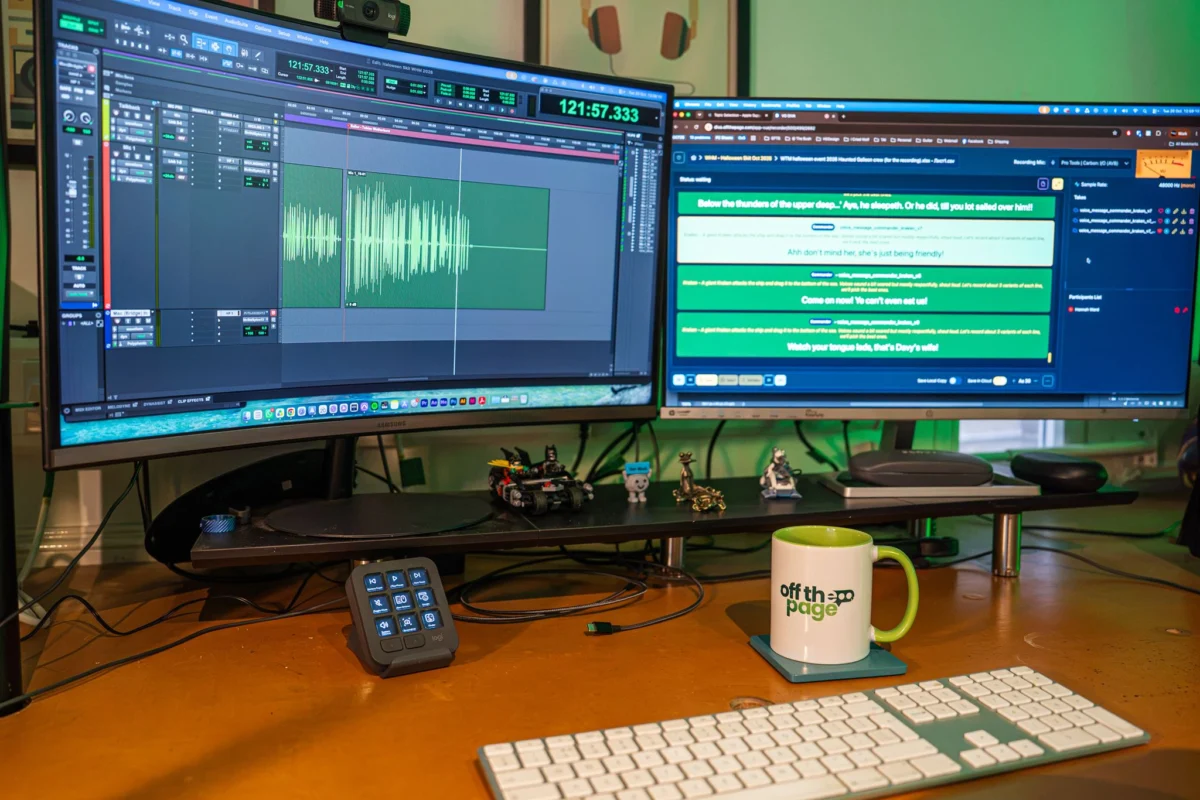
The seemingly innocuous choice between exporting a voiceover recording in mono or stereo can feel like a high-stakes decision for many practitioners in the audio industry, akin to a critical juncture in a complex technical operation. This fundamental decision, often encountered when finalizing a project, carries significant implications for file management, client satisfaction, and the overall professional presentation of one’s work. Understanding the distinct characteristics and appropriate applications of mono and stereo audio is not merely a technical nuance; it is a cornerstone of efficient workflow and effective communication within the demanding landscape of voiceover production. This comprehensive analysis aims to demystify this common point of confusion, providing a clear framework for voice actors and audio professionals to confidently navigate the export settings and ensure optimal delivery of their vocal performances.
At its core, the distinction between mono and stereo audio lies in the number of independent audio channels employed to reproduce sound. Monaural audio, often abbreviated as mono, is designed to be experienced as a single, unified sound source. Regardless of the playback system—whether it be high-fidelity studio monitors, standard consumer headphones, or even a basic smartphone speaker—the identical audio signal is distributed equally to both the left and right channels. This results in a centered, focused auditory perception, where the sound emanates from a single point directly in front of the listener. The human voice, in its natural form, is inherently a monaural phenomenon. When an individual speaks into a single microphone, the acoustic vibrations are captured and converted into a singular electrical signal, forming a mono audio stream.
Stereophonic audio, or stereo, conversely, utilizes two distinct and independent channels: a left channel and a right channel. This dual-channel approach is engineered to create a sense of spatiality, depth, and width in the soundscape. Sounds can be precisely positioned in the stereo field, allowing for the illusion of movement from one side to the other, or creating an immersive, enveloping audio experience for the listener. This spatial manipulation is crucial for music production, film sound design, and immersive gaming experiences, where distinct audio elements are deliberately placed to enhance realism and artistic intent.
The confusion often arises because Digital Audio Workstations (DAWs), the software tools used for audio recording and editing, are capable of exporting a single vocal track, which is inherently mono, into a two-channel stereo file. This is achieved by simply duplicating the mono signal and assigning it to both the left and right channels of the stereo file. While this technically creates a stereo file, it does not imbue the vocal performance with any genuine stereo characteristics; it merely wraps a mono signal in a stereo container, leading to potential complications and inefficiencies.
The Undisputed Rule: Single Voice Recordings Demand Mono Exports
The most critical guiding principle for voiceover professionals is unequivocal: for any recording consisting solely of a single voice, with no accompanying music, sound effects, or intentional spatial processing, the export setting should consistently be mono. This rule applies universally to a broad spectrum of voiceover applications, including but not limited to:
- Character Demos: When a voice actor records individual character performances for a demo reel, each character’s track should be exported as a separate mono file. This allows the subsequent audio engineer or producer to integrate these voices seamlessly into a larger production.
- Audiobook Chapters: The vast majority of audiobook narration involves a single narrator presenting the text. Unless the audiobook specifically includes sound effects or musical interludes within a chapter, the narration itself is a mono recording and should be exported as such. Platforms like ACX (Audiobook Creation Exchange) and Findaway Voices often have stringent requirements for mono delivery of narration to ensure consistency and ease of processing.
- Commercial Auditions: When submitting a dry vocal take for a commercial, the client is primarily interested in the clarity and quality of the voice performance itself. Providing this as a mono file ensures it can be easily manipulated and mixed into their final commercial production without unnecessary complications.
- Corporate Narration and Explainer Videos: Similar to commercial auditions, these types of voiceovers are typically delivered as clean, unadorned vocal tracks. Exporting them as mono streamlines the post-production process for the client.
Adhering to this mono export rule offers two significant advantages that are highly valued by audio engineers and clients alike. Firstly, it directly impacts file size and transfer efficiency. A mono audio file contains half the data of an equivalent stereo file. For instance, a 50-megabyte mono recording will expand to 100 megabytes when exported as stereo, solely due to the duplication of the identical audio stream. In scenarios involving extensive deliverables, such as a 15-chapter audiobook or an interactive voice response (IVR) system with hundreds of prompts, this doubling of file size can lead to substantially longer upload and download times, consume more storage space, and potentially strain bandwidth resources for both the sender and the receiver. By consistently exporting voice-only recordings in mono, professionals contribute to a more streamlined and efficient file transfer process, saving valuable time and resources for all parties involved.
Secondly, and perhaps more critically, exporting single voice recordings as mono significantly simplifies the mixing process for the client or audio engineer. When an engineer receives a mono file, it occupies a single channel within their digital audio workstation. This allows them to easily control the placement of the voice within the stereo sound field using a pan pot. If the project requires the voice to be slightly panned left to match on-screen action in a video, or centered for a radio advertisement, the engineer can achieve this with a simple adjustment of a dial. However, if the engineer receives an unnecessary stereo file of a mono recording, they are forced to perform additional, time-consuming steps. They must manually split the stereo track into two mono channels, discard one of the identical channels, and then re-center the remaining mono track. This is not only an inefficient use of the engineer’s time but also an implicit signal to them that the deliverable may have been prepared by someone lacking fundamental technical understanding, potentially impacting their perception of the sender’s professionalism.
The Case for Stereo: When Spatiality and Complexity are Key
While mono is the default for isolated vocal performances, there are distinct and critical scenarios where exporting in stereo is not only appropriate but absolutely essential. These situations arise when the audio file inherently contains elements that occupy or are intended to occupy a spatial dimension within the soundscape.
-
Full Production and Mixed Demos: When delivering a voiceover project that includes a pre-mixed music bed, ambient soundscapes, or integrated sound effects, the entire production must be exported as stereo. The music and sound effects were likely mixed in stereo to create a rich and immersive auditory experience. Exporting such a file as mono would result in the undesirable phenomenon known as "mono summing" or "phase cancellation." This process collapses the stereo image into a single channel, potentially leading to a loss of clarity, a reduction in perceived volume, and a significant degradation of the overall sonic quality, making the production sound flat and claustrophobic. The carefully crafted width and depth of the original stereo mix would be lost, diminishing the intended impact of the production.
-
Multi-Character Scenes and Panned Performances: In audio dramas, narrative podcasts featuring multiple characters, or even complex character reels, the deliberate spatial positioning of voices is often a crucial storytelling element. If Character A is intended to speak from the listener’s left and Character B from the right, this spatial information is encoded within a stereo audio file. Exporting such a production as mono would force all audio elements into a single point, effectively placing both characters directly in the center of the listener’s perception, negating the spatial staging and potentially confusing the narrative. The ability to pan individual voice tracks within a stereo field allows for a more dynamic and engaging listening experience, mimicking the way we perceive sound in real-world environments.
-
Stereo Spatial Effects and Binaural Audio: In advanced audio production, particularly for immersive experiences like virtual reality (VR) or highly stylized audio dramas, voice performances may be processed with specific stereo effects. These can include chorus, ping-pong delays that create a sense of rapid back-and-forth movement, or binaural processing designed to create a highly realistic 3D soundscape that is particularly effective with headphones. To accurately capture and preserve these spatial dimensions, the final export must be in stereo. A mono export would fundamentally alter or completely erase the intended spatial characteristics of these effects, rendering them ineffective.
The Quick Decision Guide: A Practical Framework
To eliminate any lingering uncertainty when facing the export dialog box, a straightforward decision-making framework can be employed:
| Project Type | What’s in the Project? | Recommended Export Setting |
|---|---|---|
| Auditions & Dry VO | Just your microphone / voice track | Mono |
| Audiobooks (ACX/Findaway) | Unaccompanied voice chapters | Mono |
| Corporate / Explainer Reads | Dry vocal track sent for client mixing | Mono |
| Commercial Demo Reels | Voice over mixed with music tracks & SFX | Stereo |
| Full Podcast Production | Voices panned across a stereo soundstage with intro music | Stereo |
| Radio-Ready Commercials | Mastered mix with music beds, sweeps, and voice | Stereo |
| Sound Design Elements | Pre-mixed stereo soundscapes or effects | Stereo |
| VR/Immersive Audio Experiences | Voice with binaural or 3D spatial processing | Stereo |
This table serves as a quick reference, empowering voice actors and audio professionals to make informed decisions based on the content and intended use of their recordings.
Conclusion: Professionalism in Every Export
The decision to export a voiceover recording in mono or stereo is more than a mere technical checkbox; it is a reflection of a professional’s understanding of audio principles and their commitment to delivering high-quality, client-ready work. For single-voice recordings devoid of any spatial elements, opting for mono is the industry standard, promoting efficient file management, reduced transfer times, and a simplified workflow for audio engineers. This practice demonstrates a respect for the client’s time and resources, fostering a reputation for professionalism and technical competence.
Conversely, when a project inherently incorporates musical elements, sound effects, multiple panned voices, or specialized stereo processing, the export must be in stereo to preserve the integrity and intended impact of the soundscape. Failing to do so can result in a degraded listening experience and a perception of technical oversight.
Ultimately, while these guidelines provide a robust foundation, the paramount directive remains: always prioritize the technical specifications provided by the client. In the professional audio arena, client requirements supersede general best practices. If a specific client or platform mandates stereo delivery for dry voice recordings, it is imperative to comply with their instructions, as their needs and workflow dictate the final output. By mastering the distinction between mono and stereo exports, voiceover professionals can ensure their deliverables are not only technically sound but also contribute to a seamless and successful production process, reinforcing their value and expertise in the competitive audio industry.
