


Ten years ago, a groundbreaking initiative, the Atlas of Emotions, was unveiled to the world. This ambitious project, a testament to the power of interdisciplinary collaboration, emerged from the minds of renowned psychologist Dr. Paul Ekman, his daughter Dr. Eve Ekman, and the spiritual leader His Holiness the Dalai Lama. Its core mission was to create a comprehensive and accessible map of the vast landscape of human emotion, grounded in robust scientific inquiry and infused with profound contemplative wisdom. Today, a decade after its introduction, the Atlas of Emotions continues to exert a significant influence, permeating educational institutions, therapeutic practices, academic research, and the very fabric of global interpersonal communication.
Genesis of a Universal Emotional Framework
The conceptualization of the Atlas of Emotions began with Dr. Paul Ekman’s long-standing quest to identify universal emotional experiences. His seminal work, built upon extensive research into facial expressions and their connection to core emotions, sought to establish a common ground for understanding human affect. A critical step in this endeavor was a comprehensive survey conducted by Dr. Ekman, which involved nearly 250 leading emotion scientists from around the globe. This landmark study, published in a prior report, revealed a remarkable consensus among experts regarding the nature and universality of certain fundamental emotions. This scientific bedrock provided the essential foundation upon which the Atlas of Emotions would be built, ensuring its scientific validity and broad applicability.
The vision for the Atlas extended beyond mere scientific documentation. The collaboration with His Holiness the Dalai Lama brought a crucial dimension of contemplative insight, emphasizing the importance of emotional regulation and well-being. Dr. Eve Ekman, a psychologist and neuroscientist, played a pivotal role in translating complex psychological theories into an intuitive and visually engaging format. This unique confluence of rigorous scientific research, sophisticated graphic design, and profound spiritual wisdom was instrumental in shaping the Atlas into a tool that could resonate with a diverse global audience. The creation process itself was a testament to the power of shared purpose, bridging the disciplines of psychology, art, and philosophy.
A Glimpse Behind the Scenes: The Making of the Atlas
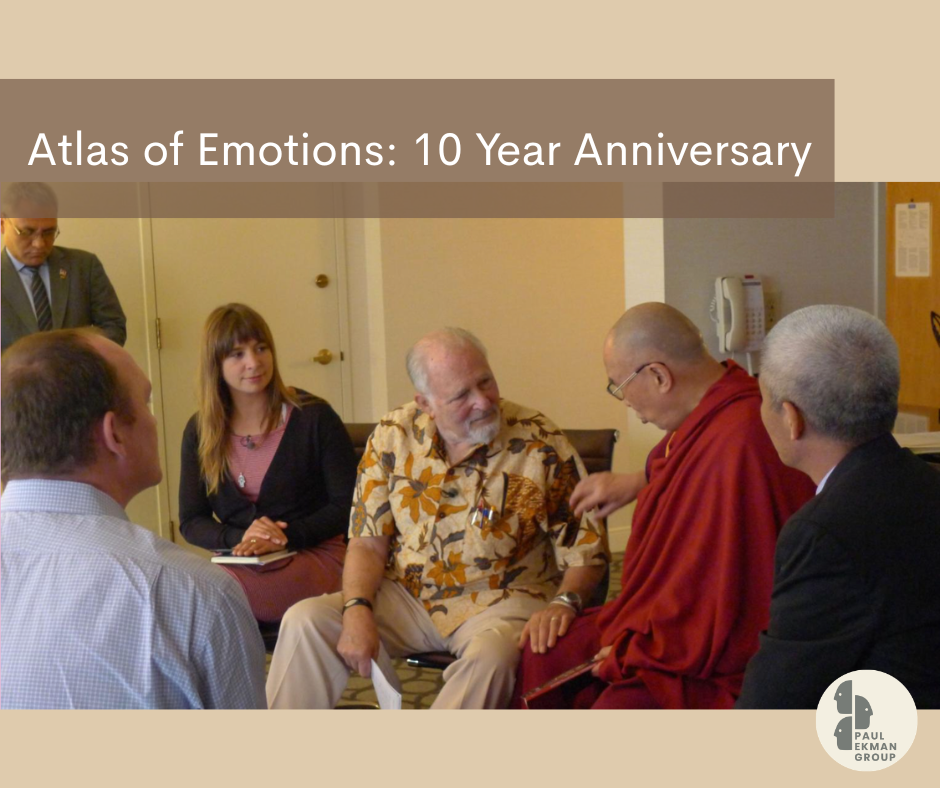
To commemorate this significant tenth anniversary, a rare and insightful piece of archival footage has been released, offering a unique behind-the-scenes look at a working meeting between Dr. Paul Ekman, Dr. Eve Ekman, and His Holiness the Dalai Lama. This candid video captures a pivotal moment during the Atlas’s development, showcasing the collaborative spirit and intellectual exchange that characterized its creation. In the footage, the trio can be seen reviewing the Atlas in progress, discussing its structure, content, and potential impact.
This visual record underscores the interdisciplinary approach that defined the project. It highlights how rigorous psychological research, innovative graphic design principles, and the Dalai Lama’s contemplative insights were interwoven to produce a comprehensive emotional awareness framework. The footage serves as a powerful reminder of the collaborative ethos that underpinned the Atlas, emphasizing a shared commitment to making the complex world of emotions understandable and navigable for all. The careful consideration given to each element, from the categorization of emotions to the visual representation of their nuances, is palpable in this unearthed material, illustrating the dedication of the creators to their vision.
From Launch to Global Reach: A Decade of Impact
The official launch of the Atlas of Emotions in 2016 garnered immediate international attention. Prominent media outlets, including The New York Times, recognized the Atlas’s innovative approach to demystifying emotions and making complex psychological concepts accessible to the general public. The New York Times article, published in May 2016, specifically highlighted the unique partnership between the scientists and the Dalai Lama, framing it as a significant step in broadening public understanding of emotional intelligence.
This early recognition served as a catalyst, fostering widespread adoption and integration of the Atlas across various sectors. Over the past ten years, the Atlas of Emotions has been instrumental in a multitude of applications:
- Education: In classrooms worldwide, educators have utilized the Atlas to teach students about emotional literacy, helping them identify, understand, and manage their feelings. This has been particularly impactful in fostering empathy and social-emotional learning (SEL) programs, with studies indicating that robust SEL initiatives can lead to improved academic performance and reduced behavioral issues. For instance, a meta-analysis published in the journal Child Development in 2011 found that students participating in SEL programs showed an average 11-percentile-point gain in academic achievement.
- Therapy and Counseling: Mental health professionals have integrated the Atlas into their practice as a valuable tool for clients to articulate their emotional experiences. The framework provides a shared language and a visual aid that can deepen therapeutic dialogues, facilitating greater self-awareness and more effective coping strategies. The use of such tools is consistent with the growing emphasis on evidence-based practices in psychotherapy, aiming to enhance client engagement and treatment outcomes.
- Research: Academics and researchers have leveraged the Atlas as a foundational resource for exploring the nuances of human emotion, its cultural variations, and its impact on behavior. The Atlas’s scientifically validated framework provides a consistent basis for comparative studies, contributing to the growing body of knowledge in affective science. Research published in journals such as Emotion Review has often cited the Atlas as a key reference point for conceptualizing and measuring emotional states.
- Personal Development: Individuals have independently used the Atlas to enhance their own emotional intelligence, navigate personal relationships more effectively, and cultivate greater self-compassion. The accessible nature of the online tool allows for self-guided exploration, empowering individuals to develop a more nuanced understanding of their internal emotional world.
The cumulative impact of the Atlas of Emotions over the past decade is a testament to its enduring relevance and efficacy. It has demonstrably contributed to a global conversation about emotions, fostering a greater appreciation for their complexity and their profound influence on human well-being and societal interactions.
Charting the Future: User Input and Evolving Resources
As the Atlas of Emotions celebrates this significant milestone, its creators are keenly focused on its evolution and continued impact. A critical component of this forward-looking strategy involves actively soliciting feedback from its global user base. The project team is inviting individuals to share their experiences with the Atlas, asking how they have utilized it and what insights or changes it has facilitated in their lives. This valuable input is being gathered through a dedicated feedback form, with the intention of informing the next phase of development.
The organization emphasizes that user insights will play a crucial role in shaping the future trajectory of the Atlas. This commitment to user-centric development ensures that the resource remains relevant, responsive, and impactful for its diverse audience. The belief is that by understanding how the Atlas is being used in real-world contexts, future enhancements can be more effectively tailored to meet emerging needs and challenges.
Looking ahead, several exciting developments are on the horizon. Updates to the online, interactive Atlas of Emotions are planned, promising an enriched user experience with potentially new features and expanded content. Furthermore, Dr. Eve Ekman is currently undertaking the ambitious project of authoring an "Atlas of Emotions" book. This forthcoming publication, slated for release in 2027, is anticipated to delve deeper into the original Atlas, offering expanded explorations, updated research findings, and novel perspectives on engaging with the emotional spectrum that shapes human existence. This book represents a significant expansion of the Atlas’s reach, translating its interactive digital format into a comprehensive literary work.
Individuals interested in staying informed about the book’s release and future updates to the online Atlas are encouraged to join the official announcement list. This proactive approach to communication aims to foster a continued sense of community and engagement around the Atlas of Emotions, ensuring its ongoing contribution to emotional literacy and well-being worldwide. The anticipation for these future developments underscores the enduring power and adaptability of this unique emotional framework.
