

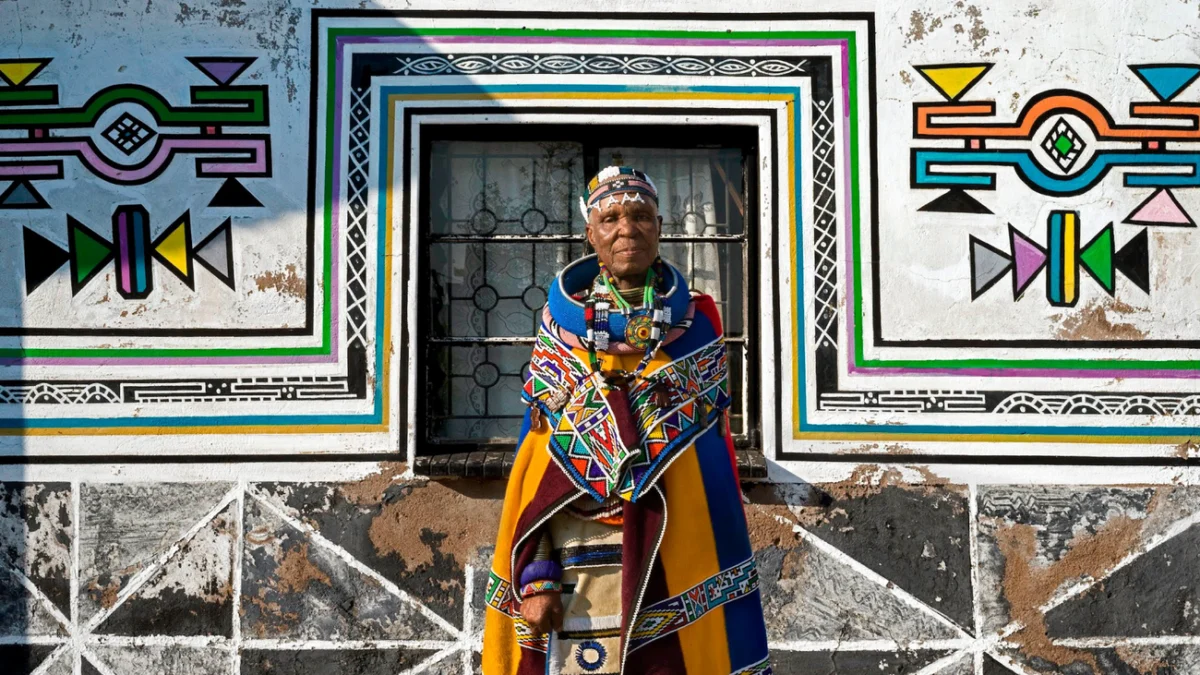
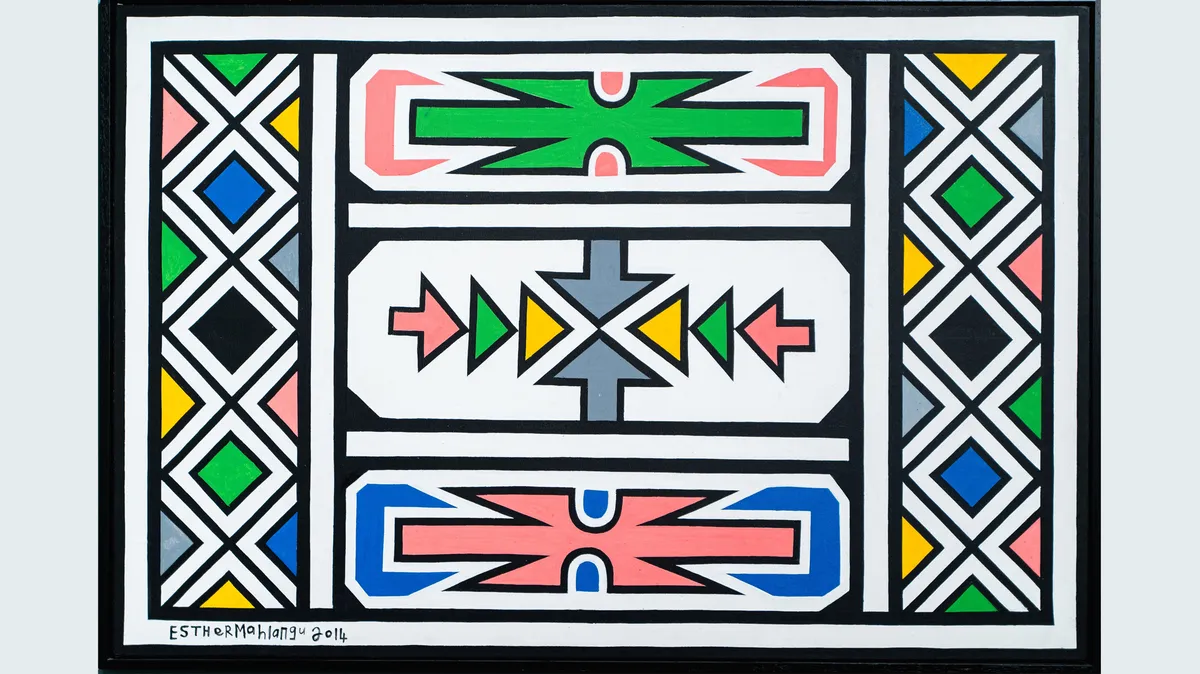
Google Arts & Culture has officially launched the first comprehensive online retrospective dedicated to the life and work of Dr. Esther Mahlangu, the globally acclaimed South African artist whose geometric Ndebele patterns have become a symbol of African contemporary art. The digital initiative, titled "Then I Knew I Was Good at Painting," was released to coincide with Mahlangu’s 91st birthday, marking a significant milestone in the preservation of South African cultural heritage. This digital archive features more than 45 curated stories, high-resolution imagery of her works, and a pioneering use of artificial intelligence to reconstruct the artist’s undocumented early memories.
The project is the result of a multi-year collaboration between Google, Dr. Nontobeko Ntombela—a senior lecturer at the Wits School of Arts—and the artist’s family. It seeks to bridge a critical gap in the historical record of Mahlangu’s career, specifically the period between her childhood and her rise to international prominence in the late 1980s. By leveraging advanced technology and traditional curatorial research, the retrospective provides a global audience with unprecedented access to the Ndebele nation’s artistic traditions and Mahlangu’s personal evolution as a pioneer of the abstract form.
The Evolution of a Global Icon
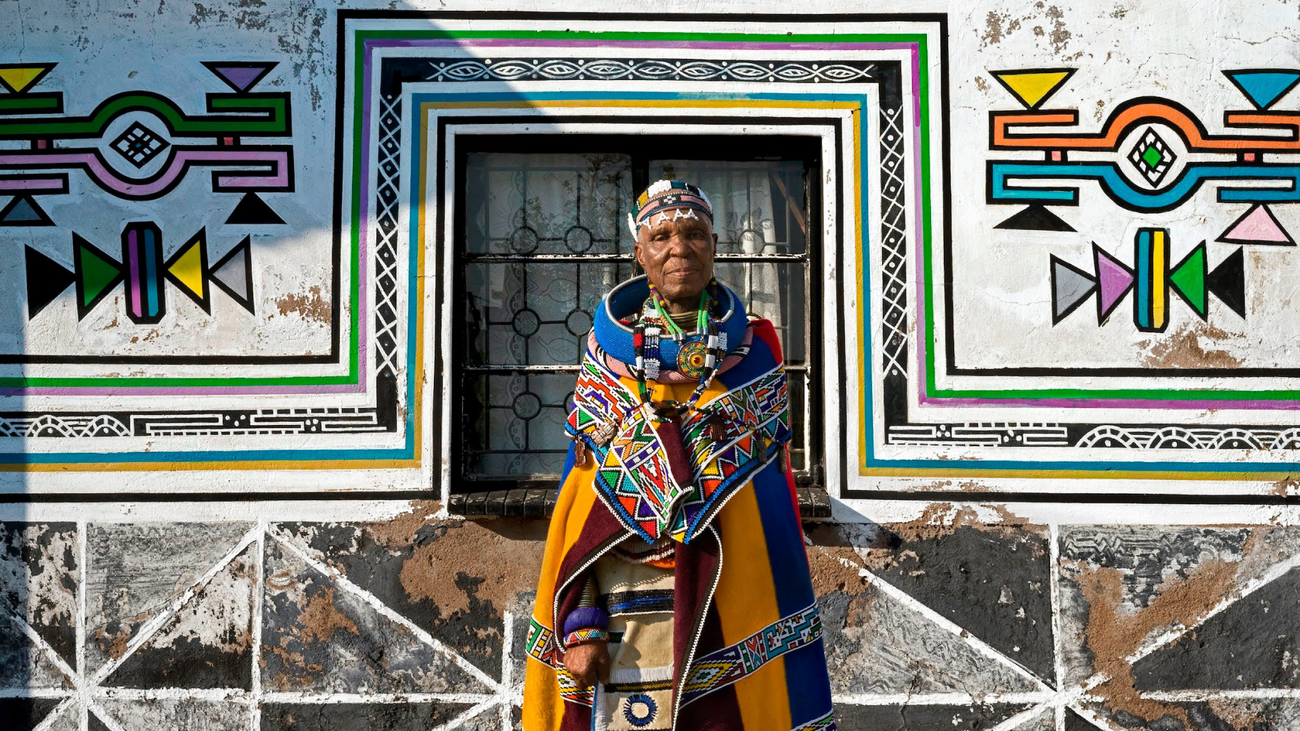
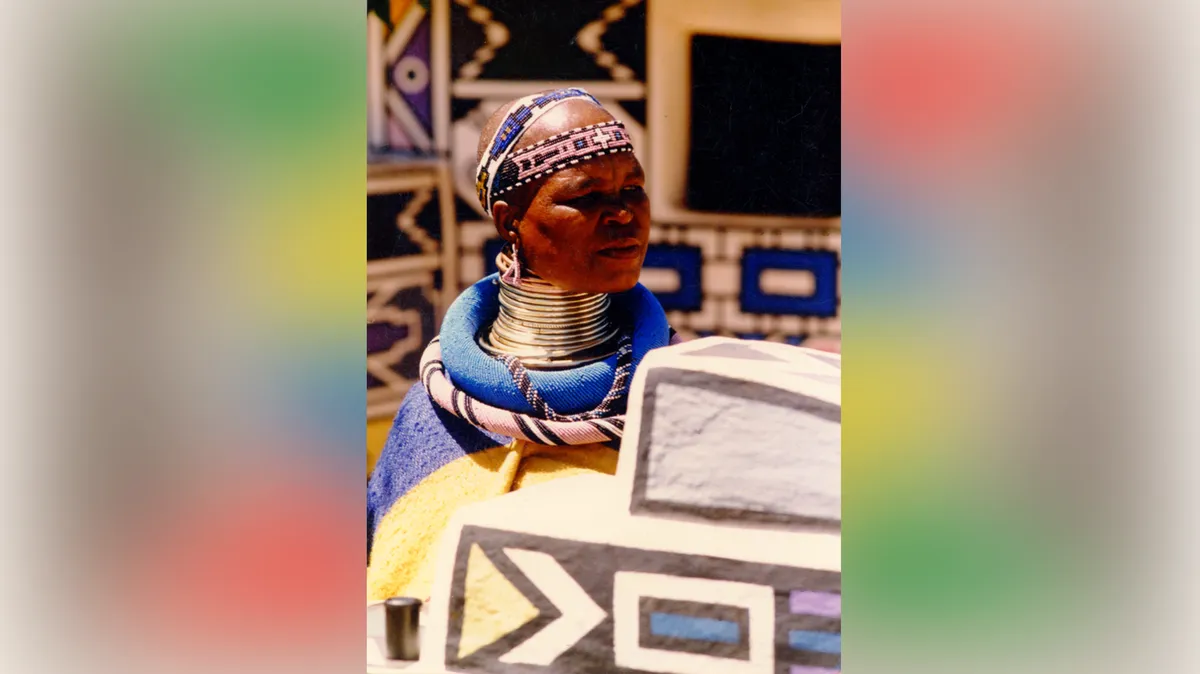
Born in 1935 in Middelburg, Mpumalanga, Esther Mahlangu began her artistic journey at the age of ten. Under the guidance of her mother and grandmother, she learned the traditional Ndebele technique of wall painting, a practice historically reserved for women to communicate identity and community status. While traditional Ndebele art utilized natural pigments and muted earth tones, Mahlangu became famous for her transition to bright acrylic paints and bold black outlines, a shift that modernized the aesthetic while maintaining its cultural integrity.
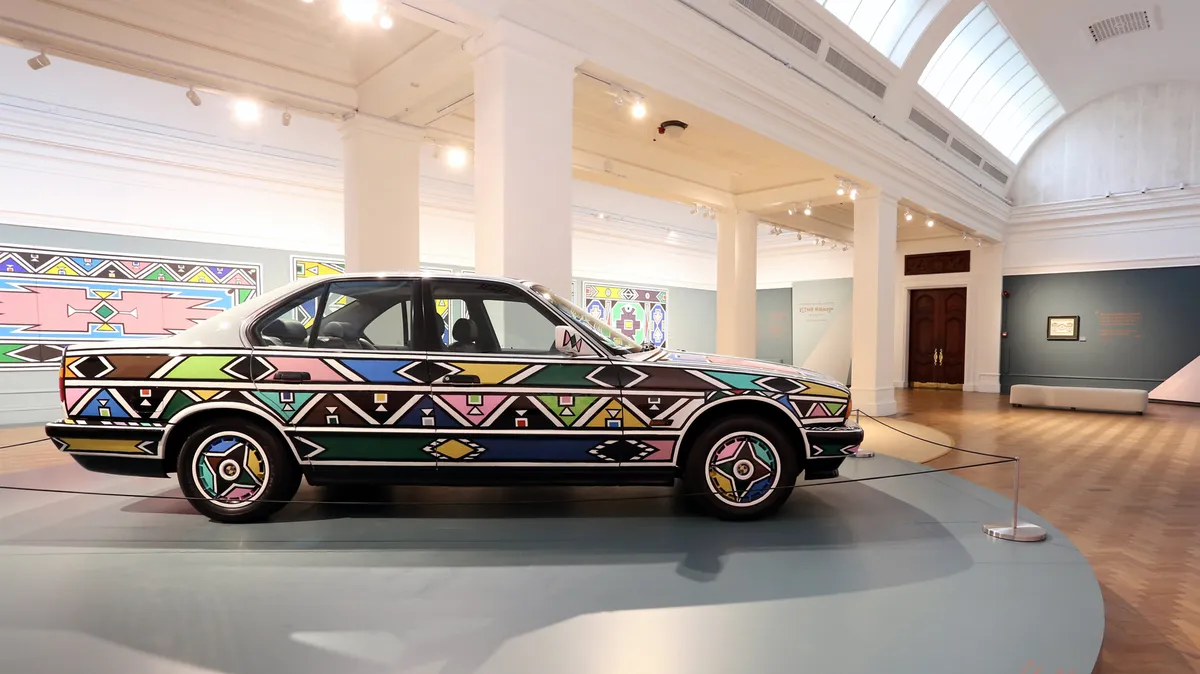
Mahlangu’s international breakthrough occurred in 1989 at the "Magiciens de la Terre" exhibition in Paris, where she was invited to paint a replica of her Ndebele homestead. This event catapulted her into the global spotlight, leading to high-profile collaborations, most notably with BMW in 1991. As the first woman and the first African artist to participate in the BMW Art Car project, Mahlangu transformed a BMW 525i into a masterpiece of Ndebele design, placing her work alongside legendary artists like Andy Warhol and Roy Lichtenstein.
Despite her global success, much of Mahlangu’s early life remained unrecorded in traditional archives. Dr. Nontobeko Ntombela, who has spent years researching South African women artists, noted that while large-scale murals and recent exhibitions were well-documented, the formative years of Mahlangu’s life—from 1945 to 1980—represented a significant archival void. This gap was the primary catalyst for the current Google Arts & Culture project.
Reconstructing History Through Synthetic Memories
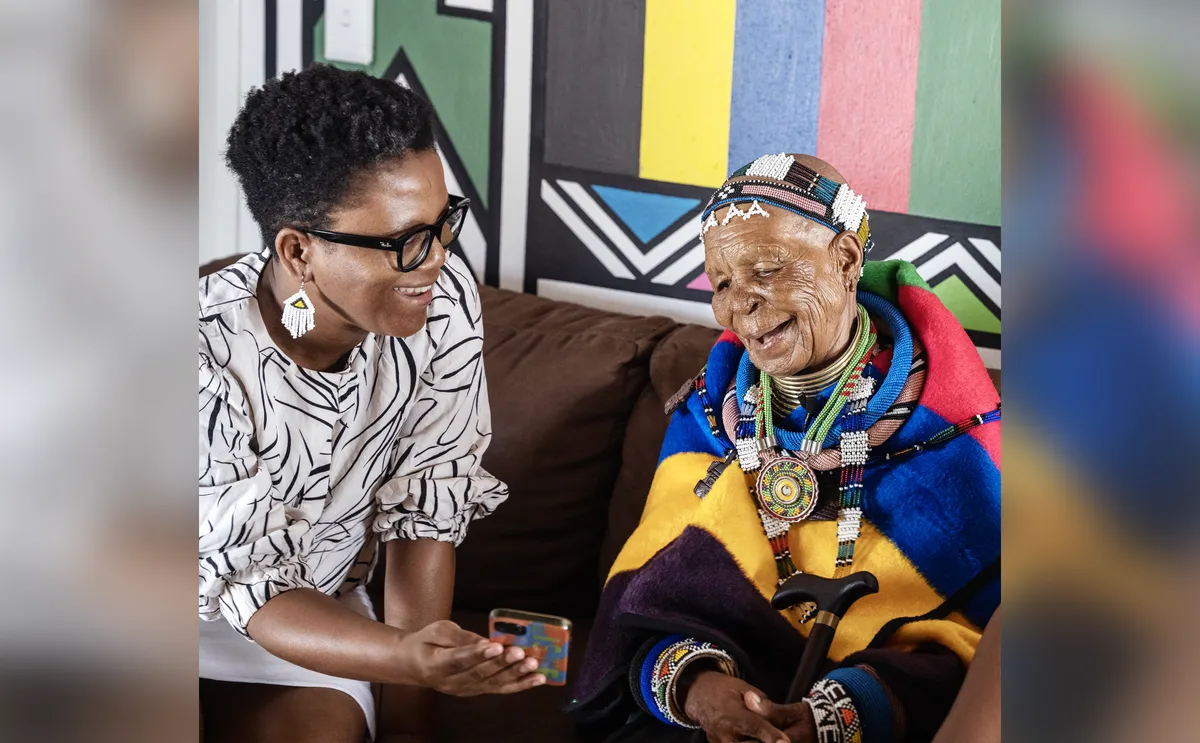
To address the missing chapters of Mahlangu’s biography, Google Arts & Culture Lab collaborated with Google DeepMind and the research studio Domestic Data Streamers. This partnership utilized a "synthetic memories" initiative, which employs generative artificial intelligence to visualize personal recollections that were never captured on film or paper.
The process involved extensive interviews and workshops with Dr. Mahlangu. During these sessions, she recounted vivid details of her youth, including the specific moment she realized her talent while painting with chicken feathers instead of traditional brushes. Using these oral histories as source material, the team utilized "Veo," Google’s latest video-generation model, to create visual representations of these memories.
This application of AI represents a new frontier in cultural preservation. Rather than replacing historical facts, the technology acts as a tool for "visual oral history," allowing the artist to see her past brought to life. These AI-generated videos depict scenes such as her early apprenticeship under her grandmother and the initial experiments with color that would eventually define her signature style. The project demonstrates how technology can be used ethically to honor personal memory and provide a fuller narrative of artists who were overlooked by traditional Western art history during the mid-20th century.
A Chronology of Dr. Esther Mahlangu’s Career
The retrospective organizes Mahlangu’s life into a clear historical timeline, illustrating her transition from a traditional community artist to a contemporary global figure:
- 1935: Born in Middelburg, South Africa.
- 1945: Begins learning Ndebele painting and beadwork from her mother and grandmother.
- 1980s: Starts working at the Botshabelo Open Air Museum, where her work begins to attract the attention of international researchers and curators.
- 1989: Participates in the "Magiciens de la Terre" exhibition at the Centre Pompidou in Paris, marking her international debut.
- 1991: Creates the BMW 525i Art Car, the first African artist to do so.
- 2004: Collaborates with Nelson Mandela on a series of paintings titled "The Long Walk to Freedom."
- 2018: Receives an honorary doctorate from the University of Johannesburg for her contribution to the arts.
- 2024: The launch of "Then I Knew I Was Good at Painting," the most comprehensive retrospective of her work, debuting at the Iziko South African National Gallery before moving to the digital realm.
Institutional Collaboration and Global Access
The digital archive is not a solitary effort but a synthesis of contributions from major global institutions. The retrospective features items and stories from:
- Iziko Museums of South Africa: Providing key pieces from the physical 2024 retrospective.
- The British Museum: Offering historical context on Ndebele heritage.
- The Jean Pigozzi Collection: Featuring early contemporary African art pieces.
- The National Museum of Women in the Arts: Highlighting her role as a female pioneer.
- Serpentine Galleries: Contributing to the analysis of her contemporary influence.
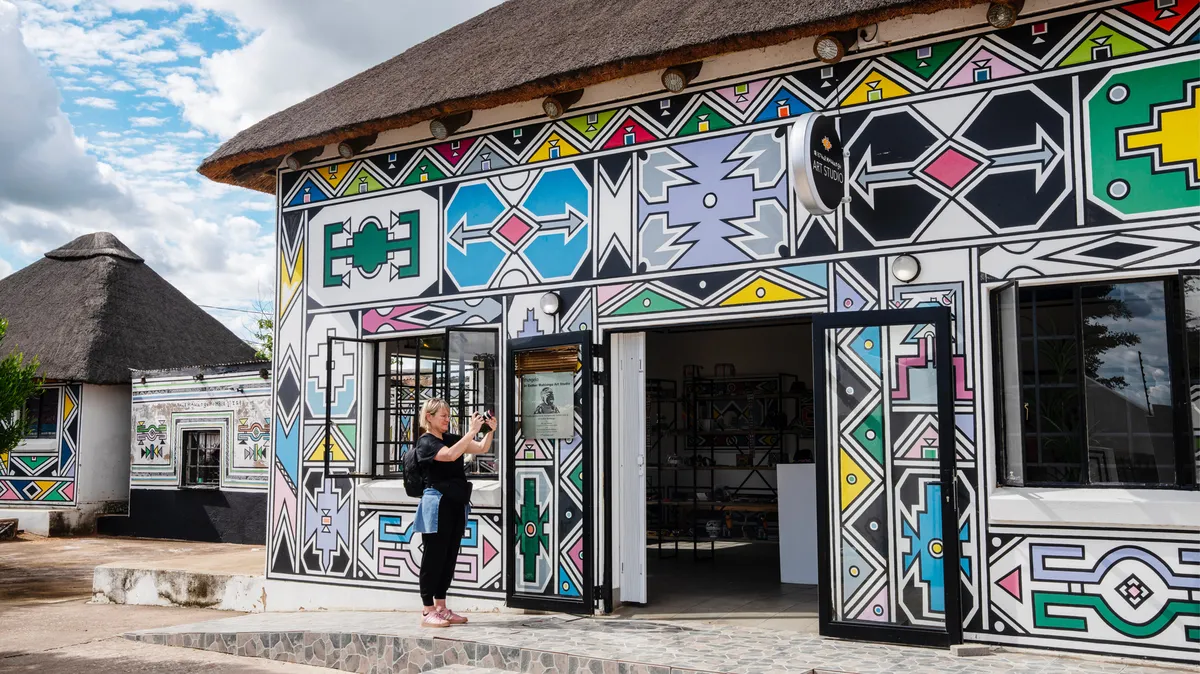
By aggregating these resources, Google Arts & Culture has created a "one-stop" repository for scholars, students, and art enthusiasts. The platform includes Street View tours of Mahlangu’s homestead and studio, allowing users to virtually walk through the spaces where her art is created. This level of accessibility is particularly vital for a South African audience, ensuring that a national treasure remains accessible to the youth of her own country while being showcased to millions abroad.
Official Responses and Cultural Significance
The launch of the retrospective has drawn significant praise from both the artistic and technological communities. Dr. Esther Mahlangu expressed her gratitude for the project, emphasizing the importance of cultural continuity. "Thank you to Google Arts & Culture for sharing my story, artwork, and the culture of the Ndebele nation with the world," she stated. "It has always been my wish to ensure that the art and culture of my Nation lives on for those who follow."
Amit Sood, Vice President of Google Arts & Culture, highlighted the project’s educational value. "We’re honored to help celebrate Dr. Esther Mahlangu’s legacy by making her work globally accessible online, offering younger generations everywhere the chance to explore Ndebele heritage and be inspired by her pioneering vision," Sood said.
Curator Dr. Nontobeko Ntombela noted that the project is more than just an exhibition; it is a corrective measure in art history. She argued that for too long, African women artists have been relegated to the category of "craft" rather than "fine art." By presenting Mahlangu’s work through a sophisticated digital retrospective, the project asserts her position as a pivotal voice in global contemporary art, equal in stature to her Western peers.
Broader Impact and Future Implications
The Esther Mahlangu retrospective serves as a blueprint for future digital preservation projects. In an era where cultural artifacts are often at risk due to physical decay or lack of funding, digital archiving provides a permanent safeguard. Furthermore, the use of AI to fill archival gaps suggests a new methodology for documenting the lives of indigenous artists whose histories were often ignored or suppressed by colonial-era institutions.
The data supporting the impact of such initiatives is compelling. Google Arts & Culture has seen a significant rise in global engagement with African art over the past five years, with digital exhibits providing a 40% increase in reach compared to traditional physical galleries. For an artist like Mahlangu, whose work is intrinsically tied to the physical walls of her community, the transition to the digital sphere ensures that her "murals" can live on even if the physical structures they inhabit eventually succumb to time.
As Dr. Mahlangu enters her tenth decade, her influence shows no signs of waning. Her patterns have appeared on everything from fashion runways to luxury aircraft, yet her core mission remains the preservation of the Ndebele identity. This Google Arts & Culture retrospective ensures that while her art continues to travel the world, the story of the woman behind the feathers—the ten-year-old girl who "knew she was good at painting"—is never lost to history.
The exhibition is now live and can be explored by the public at the dedicated Google Arts & Culture portal, providing a vivid, interactive journey through nearly a century of African creative excellence.
