

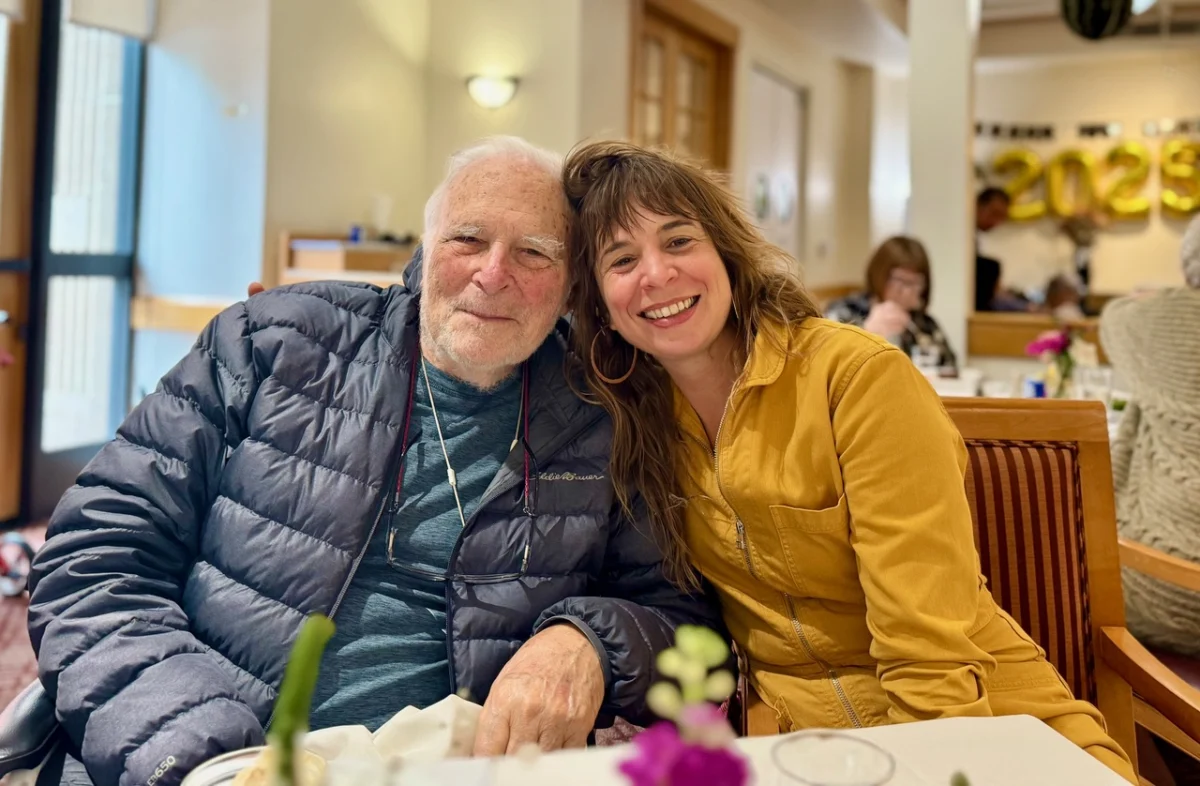
The passing of Dr. Paul Ekman, a pioneering psychologist whose groundbreaking research on universal facial expressions and emotions reshaped our understanding of human affect, has prompted a multifaceted reflection on his profound scientific contributions, personal evolution, and enduring impact. While his work has been widely celebrated and applied across diverse fields, the narrative surrounding his legacy is also marked by a deeply personal journey of transformation, particularly in his later years, which his daughter, Eve Ekman, eloquently detailed. This comprehensive account seeks to contextualize Dr. Ekman’s life and work, moving beyond a singular framing to encompass the breadth of his influence, the evolution of his thought, and the profound personal shifts that characterized his final decades.
The Architect of Emotion Science
Paul Ekman, a name synonymous with the scientific study of human emotion, dedicated his illustrious career to unraveling the complexities of facial expressions and their universal correlates. Born in 1934, his early academic pursuits laid the groundwork for what would become a lifelong exploration of the human psyche. His seminal work, often conducted in collaboration with Wallace Friesen, identified a set of basic human emotions – joy, sadness, anger, fear, surprise, and disgust – that are expressed through universally recognizable facial configurations. This research, initially met with skepticism, gained significant traction through rigorous cross-cultural studies, including investigations in remote societies like the Fore people of New Guinea, who had limited exposure to Western culture. These studies provided compelling evidence for the innate, biological basis of emotional expression, challenging prevailing theories that emphasized cultural determinism.
The implications of Ekman’s early findings were far-reaching, influencing fields as diverse as psychology, neuroscience, anthropology, and even law enforcement and national security. The ability to reliably detect microexpressions – fleeting, involuntary facial movements that betray underlying emotions – became a cornerstone of his research, with applications ranging from clinical diagnosis to interrogation techniques. His work provided a scientific framework for understanding deception and empathy, contributing to the development of training programs for professionals seeking to better interpret emotional cues.
A Personal Reckoning and Profound Transformation
Beyond the sterile halls of academia and the rigorous demands of scientific inquiry, Paul Ekman’s life was also a testament to personal growth and the capacity for profound change. His daughter, Eve Ekman, a clinical social worker herself, offered a poignant perspective on her father’s journey, emphasizing a deep-seated hunger for life, a generous spirit, and an immense capacity for love that transcended his scientific achievements. She revealed that Dr. Ekman’s research was deeply rooted in personal experience, stemming from childhood trauma and loss that shaped his lifelong commitment to understanding and alleviating human suffering.
"My father, Paul Ekman, was an awesome and loving dad, husband, and friend – with a huge heart, great humor, and an indelible hunger for life," Eve Ekman wrote in her personal reflection. "He overcame profound trauma and loss as a child, experiences that shaped his research on human emotion and echoed through his heart for a lifetime. He was committed to becoming the kind of father he never had." This dedication translated into an active and supportive presence in his children’s lives, fostering a relationship characterized by curiosity, love, and unwavering loyalty.
A pivotal moment in Dr. Ekman’s personal and intellectual evolution occurred in 2000 during a landmark meeting in Dharamsala, India. This gathering, which brought together Dr. Ekman, His Holiness the Dalai Lama, and a diverse group of scientists and contemplatives, focused on the theme of "Destructive Emotions." This experience, as described by Eve Ekman, was transformative, fundamentally altering his understanding of himself and the world.
"The 2000 meeting in Dharamsala, India – a gathering of my dad, the Dalai Lama, and a circle of scientists and contemplatives exploring ‘Destructive Emotions’ – completely transformed his understanding of the world and of himself," she stated. "Many colleagues and friends knew that he had struggled with anger earlier in his life. What fewer people know is how profoundly he shifted afterward. Something in that meeting gave him an unmistakable, embodied sense of what it might feel like to live with less reactivity and anger." This encounter with Buddhist philosophy and contemplative practices provided him with a new lens through which to view his own emotional landscape and the potential for inner transformation.
Bridging Science and Contemplation: Cultivating Emotional Balance
Inspired by the profound impact of the Dharamsala meeting, Dr. Ekman embarked on a new phase of his career, one characterized by an integration of his scientific expertise with the wisdom of ancient contemplative traditions. This fusion led to the development of influential programs designed to help individuals cultivate emotional well-being and reduce suffering.
Working alongside his daughter, Eve, who brought her own extensive experience as a clinical social worker, Dr. Ekman co-created "Cultivating Emotional Balance" (CEB). This evidence-based training program, developed in collaboration with Alan Wallace, aimed to equip participants with practical tools for understanding their emotions, developing a calmer mind, and fostering compassion. CEB has since been disseminated globally, reaching thousands of individuals across various cultural and professional backgrounds. The program’s success underscores Dr. Ekman’s evolving commitment to translating scientific knowledge into tangible methods for enhancing human well-being.
Further solidifying this integration, Dr. Ekman, commissioned by the Dalai Lama, collaborated on the creation of the "Atlas of Emotions." Launched in 2016, this free online tool provides a comprehensive vocabulary for describing the nuances of our emotional lives, serving as a valuable resource for individuals seeking to better understand and navigate their inner experiences. The Atlas, set to be relaunched for its ten-year anniversary, represents a tangible embodiment of his late-career dedication to fostering emotional literacy and reducing suffering on a global scale.
Addressing Scientific Discourse and Legacy
While Dr. Ekman’s contributions have been widely recognized, his legacy has also been subject to scientific debate. Eve Ekman addressed a particular point of contention, noting the New York Times obituary’s framing of his work through the lens of "controversy," specifically by highlighting a single scientist’s critique rather than the extensive body of peer-reviewed research that has supported and expanded upon his foundational findings.
"For these reasons, it was difficult to see the New York Times obituary frame his work through the lens of ‘controversy,’ particularly by centering a single scientist’s opinion rather than the extensive body of peer-reviewed research that has replicated, expanded, and refined the field he helped establish," she stated. "Disagreement is part of science – he welcomed it. But presenting his life’s work primarily through one selective critique, instead of the hundreds of studies and dozens of labs that built upon his foundational findings, misrepresents both his scientific contributions and the broader field of emotion research."
This perspective highlights the importance of a balanced and comprehensive view of scientific progress. While healthy debate is essential for scientific advancement, it is crucial to acknowledge the collective weight of evidence and the iterative nature of research. Dr. Ekman’s work has undeniably stood the test of time, with numerous studies by independent researchers confirming and building upon his initial discoveries, solidifying his place as a pivotal figure in the study of human emotion. The implications of his research extend far beyond academic circles, impacting fields such as animation, where his insights into facial expressions have informed character development, and national security, where the understanding of emotional cues can play a critical role.
A Life Dedicated to Understanding and Compassion
Paul Ekman’s life story is one of remarkable scientific achievement intertwined with profound personal transformation. He was not merely a scientist who studied emotions; he was a man who grappled with his own, sought to understand them deeply, and ultimately dedicated his life to helping others do the same. His journey from overcoming childhood trauma to becoming a renowned expert in emotional expression, and then embracing contemplative practices to cultivate inner peace, offers a powerful testament to the human capacity for growth and change.
"My father dedicated his life to science in the service of reducing human suffering," Eve Ekman reflected. "He did that not only through meticulous research, but through a sincere desire to help people understand themselves better. He did it by sharing his own vulnerabilities, repairing relationships, and softening over the years into a man who was joyful, open-hearted, and generous. He made deep, meaningful connections right up until the last months of his life."
The broader implications of his work continue to resonate. In an increasingly interconnected and often emotionally charged world, the ability to understand and manage our emotions, and to empathize with others, is more critical than ever. Dr. Ekman’s legacy, therefore, extends beyond the scientific realm to encompass a call for greater emotional intelligence, compassion, and human understanding.
His daughter’s desire is for his story to be seen in its full complexity: "He was complicated and imperfect, like all of us. But he was also kind, brave, funny, endlessly curious, and deeply committed to making the world better. That is the story of Paul Ekman that I hope can be held alongside the rest – a story of both scientific impact and personal transformation. Above all, it is a story of a human being who dedicated his life to understanding emotion and expanding compassion, and who never stopped learning how to love well."
The outpouring of well wishes from near and far following his passing serves as a powerful indicator of the profound impact Dr. Paul Ekman had on countless individuals, both through his groundbreaking scientific endeavors and his deeply human journey of personal growth and dedication to alleviating suffering. His life stands as an enduring example of how rigorous scientific inquiry, coupled with a commitment to personal evolution, can illuminate the path toward a more compassionate and understanding world.
