

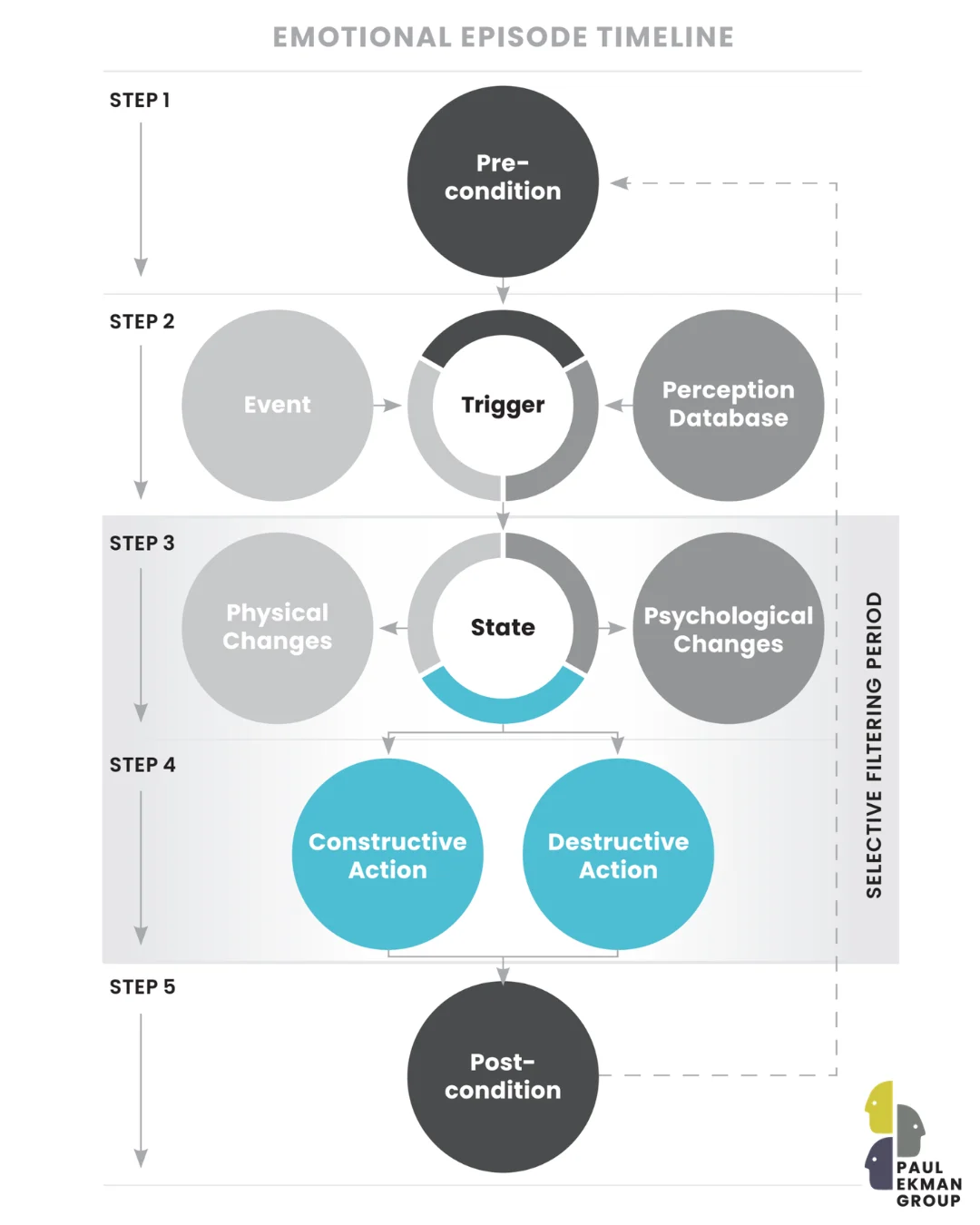
Our emotional lives can often feel like a tempestuous sea, with sudden waves of feeling washing over us before we even have a chance to register their arrival. This seemingly unpredictable nature of emotional responses, while common, masks a surprisingly structured process. Understanding the underlying mechanics of how emotions unfold can empower individuals to recognize their feelings earlier, navigate them with greater skill, and ultimately, reshape unhelpful patterns of emotional reactivity. This comprehensive breakdown delves into the Emotional Episode Timeline, a framework designed to demystify the journey from a fleeting stimulus to a full-blown emotional experience and subsequent action.
The fundamental architecture of an emotional episode can be distilled into three core stages: Trigger, Experience, and Response. This sequence, though basic, plays out countless times each day, often in subtle, unacknowledged ways. Consider the minor frustration of misplacing keys or a misplaced phone. While these might not register as significant emotional events, they still offer valuable insights into our habitual ways of processing challenges, whether it’s a tendency to assign blame or a pattern of self-criticism. The Emotional Episode Timeline, by expanding this basic model into five distinct stages, provides a more granular lens through which to examine these underlying patterns and cultivate greater self-awareness.
The Five Stages of the Emotional Episode Timeline
Stage 1: Pre-condition – The Emotional Starting Point
Before any external or internal event occurs, we bring a unique set of conditions to any given moment. This is the "pre-condition," essentially our emotional and physical baseline. It encompasses a wide spectrum of states: the exhaustion after a restless night, the gnawing hunger, the pervasive stress from work, the buoyant excitement following positive news, or the serene calm of being well-rested and at ease. Our pre-condition acts as a crucial primer, significantly influencing how readily an emotion can arise and its potential intensity. When we are in a neutral or relaxed state, the pre-condition might be minimal, allowing us to approach new situations with a degree of equanimity. Conversely, a depleted or stressed pre-condition can lower our threshold for emotional activation, making us more susceptible to triggers that might otherwise have little impact. Research in psychophysiology indicates that baseline physiological states, such as heart rate variability and cortisol levels, are directly influenced by our pre-condition and can significantly modulate our subsequent emotional reactivity.
Stage 2: Trigger – The Catalyst of Emotion
The trigger is the moment an emotional episode is initiated. It is not simply the external event itself, but a complex interplay between the event, our interpretation of it, and our internal "database" of past experiences and learned responses, all filtered through our current pre-condition.
-
The Event: An event can be anything that registers in our awareness, whether it’s an external stimulus like encountering a particular person, visiting a familiar place, or witnessing a specific situation, or an internal experience such as a memory, a fleeting thought, or a vivid fantasy. Our sensory portals – sight, sound, smell, taste, and touch – are constantly feeding information to our brains. This information is then subjected to a process known as "automatic appraisal." This unconscious evaluation system rapidly assesses potential opportunities or threats, preparing us for immediate action. For instance, the instinctive swerving of a car to avoid an animal in the road is a direct result of automatic appraisal, prioritizing immediate safety. Similarly, not receiving a text back from a new acquaintance can be automatically appraised as a sign of rejection, even before conscious deliberation. Studies in neuroscience have demonstrated that the amygdala, a key brain region for processing emotions, is highly active during automatic appraisal, often preceding conscious awareness.
-
The Perception Database: Each individual possesses a unique "perception database," an internal repository of emotional memories, learned associations, and innate predispositions. This database acts as an "emotional alert system," enabling our minds to quickly ascertain the significance of incoming information. This internal library is shaped by a confluence of factors:
- Genetics: Our inherent biological predispositions can influence our baseline emotional sensitivity and the types of stimuli that are more likely to evoke strong reactions.
- Past Experiences: Crucially, our personal history of emotional encounters profoundly shapes how we interpret current events. A past trauma, for example, can render an individual hyper-vigilant to certain stimuli, leading to an exaggerated emotional response in the present. Conversely, positive past experiences can foster resilience and a more measured reaction. Research on neuroplasticity highlights how repeated emotional experiences can literally rewire neural pathways, reinforcing certain response patterns.
- Cultural and Social Learning: The societal norms, family upbringing, and cultural context in which we are raised also contribute to our perception database, dictating what is considered appropriate or significant in terms of emotional expression and interpretation.
Stage 3: State – The Embodied Emotion
This stage represents the actual experience of the emotion – the fusion of mind and body. It is the subjective "felt sense" that distinguishes one emotion from another. The "State" is the "Experience" step from the simplified three-step model.
-
Physical Changes: Emotions manifest physically. These are the observable and sometimes subtle bodily shifts that accompany an emotional state. They can include an accelerated heart rate, a flush of heat to the face, a clenched jaw, the sensation of "butterflies" in the stomach, tear production, muscle tension, or alterations in breathing patterns. Scientific literature firmly establishes that each universal emotion is associated with a distinct physiological signature. For example, fear often triggers a "fight or flight" response characterized by increased heart rate and respiration, preparing the body for immediate action. Anger might manifest as increased blood pressure and muscle tension. It’s important to note that we may not always be consciously aware of the trigger event but can become acutely aware of these bodily sensations as they arise, signaling the presence of an emotion.
-
Psychological Changes: This refers to the internal, subjective feeling of the emotion – its unique "flavor." Sadness might be perceived as a heavy, dragging sensation, while anger can feel hot and sharp. These psychological shifts color our cognitive processes and our overall subjective experience. The intensity and quality of these psychological changes are deeply personal, influenced by our individual perception database and current context.
Stage 4: Action – The Behavioral Manifestation
Emotions are inherently action-oriented. They impel us to do something, whether that action is overt and external or subtle and internal.
- External Actions: These are the visible responses to an emotion, such as lashing out in anger, embracing someone in joy, or withdrawing in sadness.
- Internal Actions: These are less visible responses, such as suppressing an emotion, ruminating on a negative experience, or consciously softening one’s own internal state towards compassion.
Rather than labeling emotions as "positive" or "negative," a more constructive approach is to evaluate the nature of the resulting action:
- Constructive Actions: These actions are beneficial to oneself and/or others, promoting well-being, problem-solving, or positive connection. For example, using anger to advocate for justice or expressing sadness to seek support are constructive actions.
- Destructive Actions: These actions are detrimental, causing harm to oneself or others, leading to conflict, or hindering progress. Yelling abusively in anger or isolating oneself in sadness can be considered destructive.
It is crucial to recognize that even emotions often labeled as "negative," such as anger, can lead to constructive outcomes. As research by Dr. Paul Ekman suggests, anger can be a powerful motivator for positive social change and personal assertion when channeled effectively.
Stage 5: Post-condition – The Lingering Impact and Learning Opportunity
Every emotional episode leaves a residue, influencing subsequent states and interactions. If an outburst of anger resulted in a reciprocal angry response from another person, this creates a new context that can fuel further anger. Conversely, suppressing anger might lead to lingering irritation or resentment, which can then become a pre-condition for future emotional episodes. These "post-conditions" are not merely passive outcomes; they represent critical opportunities for reflection and learning. By examining the aftermath of an emotional episode, individuals can gain valuable insights into their own patterns, the effectiveness of their responses, and areas where growth is possible. This reflective process is fundamental to long-term emotional development and the modification of unhelpful emotional habits.
The Selective Filtering Period: An Integral Part of Emotional Processing
It is important to note that a phenomenon known as the "selective filtering period" occurs not as a separate step, but intrinsically during Stages 3 (State) and 4 (Action). When an emotion is actively engaged, our perceptual field tends to narrow. We begin to filter incoming information, unconsciously prioritizing data that aligns with our current emotional state. In a state of fear, for instance, our attention becomes hyper-focused on perceived threats, both real and imagined, while overlooking elements of safety or calm. Similarly, during anger, we may disproportionately notice frustrating aspects of a situation and tune out aspects that are proceeding smoothly. While this selective filtering is a survival mechanism that helps us to quickly address perceived dangers, it can also significantly distort our perception of reality if we are not aware of its influence. Understanding this phenomenon is key to mitigating its potential to create biased interpretations and maladaptive responses.
Implications and Broader Context
The Emotional Episode Timeline provides a valuable framework for understanding the intricate dance of our emotional lives. By dissecting this process, individuals can move from a reactive stance to a more proactive and skillful engagement with their emotions. This understanding has profound implications across various domains:
- Mental Health: For individuals struggling with anxiety, depression, or anger management issues, recognizing the stages of emotional episodes can be a critical first step in developing coping strategies. Interventions like Cognitive Behavioral Therapy (CBT) and Dialectical Behavior Therapy (DBT) often work by helping individuals identify triggers, challenge maladaptive appraisals, and develop more constructive responses.
- Interpersonal Relationships: A deeper understanding of how emotions unfold can foster greater empathy and improve communication. When we grasp that our partner’s reaction might be influenced by their pre-condition or perception database, we can approach conflict with more patience and less defensiveness.
- Personal Growth: By consistently applying the Emotional Episode Timeline to our experiences, we can identify recurring negative patterns – such as a tendency to jump to conclusions or to engage in destructive self-talk – and actively work towards replacing them with more beneficial habits. This self-awareness is the bedrock of personal development.
- Societal Impact: On a larger scale, understanding the science of emotion can inform public policy, education, and conflict resolution efforts. Promoting emotional literacy from a young age can equip future generations with the tools to navigate a complex world with greater resilience and compassion.
The research underpinning the Emotional Episode Timeline, pioneered by figures like Dr. Paul Ekman, has been instrumental in advancing our comprehension of human emotions. His work, alongside that of Dr. Eve Ekman, has led to the development of resources such as "The Feelings Field Guide" and the interactive "Atlas of Emotions." These tools are designed to further equip individuals with the knowledge and practical exercises needed to build emotional awareness and apply these principles to their daily lives. The ongoing development of an "Atlas of Emotions" book promises to further expand upon these concepts, offering deeper insights and practical guidance for navigating the landscape of human feeling.
Frequently Asked Questions
Why do I react before I even know what’s happening?
This phenomenon is attributed to "automatic appraisal," a rapid, unconscious evaluation process occurring during the trigger stage. Your brain assesses for potential help or harm at a speed that often outpaces conscious awareness, leading to a pre-cognitive emotional response.
Why do small things set me off more on some days than others?
Your "pre-condition" plays a significant role. Factors such as fatigue, hunger, stress, or even a generally positive mood can influence your emotional threshold. On days when your pre-condition is compromised (e.g., you’re tired or stressed), you are more susceptible to minor stimuli triggering a stronger emotional reaction.
Why can’t I think clearly when I’m upset?
During the "state" and "action" stages of an emotional episode, you enter a "selective filtering period." Your perception narrows to focus on aspects of the situation that align with your prevailing emotion, making it challenging to consider alternative perspectives or engage in objective reasoning.
Can I control how I react to an emotion?
While the trigger and state stages are largely automatic and beyond immediate conscious control, the "action" stage offers a critical window for choice. This is where you can consciously choose how to respond to your emotional experience, moving from automatic reactivity to deliberate and constructive action. This capacity for choice is a cornerstone of emotional regulation and personal agency.
