


The Evolution of the Full-Stack Paradigm
The concept of "full-stack" development first gained prominence approximately a decade ago during the explosion of web and mobile applications. At that time, building a digital product required a fragmented assembly of specialists. Front-end developers focused on user interfaces (UI) and user experience (UX), back-end developers managed server-side logic and application programming interfaces (APIs), and database administrators ensured data integrity and storage.
A "full-stack engineer" emerged as a professional capable of navigating every layer of this hierarchy. By understanding the entire lifecycle of data—from the moment a user clicks a button to the moment that action is recorded in a remote data center—these generalists could bypass the friction of cross-departmental handoffs. This efficiency became the blueprint for the modern tech industry, enabling the rapid prototyping and deployment cycles that defined the "move fast and break things" era.
Today, this paradigm is being applied to artificial intelligence. However, the AI stack is significantly more complex than the web stacks of the 2010s. It encompasses physical hardware, foundational machine learning models, orchestration layers, and the final application interface. According to Seroter, the "full-stack" approach in 2024 and beyond refers to a system where these disparate elements are designed to work in native harmony rather than being "stitched together" from various third-party vendors.
Chronology of Google’s Integrated AI Strategy
The transition to a full-stack AI model was not an overnight reaction to the generative AI boom; rather, it was the culmination of a multi-decade investment strategy. To understand the current state of Google’s AI infrastructure, one must look at the historical milestones that built the foundation:

- 2013–2014: Google recognized that the computational demands of voice search and image recognition would eventually outstrip the capabilities of traditional Central Processing Units (CPUs) and Graphics Processing Units (GPUs). This led to the secret development of the Tensor Processing Unit (TPU).
- 2015: The company open-sourced TensorFlow, a library that became a standard for machine learning development, signaling a commitment to influencing the software layer of the AI stack.
- 2016: Google publicly announced the first generation of TPUs, marking its entry into custom silicon designed specifically for neural network inference.
- 2023: The launch of the Gemini family of models represented the unification of Google’s major AI research labs (Google Brain and DeepMind), creating a "frontier model" layer designed to compete at the highest levels of reasoning and multimodality.
- 2024: The introduction of tools like Google AI Studio and the Antigravity platform aimed to democratize access to this stack, allowing non-engineers to leverage the underlying hardware and model layers through simplified interfaces.
Deconstructing the Modern AI Stack
A functional full-stack AI environment is composed of four primary layers. Each layer presents unique technical challenges and economic considerations.
1. The Infrastructure Layer (Hardware)
At the base of the stack lies the compute infrastructure. While many companies rely on third-party hardware providers, Google’s decade-long investment in TPUs allows for vertical integration. By owning the silicon, the company can optimize the hardware specifically for the requirements of its Gemini models. This reduces latency and improves energy efficiency, which is critical as AI workloads begin to consume a larger share of global energy resources.
2. The Model Layer (Intelligence)
The second layer consists of the large language models (LLMs) or multimodal models. These are the "brains" of the operation. In a full-stack system, the model is not a black box accessed via an API; it is a dynamic engine that can be tuned and optimized based on the performance of the hardware below it and the requirements of the applications above it.
3. The Orchestration Layer (Integration)
This is where the model is connected to real-world data and workflows. Tools like the Gemini Enterprise Agent Platform and Firebase integration allow developers to build "agents"—AI systems that can take actions, such as parsing spreadsheets or managing emails, rather than just generating text. This layer acts as the bridge between raw intelligence and practical utility.
4. The Application Layer (User Interface)
The final layer is what the end-user interacts with. This includes familiar services like Gmail, Maps, and Workspace, as well as new, experimental interfaces. In a full-stack model, the feedback loop is instantaneous: user behavior in the application layer can inform optimizations in the model and hardware layers.

Economic and Operational Implications of Vertical Integration
The primary argument for a full-stack approach is the mitigation of "systemic friction." When a developer uses an AI stack composed of parts from five different vendors—one for the cloud, one for the model, one for the vector database, and another for the UI framework—they face significant risks. If the model provider updates their API, the orchestration layer may break. If the cloud provider has an outage, the entire system collapses.
Seroter highlights two major advantages of Google’s integrated approach: reliability and cost-efficiency. By managing the entire stack, a provider can implement "fail-safe" mechanisms where a technical failure at the infrastructure layer is automatically compensated for at the orchestration layer. Furthermore, the absence of "middleman" fees from third-party vendors allows for more aggressive pricing models for developers and enterprise clients.
However, this level of integration often raises concerns about "vendor lock-in." Critics argue that once a company builds its entire ecosystem on a single provider’s stack, the cost of switching becomes prohibitively high. In response, Google has adopted an "opinionated but extensible" philosophy. While the stack is optimized to work together ("batteries included"), it remains compatible with open-source models and third-party software, such as those within the Gemma open-model family.
Democratizing Development: The Rise of "Vibe Coding"
One of the most significant shifts identified by AI experts is the lowering of the barrier to entry for software creation. As the full stack becomes more integrated, the need for deep expertise in syntax and manual coding is being replaced by a concept often referred to in the industry as "vibe coding" or natural language development.
Through platforms like Google AI Studio and the Antigravity coding agent, individuals without formal computer science training can describe a desired application in plain English. The full-stack AI then translates that intent into a functioning prototype, handles the deployment to the cloud, and manages the underlying database.
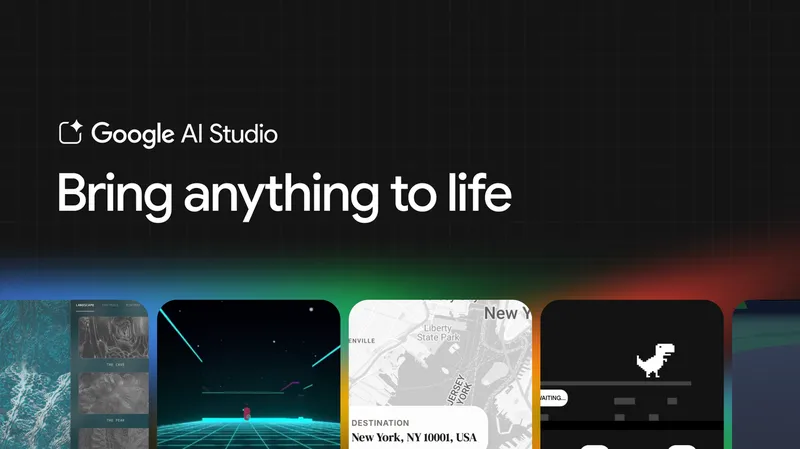
This transition suggests a future where the "full-stack" no longer refers only to a professional’s skill set, but to the capability of the tools themselves. If the tool can handle the hardware, the model, and the deployment, the human’s role shifts from "builder" to "architect" or "director."
Broader Impact and Future Outlook
The move toward full-stack AI is likely to accelerate the consolidation of the tech industry. Smaller startups may find it increasingly difficult to compete with the sheer scale and efficiency of vertically integrated giants. However, the open-sourcing of foundational technologies—a practice Google continues with its Open Source Programs Office—provides a counter-balance, allowing the broader developer community to benefit from high-level research.
As AI agents become more autonomous, the importance of a reliable, integrated stack will only grow. For businesses, the choice between "building your own stack" and "using a full stack" will become a defining strategic decision. Those who choose the latter gain speed and reliability but must navigate the nuances of a partner-dependent ecosystem.
In conclusion, the "full stack" is no longer just a way to describe an app; it is the essential framework for the next generation of human-computer interaction. By controlling every variable from the silicon to the search bar, technology providers are attempting to create a seamless, "always-on" AI experience that can scale to meet the needs of the global population. As Richard Seroter and other experts suggest, the goal is to make the technology so integrated and accessible that the complexity of the "stack" eventually becomes invisible to the user.
