

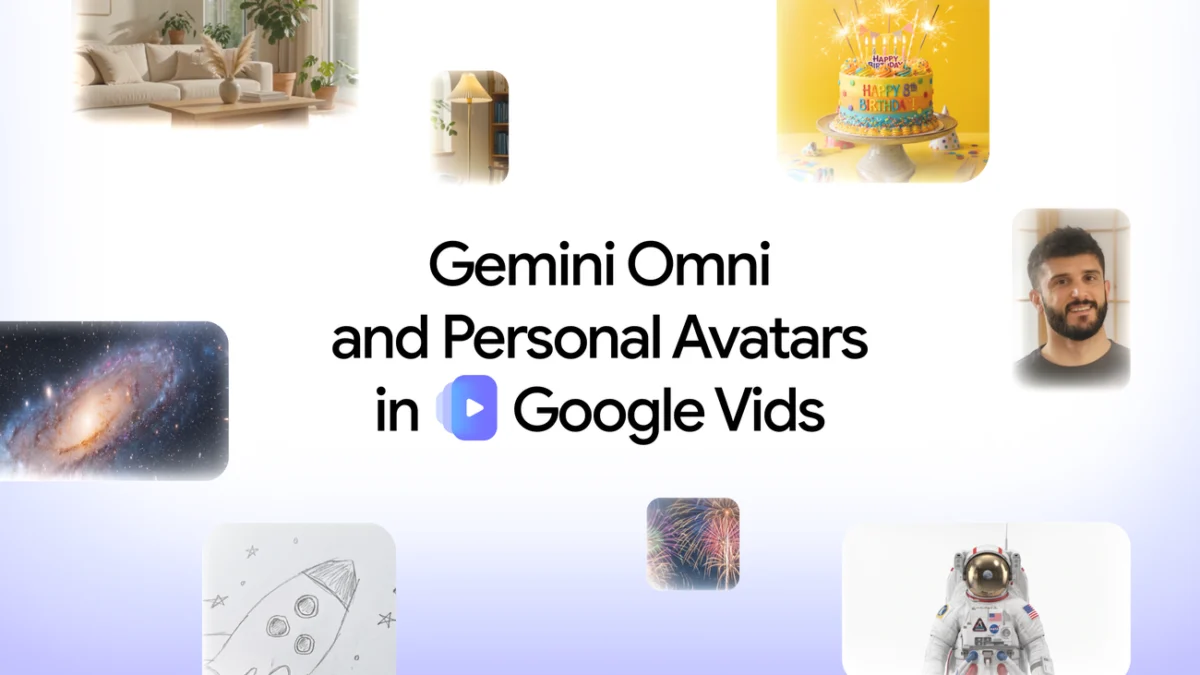
Google has officially announced the rollout of two significant updates to Google Vids, its AI-powered video creation app for work, aimed at streamlining the production of professional-grade content through the integration of Gemini Omni and personal digital avatars. These updates represent a pivot toward a more conversational and automated video editing experience, allowing users to generate, refine, and appear in high-quality video clips without the need for traditional recording equipment or complex editing software. By leveraging Google’s most advanced multimodal AI models, the platform now enables users to transform text prompts and static images into dynamic video sequences, while simultaneously offering a solution for professionals who need to deliver personalized messages but lack the time or resources for a live shoot.
The Integration of Gemini Omni and Multimodal Video Generation
The centerpiece of this update is the introduction of Gemini Omni to the Google Vids environment. Unlike previous iterations of video generation tools that relied on separate processes for text and visual synthesis, Gemini Omni operates as a multimodal engine. This allows users to start the creative process with a simple text prompt in natural language, which can then be augmented with specific image references, such as a photograph, a brand logo, or even a rough hand-drawn sketch. The AI interprets these diverse inputs to generate a cohesive video that aligns with the user’s specific aesthetic and narrative vision.
This functionality is built upon the foundation of Veo, Google’s most capable video generation model to date. By bringing Omni’s capabilities into Vids, Google is targeting the "blank page" problem often faced by corporate communicators. Instead of starting with a timeline and a library of stock footage, users can describe a scene—for example, "a cinematic drone shot of a modern office building during sunset with a translucent blue overlay"—and the system will render the clip. The ability to mix text and image inputs ensures that the output is not just a generic representation but a tailored asset that can include specific products or environments relevant to a business’s internal or external communications.
Conversational Editing: A New Paradigm for Post-Production
Perhaps the most disruptive element of the Gemini Omni update is the "Chat to Edit" feature. Traditional video editing is a linear and often tedious process involving trimming clips, adjusting color balances, and managing layers on a timeline. Google Vids is shifting this workflow toward a step-by-step conversational interface. Users can now use everyday language to request specific modifications to their footage.
Whether a clip was generated by the AI or uploaded from a mobile device, a user can prompt the system to "swap the background for a mountain landscape," "make the lighting warmer," or "add a professional cinematic blur to the background." Because Gemini Omni supports iterative, step-by-step edits, the software maintains the context of the previous version while applying the new changes. This eliminates the need to start from scratch when a single element of a video needs to be adjusted, a common pain point in early generative AI video tools. This granular control is expected to significantly reduce the time required for internal corporate reviews and revisions, where minor branding or aesthetic tweaks are frequently requested.
Personal Avatars: The Digital Double for Modern Professionals
The second major pillar of this update is the launch of personal avatars. This feature allows users to create a digital representation of themselves that can "star" in videos. The process is designed for speed and accessibility: a user uploads a high-quality selfie and a brief voice recording to train the system on their likeness and vocal cadence. Once the avatar is generated, the user can simply type a script, and the digital double will deliver the message with synchronized lip movements and natural-sounding speech.
This technology addresses a specific logistical challenge in the corporate world: the demand for personalized video updates in an environment where leaders and managers are often over-scheduled. Personal avatars allow for the rapid production of "talking head" videos for employee onboarding, executive announcements, or personalized client shout-outs without the need for a studio, lighting, or multiple takes. The avatars are strictly linked to the user’s Google Account, ensuring that the likeness cannot be easily misappropriated by others within the organization. Currently, this feature is restricted to users aged 18 and older in specific regions, reflecting Google’s cautious approach to synthetic media deployment.
Chronology of Google Vids and the Evolution of Workspace AI
The development of Google Vids has been a rapid progression within the broader Google Workspace roadmap. The platform was first unveiled in April 2024 at the Google Cloud Next conference in Las Vegas. Positioned as a "video-first" productivity app alongside Docs, Sheets, and Slides, it was designed to bridge the gap between static presentations and high-production marketing videos.

By June 2024, Google began rolling out Vids to Workspace Labs and Gemini for Google Workspace Alpha users. This initial phase focused on the "Help me create" feature, which used AI to generate storyboards and initial drafts based on files in Google Drive. In early autumn 2024, Google integrated Veo 3.1, providing a significant boost to the visual fidelity of generated clips. The current rollout of Gemini Omni and personal avatars marks the transition of Vids from a drafting tool to a comprehensive, end-to-end production suite capable of handling both the creation and the "performance" aspects of video.
Technical Security and Content Transparency via SynthID
As generative AI becomes more sophisticated, the risk of misinformation and the difficulty of distinguishing between real and synthetic media have become primary concerns for tech regulators and the public. To address this, Google has integrated SynthID into the Google Vids workflow. Developed by Google DeepMind, SynthID is a digital watermarking technology that embeds an invisible, permanent mark into the pixels of AI-generated video clips.
Unlike traditional watermarks that can be cropped or edited out, SynthID is designed to be robust against common image manipulations. This allows viewers or platforms to verify the origin of the content, ensuring transparency in corporate communication. Google’s commitment to "responsible AI" is a cornerstone of this rollout, as the company seeks to provide tools for creativity while maintaining a framework that prevents the deceptive use of synthetic likenesses.
Market Analysis and the Competitive Landscape
The updates to Google Vids arrive at a time of intense competition in the AI video space. Startups like Synthesia, HeyGen, and Runway have already established significant footprints in the corporate video market with similar avatar and generative technologies. However, Google’s advantage lies in its deep integration with the Workspace ecosystem.
For a business already utilizing Google Drive, Docs, and Gmail, the ability to pull data from a spreadsheet or a document directly into a video storyboard—and then edit that video using the same Gemini interface used for writing emails—creates a frictionless workflow that standalone apps struggle to match. Data suggests that video is becoming the preferred medium for internal corporate knowledge sharing; industry reports indicate that nearly 75% of employees are more likely to watch a video than read a long-form email or document. By lowering the barrier to entry for video production, Google is positioning Vids not as a tool for professional videographers, but as a standard communication tool for every office worker.
Broad Implications for Corporate Communication and Training
The implications of these updates extend beyond simple convenience. In the realm of Human Resources and corporate training, the ability to update training videos via a text prompt rather than a re-shoot could save companies thousands of dollars in production costs. When a company policy changes, an HR manager can simply update the script for their personal avatar and regenerate the video in minutes.
Furthermore, the "Chat to Edit" feature democratizes creative direction. Employees who lack formal training in video editing can now produce content that adheres to professional standards of lighting and composition simply by describing their needs to the AI. This shift is expected to lead to a surge in internal video content, ranging from "daily stand-up" updates to complex project post-mortems, further moving the corporate world away from text-heavy communication.
Subscription Tiers and Global Availability
The new features are not available to all users immediately. Google has targeted its high-value segments for the initial rollout, making Gemini Omni and personal avatars available to Google AI Pro and Ultra subscribers, as well as Google Workspace business customers. This tiered approach allows Google to manage the significant computational resources required for real-time video generation and avatar synthesis while providing a premium value proposition for its enterprise clients.
As the rollout continues, Google is expected to monitor user feedback and the performance of the SynthID watermarking system before expanding the personal avatar feature to a broader global audience. For now, the updates represent a significant milestone in Google’s mission to integrate generative AI into every facet of the modern workplace, transforming video from a specialized skill into a fundamental component of digital literacy.
