

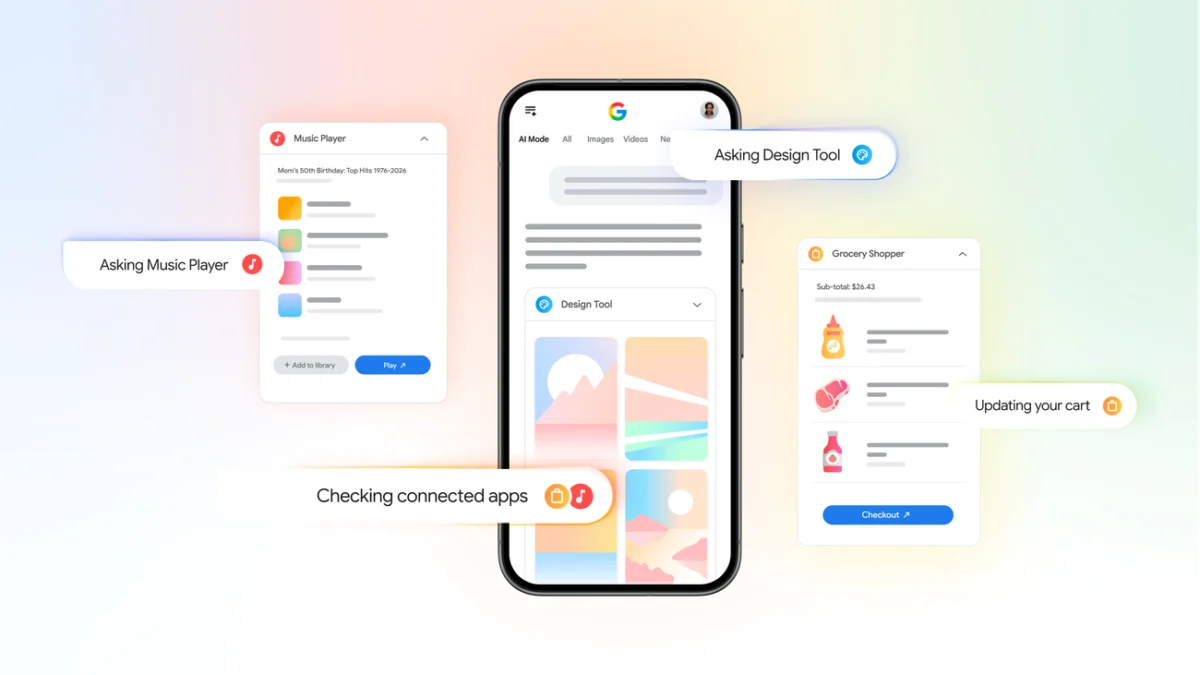
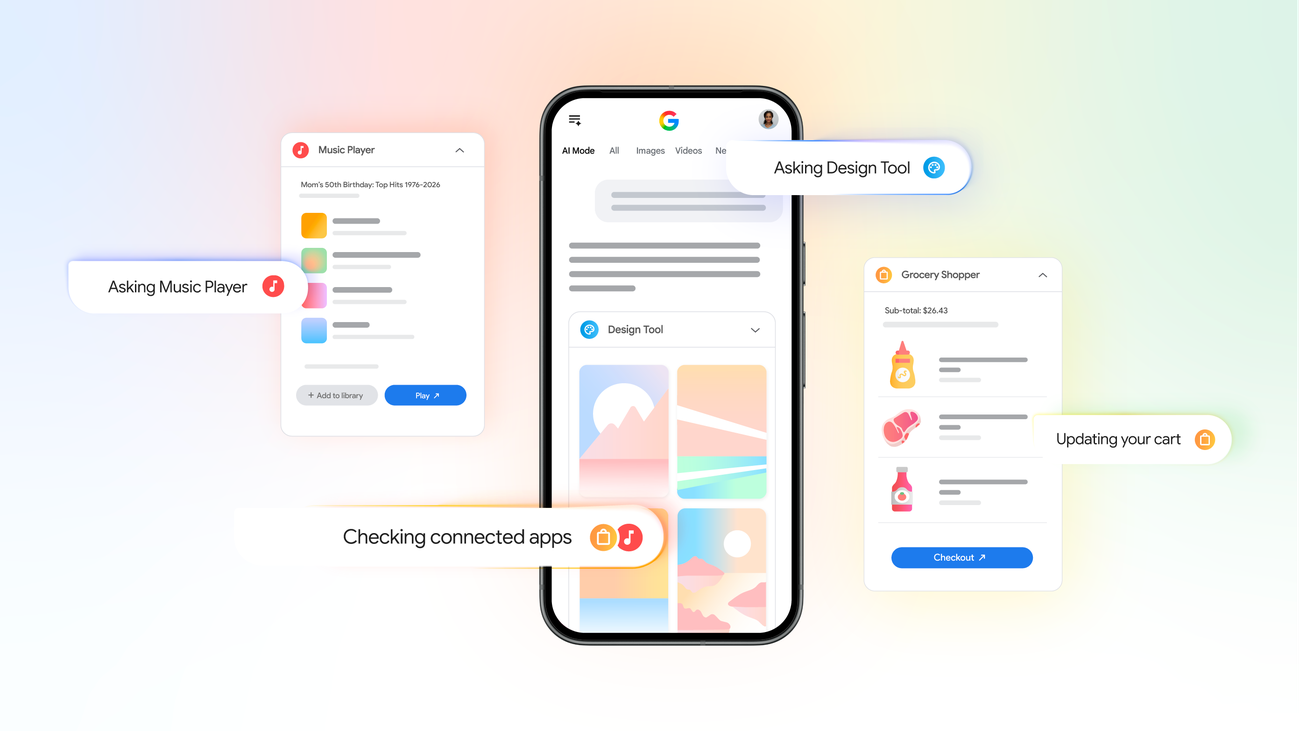
Google has announced a significant update to its Search ecosystem, enabling users to securely link and interact with third-party services directly within the platform’s AI Mode. This development, spearheaded by Senior Product Manager Chips Mistry and Engineering Lead Biharck Araújo, represents a pivotal shift in how the world’s most popular search engine functions—moving away from a directory of links and toward an "action-oriented" personal assistant. Starting this week, users in the United States will begin seeing the rollout of these integrations, which initially include partnerships with Instacart, Canva, and YouTube Music.
The move is part of a broader strategy to weave generative artificial intelligence into the fabric of daily digital tasks. While Google’s standalone Gemini app has previously offered similar integrations, the inclusion of these features directly within Search’s AI Mode signals a commitment to making the search experience more transactional. By allowing users to perform complex tasks—such as populating a grocery cart or designing a flyer—without leaving the Google interface, the company aims to reduce the "friction" inherent in navigating between multiple websites and applications.
A Chronology of Search Evolution
The integration of third-party apps into Search is the latest milestone in a timeline that began decades ago but accelerated rapidly with the advent of large language models (LLMs). For over twenty years, Google Search operated primarily on a "ten blue links" model, where the engine’s primary job was to index the web and point users toward relevant external content.
The timeline shifted in May 2023, when Google introduced the Search Generative Experience (SGE) at its annual I/O developer conference. SGE utilized AI to provide summarized answers to queries, reducing the need for users to click through to multiple sources. By early 2024, Google rebranded its AI efforts under the Gemini umbrella and began experimenting with "Extensions," which allowed the Gemini chatbot to pull data from Google Workspace, Maps, and Flights.
The current rollout of "Connected Apps" in Search AI Mode marks the first time Google has extended this level of interactivity to major third-party platforms within the primary Search interface. This transition reflects a shift toward "Agentic AI," where the software does not just provide information but executes tasks on behalf of the user.
Deep Integration: Instacart, Canva, and YouTube Music
The initial phase of the rollout focuses on three distinct use cases: e-commerce, creative design, and entertainment. Each integration is designed to demonstrate the efficiency gains of an AI-augmented search experience.
In the realm of grocery shopping and logistics, Google has partnered with Instacart. When a user utilizes AI Mode to plan an event—such as a summer barbecue or a weekly meal plan—the AI can generate a comprehensive grocery list. With the new integration, the user can then instruct the AI to transfer those items directly into an Instacart shopping cart. This eliminates the manual process of copying ingredients and searching for them individually on a retail site. The final checkout still occurs on Instacart’s platform, maintaining the partner’s role in the transaction while streamlining the "top-of-funnel" discovery process.
For creative workflows, the integration with Canva allows users to request design concepts directly through a search query. A user seeking to create a promotional flyer or a social media post can ask AI Mode for templates. The AI then surfaces specific Canva options that match the user’s intent. Clicking these options opens the Canva editor, pre-loaded with the selected template, bridging the gap between the initial spark of an idea and the execution of a design.
Finally, the YouTube Music integration addresses the entertainment sector. Users can ask AI Mode to curate specific soundtracks—such as "a 90-minute playlist for a high-intensity workout" or "calming music for a dinner party." The AI builds the playlist and allows the user to save it instantly to their YouTube Music library. This level of cross-service functionality suggests a future where Google Search acts as a universal remote for a user’s digital life.
Technical Framework and Data Security
A critical component of this rollout is the security architecture underlying the "Connected Apps" feature. According to Mistry and Araújo, the linking process is designed to be secure and user-controlled. Users must explicitly grant permission for Google Search to interact with their third-party accounts. This "handshake" ensures that data is only shared when necessary to complete a specific task.
The technical implementation relies on sophisticated API (Application Programming Interface) calls. When a user makes a request in AI Mode, the LLM parses the intent and determines if a connected app can fulfill the need. If so, it sends a structured request to the partner’s API. Google has emphasized that these integrations are built with privacy in mind, utilizing encrypted tokens to manage authentication without exposing sensitive user credentials to the AI model itself.
Supporting Data and Market Context
The expansion into actionable search comes at a time of intense competition in the AI sector. According to data from Statista, Google’s global search market share has remained dominant at over 90%, but the rise of "answer engines" like Perplexity AI and the integration of GPT-4 into Microsoft’s Bing have pressured Google to innovate.
Industry analysts suggest that the "actionable search" market is poised for significant growth. A report from Gartner predicts that by 2026, the use of traditional search engines will drop by 25% as users migrate toward AI conversational agents. By integrating apps like Instacart and Canva, Google is attempting to capture this shifting user behavior. Furthermore, the e-commerce implications are vast; data from Adobe Analytics indicates that "frictionless" shopping experiences can increase conversion rates by up to 30%. By moving the "add to cart" action closer to the initial search query, Google and its partners are likely to see higher engagement and revenue.
Official Responses and Strategic Vision
While Google has not released specific financial terms of these partnerships, the company’s leadership has been vocal about the strategic importance of the update. "We’re working with a range of partners and look forward to launching with more apps soon," the company stated in its official release.
Internal sources suggest that the "Personal Intelligence" aspect of this update is the ultimate goal. By understanding a user’s preferences across different apps, Google can provide increasingly tailored responses. For example, if the AI knows a user’s dietary restrictions through their Instacart history or their aesthetic preferences through Canva, it can filter search results to be more relevant, creating a feedback loop that increases user loyalty to the Google ecosystem.
Broader Impact and Industry Implications
The move toward integrated apps in Search has profound implications for the broader internet economy. For years, the "open web" has relied on search traffic to drive visitors to independent websites. As Google transforms into a destination that fulfills tasks internally, there are growing concerns among publishers and small-scale developers about "zero-click" searches—queries that are answered or acted upon without the user ever visiting a third-party site.
However, for major platforms like Instacart and Canva, the integration represents a powerful new acquisition channel. It places their services at the very moment of consumer intent. For the average user, the benefit is primarily one of convenience. In an era of "app fatigue," the ability to manage multiple services through a single, intelligent interface is a compelling value proposition.
There are also regulatory considerations to monitor. Antitrust regulators in both the U.S. and the E.U. have previously scrutinized Google for "self-preferencing" its own services. By opening AI Mode to third-party partners like Instacart (rather than just Google’s own shopping tools), the company may be attempting to demonstrate an open ecosystem, though critics will likely watch closely to see how Google chooses which "preferred partners" get integrated into the AI interface.
The Path Forward
The rollout in the U.S. is just the beginning of what Google describes as a multi-phase expansion. As AI Mode becomes more sophisticated, the range of "Connected Apps" is expected to grow to include travel booking, financial management, and professional productivity tools.
The success of this initiative will ultimately depend on user trust and the seamlessness of the experience. If the AI can reliably and safely manage tasks across different platforms, Google will have successfully redefined "search" for the generative AI era. No longer just a way to find information, Google Search is positioning itself to be the operating system for the web—a centralized hub where information discovery and task execution become one and the same.
