

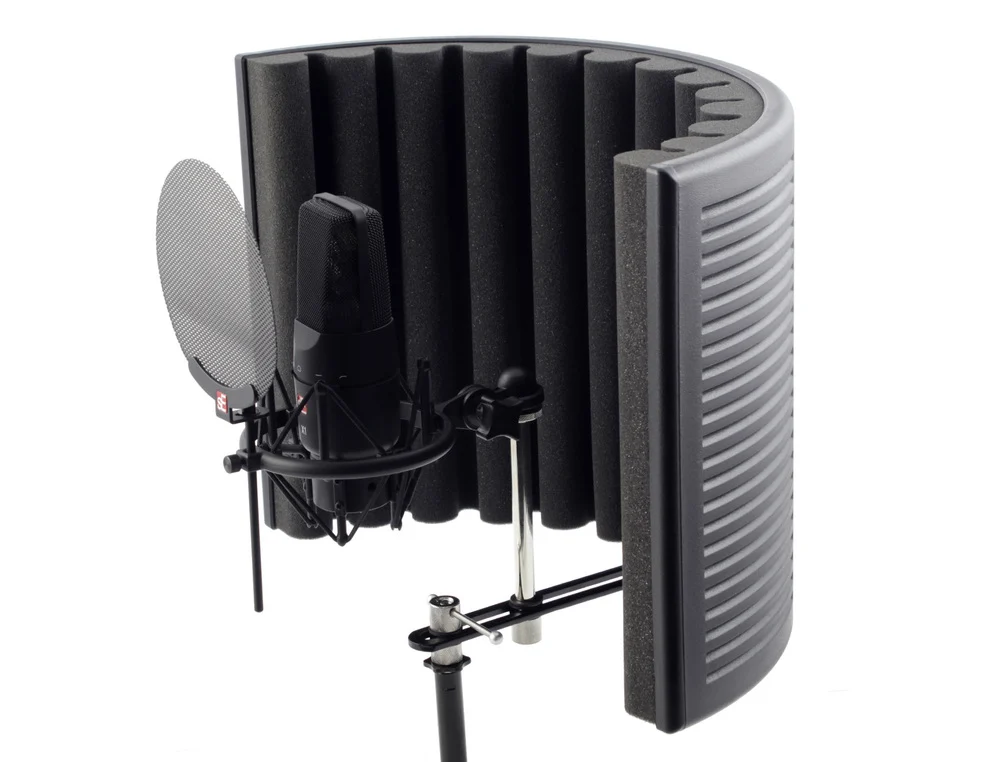
The question of whether a sound reflection filter is a necessary component for a home recording studio is a frequent point of inquiry within the professional audio community, particularly among aspiring voice-over artists and home-based musicians. This comprehensive analysis aims to provide a definitive answer by dissecting the fundamental principles of studio acoustics, microphone technology, and the actual function of these devices.
Understanding the Home Recording Studio’s Purpose
At its core, a home recording studio is designed to create a controlled and consistent acoustic environment. This environment serves several critical functions: to prevent external sounds from intruding into the recording (sound ingress), to stop recorded sounds from escaping the recording space (sound egress), and, crucially, to minimize the capture of unwanted sound reflections within the microphone’s pickup pattern.

The ideal scenario for any recording aims to capture a "pure" sound source. For vocalists, this means isolating the voice from its surroundings as much as possible. The aspiration is to capture a direct, uncolored signal, free from the reverberations and echoes that can emanate from hard surfaces within a room. Achieving this ideal necessitates either building a dedicated recording booth or ingeniously adapting existing spaces, such as home offices, garages, or even carefully considered nooks, to become acoustically suitable recording environments.
The Mechanics of Sound Reflection and Absorption
To understand the efficacy of any acoustic treatment, it’s essential to grasp how sound behaves. Sound waves, when encountering surfaces, can be absorbed, reflected, or transmitted. Hard, flat surfaces like glass or untreated drywall are highly reflective, bouncing sound waves back into the room. Conversely, soft, porous materials like thick curtains, duvets, or acoustic foam tiles are designed to absorb sound energy, reducing reflections.
Consider common household items: a television screen or a computer monitor will reflect sound. In contrast, a furry pet, while not a conventional acoustic treatment, demonstrates the principle of absorption due to its textured, soft surface. This concept of absorption is paramount in acoustic treatment, aiming to dissipate sound energy rather than redirect it.

Examining the Role of Reflection Filters
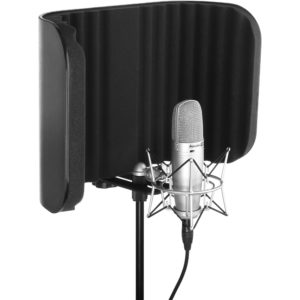
Reflection filters, often seen in marketing materials and utilized by some professionals, are typically semi-circular devices lined with absorbent material. They are designed to be placed around a microphone, ostensibly to block out ambient room reflections and create a more controlled recording environment. The marketing premise suggests that by surrounding the microphone, these filters create a localized "sweet spot," enhancing the clarity and isolation of the recorded sound.
Popular models, such as those manufactured by Auray and sE Electronics, feature robust construction and absorbent inner linings. The typical setup involves positioning the microphone at the center of the filter’s arc. The theoretical benefit is that the absorbent material intercepts sound waves that would otherwise bounce off the surrounding environment and re-enter the microphone from the sides or rear, thus purifying the direct sound from the performer.
The Critical Factor: Microphone Pickup Patterns
The true impact of a reflection filter can only be understood when examined in conjunction with how microphones capture sound. Microphones are not omniscient sound recorders; they possess directional characteristics known as polar pickup patterns. These patterns define the areas or angles from which a microphone is most sensitive to sound.
The common polar pickup patterns include:
- Omnidirectional: Picks up sound equally from all directions (360 degrees). This pattern captures the most room sound.
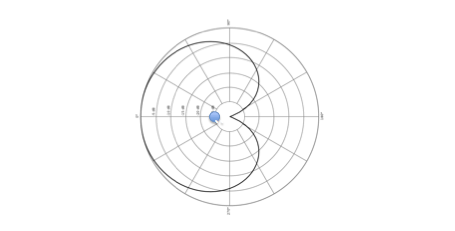
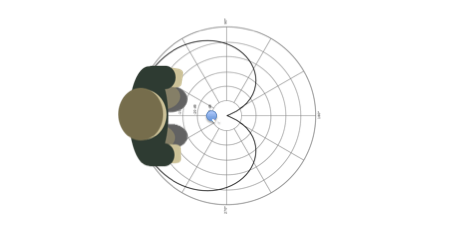
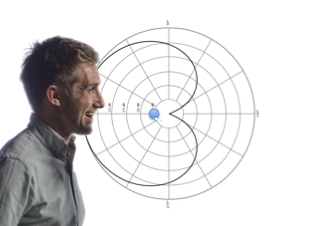
- Cardioid: Picks up sound primarily from the front, with significant rejection from the rear and sides. This is the most common pattern for vocal recording as it minimizes room reflections.
- Figure-of-8 (Bidirectional): Picks up sound equally from the front and the rear, with maximum rejection from the sides.
- Supercardioid and Hypercardioid: Variations of cardioid with narrower front pickup and slightly increased sensitivity from the rear.
Many professional microphones, such as the Neumann U87, offer switchable polar patterns, allowing users to adapt the microphone’s sensitivity to different recording situations. However, the default and most frequently used pattern for voice-over work is cardioid. The choice of cardioid is deliberate: by focusing the pickup towards the sound source (the performer’s voice) and rejecting sound from other directions, it inherently minimizes the capture of ambient room noise and reflections.
Visualizing the Cardioid Pattern
To illustrate the cardioid pattern, imagine a top-down view of a microphone. The pickup area resembles a heart shape, hence the name (from the Greek word "kardia" meaning heart). This "heart" represents the primary zone of sensitivity. When a voice artist speaks into the microphone, their voice originates from within this cardioid "bubble." The pattern is not strictly 2D; it extends into a 3D shape, essentially a heart-shaped beanbag in front of the microphone. This allows for some flexibility in performer positioning – slightly left, right, high, or low – while still maintaining a strong signal.
Now, consider how sound reflections behave. Reflections emanate from all surfaces in a room and travel in various directions, bouncing off walls, ceilings, and floors before reaching the microphone. A crucial observation is that while these reflections arrive from all angles, a microphone set to a cardioid pattern will only capture a fraction of them. The majority of the reflections are naturally rejected by the microphone’s directional characteristics, particularly those coming from the sides and rear.
The Reflection Filter’s Limited Impact
When a reflection filter is introduced, it is positioned around the microphone. While the absorbent material on the filter can absorb some sound waves that reach it, the critical question is: what sound waves is it actually intercepting that the cardioid pickup pattern isn’t already rejecting?
Analysis of diagrams and practical testing reveals a stark reality: the reflection filter’s absorbent material primarily faces the sides and rear of the microphone. However, the cardioid pattern already significantly attenuates sound from these directions. Therefore, the filter is essentially attempting to block reflections that the microphone is already largely ignoring. The direct sound from the performer, originating from the front, is largely unimpeded by the filter, as it’s meant to pass through to the microphone.
Numerous audio engineers and experienced voice artists have conducted side-by-side comparisons, recording the same performance with and without a reflection filter, using the same cardioid microphone in the same untreated room. The findings consistently indicate a negligible, if any, difference in the recorded audio quality. This suggests that the perceived benefits of reflection filters are often outweighed by their actual acoustic performance.
So, Do You Need a Reflection Filter? The Verdict
Based on an objective analysis of acoustic principles and microphone technology, the definitive answer is: No, you generally do not need a sound reflection filter for your home studio. For most home studio applications, particularly voice-over recording, a reflection filter is an unnecessary expenditure and offers minimal to no practical acoustic improvement.
Why the Persistent Popularity?
If reflection filters are largely ineffective, why are they so widely purchased and used? The reasons often stem from a lack of technical understanding, particularly among individuals new to audio production.
- Perceived Effectiveness: They look like they should work. The absorbent material and the physical barrier they create give a visual impression of acoustic control.
- Marketing Influence: Manufacturers and retailers often promote them as essential studio gear, leveraging visual marketing and testimonials from less technically informed users.
- Peer Influence: Seeing other artists, especially those perceived as successful, using these devices can create a sense of necessity, even without understanding the underlying principles.
- Misinformation: Advice from well-meaning but perhaps less knowledgeable individuals can perpetuate the myth of their effectiveness.
While a reflection filter will not actively harm your recordings, its contribution to sound quality is, at best, marginal. The money and effort invested in such a device could be far better allocated towards more impactful acoustic treatments.
Achieving Professional Sound: The Real Solution
The key to achieving high-quality recordings in a home studio lies not in supplementary devices like reflection filters, but in fundamentally addressing the acoustic environment itself. This requires creating a space that is acoustically treated to absorb and diffuse sound reflections.
This involves:
- Dedicated Booths: The most effective solution is often a purpose-built vocal booth, designed with specific acoustic materials to control sound.
- DIY Solutions: More accessible options include creating homemade vocal booths or modifying existing spaces. This might involve using thick blankets, acoustic panels, bass traps, and strategically placed absorbent materials to dampen reflections.
- Room Treatment: Even without a dedicated booth, treating the room itself with acoustic panels on walls and ceilings, and utilizing bass traps in corners, can significantly improve the recording environment.
The core principle remains: an untreated room, whether it’s a kitchen, an office, or any other standard living space, will inherently produce problematic sound reflections that will be picked up by the microphone. The solution is to make the recording space acoustically "dead" or at least significantly controlled.
For those serious about establishing a professional home studio, resources such as comprehensive webinars on home studio construction and acoustic treatment are invaluable. These resources delve into the practicalities of soundproofing, absorption, diffusion, and the selection of appropriate materials to create an optimal recording environment.
In conclusion, while the allure of a quick fix like a reflection filter might be tempting, aspiring audio professionals should focus their efforts and resources on creating a truly acoustically sound recording space. This foundational approach, rather than relying on devices with limited efficacy, is the proven path to achieving clean, professional-sounding recordings.
