

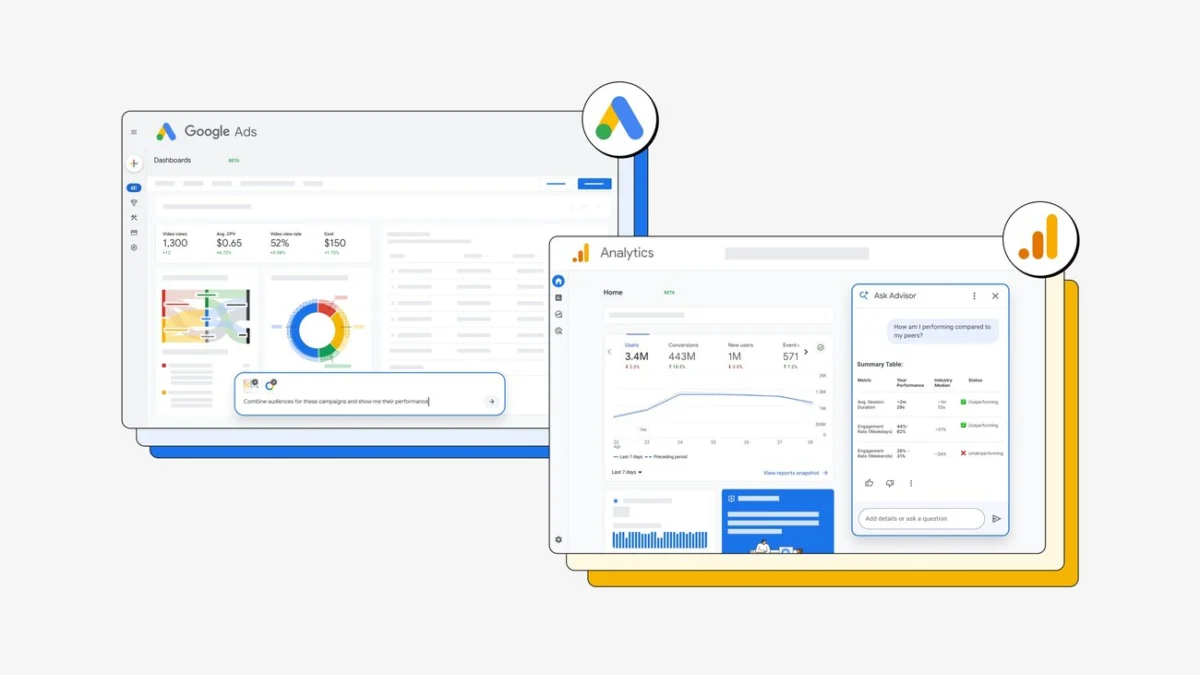
Google has announced a significant expansion of its artificial intelligence capabilities within its primary marketing platforms, introducing a suite of "agentic" experiences designed to streamline workflows for advertisers and data analysts. These updates, integrated into Google Ads and Google Analytics, center on a new AI-powered assistant known as Ask Advisor. By leveraging the Gemini large language model, Google aims to transform how businesses interact with complex datasets, moving from manual data extraction to a conversational, insight-driven model. The initiative reflects a broader industry shift toward generative AI tools that do not merely present data but interpret it and suggest actionable strategies for growth.
The primary objective of these enhancements is to reduce the "measurement gap" that often exists between gathering raw data and executing strategic decisions. According to Josh Moser, Senior Director of Product Management at Google, the new tools are intended to amplify the expertise of marketing teams by uncovering insights faster and ensuring that human operators remain in control of the decision-making process. The updates include revamped homepages for both Google Ads and Google Analytics, new visual reporting features, and advanced benchmarking tools that allow businesses to compare their performance against industry averages.
The Evolution of Agentic AI in Marketing Technology
The introduction of agentic AI marks a pivotal moment in the chronology of Google’s advertising technology. Over the past decade, Google has steadily moved from manual keyword bidding to automated systems like Smart Bidding and Performance Max. However, these previous iterations focused largely on backend optimization. The current update represents a shift toward front-end assistance, where the AI acts as an "agent" capable of understanding intent and performing multi-step tasks on behalf of the user.
This transition follows a series of incremental AI rollouts. In late 2023 and early 2024, Google began integrating Gemini into its search and advertising products to help generate creative assets and headlines. The latest announcement regarding Ask Advisor takes this a step further by positioning the AI as a strategic consultant. This timeline suggests a strategic roadmap where Google intends to make its platforms more accessible to small and medium-sized businesses that may lack dedicated data science teams, while simultaneously increasing the productivity of large-scale agencies.
Enhanced Homepage Insights and Real-Time Monitoring
One of the most immediate changes users will encounter is the implementation of AI Overviews at the top of the Google Analytics homepage. These summaries provide a snapshot of significant performance shifts, such as sudden spikes in traffic or seasonal sales peaks, since the user’s last login. This feature addresses a common pain point for analysts: the time-consuming process of digging through multiple reports to identify why a specific metric has changed.
The system is designed to be proactive rather than reactive. Users can now opt into automated notifications via email or mobile devices, receiving smart summaries at a frequency of their choosing. This ensures that stakeholders are alerted to market volatility or campaign anomalies without needing to be constantly logged into the platform. When a specific data point requires further investigation, a single click transfers the context of that data into the Ask Advisor interface, where the AI can perform a deeper root-cause analysis.
Similarly, the Google Ads homepage has been redesigned to feature personalized AI-powered insight cards. These cards are tailored to the specific business goals of the advertiser, highlighting competitive threats—such as changes in impression share—and identifying emerging trends that could be leveraged to improve campaign ROI. A new prompt box allows users to generate custom insights on demand, effectively allowing them to "interview" their account data.
Visual Reporting and the Democratization of Data Science
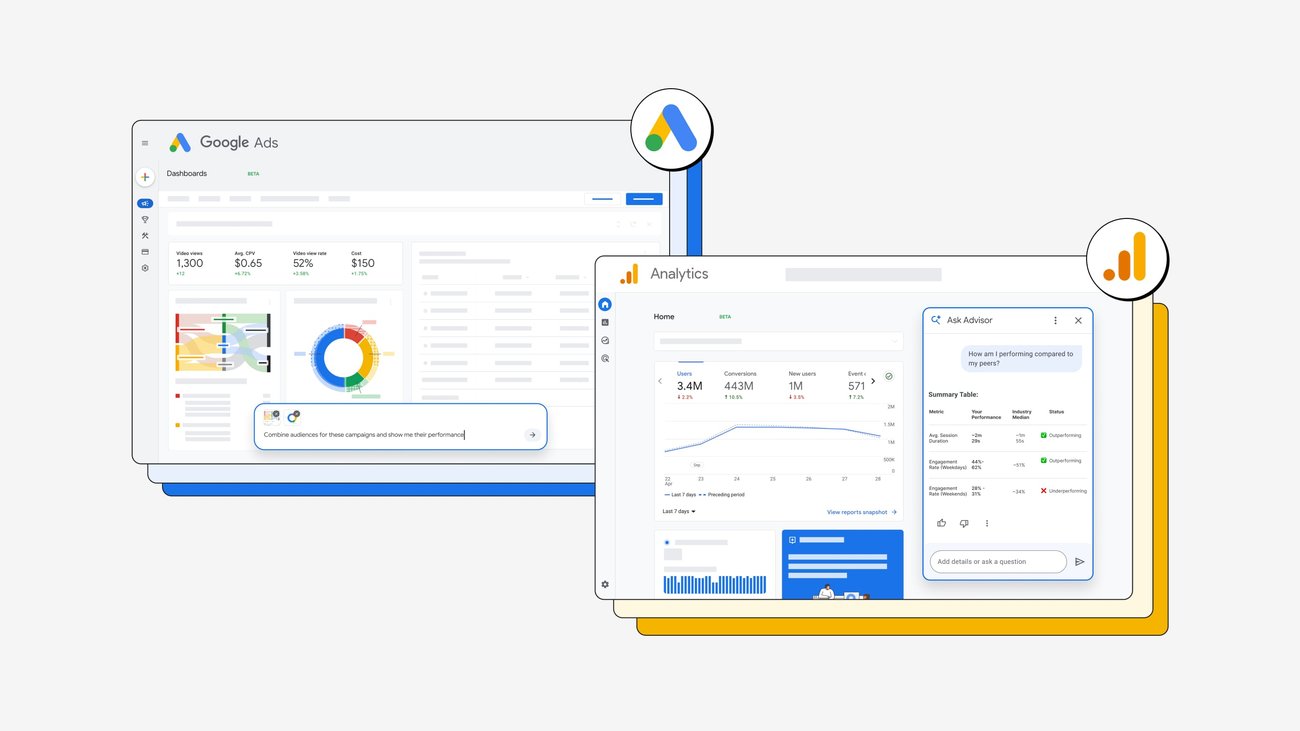
A major barrier to effective marketing is the technical difficulty of creating compelling visual reports for stakeholders. Google is addressing this by introducing a new "Dashboards" feature in Google Ads, with a rollout for Google Analytics expected to follow. This tool allows marketers to transform raw datasets into visual charts and graphs using simple natural language prompts.
For example, a user could type, "Show me a comparison of mobile versus desktop conversion rates over the last six months," and the system would automatically generate the appropriate visualization. Furthermore, each report includes an AI-generated summary that explains the "why" behind the trends shown in the data. This capability is expected to significantly reduce the time spent on administrative reporting, allowing marketing directors to focus on high-level strategy. By automating the visualization process, Google is effectively lowering the technical barrier to entry for sophisticated data analysis.
Benchmarking and Competitive Analysis
A critical component of the new update is the benchmarking feature integrated into Ask Advisor within Google Analytics. For the first time, advertisers can directly ask the AI how their campaign performance compares to anonymized averages from similar businesses within their industry. This feature provides a much-needed baseline for success, helping marketers determine if their performance is a result of their own strategy or broader market trends.
The benchmarking data is derived from aggregated, anonymized datasets, ensuring privacy while providing actionable intelligence. This allows businesses to identify areas where they are underperforming relative to their peers, such as high cost-per-click (CPC) rates or lower-than-average engagement, and adjust their tactics accordingly. This level of transparency was previously only available through expensive third-party market research or manual industry audits.
Industry Reaction and Real-World Application
Early adopters of the agentic tools have reported significant improvements in operational efficiency. Kevin Marshall, Paid Media Director at Gardyn, noted that Ask Advisor has become a primary tool for "directional checks" on paid media performance. Marshall emphasized that the speed at which the AI provides answers allows his team to make shifts that improve performance sooner, rather than waiting for weekly or monthly manual reviews.
Market analysts suggest that these tools are a response to the increasing complexity of the digital advertising landscape. With the phasing out of third-party cookies and the rise of privacy-centric measurement, marketers are relying more heavily on first-party data and AI modeling. By embedding Gemini directly into the workflow, Google is attempting to make its ecosystem the "single source of truth" for digital marketers.
Broader Implications and Technical Analysis
The move toward agentic AI in Google Ads and Analytics has several long-term implications for the marketing industry. First, it changes the required skill set for digital marketers. The focus is shifting from "platform operation"—knowing which buttons to click—to "prompt engineering" and strategic interpretation. As the AI handles the tactical execution of data retrieval and visualization, the value of a human marketer will increasingly lie in their ability to ask the right questions and apply the AI’s findings to creative brand building.
Second, there is a technical implication regarding data processing. By using Gemini to summarize and analyze data in real-time, Google is demonstrating the power of large language models (LLMs) to handle structured data. While LLMs are traditionally associated with text generation, Google’s integration shows their utility in mathematical and statistical contexts. This could lead to a future where the entire interface of marketing platforms is conversational, replacing traditional menus and sidebars with a single, intelligent dialogue box.
Finally, the competitive landscape of the "MarTech" (Marketing Technology) industry is likely to react. Competitors such as Meta, Amazon, and Adobe are also investing heavily in generative AI. Google’s advantage lies in its vast repository of search intent data and its dominance in the analytics space. By tightly integrating Ads and Analytics through a shared AI agent, Google creates a "closed-loop" system where insights from one platform immediately inform actions in the other.
Conclusion and Future Outlook
The launch of these new AI tools represents a fundamental redesign of Google’s marketing suite. By prioritizing "agentic" experiences, Google is betting that the future of marketing lies in a partnership between human creativity and machine intelligence. The ability to move from raw data to a strategic visualization in seconds, coupled with the power of industry benchmarking, provides a significant competitive advantage to those who adopt these tools early.
As Google continues to roll out these features globally, the focus will likely turn to how these agents can further automate the creative process, perhaps even suggesting specific ad copy or image adjustments based on the performance trends they identify. For now, the introduction of Ask Advisor and AI-powered homepages serves as a powerful reminder that the era of manual data analysis is rapidly giving way to a more automated, insightful, and agile marketing environment. Advertisers can begin utilizing these features today within the existing Google Ads and Google Analytics interfaces, marking the start of a new chapter in digital business growth.
