

Google’s July 2026 AI updates represent a pivotal shift in the company’s long-term strategy, moving beyond experimental generative models toward a highly integrated ecosystem of agentic workflows, embodied reasoning, and global crisis resilience. Building on more than two decades of investment in machine learning and infrastructure, the latest announcements span a diverse array of sectors, including enterprise software development, consumer electronics, economic research, and environmental protection. This comprehensive rollout underscores a broader industry trend where artificial intelligence is no longer a standalone feature but a foundational layer for physical robotics, economic modeling, and real-time public safety systems.
The Evolution of Agentic AI: Gemini 3.6 and Specialized Models
At the center of July’s technical announcements is the introduction of three new iterations of the Gemini model family: Gemini 3.6 Flash, 3.5 Flash-Lite, and 3.5 Flash Cyber. These models are specifically engineered to address the growing demand for "agentic" workflows—systems capable of performing multi-step tasks autonomously with minimal human intervention. As developers move from simple chatbots to complex production agents, the industry has faced a bottleneck regarding token efficiency and latency.
Gemini 3.6 Flash is designed to optimize this "sweet spot," providing the high-speed processing necessary for real-time applications while maintaining the reasoning quality required for complex logic. The Flash-Lite version targets mobile and edge computing environments, where power consumption and memory are limited, while the Flash Cyber model is fine-tuned for cybersecurity applications, such as automated threat detection and code vulnerability analysis. By diversifying the Gemini lineup, Google is positioning its infrastructure to support the next generation of AI agents that can scale across global enterprises without the prohibitive costs associated with larger, more generalized models.

Bridging Digital and Physical Realms: Gemini Robotics ER 2
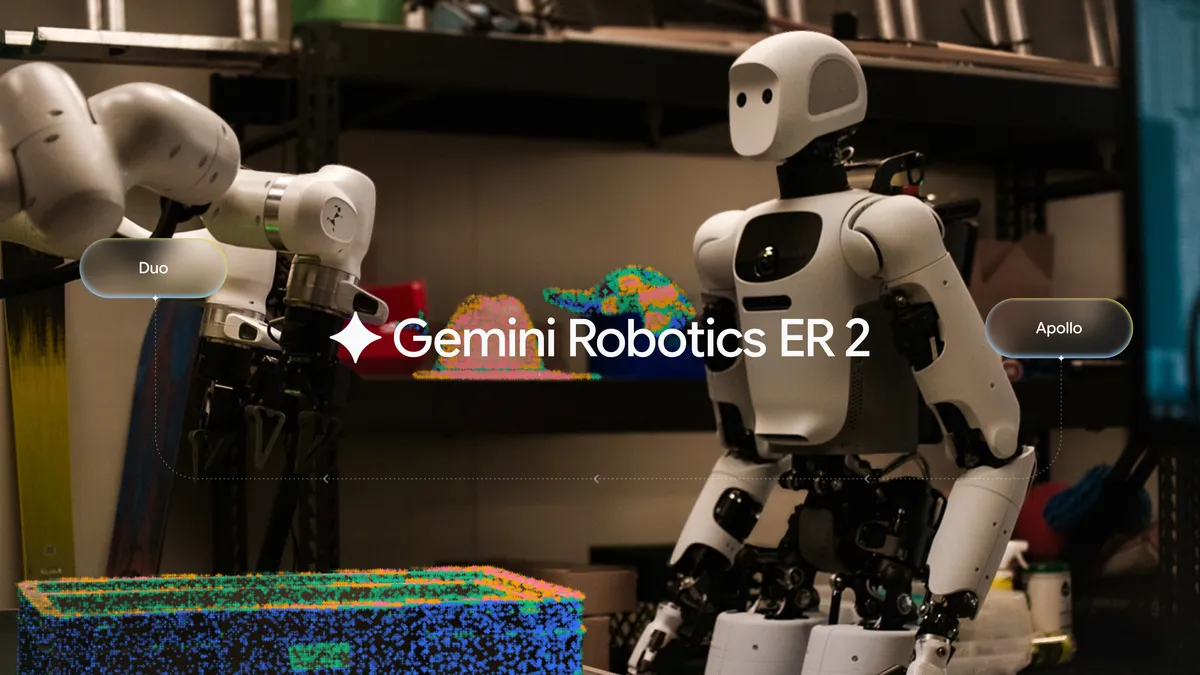
Perhaps the most significant leap in "embodied AI" came with the launch of Gemini Robotics ER 2. This model serves as a bridge between high-level reasoning and physical execution, a field often referred to as embodied reasoning. Unlike previous iterations that functioned primarily as digital assistants, ER 2 allows robotic systems to interpret complex, natural language instructions and translate them into multi-step physical actions in dynamic environments.
According to technical specifications, ER 2 enables robots to collaborate more effectively with humans by understanding context and spatial relationships. For instance, a robot equipped with ER 2 can navigate a warehouse or a domestic setting, identifying objects and solving problems—such as clearing an obstructed path—without needing a pre-programmed script for every possible scenario. This development is expected to accelerate the deployment of autonomous systems in logistics, manufacturing, and eventually, elder care and domestic assistance.

Consumer Hardware and the Launch of Android 17
July also marked a major milestone for Google’s mobile ecosystem through its partnership with Samsung. During the Galaxy Unpacked 2026 event, the companies unveiled the Samsung Galaxy Z Fold8 Ultra, Fold8, and Flip8. These devices are the first to ship with "Gemini Intelligence," a deeply integrated version of Google’s AI that operates at the system level rather than as a secondary application.
This integration coincides with the rollout of Android 17, which introduces a native migration experience designed to eliminate the friction of switching between mobile platforms. The new migration tool allows users to transfer a wider array of data types from iOS to Android wirelessly and securely, without the need for third-party applications. This move is seen by industry analysts as a strategic effort to lower the barrier to entry for the Android ecosystem, leveraging AI-driven data mapping to ensure that settings, messages, and media are seamlessly transitioned.
Economic Analysis and Workforce Development: The ATLAS Study and Skilled Trades Alliance
Recognizing that the rapid advancement of AI creates both opportunities and anxieties in the global labor market, Google released the first iteration of the AI & Economy ATLAS. This expansive, large-scale study uses de-identified data to track how AI tools are being adopted across different industries and the subsequent impact on productivity and job roles. The ATLAS project aims to provide policymakers and business leaders with a data-driven view of a fast-moving landscape, moving beyond anecdotal evidence to quantify the actual economic shifts caused by automation and augmentation.
In tandem with this research, Google announced the formation of the Alliance for America’s Skilled Trades. This cross-industry partnership includes major players such as BlackRock, Carhartt, and Ford. The alliance is designed to address the growing shortage of skilled labor in the United States by scaling evidence-based training programs. By integrating AI-assisted learning tools into vocational training, the alliance seeks to create a robust pipeline for electricians, mechanics, and other essential trades, ensuring that the workforce remains resilient in an increasingly automated economy.

Enterprise Optimization: AlphaEvolve and Google Cloud
For enterprise customers, the general availability of AlphaEvolve on the Gemini Enterprise Agent Platform represents a significant advancement in automated software engineering. AlphaEvolve is a Gemini-powered AI code-optimization agent that functions as an "evolutionary collaborator."
In practice, developers provide the agent with a baseline algorithm and a set of performance goals. AlphaEvolve then autonomously searches for more efficient iterations of that code, eventually returning human-readable, optimized solutions. This tool is particularly valuable for organizations dealing with massive data sets or complex computational requirements, as it can identify efficiencies that might be overlooked by human engineers. By automating the "brute force" aspect of algorithm optimization, AlphaEvolve allows developers to focus on higher-level architectural decisions.

Creative Innovation and the Preservation of Cultural History
Google’s July updates also extended into the creative arts and historical preservation. One of the more poignant applications of DeepMind technology was the reconstruction of Pelé’s "lost" goal. On August 2, 1959, the Brazilian football legend scored what many consider his greatest goal—flicking the ball over three defenders and the goalkeeper without it touching the ground—but no film footage of the event existed. Using historical accounts and motion-capture AI, Google DeepMind reconstructed the moment in high-definition video, demonstrating how AI can be used to recover and visualize "missing" pieces of human history.
In the realm of modern content creation, Google Vids received two major updates: Gemini Omni and personal avatars. These features allow users to generate high-quality video clips using natural language prompts and create custom digital avatars to serve as presenters. Additionally, Google launched Lyria 3.5, its latest music generation model. Powering the Google Flow Music platform, Lyria 3.5 offers improved vocal quality and musicality, giving creators more granular control over the tracks they produce.

Global Resilience: FireSat, NOAA, and Bioresilience
The final pillar of the July announcements focused on the use of AI for global safety and environmental protection. In a major step for wildfire prevention, three new FireSat satellites were launched from Vandenberg Space Force Base. This initiative, led by the Earth Fire Alliance in partnership with Google Research, uses specialized sensors and AI processing to detect wildfires in their earliest stages, often before they are visible to traditional monitoring systems.
Furthermore, the National Oceanic and Atmospheric Administration (NOAA) has begun modernizing its weather forecasting capabilities by migrating atmospheric models to Google Cloud’s high-performance H4D virtual machines. This transition allows meteorologists to run massive simulations with greater speed and accuracy, providing faster early warnings for severe weather events.

To address the potential risks of advanced biological modeling, Google DeepMind and Isomorphic Labs shared their joint approach to bioresilience. This program is designed to prevent the misuse of AI models by "threat actors" while ensuring that legitimate scientists and biosecurity experts can use these technologies to develop vaccines and treatments more rapidly. This dual-track approach reflects a growing emphasis on "responsible AI," where the benefits of innovation are balanced against the need for rigorous safety protocols.
Analysis of Implications
The breadth of Google’s July 2026 announcements suggests a shift in the AI narrative from "potential" to "utility." By focusing on efficiency in models (Gemini 3.6 Flash), physical interaction (Robotics ER 2), and societal safety (FireSat and Bioresilience), Google is attempting to demonstrate that AI is a mature technology capable of solving systemic global challenges.

From a competitive standpoint, the integration of Gemini Intelligence into Android 17 and Samsung hardware serves as a defensive moat against rivals in the smartphone market. Meanwhile, the ATLAS study and the Skilled Trades Alliance signal that Google is taking a proactive role in shaping the social contract of the AI era, acknowledging that technological progress must be accompanied by economic stability and workforce support.
As these tools move from the lab to the real world, the primary challenge for Google will be maintaining public trust and ensuring that its "agentic" systems—which can now book flights, manage passwords, and optimize enterprise code—remain secure and transparent. The July updates provide a glimpse into a future where AI is an invisible but omnipresent assistant, deeply embedded in the infrastructure of daily life, commerce, and global survival.
