

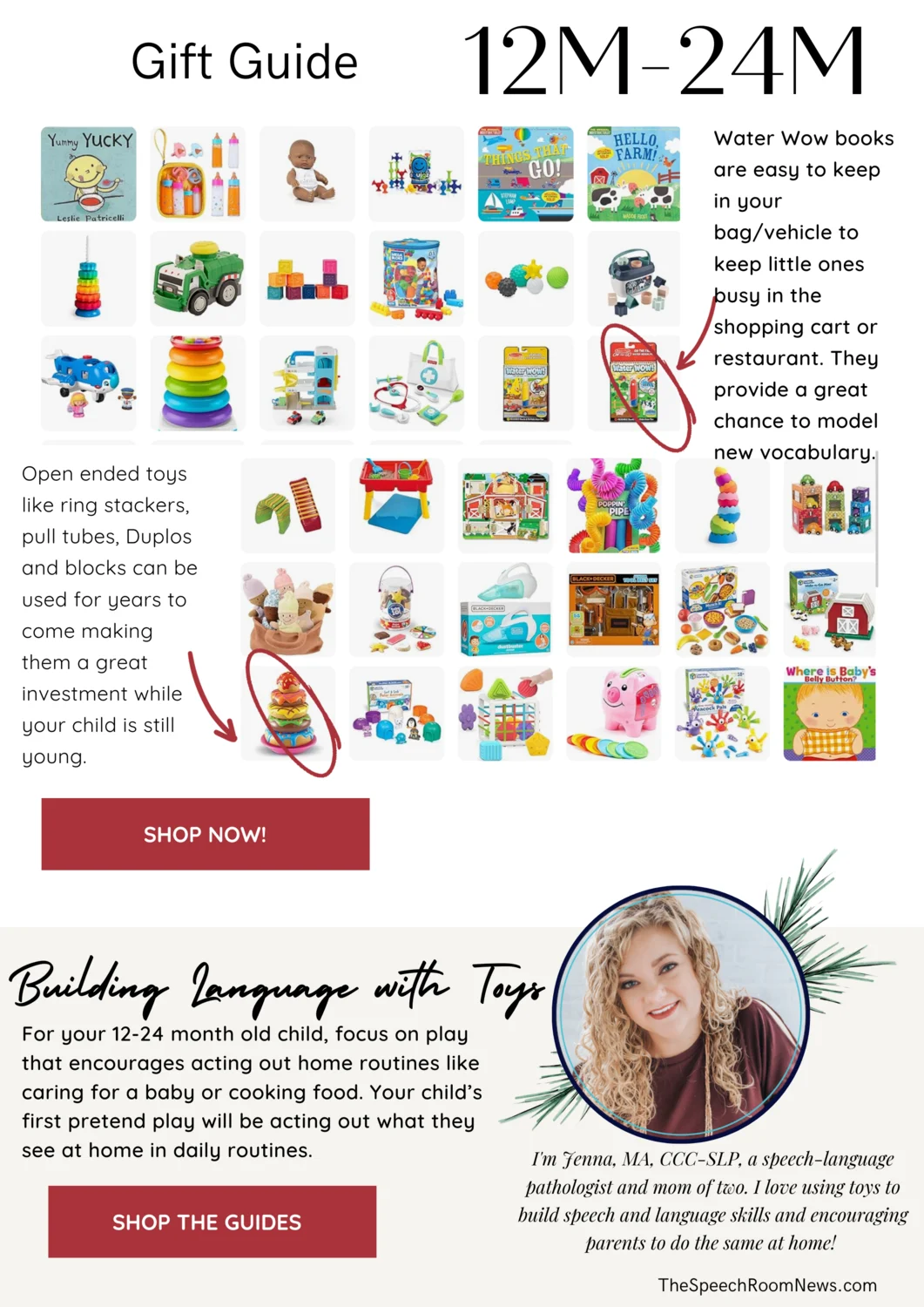
In a significant resource for parents and caregivers navigating the complex world of childhood development, Jenna Kirk, MA, CCC-SLP, a distinguished pediatric Speech-Language Pathologist and founder of The Speech Room News, has launched a series of meticulously curated Amazon gift guides. These guides are specifically designed to highlight toys that not only entertain but also actively cultivate essential speech and language skills in children across various age groups. This initiative stems from Ms. Kirk’s dual perspective as a seasoned clinician and a mother of two, one of whom has been diagnosed with Childhood Apraxia of Speech (CAS), a complex motor speech disorder. Her personal and professional experiences underscore the profound impact that thoughtfully chosen play items can have on a child’s communicative journey, especially during critical developmental windows. The guides offer an accessible, expert-vetted resource for individuals seeking to make informed decisions about holiday gifts or year-round developmental support.
The Foundational Role of Play in Language Acquisition
The scientific consensus is unequivocal: play is not merely a recreational activity but a fundamental mechanism through which children learn about the world, develop social competencies, and, crucially, acquire language. From birth through early adolescence, engaging in various forms of play stimulates neural pathways, fosters cognitive flexibility, and provides rich contexts for linguistic experimentation. During infancy, sensory play, such as interacting with rattles, soft textures, and musical toys, lays the groundwork for auditory processing and early sound discrimination. As children progress into toddlerhood, manipulative play with blocks, shape sorters, and simple puzzles enhances fine motor skills while simultaneously expanding vocabulary through descriptive language and following multi-step commands. Pretend play, which typically emerges around age two, is particularly potent for language development, allowing children to practice narrative skills, develop social scripts, and understand abstract concepts. Researchers like Lev Vygotsky emphasized the social nature of play, highlighting how interactions with caregivers and peers within play scenarios facilitate language learning through scaffolding and shared understanding. This intricate relationship between play and communication forms the bedrock of Ms. Kirk’s recommendations, ensuring that each toy suggested serves a tangible developmental purpose beyond fleeting entertainment.
Addressing the Prevalence of Speech and Language Disorders
The need for targeted developmental resources is underscored by the prevalence of speech and language challenges among children. According to the Centers for Disease Control and Prevention (CDC), approximately 1 in 12 (7.7%) children aged 3-17 years in the United States has a speech, language, voice, or swallowing disorder. The American Speech-Language-Hearing Association (ASHA) further indicates that nearly 1 million children receive special education services for speech or language impairments in public schools annually. Conditions like Childhood Apraxia of Speech, which affects approximately 1 to 2 children per 1,000, specifically impact a child’s ability to accurately produce sounds, syllables, and words, despite having the muscle strength for speech. For children facing these hurdles, every interaction and every play opportunity becomes a therapeutic avenue. Ms. Kirk’s personal experience with her own child’s CAS provides a unique empathy and practical insight into selecting toys that can specifically aid in articulation, phonological awareness, and motor planning for speech. The guides, therefore, are not just for general development but also serve as a valuable tool for families navigating specific diagnostic needs, offering hope and actionable strategies for support at home.

A Chronology of Developmental Play: Tailored Recommendations by Age
The structured nature of Ms. Kirk’s gift guides, sorted meticulously by age, reflects a deep understanding of developmental milestones and how play evolves with a child’s growing capabilities. This chronological approach ensures that the recommended toys align with a child’s cognitive, linguistic, and motor skills at each stage, maximizing their developmental impact.
-
Infancy (0-12 Months): This foundational period focuses on sensory exploration and early social interaction. Toys like high-contrast books, soft rattles, unbreakable mirrors, and engaging mobiles are paramount. These items encourage visual tracking, auditory discrimination, early babbling, joint attention, and the beginnings of turn-taking, which are crucial precursors to verbal communication. The emphasis is on responsive interaction between caregiver and child, with toys serving as prompts for shared experiences.

-
Toddlerhood (1-3 Years): As children begin to walk and utter their first words, play shifts towards exploration and early communication. Stackable blocks, shape sorters, simple push-and-pull toys, and sturdy board books are ideal. These foster vocabulary expansion (naming objects, actions, attributes), early sentence formation (e.g., "more block," "go car"), and understanding simple commands. Play becomes more functional and encourages imitation and early pretend scenarios, laying the groundwork for symbolic thought.
-
Preschool (3-5 Years): This is a period of rapid language growth and the emergence of complex imaginative play. Dress-up clothes, play kitchens, dollhouses, vehicle sets, and simple board games become invaluable. These toys facilitate narrative development, allowing children to create stories, role-play various scenarios, and practice social problem-solving. They also promote the use of descriptive language, inferencing, and the understanding of cause and effect, alongside strengthening conversational skills and turn-taking in dialogue.
-
Early School Age (5+ Years): As children prepare for or enter elementary school, play continues to refine their language and cognitive abilities. More complex board games requiring strategic thinking and negotiation, science kits promoting inquiry-based learning, chapter books fostering literacy, and collaborative building sets encourage advanced communication. These activities support higher-level language skills such as reasoning, argumentation, complex narrative construction, and metacognitive awareness, which are essential for academic success and sophisticated social interaction.

The inclusion of "stocking stuffer" ideas further demonstrates a holistic approach, ensuring even small, supplementary items contribute to the overarching goal of language enrichment for the entire family.
Expert Criteria for Selecting Developmentally Supportive Toys
While the specific toys listed in the guides remain proprietary to Ms. Kirk’s Amazon storefront, the underlying principles of her selection process are rooted in established speech-language pathology best practices. When evaluating toys for their developmental potential, SLPs typically consider several key criteria:

- Open-Ended Play Potential: Toys that can be used in multiple ways, without a single "right" answer, are preferred. Examples include building blocks, art supplies, and play-doh. These encourage creativity, problem-solving, and provide numerous opportunities for varied communication (e.g., "make a tall tower," "let’s pretend this is a cake").
- Interaction and Social Engagement: Toys that naturally encourage interaction between children or between children and caregivers are highly valued. Board games, cooperative building sets, and puppets promote turn-taking, negotiation, joint attention, and social communication skills.
- Vocabulary Richness: Toys that introduce new vocabulary or provide contexts for using a wide range of words are beneficial. Animal figures, play food, and themed sets (e.g., farm, doctor’s office) allow for naming, describing attributes, actions, and categories.
- Sound and Speech Production Opportunities: For children with articulation or phonological disorders, certain toys can be excellent tools for practicing specific sounds or syllable structures. For instance, animal sounds, vehicle noises, or action words can target specific phonetic elements.
- Problem-Solving and Cognitive Skills: Toys that require children to think, plan, and strategize enhance cognitive-linguistic connections. Puzzles, construction sets, and strategy games help develop critical thinking, which is intrinsically linked to complex language comprehension and expression.
- Durability and Safety: While not directly language-related, these practical considerations ensure that toys are long-lasting and safe for children, allowing for sustained, worry-free play.
- Adaptability for Diverse Needs: A truly effective developmental toy can often be adapted to suit children with different developmental profiles, including those with specific speech or language disorders, ensuring broad applicability.
Ms. Kirk’s expertise, combined with her personal understanding of challenges like CAS, ensures these principles are applied rigorously, offering parents confidence in her selections.
Statements and Reactions from the Educational and Parental Communities
The launch of such a specialized resource is likely to be met with widespread approval across the speech-language pathology community, among educators, and, most importantly, by parents.

- From Speech-Language Pathologists: "This initiative aligns perfectly with evidence-based practices in our field," comments Dr. Evelyn Reed, a veteran SLP specializing in early intervention. "Parents often feel overwhelmed by the sheer volume of toys on the market, many of which offer minimal developmental benefit. Curated lists from a trusted professional like Jenna Kirk are invaluable. They empower families to make intentional choices that support therapy goals and foster language acquisition in natural, playful environments."
- From Parental Advocacy Groups: A representative from a national organization supporting families of children with communication disorders states, "Finding expert-vetted toy lists is a huge relief for parents, especially those with children facing diagnoses like Childhood Apraxia of Speech. It’s often difficult to discern which toys truly facilitate speech and language growth versus those that are simply entertaining. These guides provide a much-needed roadmap, helping parents feel more confident in their purchasing decisions and more effective in supporting their child’s development at home."
- From Early Childhood Educators: "Developmentally appropriate toys are crucial for preparing children for school," notes Maria Sanchez, a preschool director. "When children engage with toys that build language and social skills, they enter the classroom with a stronger foundation for literacy, communication, and peer interaction. Resources that simplify this selection process are a tremendous asset to both parents and educators."
These inferred reactions underscore the widespread demand for accessible, expert-driven guidance in this critical area of child development.
Broader Impact and Future Implications
The introduction of these specialized gift guides carries significant implications beyond simply assisting with holiday shopping. This initiative contributes to a broader movement of empowering parents with actionable information and fostering a more informed consumer culture around children’s products. In an era increasingly dominated by screen-based entertainment, the emphasis on tangible, interactive, and language-rich toys serves as a vital counter-narrative, reminding caregivers of the irreplaceable value of hands-on play for cognitive and communicative development.

Moreover, by making these recommendations readily available through platforms like Amazon and downloadable PDFs, Ms. Kirk is democratizing access to specialized knowledge that might otherwise only be available through direct consultation with an SLP. This accessibility can potentially accelerate early intervention efforts, as parents can proactively integrate therapeutic play into their daily routines. The guides also serve as an educational tool, subtly informing parents about the various facets of speech and language development and what to look for in toys. As awareness grows, it could influence toy manufacturers to place a greater emphasis on developmental benefits, potentially shifting market trends towards more educationally sound products. Ultimately, initiatives like these reinforce the critical role of Speech-Language Pathologists not just in direct therapy but also in providing public education and resources that support the holistic development of all children.
The comprehensive nature of Jenna Kirk’s gift guides offers a timely and invaluable resource for anyone committed to fostering robust speech and language skills in children. By blending professional expertise with personal insight, these guides transcend mere product recommendations, becoming a practical tool for enriching developmental trajectories and empowering families worldwide.
