

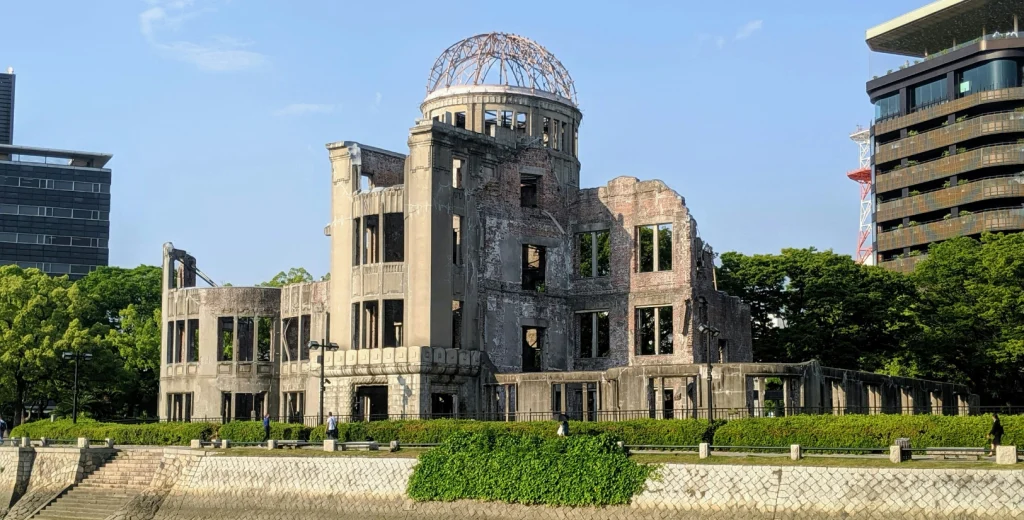
The intersection of historical trauma and modern leadership development took center stage in the latest installment of the Anecdotally Speaking podcast, where hosts Mark Schenk and Shawn Callahan examined the life of Tsutomu Yamaguchi. As the only individual officially recognized by the Japanese government to have survived the atomic bombings of both Hiroshima and Nagasaki, Yamaguchi’s life offers a profound case study in how the stories individuals tell themselves can dictate their capacity for resilience and their effectiveness as leaders. Episode 284 of the series uses this historical anomaly to explore the mechanics of meaning-making, the technical aspects of storytelling, and the ethical challenges leaders face when navigating organizational change.
The Dual Survival of Tsutomu Yamaguchi: A Chronology of Fortitude
The historical record of Tsutomu Yamaguchi begins in the summer of 1945. At 29 years old, Yamaguchi was a naval engineer for Mitsubishi Heavy Industries, specializing in oil tanker design. His presence in Hiroshima on August 6, 1945, was a matter of professional routine; he was completing a three-month business trip and was scheduled to return to his home in Nagasaki the following day.
At approximately 8:15 a.m., as Yamaguchi was walking toward the Mitsubishi shipyard, the B-29 bomber Enola Gay released the "Little Boy" atomic bomb over the city center. Yamaguchi was roughly three kilometers from the hypocenter. The resulting blast produced a blinding flash of light and a heat wave that inflicted serious burns to the left side of his body, ruptured his eardrums, and left him temporarily blinded. Despite the devastation, which leveled the majority of Hiroshima’s infrastructure, Yamaguchi managed to find a temporary air-raid shelter where he spent a fitful night.
The following day, demonstrating a level of shock-induced resolve often seen in disaster survivors, he navigated the charred remains of the city to reach the Hiroshima railway station. Miraculously, the trains were still operational in some sectors. He boarded a transport filled with other wounded survivors and arrived in Nagasaki on August 8. Upon his arrival, he sought medical treatment for his burns, which were so severe they had begun to turn gangrenous.
On the morning of August 9, despite his physical trauma and the psychological weight of the Hiroshima catastrophe, Yamaguchi reported to the Mitsubishi office in Nagasaki. His intent was to brief his supervisor on the destruction he had witnessed. Historical accounts, including those later recounted by Yamaguchi himself, suggest that his supervisor was skeptical. During their meeting, the supervisor questioned how a single bomb could destroy an entire city. As Yamaguchi attempted to explain the scale of the blast, the second atomic bomb, "Fat Man," was detonated over Nagasaki at 11:02 a.m.
Yamaguchi was again approximately three kilometers from the blast center. While the office building was heavily damaged, he survived the second explosion without significant new injuries, though his existing wounds were further aggravated and he suffered from a high fever for over a week. He lived to the age of 93, eventually becoming a vocal advocate for nuclear disarmament.
The Statistical Context of the Hibakusha
To understand the magnitude of Yamaguchi’s experience, it is necessary to examine the broader data regarding the atomic bombings. In Hiroshima, an estimated 70,000 to 80,000 people—roughly 30% of the city’s population—were killed instantly by the blast and the resulting firestorm. By the end of 1945, the death toll rose to over 140,000 due to radiation poisoning and other complications. In Nagasaki, the death toll was estimated at 40,000 initially, rising to 74,000 by the year’s end.
While there were an estimated 165 individuals believed to have been present in both cities during the bombings—referred to as nijyuu hibakusha or "twice-bombed people"—Yamaguchi remains the only one to have received official recognition from the Japanese government for surviving both. This recognition, granted in 2009, was a significant administrative milestone, as the government had previously only acknowledged his presence in Nagasaki.
From a statistical perspective, the probability of surviving two such events is astronomically low. However, the Anecdotally Speaking podcast posits that the most compelling aspect of Yamaguchi’s story is not the survival itself, but the framing of the narrative. Is he the unluckiest man in history for being at ground zero twice, or the luckiest for surviving both?
Narrative Framing and the Psychology of Leadership
Mark Schenk and Shawn Callahan argue that the facts of a situation are often static, but the meaning derived from those facts is fluid. In a corporate or leadership context, this process of "meaning-making" is critical. Leaders are frequently tasked with interpreting complex, often negative, data for their teams. How a leader frames a setback—whether as a catastrophic failure or a grueling but necessary learning experience—directly impacts the resilience of the organization.

The podcast explores the concept of "narrative identity," a psychological framework suggesting that individuals form an identity by integrating their life experiences into an internalized, evolving story. For Yamaguchi, the story shifted over decades. In the immediate post-war years, his focus was on survival and recovery. In his later years, he reframed his trauma into a mission of peace, telling his story to the United Nations and world leaders to ensure such weapons were never used again.
For modern leaders, this highlights a vital skill: the ability to communicate decisions and events with authenticity. The podcast emphasizes that leaders must often convey corporate decisions they may not personally endorse. The challenge lies in maintaining integrity while ensuring the organizational narrative remains cohesive. By focusing on the "why" and the broader context, leaders can facilitate a sense of purpose even in the face of adversity.
Storytelling Techniques: Foreshadowing and Participation
Beyond the historical and psychological implications, the episode delves into the technical craft of storytelling. One specific technique discussed is "foreshostowing." In the context of Yamaguchi’s story, his initial conversation with his boss in Nagasaki serves as a chilling narrative setup. The boss’s disbelief in the power of the bomb creates a tension that is immediately shattered by the second explosion.
In leadership communications, foreshadowing can be used to prepare teams for upcoming changes or challenges. By subtly signaling shifts in the market or the organization before they occur, leaders can reduce the shock of impact and allow for a more measured response.
Furthermore, the role of audience participation in meaning-making is addressed. A story is not a monologue; it is a collaborative process between the teller and the listener. When a leader shares a story of resilience, the listeners bring their own experiences and biases to the interpretation. Effective leaders leave "space" in their narratives for their teams to find their own meaning, thereby increasing engagement and buy-in.
Broader Impact and Implications for the Workforce
The analysis provided by Anecdote International suggests that the "humanity" of the workforce is often lost in a sea of data, metrics, and KPIs. The story of Tsutomu Yamaguchi serves as a reminder that at the heart of every organization are individuals navigating their own narratives of struggle and triumph.
The implications for modern business are twofold:
- Resilience Training: Organizations that prioritize storytelling as a tool for resilience are better equipped to handle volatility. By studying figures like Yamaguchi, employees can learn to reframe their own professional "explosions"—such as project failures or layoffs—into narratives of survival and eventual growth.
- Authentic Leadership: In an era of increasing skepticism toward corporate messaging, authenticity is a leader’s most valuable currency. Sharing stories that acknowledge hardship, rather than glossing over it with corporate jargon, builds trust and fosters a more transparent culture.
Conclusion: The Enduring Power of the Narrative
Tsutomu Yamaguchi’s life was defined by two of the most horrific events in human history. Yet, his legacy is not one of victimhood, but of profound narrative agency. By choosing to frame his experience as a mandate for peace, he transformed a story of unimaginable "bad luck" into a global message of hope and responsibility.
As discussed in Episode 284 of Anecdotally Speaking, the lessons of Yamaguchi’s survival transcend history. They provide a blueprint for how modern leaders can navigate the complexities of the 21st-century workplace. By mastering the art of the story, leaders can influence not just what their teams do, but how they feel and what they believe is possible. The facts of our lives may be beyond our control, but the meaning we assign to them remains our most powerful tool for change.
The work of Anecdote International, with its global network of partners and translated learning programs, continues to emphasize this human-centric approach. In a world increasingly driven by automation and remote interaction, the ability to tell a story that resonates on a human level is no longer just a "soft skill"—it is a strategic necessity for leadership, sales enablement, and organizational health.
