

In an era where the speed of cyberattacks increasingly outpaces traditional human-led defenses, Google has officially announced the launch of its Fairwind Program. This initiative marks a significant shift in the cybersecurity landscape, offering a limited-access platform designed specifically for government agencies and trusted enterprise partners. By leveraging Google’s most sophisticated artificial intelligence models, the program aims to transition cybersecurity from a reactive posture—characterized by perpetual "firefighting"—to a proactive, autonomous model capable of neutralizing threats before they can be exploited by malicious actors.
The announcement, spearheaded by Four Flynn, Google’s Vice President of Security and Privacy, addresses a long-standing "defender’s dilemma." For years, cybersecurity professionals have been forced to choose between two suboptimal paths: deploying massive, resource-heavy frontier AI models that are often too expensive and complex to integrate into existing codebases, or utilizing smaller, open-weight models that frequently lack the reasoning capabilities required for complex vulnerability remediation. The Fairwind Program seeks to bridge this gap by introducing specialized, agentic AI tools that combine high-level reasoning with operational efficiency.
The Technical Foundation: Gemini 3.8 Flash Cyber and CodeMender
At the heart of the Fairwind Program is the Gemini 3.8 Flash Cyber model, a specialized version of Google’s latest AI architecture optimized specifically for security use cases. Unlike general-purpose AI, this model is fine-tuned on vast datasets of security telemetry, vulnerability reports, and secure coding practices. When paired with Google’s CodeMender harness, the system moves beyond mere threat detection.
Historically, identifying a vulnerability was only the first step in a grueling process. Security teams would often spend weeks manually verifying a flaw, writing a patch, testing it for regressions, and finally deploying it. During this window, the organization remains exposed. The Fairwind Program changes this timeline from weeks to minutes. CodeMender utilizes the reasoning capabilities of Gemini 3.8 Flash Cyber to autonomously write and validate code fixes. These patches are generated within the organization’s secure cloud environment, ensuring that sensitive proprietary code never leaves the protected perimeter.
By operating at "agentic scale," the system can simultaneously scan thousands of lines of code, identify weaknesses, and propose verified, deployment-ready solutions. This speed is critical in combating modern "zero-day" exploits, where the time between the discovery of a flaw and its active exploitation by hackers is shrinking rapidly.

A Strategic Chronology of Google’s Cyber Defense Evolution
The launch of the Fairwind Program is the culmination of a multi-year strategic roadmap focused on AI-driven security. To understand its significance, one must look at the trajectory of Google’s security innovations over the last decade:
- The Zero-Trust Era (2014–2020): Google pioneered the BeyondCorp framework, moving away from traditional perimeter-based security toward a zero-trust model. This established the infrastructure necessary to host advanced security tools in the cloud.
- The AI Cyber Defense Initiative (2023): Following the surge in generative AI, Google launched a concerted effort to apply large language models (LLMs) to security operations, focusing on threat intelligence and natural language queries for security analysts.
- The Munich Security Conference Commitments (Early 2024): Google pledged to bolster global cyber resilience by providing tools to under-resourced defenders, setting the stage for the current $100 million funding commitment.
- The Launch of Fairwind (Present): The formalization of a "trusted partner" ecosystem that grants specific, high-level access to autonomous remediation tools.
This timeline illustrates a move from securing Google’s internal systems to providing the underlying "immune system" for the global digital economy.
Strengthening Global Resilience: Supporting 650+ Partners and Critical Infrastructure
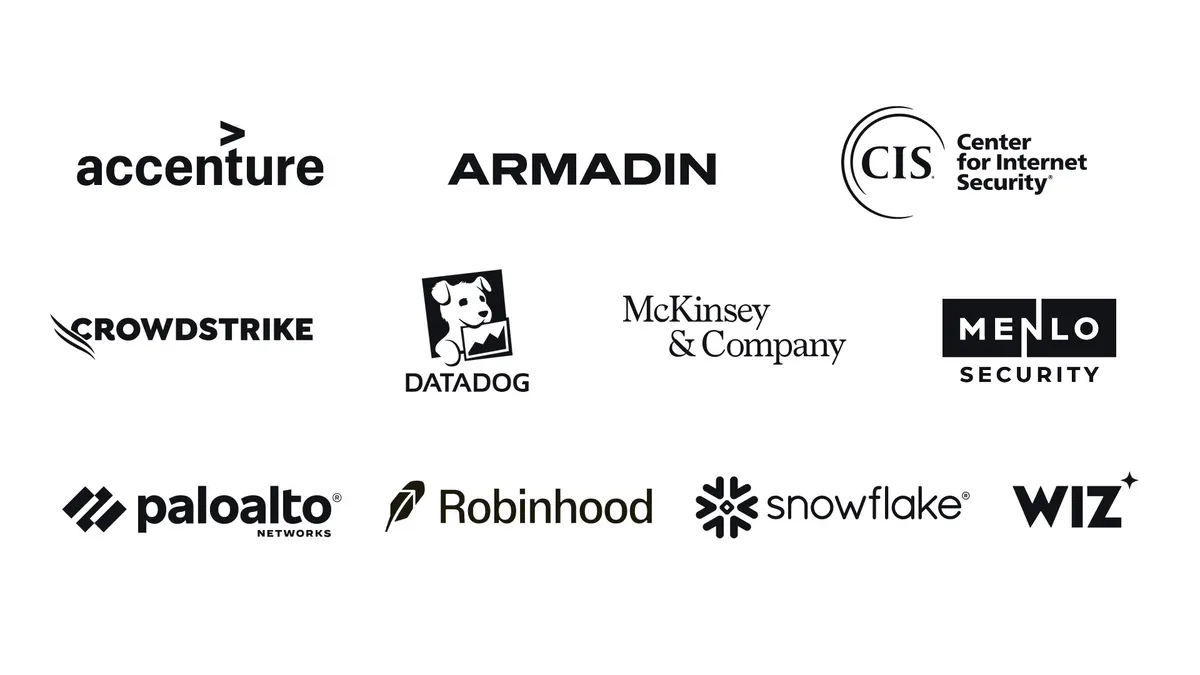
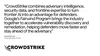
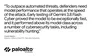
The Fairwind Program is not a solitary endeavor; it is supported by a global ecosystem of over 650 participating partners. These include some of the most prominent names in the cybersecurity industry, such as CrowdStrike, Palo Alto Networks, Wiz, Snowflake, and Armadin. By integrating Gemini 3.8 Flash Cyber into their own platforms, these partners can offer their customers enhanced protection levels that were previously unattainable.
The program’s rollout is intentionally staged, prioritizing government agencies and enterprises that manage critical infrastructure. This includes sectors such as energy, finance, and healthcare, which are frequent targets of state-sponsored threat actors. By providing these entities with an "adaptation window," Google allows them to harden their systems before bad actors can develop AI-driven tools to exploit the same vulnerabilities.
Furthermore, Google is emphasizing the social impact of its security mission. Through Google.org, the company has increased its total cybersecurity funding to over $100 million globally. A key component of this is the support for "cyber clinics." According to the 2026 Google.org U.S. Cybersecurity Impact Report, $36 million has been allocated to fund 35 cyber clinics across the United States. These clinics have provided free, hands-on security assistance to more than 1,250 organizations, including municipal utilities, public school districts, and rural hospitals—entities that often lack the budget for high-end security services.
Governance and Responsible AI Deployment
Recognizing the dual-use nature of advanced AI, Google has implemented strict operational standards for the Fairwind Program. The power to autonomously find and fix vulnerabilities could, in the wrong hands, be used to find and exploit them. To mitigate this risk, participating organizations must adhere to rigorous protocols:
- Restricted Access: Use of Fairwind tools is limited to internal cybersecurity, incident response, or penetration testing teams.
- Identity Verification: Mandatory multi-factor authentication (MFA) and strict identity and access management (IAM) controls are required for all users.
- Safe Environments: The AI agents operate within isolated, secure cloud environments to prevent accidental leakage of sensitive data or unauthorized system changes.
This "guarded" approach reflects a broader industry debate regarding open-weight versus closed-source AI. While Google continues to collaborate with the open-source community, the Fairwind Program operates on a "trusted access" model to ensure that the most potent capabilities are not weaponized by adversaries.
Analysis of Implications: A Shift in the Economic Balance of Cyberwarfare
The introduction of the Fairwind Program has profound implications for the economics of cybersecurity. For decades, the advantage has rested with the attacker. A hacker only needs to find one flaw to succeed, while a defender must protect every possible entry point. Furthermore, the cost of an attack (often involving automated scripts) has been significantly lower than the cost of defense (requiring highly paid human experts).
By introducing autonomous remediation at a fraction of the cost of traditional methods, Google is effectively "flipping the script." When a model like Gemini 3.8 Flash Cyber can patch a vulnerability in minutes for a nominal computing cost, the "Return on Investment" (ROI) for the attacker plummets. If a vulnerability is closed almost as soon as it is discovered, the window for exploitation disappears.
However, this also signals the beginning of an "AI arms race" in the cyber domain. As defenders adopt agentic AI, attackers will inevitably use similar technologies to automate the discovery of new exploit chains. The Fairwind Program represents Google’s bet that by giving the "defender’s edge" to the most critical sectors of society first, it can create a more resilient digital foundation that can withstand the coming wave of AI-driven threats.
Future Outlook and Expansion
While the Fairwind Program is currently in a limited-access phase, Google has indicated that the program will evolve based on user feedback and emerging threats. For organizations not currently in the "trusted partner" group, Google Cloud continues to offer AI-driven security through the Gemini Enterprise Agent Platform and the AI Threat Defense suite.
The ultimate goal of the Fairwind Program is to create an ecosystem-scale impact. By fortifying the most critical nodes of the internet—government services and major enterprises—Google aims to create a "herd immunity" effect for the digital world. As more vulnerabilities are autonomously patched at the source, the overall number of viable targets for global cybercrime syndicates decreases, leading to a safer internet for all users.
As the program moves forward, the industry will be watching closely to see how effectively these autonomous agents perform in real-world, high-stakes environments. If successful, the Fairwind Program may well be remembered as the moment when the cybersecurity industry finally moved from a posture of perpetual defense to one of proactive, machine-speed resilience.
