

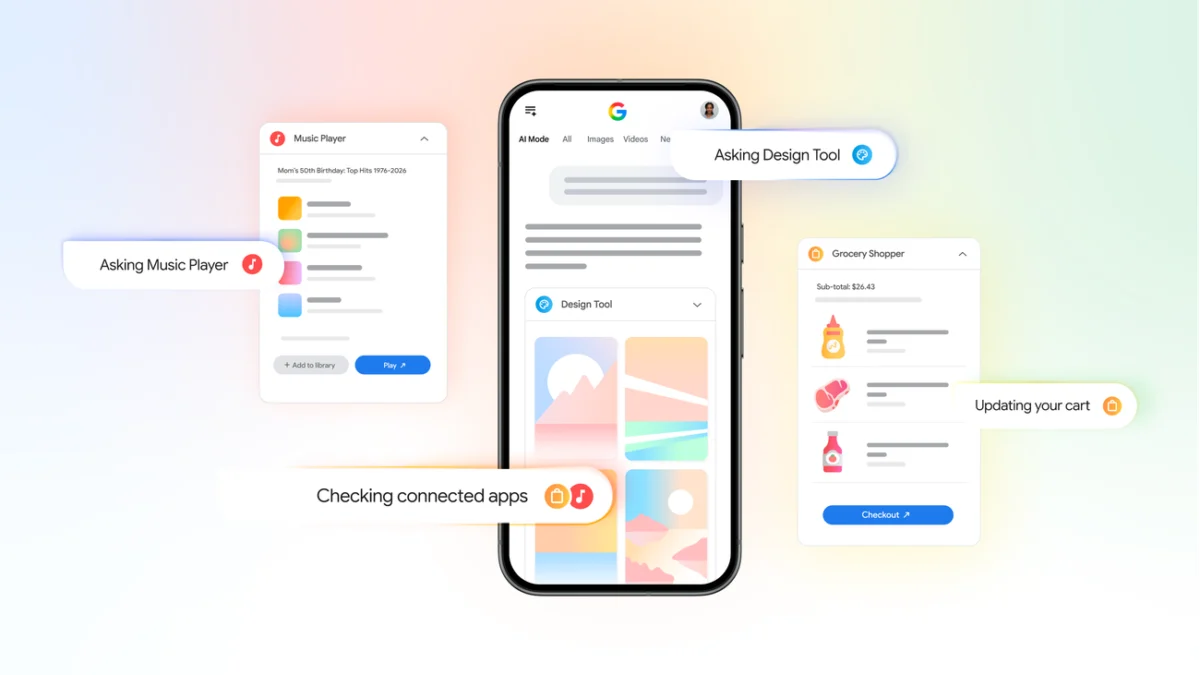
Google has officially announced a significant expansion of its artificial intelligence capabilities within its flagship Search product, allowing users to securely link and interact with third-party services directly through its "AI Mode." This development, spearheaded by Senior Product Manager Chips Mistry and Engineering Lead Biharck Araújo, marks a pivotal shift in the evolution of Search from a directory of information to an "agentic" platform capable of executing complex tasks. Starting this week, users in the United States will begin seeing the rollout of these integrations, which initially include partnerships with major service providers such as Instacart, Canva, and Google’s own YouTube Music. The move is designed to reduce the friction between information discovery and action, enabling a more seamless transition from a query to a completed transaction or creative project.
The introduction of connected apps in AI Mode represents the next phase of Google’s broader strategy to integrate its Gemini generative AI models across its ecosystem. While users were previously able to connect certain services to the standalone Gemini app, this update brings that functionality into the primary Search interface, where the vast majority of user intent begins. By allowing direct interaction with external platforms, Google is positioning its AI as a central orchestrator of digital activity, rather than just a source of answers.
The Evolution of Search: From Information to Action
The chronology of Google Search has been defined by several distinct eras. For nearly two decades, the platform operated primarily on the "ten blue links" model, where the goal was to index the web and direct users to external websites. The second era began with the introduction of the Knowledge Graph and "Featured Snippets," which sought to provide direct answers on the search results page. The current era, accelerated by the launch of the Search Generative Experience (SGE) in 2023, focuses on synthesis and reasoning.
This latest update moves beyond synthesis into the realm of "Agentic AI." In this model, the AI does not just tell the user what to do or where to go; it performs the action on their behalf. The timeline for this specific rollout follows the integration of Gemini into Google Workspace and the subsequent launch of Gemini Extensions. By bringing these extensions into Search’s AI Mode, Google is effectively merging its most advanced AI capabilities with its most powerful distribution channel.
Deep Dive into Initial Integrations: Instacart, Canva, and YouTube Music
The initial launch features three distinct use cases that highlight the versatility of the connected apps framework. These partnerships appear strategically chosen to cover high-intent categories: e-commerce, productivity, and entertainment.
In the realm of e-commerce, the partnership with Instacart allows for a direct "search-to-cart" pipeline. For example, a user planning a specific event, such as a backyard barbecue, can use AI Mode to generate a comprehensive grocery list based on dietary preferences or themes. With the Instacart connection active, the AI can automatically populate an Instacart shopping cart with the necessary ingredients. The user then only needs to navigate to the Instacart app or website to finalize the payment and delivery details. This eliminates the manual process of switching between tabs and copying items from a search result into a retail application.
The Canva integration targets the creative and productivity sector. When users search for design concepts—such as "create a flyer for a community bake sale"—the AI Mode can pull specific templates directly from Canva’s library. This allows users to visualize options within the search interface before jumping into the design tool to perform final edits. This partnership suggests a future where Search serves as a pre-production environment for creative professional and hobbyist tasks.
Finally, the integration with YouTube Music addresses the entertainment segment. Users can ask the AI to curate a specific playlist—for instance, "upbeat 80s synth-pop for a workout"—and then instantly save that playlist to their YouTube Music library. This functionality leverages Google’s internal ecosystem to provide a more cohesive experience for users who are already subscribed to its media services.
Data Security and the User Experience Architecture
A critical component of this announcement is the emphasis on security and user consent. According to Chips Mistry and Biharck Araújo, the linking of these services is entirely optional and requires explicit user authorization. Google has implemented a "secure link" protocol designed to ensure that personal data shared between Search and third-party apps is handled with high standards of privacy.
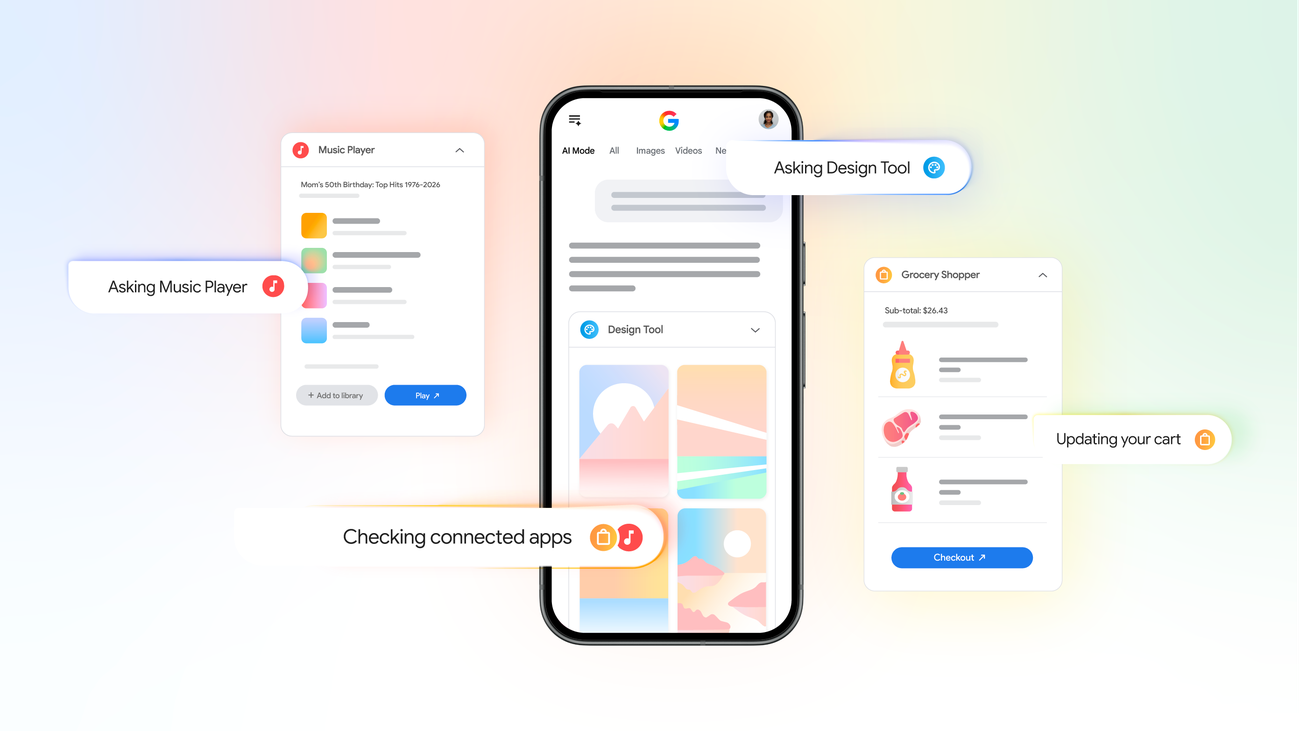
From a technical standpoint, these integrations rely on APIs (Application Programming Interfaces) that allow Google’s Large Language Models (LLMs) to communicate with external databases. When a user asks a question in AI Mode that requires an external action, the model identifies the appropriate "tool" or "extension" to use, formats the request for the third-party API, and then presents the result to the user. This architecture is designed to be scalable, with Google indicating that they are currently working with a wide range of additional partners to expand the library of connected apps in the coming months.
Market Context and Competitive Landscape
Google’s push toward an integrated AI Search experience comes at a time of intense competition in the technology sector. The rise of OpenAI’s ChatGPT, and more recently the announcement of SearchGPT, has challenged Google’s dominance in the search market. Similarly, startups like Perplexity AI have gained traction by offering a "source-first" AI search engine that prioritizes direct answers over links.
Microsoft has also been aggressive in this space, integrating its Copilot AI into the Bing search engine and the Edge browser. Microsoft’s approach has focused heavily on the "sidecar" model, where AI assists the user alongside traditional search results. Google’s "AI Mode" is a more immersive experience, often taking over the full screen to provide a conversational interface. By adding third-party app connections, Google is attempting to create a "moat" around its search business by offering utility that a simple chatbot cannot replicate.
Industry analysts suggest that this move is also a response to the "walled garden" trend in mobile usage. As users spend more time within specific apps (like TikTok, Amazon, or Instagram) for discovery, Google risks losing its status as the "front door" of the internet. By bringing the functionality of those apps into Search, Google is attempting to re-establish itself as the primary interface for the digital world.
Implications for the Digital Economy and SEO
The shift toward connected apps in Search has profound implications for the broader digital economy, particularly for web publishers and e-commerce platforms. For years, the "search economy" has been built on the premise of traffic referral. Websites provide content, Google indexes it, and users click through to the site.
However, as Google enables users to complete tasks within the search interface, there is a growing concern among publishers about "zero-click" searches. If a user can add groceries to a cart or find a design template without ever visiting a publisher’s website or a search results page filled with ads, the traditional revenue models for both Google and its partners may need to evolve.
For brands like Instacart and Canva, the trade-off is clear: they may lose some direct site traffic, but they gain a high-conversion entry point directly within the world’s most-used search engine. For smaller players, however, the challenge will be whether they can gain access to this "Connected Apps" ecosystem. If Google only partners with a few dominant players in each category, it could further consolidate market power among top-tier platforms.
Future Outlook and Scalability
As the rollout continues in the United States, the tech community will be watching closely to see how quickly Google expands this feature to international markets and additional languages. The success of the "Connected Apps" initiative will likely depend on the breadth of the ecosystem. To truly become an indispensable "AI Agent," Google will need to move beyond a handful of partners to include hundreds, if not thousands, of service providers—ranging from local restaurant reservation systems to global travel booking engines.
The announcement concludes with a call to action for users to explore the new features in "AI Mode," signaling that this is just the beginning of a long-term transformation. As AI models become more capable of reasoning and planning, the distinction between "searching for something" and "doing something" will continue to blur. For now, Google is betting that by making Search more actionable, it can maintain its relevance in an era where artificial intelligence is rapidly rewriting the rules of the internet.
