

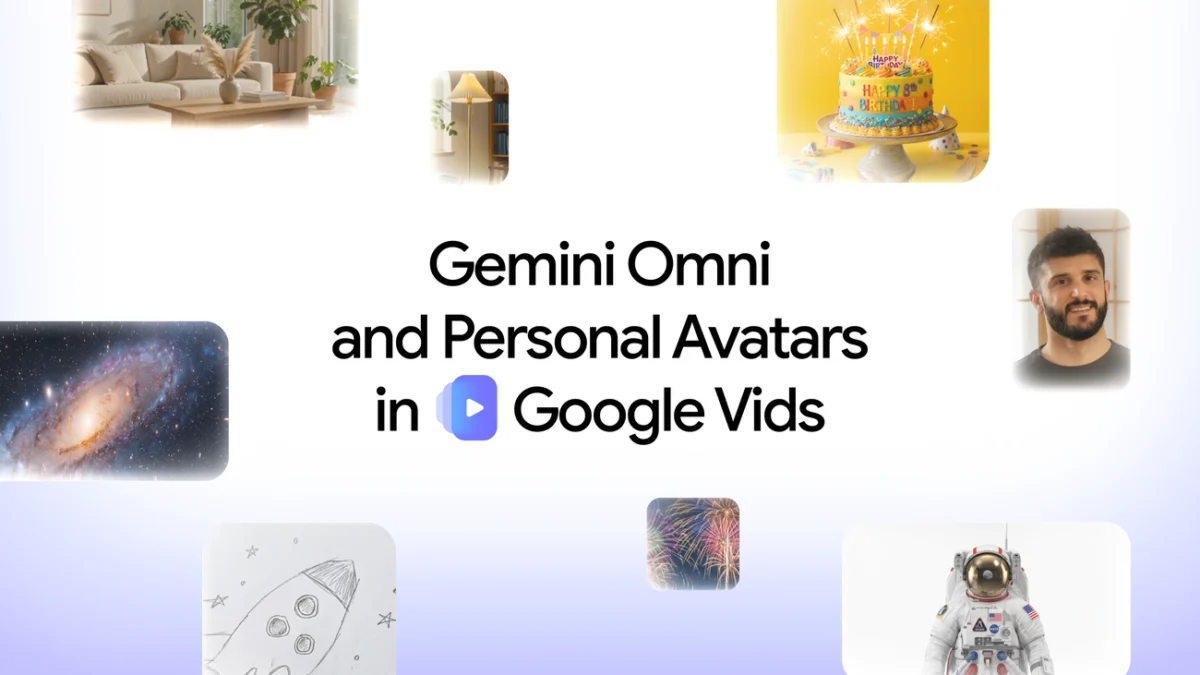
Google has announced a significant expansion of its AI-driven video creation suite, Google Vids, introducing two transformative features: Gemini Omni and personal avatars. These updates, revealed by Product Manager Justin Luk, represent a major shift in the tech giant’s strategy to integrate generative artificial intelligence directly into the professional workflow. By allowing users to generate high-quality video content from natural language prompts and create digital twins of themselves, Google is positioning Vids as a central pillar of the modern enterprise communications stack.
The rollout follows a year of rapid iteration for the platform, which was first introduced as an AI-powered video app for work designed to sit alongside Google Docs, Sheets, and Slides. The latest enhancements aim to lower the barrier to entry for professional-grade video production, removing traditional hurdles such as expensive hardware, complex editing software, and the logistical challenges of live filming.
The Evolution of Google Vids: A Chronological Perspective
The journey of Google Vids began in early 2024 when Google Cloud Next attendees were given a first look at a tool intended to democratize video creation within the Google Workspace environment. At the time, the focus was on assembling storyboards and stock footage using AI. By mid-2024, Google had integrated its Veo 3.1 model, which allowed for the generation of short video clips directly within the interface.
The current announcement of Gemini Omni and personal avatars marks the third major phase of this evolution. While previous versions focused on curation and basic generation, the current update focuses on precision editing and personalization. This timeline reflects a broader trend in the tech industry: a shift from "generative curiosity" to "functional utility," where AI tools are expected to handle complex, iterative tasks rather than just providing a single-shot output.
Gemini Omni: Multimodal Intelligence in Video Editing
At the heart of the new update is Gemini Omni, a multimodal model capable of processing and generating content across various formats simultaneously. Unlike traditional video editors that require manual manipulation of timelines and layers, Gemini Omni allows users to "chat" with their video.
The functionality begins with the generation phase. Users can enter a text prompt describing a scene and supplement it with visual references, such as a photograph of a specific location or a hand-drawn sketch of a character. The Omni model interprets these diverse inputs to produce a cohesive video clip that aligns with the user’s specific aesthetic vision.
However, the more significant breakthrough lies in the "Chat to Edit" feature. Video production is rarely a one-step process; it typically involves multiple rounds of revisions. Google has addressed this by enabling step-by-step edits through natural language. For instance, a user can instruct the AI to "change the background to a sunset," "adjust the lighting to look more cinematic," or "add a motion blur effect to the moving object." Because the model supports iterative changes, users can refine their work without having to regenerate the entire clip from scratch, a common pain point in early generative AI video tools.
Personal Avatars: The Rise of the Digital Twin
The second major update is the introduction of personal avatars, a feature designed to solve the "camera-ready" dilemma in corporate environments. Recording professional updates, training videos, or personalized shout-outs often requires significant preparation, including professional lighting, audio setups, and multiple takes.
Google’s personal avatars allow users to create a digital likeness of themselves using a simple selfie and a short voice recording. Once the avatar is generated, the user only needs to type a script. The AI then animates the avatar to deliver the speech, matching the user’s appearance and vocal patterns. This "digital twin" technology is linked directly to the user’s Google Account to ensure security and prevent unauthorized use of a person’s likeness.
From a productivity standpoint, this feature is aimed at busy executives and team leads who need to provide consistent, face-to-face communication across global time zones without the time investment of a physical video shoot.
Supporting Data and the Competitive Landscape
The integration of AI into video production comes at a time when video content is becoming the dominant form of communication in the enterprise. According to recent industry reports, over 80% of businesses now use video as a primary marketing and internal communication tool. Furthermore, the global generative AI in the media and entertainment market is projected to reach several billion dollars by 2030, with a significant portion of that growth attributed to automated video creation tools.

Google’s move puts it in direct competition with specialized AI video startups like HeyGen, Synthesia, and Runway, as well as established players like Adobe. While startups have led the way in digital avatar technology, Google’s advantage lies in its massive ecosystem. By embedding these tools within Google Workspace, the company makes AI video production a seamless part of the daily routine for millions of business users who are already using Google Drive and Gmail.
Security, Transparency, and Ethical Considerations
The rise of generative AI has brought legitimate concerns regarding deepfakes and misinformation. Google has addressed these issues by incorporating SynthID, a digital watermarking technology developed by Google DeepMind. SynthID embeds an invisible watermark into the pixels of the generated video, making it possible to identify AI-generated content even if it has been cropped or compressed.
Furthermore, the personal avatar feature includes strict age and regional restrictions. Currently, the tool is limited to users aged 18 and older in specific jurisdictions. By restricting avatar creation to the account holder’s own likeness, Google aims to mitigate the risk of identity theft or the creation of deceptive content.
These measures reflect a growing industry-wide consensus on the importance of "responsible AI." As these tools become more powerful and realistic, the ability to distinguish between human-captured and AI-generated content becomes a critical component of digital literacy and corporate trust.
Industry Implications and Workplace Impact
The implications of Gemini Omni and personal avatars extend beyond simple convenience. For human resources departments, these tools could revolutionize onboarding by allowing for the rapid creation of personalized training modules. For marketing teams, it enables the scaling of localized content without the need for international film crews.
Analysis of the current corporate landscape suggests that "video-first" communication is no longer optional. However, the "production gap"—the distance between needing a video and having the skills/resources to make one—has historically been a bottleneck. Google Vids aims to close this gap entirely.
When employees can generate a professional-looking project update in minutes using only their voice and a prompt, the frequency and quality of internal information sharing are likely to increase. However, this also raises questions about the "human touch" in communication. As digital twins become more common, organizations will need to balance the efficiency of AI with the authenticity of real-time human interaction.
Subscription Models and Availability
The new features are not available to the general public immediately. Google has targeted its high-value segments, making Gemini Omni and personal avatars available to Google AI Pro and Ultra subscribers, as well as Google Workspace business customers. This tiered approach is a standard strategy for Google, allowing it to manage the significant computational costs associated with high-end video generation while providing premium value to its paying enterprise base.
Users who meet these criteria can access the new tools via the standard Google Vids interface or by starting a new project at vids.new.
Conclusion: The Future of Professional Media
The updates to Google Vids represent a milestone in the democratization of media production. By moving from simple clip generation to complex, conversational editing and personalized digital representation, Google is redefining what it means to "create" a video.
As the technology matures, it is expected that the distinction between a "video editor" and a "content strategist" will blur. In the near future, the most valuable skill in professional communication may not be the ability to use a camera or a timeline editor, but the ability to effectively prompt and refine AI models to tell a compelling story. With Gemini Omni and personal avatars, Google is betting that the future of the office is not just digital, but increasingly cinematic.
