

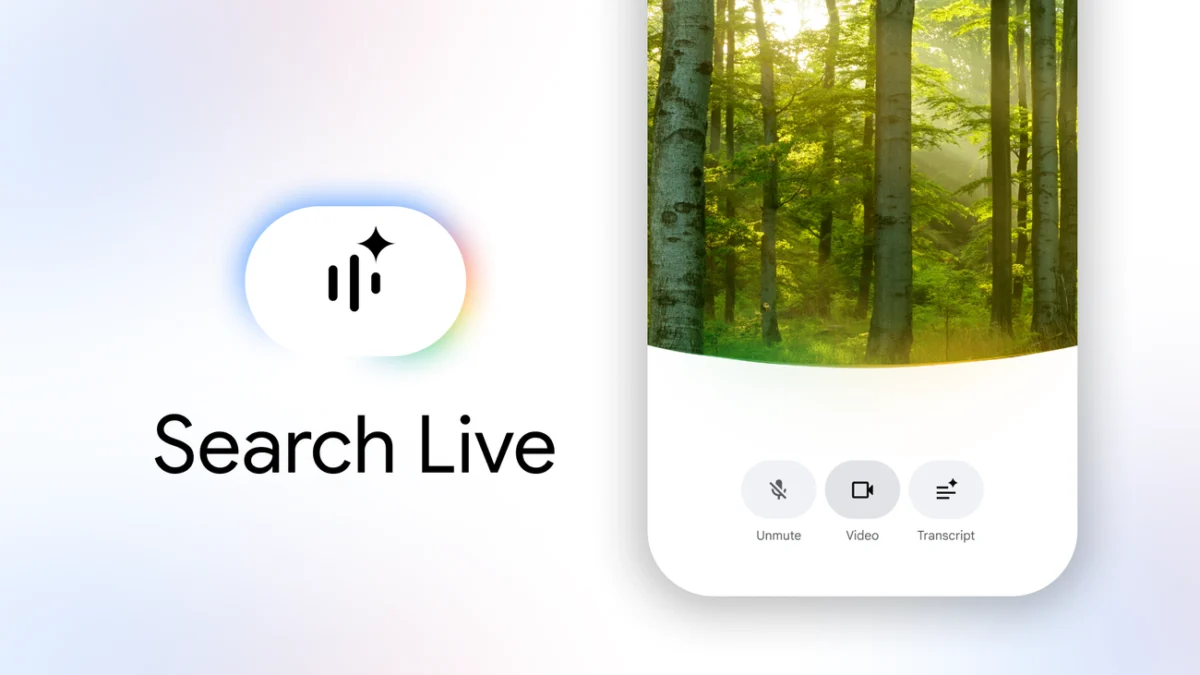
In a significant move to redefine the landscape of digital information retrieval, Google has announced the global expansion of Search Live, its high-fidelity, interactive AI search experience. This deployment extends the service to all languages and locations where the company’s AI Mode is currently supported, effectively reaching more than 200 countries and territories. By integrating advanced voice and vision capabilities directly into the search interface, the technology allows users to engage in fluid, back-and-forth conversations with the search engine, moving beyond the traditional paradigm of static text-based queries. This rollout marks a pivotal step in Google’s transition toward becoming an "AI-first" company, leveraging its most sophisticated generative models to provide real-time assistance in complex, real-world scenarios.
The global expansion is underpinned by the introduction of Gemini 3.1 Flash Live, a state-of-the-art audio and voice model specifically optimized for low-latency, high-speed interactions. Unlike previous iterations of AI search that required sequential processing—where a user would input text, wait for a generation, and then read the result—Gemini 3.1 Flash Live is designed for immediacy. It is inherently multilingual, enabling it to process and respond in dozens of languages natively, ensuring that the nuance of local dialects and conversational registers is maintained. This technological backbone allows Search Live to function not merely as a tool for finding facts, but as a multimodal assistant capable of "seeing" and "hearing" the user’s environment to provide contextualized support.
Technological Foundations: The Role of Gemini 3.1 Flash Live
At the heart of this expansion is the Gemini 3.1 Flash Live model, a specialized version of Google’s broader Gemini family. The "Flash" designation refers to the model’s optimization for speed and efficiency, which is critical for maintaining the "Live" aspect of the user experience. In the realm of large language models (LLMs), latency—the delay between a user’s prompt and the machine’s response—has historically been a barrier to natural conversation. Gemini 3.1 Flash Live utilizes advanced distillation techniques to reduce this latency to near-human levels, allowing for interruptions, follow-up questions, and rapid shifts in topic without the jarring pauses common in earlier AI systems.
Furthermore, the model’s multimodal architecture allows it to process disparate types of data simultaneously. When a user activates their camera during a Search Live session, the model does not treat the video feed and the audio input as separate streams. Instead, it synthesizes the visual data (such as the components of a mechanical device or the labels on a product) with the spoken query to form a unified understanding of the context. This capability is a significant departure from standard OCR (Optical Character Recognition) or image-matching technologies, as it involves a generative understanding of spatial relationships and functional logic.
A Chronology of Innovation: From Keywords to Conversations
The launch of Search Live globally is the culmination of over two decades of evolution in how Google processes human intent. To understand the significance of this moment, it is necessary to examine the timeline of Google’s search innovations:
- 1998–2010: The Keyword Era. Search was primarily a matter of matching text strings. Users learned to "speak" to Google in keywords rather than natural language.
- 2011: Introduction of Voice Search. Google launched Voice Search on mobile, allowing users to speak their queries. However, this was essentially a "speech-to-text" layer over the traditional search engine.
- 2015: RankBrain. The introduction of machine learning to help process search results marked the beginning of Google’s move toward understanding intent rather than just words.
- 2017: Google Lens. The launch of Lens introduced the ability to search using the camera, identifying objects and landmarks.
- 2023: The Gemini Era. Google announced the Gemini family of models, built from the ground up to be multimodal. This was followed by the "Search Generative Experience" (SGE) in labs.
- 2024: Search Live Global Rollout. The integration of Gemini 3.1 Flash Live into the core Google app signifies the mainstreaming of agentic, conversational search on a global scale.
This chronology illustrates a clear trajectory: the narrowing of the gap between human communication and machine processing. Search Live represents the current zenith of this trend, where the interface effectively disappears, leaving only the conversation.
Functionality and User Experience: Navigating the Physical World
Search Live is designed for high-utility moments where manual typing is either inconvenient or impossible. The user interface is accessed via the Google app on Android and iOS platforms. By tapping the "Live" icon, users enter a hands-free environment. For instance, a user attempting to repair a bicycle or install a complex shelving unit can point their camera at the hardware while asking, "What does this bracket do?" or "How do I align these rails?"
The system provides an audio response that guides the user through the process, often referencing specific visual cues captured by the camera. If the user is confused by a step, they can ask for clarification—"Wait, which screw did you mean?"—and the AI will adjust its guidance based on the visual context. This "back-and-forth" capability transforms the search engine from a repository of information into a collaborative partner.
Additionally, the integration with Google Lens allows for a seamless transition between identifying an object and discussing it. If a user is already using Lens to identify a plant or a piece of architecture, they can tap the Live option to begin a deeper inquiry into the history, care instructions, or related topics of the subject in view.
Supporting Data and Market Context
The move to expand Search Live globally comes at a time when the search industry is undergoing a radical transformation. According to industry data, mobile search now accounts for over 60% of all global web traffic, and the demand for "zero-click" searches—where the answer is provided directly on the search results page—has risen steadily. Furthermore, research into consumer behavior suggests that younger demographics, particularly Gen Z, are increasingly turning to visual and conversational platforms for information retrieval.
Internal data from Google indicates that users who interact with AI-driven search features tend to ask more complex, multi-part questions that would be difficult to formulate in a traditional search bar. By providing a "Live" interface, Google is capturing a segment of "long-tail" queries that were previously underserved. The multilingual support is also a strategic necessity; with over 5 billion internet users worldwide, providing high-quality AI assistance in languages like Hindi, Spanish, Portuguese, and Arabic is essential for maintaining global market share.
Official Perspectives and Industry Reactions
While Google has focused its official communications on the helpfulness and accessibility of the tool, industry analysts view the expansion as a direct response to the "AI arms race" involving competitors like OpenAI, Microsoft, and specialized search startups like Perplexity.
"The goal is to make the search engine an ambient presence in the user’s life," says one industry analyst. "By moving Search Live to 200 countries, Google is leveraging its massive infrastructure to set a standard for what ‘agentic’ search looks like. It’s not just about finding a link; it’s about solving a problem in real-time."
Google’s leadership has emphasized that this technology is built with a focus on safety and accuracy. The company has implemented grounding techniques to ensure that the AI’s responses are backed by reliable web sources. "We are committed to making Search more natural and intuitive," a company spokesperson noted during the rollout. "Search Live is about those moments when you need a helping hand and a second pair of eyes, regardless of where you are in the world or what language you speak."
Global Implications and the Future of Information
The global rollout of Search Live has profound implications for digital equity and accessibility. For users with visual impairments or motor disabilities that make typing difficult, a fully voice-and-camera-operated search experience provides a new level of independence. In developing economies, where mobile-first internet usage is the norm, the ability to access complex information through conversation could bypass traditional barriers to digital literacy.
However, the expansion also raises questions about the future of the "open web." As AI provides more comprehensive, direct answers, the traffic to traditional websites may fluctuate. Google has addressed this by ensuring that Search Live still provides "helpful web links" within the interface, allowing users to "dive deeper" into the source material. This balance will be crucial as the technology matures.
Looking ahead, the integration of Gemini 3.1 Flash Live suggests that the next phase of search will be even more proactive. We are moving toward a future where the search engine does not wait for a query but anticipates the user’s needs based on their environment and current activity. For now, the global availability of Search Live represents a significant milestone in making the world’s information not just searchable, but truly conversational and contextually aware.
