

The Technological Evolution of Wildlife Monitoring
The genesis of SpeciesNet lies in the intersection of computer vision and the urgent need for biodiversity preservation. While camera traps have been a staple of wildlife biology for decades—offering a non-intrusive window into the lives of elusive species like the Colombian puma or the Australian cassowary—the manual processing of these images has historically been a labor-intensive endeavor. Researchers often found themselves reviewing millions of photographs, a significant portion of which were "false triggers" caused by moving vegetation or changing light conditions.
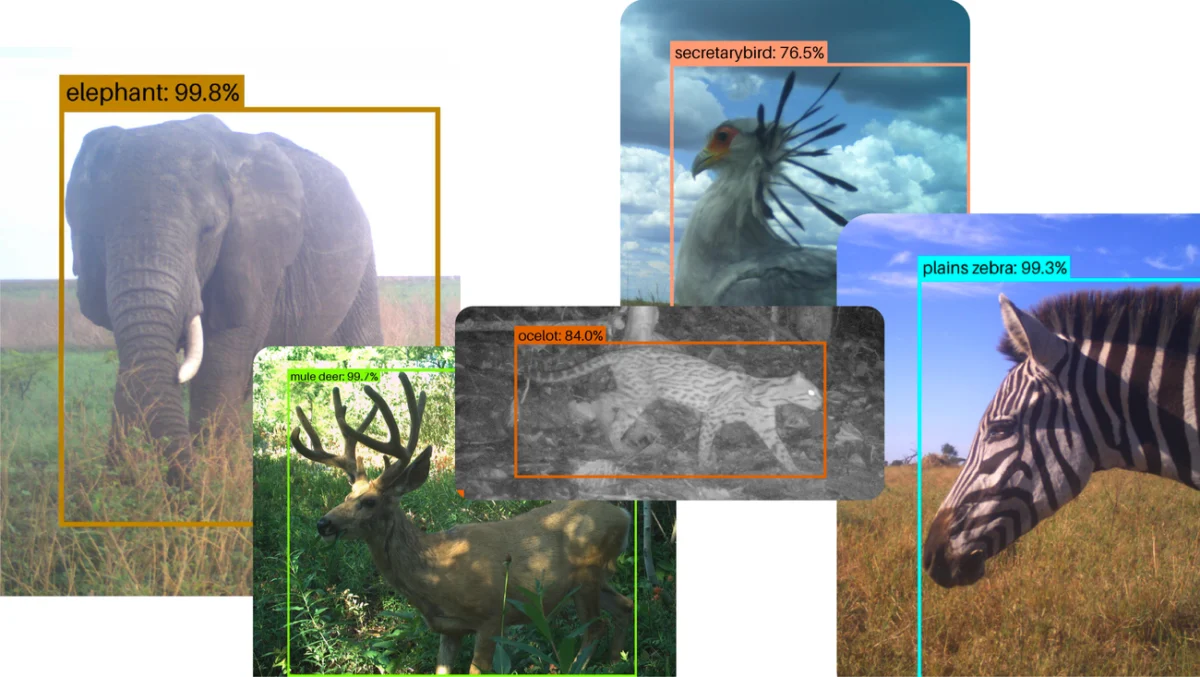
SpeciesNet utilizes advanced deep-learning architectures to identify animals across a vast array of environmental conditions. The model is trained to recognize species from multiple angles, in varying degrees of light, and even when only a portion of the animal is visible in the frame. This robustness is critical for field applications where cameras are subject to the elements and animals rarely cooperate with the framing of a shot. Originally integrated into the Wildlife Insights platform in 2019, the decision to open-source the model on GitHub a year ago was a strategic move to democratize access to high-tier AI, allowing local organizations to customize the tool for their specific ecological niches.

A Chronology of Implementation and Global Partnerships
The timeline of SpeciesNet’s impact is marked by several landmark collaborations across four continents. Each partnership demonstrates a different facet of the model’s versatility, from clearing decades-long backlogs to monitoring real-time behavioral shifts in response to climate change and human encroachment.
The Serengeti Backlog: A Decade of Data in Days
In Tanzania, the Snapshot Serengeti project—a collaboration with the Tanzanian Wildlife Research Institute—has maintained one of the world’s most extensive camera trap networks since 2010. For years, the project relied on a massive network of online citizen science volunteers to classify images. However, the sheer volume of data eventually outpaced the human workforce. Todd Michael Anderson of Wake Forest University utilized SpeciesNet to process a staggering backlog of 11 million photos. What would have taken years of manual labor was completed in a matter of days. This rapid processing has allowed researchers to gain a longitudinal view of fauna abundance and predator-prey dynamics in one of Africa’s most biodiverse ecosystems, providing a baseline for conservation efforts in the face of increasing environmental pressures.
South America: Monitoring Anthropogenic Pressures
In Colombia, the Humboldt Institute has integrated SpeciesNet into its national monitoring strategy. Colombia is ranked as the second most biodiverse country in the world, yet its ecosystems, particularly the Amazon Rainforest, are undergoing rapid transformation. The launch of "Red Otus," a national-scale network of camera traps on both public and private lands, has utilized SpeciesNet to analyze tens of thousands of images.

The data has yielded startling insights into "behavioral plasticity"—the way animals change their habits to survive. Analysis suggests that several mammalian species are becoming increasingly nocturnal to avoid human activity, while bird species in developed areas are appearing later in the morning, likely a strategy to mitigate predation risks. These findings are critical for urban planning and the establishment of wildlife corridors that account for the shifting schedules of the animals they are meant to protect.
North America: Enhancing State-Level Management
In the United States, the Idaho Department of Fish and Game (IDFG) represents a growing cohort of state agencies adopting AI to manage local wildlife populations. While aerial surveys are effective in the open plains of southern Idaho, the dense, rugged forests of the north require a different approach. The IDFG deploys hundreds of camera traps to monitor keystone species such as black bears, coyotes, mule deer, and elk. SpeciesNet acts as a primary filter, sorting millions of annual images by species before human experts conduct a final quality assurance review. This hybrid approach ensures high scientific accuracy while drastically reducing the administrative burden on state biologists.
Australia: Customization for Endemic Species
Perhaps the most significant evidence of the power of open-source AI comes from the Wildlife Observatory of Australia (WildObs). Because Australia is home to a high percentage of endemic species—animals found nowhere else on Earth—the base SpeciesNet model required specific tuning. WildObs took the open-source code and "trained" it on local wildlife, such as the red-legged pademelon and the southern cassowary. This ability to adapt the model to local needs is a cornerstone of the project’s philosophy, ensuring that even the most remote or unique ecosystems can benefit from cutting-edge computational power.
Supporting Data and Efficiency Metrics
The shift toward AI-assisted conservation is supported by compelling efficiency data. In traditional workflows, a professional biologist might spend between 30 seconds and several minutes identifying a single sequence of images, depending on the clarity and species complexity. When scaled to a project like Snapshot Serengeti, manual classification represents hundreds of thousands of man-hours.
SpeciesNet reduces this time by orders of magnitude. By automatically filtering out "empty" images—which can account for up to 80% of camera trap triggers in windy or high-traffic environments—the AI allows researchers to focus exclusively on relevant biological data. Furthermore, the model’s ability to identify nearly 2,500 categories means it can handle "bycatch" data—records of non-target species that are often ignored in manual studies but are vital for understanding total ecosystem health.
Official Responses and Technical Implications
The leadership behind SpeciesNet emphasizes that the tool is not intended to replace human expertise but to augment it. Tanya Birch, Senior Program Manager at Google Earth Outreach, and Dan Morris, Senior Research Scientist at Google Research, have noted that the open-source nature of the project is a response to the "biodiversity crisis." By removing the financial and technical barriers to high-level AI, Google aims to empower local conservationists who are often the most knowledgeable about their specific regions but lack the computational resources of large Western universities.
The broader scientific community has reacted positively to the transparency of the model. By hosting the code on GitHub, Google allows for peer review of the algorithms, ensuring that the data used for conservation policy is derived from a verifiable and improving source. This transparency is vital for government agencies like the IDFG, where management decisions regarding hunting quotas or land-use permits must be backed by rigorous, defensible data.
Broader Impact and Future Outlook
The implications of SpeciesNet extend far beyond simple animal identification. In the context of the global climate crisis, SpeciesNet serves as an early warning system. By tracking changes in migration timing and species distribution in real-time, the model provides a "pulse" of the planet’s health. As species are forced to move to higher altitudes or latitudes due to warming temperatures, SpeciesNet can help map these shifts as they happen, rather than years after the fact.
Furthermore, the success of SpeciesNet highlights a growing trend in "Computational Ecology." The integration of AI into field biology is creating a new generation of scientists who are as comfortable with Python scripts as they are with field binoculars. As the model continues to evolve, future iterations are expected to include individual animal recognition—allowing researchers to track the life history of specific pumas or elephants—and integrated acoustic monitoring to identify species by sound as well as sight.
The first year of SpeciesNet as an open-source tool has proven that when high-tech resources are placed in the hands of the global conservation community, the result is a more informed, responsive, and effective approach to protecting the natural world. From the plains of the Serengeti to the depths of the Amazon, the digital eyes of SpeciesNet are helping to ensure that the wild things of the world are not just seen, but understood and protected for generations to come.
