

Rites of passage, from the celebratory "Auld Lang Syne" on New Year’s Eve to the ceremonial champagne christening of a ship’s maiden voyage, mark significant transitions and new beginnings. In the dynamic world of sales, the annual Sales Kickoff (SKO) serves a similar, pivotal function: it is the definitive rite of passage that christens the new sales cycle, setting the tone, aligning objectives, and igniting the collective ambition of the sales force for the year ahead. Far from being a mere corporate gathering, a truly successful SKO is a meticulously crafted strategic event, demanding deep reflection, acute foresight, and a compelling narrative designed to inspire and unify every participant. In today’s hyper-competitive and rapidly evolving market landscape, the effectiveness of an SKO is directly correlated with a company’s ability to not only meet but exceed its ambitious sales targets.
The Evolving Landscape of Sales Kickoffs: More Than Just a Meeting
Historically, sales kickoffs might have been straightforward annual meetings, often focused solely on presenting revenue targets and new product features. However, the modern sales environment — characterized by rapid technological advancements, intense global competition, and the increasing complexity of customer journeys — has transformed the SKO into an indispensable strategic investment. Organizations now allocate substantial budgets and resources, both financial and human, to these events, recognizing their profound impact on morale, motivation, and the successful adoption of new strategies. Industry analysis consistently highlights the correlation between well-executed SKOs and improved sales performance metrics, including higher quota attainment, faster sales cycles, and enhanced team cohesion. Estimates suggest that companies spend millions annually on SKOs, underscoring the high stakes involved in maximizing their return on investment. A poorly planned or executed SKO risks not only wasting significant capital but also fostering disengagement, confusion, and even cynicism among the sales team, which can ripple negatively throughout the entire sales year. Therefore, understanding the foundational elements that transform a good event into an exceptional one is paramount for sales leaders.
Beyond Spectacle: The Imperative for Strategic Design
Many organizations fall into the trap of believing that a successful SKO hinges on external grandeur – a celebrity keynote, lavish entertainment, or an overemphasis on abstract goals without practical pathways. While elements of excitement can certainly contribute, true impact stems from strategic design. The core objective remains to unify sellers and energize them to achieve their goals. To guide this planning and avert costly missteps, four critical elements have emerged as essential for elevating any sales kickoff, ensuring the content resonates deeply, strikes an emotional chord, and translates into tangible action. These elements prioritize the human element and strategic clarity over mere spectacle.

Pillar 1: Audience-Centricity – The Foundation of Engagement
The most common pitfall in SKO planning is for leadership to design an event primarily from an organizational perspective. Leaders, naturally, prioritize overall company health, future growth, and the bottom line. However, assuming that the sales team shares these same high-level concerns in the same way can lead to a disconnect. The result is often an agenda filled with dense financial slides, abstract projections, and a general lack of practical relevance that causes eyes to glaze over.
The antidote is straightforward yet often overlooked: Put Your Audience First. Before drafting a single piece of content or planning any session, leaders must delve deeply into the mindset and experiences of their sales force. This requires empathetic inquiry, not assumption. Key questions to consider include:
- What challenges did our sellers face last year? What were their biggest wins?
- What are their current anxieties or concerns about the market, our products, or their roles?
- What hopes do they harbor for the coming year, both professionally and personally?
- What specific knowledge or skills do they need to feel empowered and successful?
- How do they prefer to learn and engage (e.g., interactive workshops, peer discussions, motivational speeches)?
By gathering these insights, through direct interviews, anonymous surveys, or discussions with frontline sales managers, leaders can craft messaging and programming that directly addresses the sellers’ realities. For instance, introducing a new AI-enabled sales workflow – a clear productivity win for the organization – should not be framed solely in terms of efficiency gains for the company. Instead, an audience-first approach would highlight how the AI tools will save sellers 8-10 hours a week on clerical tasks, freeing up valuable time and energy to nurture high-value relationships and drive deeper customer engagement. This reframes the initiative from a corporate mandate into a personal benefit, addressing potential fears of job displacement or increased workload head-on. Furthermore, instead of a passive live demonstration, planning small group breakouts where sellers can hands-on test the new technology fosters ownership and reduces adoption friction. This approach is supported by various organizational psychology studies, which show that individuals are far more likely to embrace change when they understand its direct benefit to them and feel a sense of agency in the adoption process. Companies leveraging audience-centric design for their SKOs often report a 20-30% increase in post-event engagement and higher rates of initiative adoption. Tools like Duarte’s "Audience Needs Map™" are invaluable in systematically analyzing these responses and translating them into actionable SKO content and experiences.
Pillar 2: The Unified Message – Crafting the "Duarte Big Idea™"
In the pursuit of comprehensiveness, many ambitious SKOs overwhelm their audiences with a deluge of information – financials, product roadmaps, market forecasts, and leadership pronouncements. While each topic may hold individual importance, their cumulative effect can be dilution, leaving attendees without a clear, memorable takeaway. The solution lies in establishing a singular, overarching message: the Duarte Big Idea™.
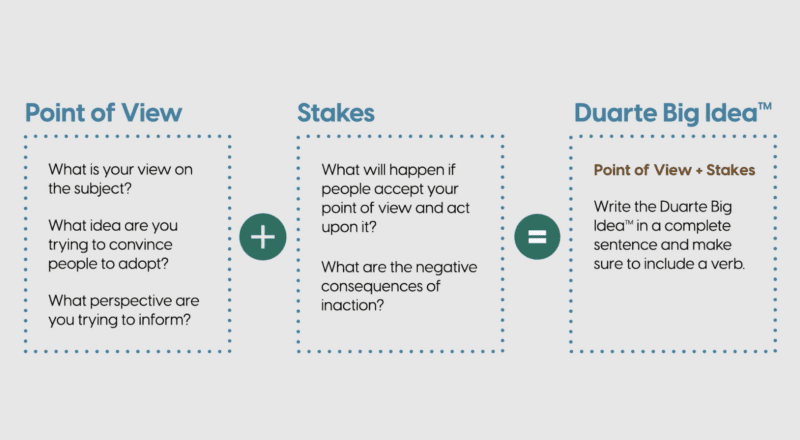
The Duarte Big Idea™ is a powerful framework for distilling complex messaging into a clear, concise, and compelling statement that encapsulates the essence of what leaders want their audience to remember and act upon. It combines your unique Point of View (POV) on a subject with What’s at Stake for your audience, forming a single, digestible sentence. For example, if the POV is "This new AI workflow will cut clerical tasks for sellers by 20%," and what’s at stake is "freeing up between 8-10 hours a week for high-value account holders," the Big Idea becomes: "This new AI workflow will cut clerical tasks for sellers by 20% and free up between 8-10 hours a week for high-value account holders." This statement serves as the strategic north star for all SKO content, from keynote speeches to breakout sessions and supporting materials. Any content that does not directly serve or reinforce this Big Idea should be reevaluated or communicated through alternative channels. The clarity provided by a single Big Idea™ has been a cornerstone of The Duarte Method™, trusted by Fortune 50 companies and global brands to maximize impact in high-stakes communications. Its adoption leads to greater message retention, improved alignment, and a more focused sales effort throughout the year.
Pillar 3: Narrative Arc – The Power of the 3-Act Structure
Once the audience is understood and the Big Idea™ is established, the next step is to structure the SKO programming in a way that is both engaging and memorable. The universally recognized 3-Act Structure provides an intuitive framework for storytelling, guiding the audience through a logical and emotionally resonant journey: a beginning, a middle, and an end. This ancient narrative form underpins everything from epic sagas like Star Wars and The Lord of the Rings to classical drama, making it instantly familiar and psychologically compelling.
- The Beginning (Act I): This is where the audience enters the story, positioned as the hero. It sets the current stage, acknowledging the existing circumstances, challenges, and the feelings, gaps, and needs identified during the audience-first research. It validates their experiences and establishes a shared reality.
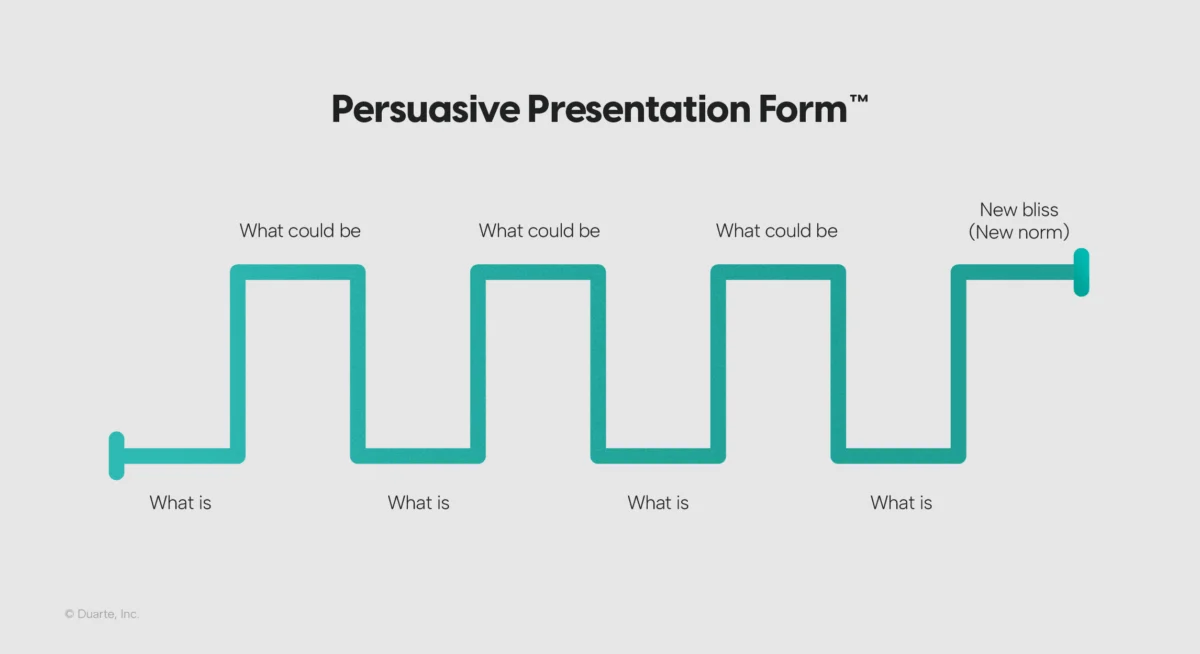
- The Middle (Act II): This is where the action, tension, and transformation occur. Often referred to as the "messy middle," this act introduces roadblocks and challenges that test the hero’s resolve. Within this act, the "Persuasive Presentation Form™" (or Presentation Sparkline™), popularized by Nancy Duarte, offers a dynamic call-and-response structure. It alternates between describing "what is" (the current reality, with its problems and obstacles) and "what could be" (the envisioned future, with its solutions and opportunities). This oscillation builds tension and desire, actively persuading the audience to embrace the proposed change. For instance, when discussing the AI workflow, the middle act would acknowledge the "what is" – the initial learning curve, potential disruptions, and discomfort with new tech – but immediately follow with "what could be" – the promised time savings, deeper customer relationships, and enhanced personal impact.
- The End (Act III): In the final act, the hero emerges transformed, conflicts are resolved, and the tension built in the middle is released as a new, desirable reality ("new bliss") sets in. This act provides a clear vision of the future and a call to action, outlining the concrete steps the audience needs to take to achieve the promised benefits. For the AI example, this would be the successful adoption of the tools, leading to a more efficient, fulfilling sales role and superior results.
This structured approach ensures that the SKO is not merely a collection of presentations but a coherent narrative that emotionally connects with participants, making the message more impactful and actionable. Studies on cognitive processing demonstrate that information presented within a story structure is significantly more memorable and persuasive than disconnected facts. Utilizing tools like sticky notes to visually map out the 3-act flow and the "what is/what could be" transitions allows for nimble experimentation and ensures a natural cadence for the entire event.
Pillar 4: Human Connection – The Impact of Personal Stories
Even with meticulous planning, a clear Big Idea™, and a compelling narrative structure, an SKO can feel distant without a human touch. The final, crucial element is to Weave in a Personal Story. While storytelling may feel daunting for some leaders, its power to forge genuine connection and relatability is immense. Authenticity, not theatricality, is the key.

Personal anecdotes, strategically placed, can:
- Humanize the message: Leaders become more relatable, fostering trust and rapport.
- Increase relatability: Abstract concepts or organizational changes become tangible through personal experience.
- Build empathy and connection: Shared emotions make the audience feel seen and understood.
- Make the complex simple: A personal story can serve as a powerful analogy for a challenging concept.
The story doesn’t need to be deeply vulnerable; a brief, relevant anecdote from outside the corporate sphere can suffice. For example, a sales leader introducing the new AI workflow might share: "While testing this new workflow over the past several months, something unexpected happened. My son was entering his ‘terrible twos,’ and my wife and I were exhausted from keeping up. I was working late every night, and she was increasingly on toddler duty. But as my understanding of these AI tools grew, my days started ending earlier. I was keeping pace with tasks and getting time back. Now, we all go to the park every day after picking him up from daycare. He can run his wheels, I’m contributing more around the house, and we’re all sleeping a little better." This simple story immediately connects the abstract benefit of AI (time-saving) to a universal human desire (work-life balance, family time), making the message resonate on a deeper, emotional level. Research on leadership communication consistently shows that leaders who share authentic stories are perceived as more trustworthy and inspiring, leading to greater employee engagement and motivation. Practicing these stories in smaller, trusted settings before the main event can build confidence and refine delivery.
Execution and Sustained Momentum: Beyond the Event
The successful SKO is not merely a standalone event; it is the kick-off point for a year-long journey. Effective planning involves a detailed timeline, typically beginning 3-6 months prior, covering content development, logistical arrangements, speaker preparation, and integration of interactive elements. Post-SKO, the commitment must extend to continuous reinforcement, establishing feedback loops, and providing ongoing support and training. This ensures that the initial enthusiasm translates into sustained momentum and actionable results. Sales leaders should implement quarterly check-ins, create dedicated channels for sharing success stories related to the SKO initiatives, and leverage internal communication platforms to keep the Big Idea™ and its implications top of mind. The implications of a strategically designed SKO are far-reaching: it fosters a resilient sales culture, enhances talent retention by demonstrating investment in employee success, and ultimately positions the organization for sustained competitive advantage and market leadership. Industry experts, such as those at the Sales Management Association, consistently advocate for this holistic approach, emphasizing that the SKO is a critical component of a broader sales enablement strategy.
By meticulously reflecting on the audience’s needs, committing to a singular and powerful Big Idea™, structuring the narrative with a compelling 3-act arc, and weaving in authentic personal stories, organizations can transform their Sales Kickoff from a routine event into a powerful catalyst for peak performance and remarkable growth. For companies seeking to refine their approach and maximize impact, specialized expertise in communication and presentation design, such as that offered by Duarte, can provide invaluable support, from crafting impactful keynote presentations to training teams for dynamic breakout sessions, ensuring every message is airtight and every team member is aligned around a unified vision for success.
