


Understanding emotions, once considered an abstract and elusive concept, is now being demystified and made accessible through a groundbreaking tool developed by leading behavioral researchers. Drs. Paul and Eve Ekman, drawing upon more than five decades of pioneering work in the study of human emotion and facial expression, have introduced "The Feelings Field Guide," a comprehensive and science-backed resource designed to translate complex psychological research into practical, everyday skills. This innovative guide aims to equip individuals with the ability to identify universal facial expressions and respond to emotions with greater accuracy and constructiveness, benefiting everyone from parents navigating their children’s anxiety to professionals engaged in high-stakes negotiations.
The Foundation of Emotional Understanding: Decades of Research
The development of "The Feelings Field Guide" is rooted in the extensive research conducted by Dr. Paul Ekman, a renowned psychologist often referred to as the "father of facial expression research." His work, beginning in the mid-20th century, challenged prevailing theories by demonstrating the universality of certain basic human emotions and their corresponding facial expressions across diverse cultures. This research, which involved meticulously observing and analyzing thousands of individuals in various cultural contexts, established that seven emotions—anger, fear, disgust, contempt, surprise, sadness, and happiness—are universally recognized by their distinct facial manifestations. This scientific bedrock forms the core of "The Feelings Field Guide," ensuring that the skills it imparts are grounded in robust empirical evidence.
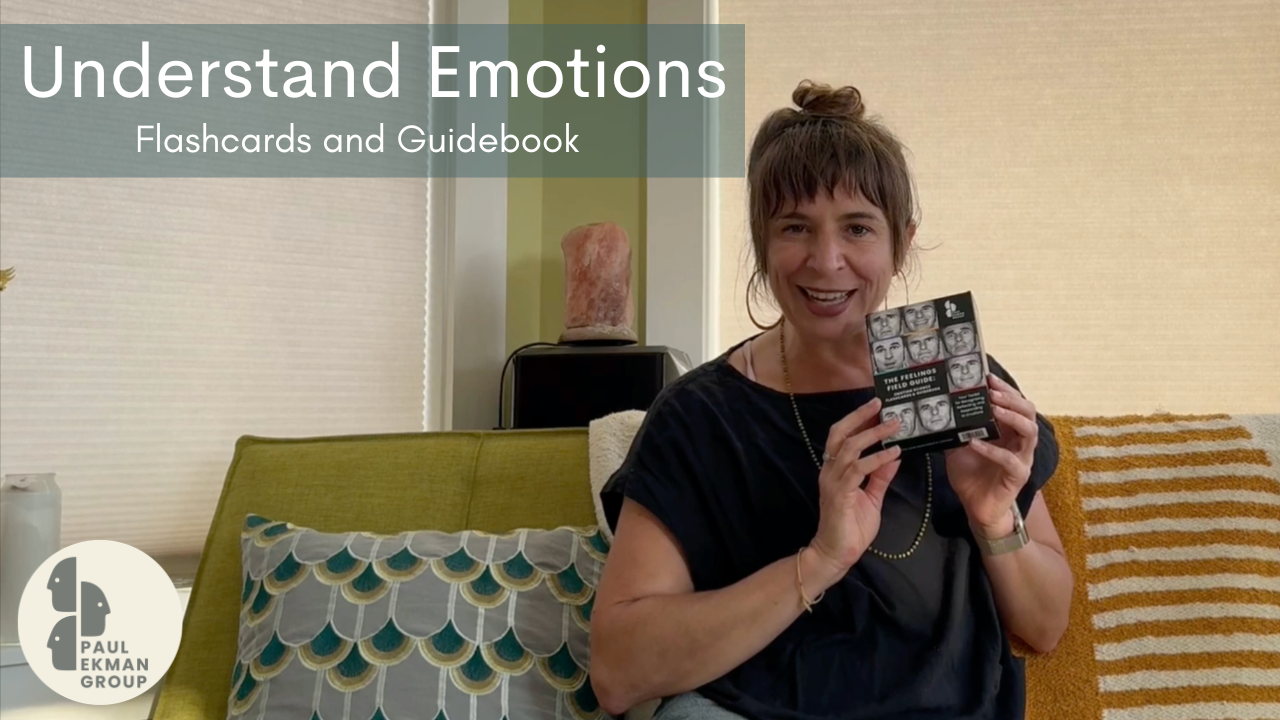
"The Feelings Field Guide" itself is a meticulously crafted toolkit. It comprises 92 emotion flashcards, each illustrating a specific emotional expression with scientific accuracy, and a comprehensive scientific guidebook. This combination is designed to significantly enhance emotional awareness and improve non-verbal communication skills. The flashcards serve as tangible aids for learning to recognize the subtle nuances of facial expressions, while the guidebook provides the scientific context and methodologies behind this recognition.
Unveiling the Science: A Glimpse into the Guide’s Methodology
Dr. Eve Ekman, who has continued and expanded upon her father’s legacy, often introduces the Field Guide and elucidates its core methodology. A key component of the guide’s effectiveness lies in its ability to teach users how to identify the universal facial expressions associated with the seven basic emotions. This is not merely about recognizing a general feeling; it is about understanding the specific muscle movements in the face that, when combined, create a distinct emotional expression. This scientific precision is what differentiates "The Feelings Field Guide" from other, less scientifically rigorous tools.
The accompanying video, often featured in promotional materials, typically showcases Dr. Eve Ekman explaining the foundational principles. It highlights how the guide leverages insights from the Facial Action Coding System (FACS), a comprehensive system developed by Dr. Paul Ekman and Wallace Friesen, which systematically describes all observable facial movements. FACS breaks down facial expressions into their component parts—Action Units (AUs)—which correspond to the contraction or relaxation of specific facial muscles. By learning to identify these AUs, individuals can gain an objective and precise understanding of what an emotion looks like on the face, irrespective of cultural idioms or personal interpretations. This scientific rigor ensures that the learning process is not subjective but rather based on observable, measurable phenomena.
From Theoretical Insight to Practical Application
The transformation of over 50 years of academic research into a practical, user-friendly tool is a testament to the Ekman team’s commitment to making emotional intelligence accessible. "The Feelings Field Guide" bridges the gap between academic understanding and real-world application, offering a tangible pathway for individuals to develop their emotional literacy.
Within the physical confines of the guide, users will discover a wealth of resources. While the specific contents of the flashcards and guidebook are detailed in the product’s literature, they are designed to facilitate active learning. This includes visual representations of the seven universal emotions, often presented in various intensities and combinations, allowing users to discern subtle differences. The guidebook likely provides detailed explanations of each emotion, its typical triggers, its evolutionary purpose, and the specific facial markers associated with it, all informed by decades of research. The emphasis is not solely on observation but on fostering a deeper understanding of the "why" behind these expressions.
A critical aspect highlighted by the creators is that the guide moves beyond mere identification. It encourages users to consider "knowing what to do with that awareness." This implies that the guide aims to equip individuals with strategies for responding to observed emotions constructively, whether in oneself or in others. This could involve learning to regulate one’s own emotional responses or to communicate more effectively based on an accurate understanding of another person’s emotional state. This practical application of emotional intelligence is crucial for building stronger relationships, resolving conflicts, and enhancing overall well-being.
Adaptability and Personalization: A Flexible Learning Experience
Recognizing that individuals learn and apply skills in diverse ways, "The Feelings Field Guide" is intentionally designed for flexibility. Its adaptable nature allows users to tailor their learning experience to their specific needs and preferences. This might include various methods of engagement:
- Self-Quizzing: The flashcards can be used as a personal diagnostic tool, allowing individuals to test their ability to identify emotions from facial expressions. This repetitive practice can solidify learning and build confidence.
- Focused Learning: Users can choose to concentrate on mastering one emotion at a time, delving deeply into its characteristics and expressions before moving on to others. This methodical approach can be particularly beneficial for those who find the sheer volume of information overwhelming.
- Reflection Exercises: The accompanying guidebook likely includes prompts and exercises designed to encourage introspection and the application of learned concepts to personal experiences. This could involve reflecting on past interactions or anticipating future situations, integrating emotional intelligence into daily life.
The absence of a single "right" way to use the guide underscores its user-centric design. The emphasis is on empowering individuals to discover the most effective methods for their personal growth, fostering a sense of ownership and agency in their journey toward enhanced emotional intelligence. This approach aligns with modern pedagogical principles that prioritize learner autonomy and personalized learning pathways.
Testimonials: Real-World Impact and Validation
The efficacy of "The Feelings Field Guide" is further validated by testimonials from individuals who have integrated it into their lives. These accounts offer compelling evidence of its practical value across different demographics and professions.
One testimonial from "Mark B." highlights its utility for parents. Mark, lacking a formal background in behavioral sciences, found the guide to be an "effective tool to use in discussing emotions with my son," who was experiencing anxiety and social regression. His confidence in the product was bolstered by the knowledge that it was "practically pioneered by Dr. Ekman," underscoring the scientific credibility that underpins the tool. This suggests that the guide can be instrumental in fostering open communication about emotions within families, particularly for children struggling with emotional regulation or social interaction.
Another user, "Simon B.," a professional in information security and data protection, emphasizes the professional advantages gained from using the Field Guide. He describes it as a "great tool" for anyone interested in micro-expressions and emotions. Simon found that understanding micro-expressions and emotions has significantly improved his interactions with colleagues, customers, and suppliers. He notes its particular value in his field, where "determining what people really feel compared to what they are saying" is a crucial skill for security professionals. This testament illustrates how the guide can be applied in professional settings to enhance interpersonal dynamics, build trust, and improve decision-making by providing a deeper understanding of underlying emotional states.
The Profound Significance of Emotional Intelligence
The importance of emotional intelligence, and the ability to accurately read emotions, cannot be overstated. Emotions are not merely transient feelings; they are fundamental drivers of human thought, communication, and decision-making, often influencing us more profoundly than we consciously realize.
When emotional cues are misread, either in oneself or in others, the consequences can range from minor misunderstandings to significant conflicts, strained relationships, or missed opportunities for connection and collaboration. For instance, misinterpreting a colleague’s quietness as disinterest when it is actually due to fatigue can lead to a breakdown in communication. Similarly, failing to recognize the subtle signs of distress in a child can delay crucial support.
Conversely, developing the capacity to recognize and respond to emotions with greater accuracy yields substantial benefits:
- Enhanced Self-Awareness: Understanding one’s own emotional landscape allows for better self-regulation, more considered responses to stress, and improved personal well-being.
- Stronger Interpersonal Relationships: Accurately perceiving and responding to the emotions of others fosters empathy, builds trust, and strengthens bonds in personal and professional contexts.
- Improved Communication: When individuals can read non-verbal cues, they can tailor their communication to be more effective, avoid misinterpretations, and ensure their message is received as intended.
- Effective Conflict Resolution: Understanding the underlying emotions driving a conflict allows for more constructive dialogue and facilitates the finding of mutually agreeable solutions.
- Increased Empathy and Compassion: The ability to connect with and understand the emotional experiences of others cultivates a more compassionate and supportive environment.
"The Feelings Field Guide" is specifically engineered to cultivate these essential skills. Its design, grounded in scientific research and practical application, offers a repeatable and reliable method for individuals to enhance their emotional intelligence, leading to more fulfilling relationships and a more effective navigation of the complexities of human interaction.
Frequently Asked Questions: Clarifying the Guide’s Uniqueness
To further clarify the value and distinctiveness of "The Feelings Field Guide," several frequently asked questions are addressed:
How is this different from other emotion flashcards?
The primary differentiator lies in its scientific foundation. While many emotion flashcards simply provide a label for a feeling, "The Feelings Field Guide" is the only tool explicitly based on the Facial Action Coding System (FACS). This ensures that the facial expressions depicted are not arbitrary interpretations but are scientifically accurate representations of universal emotional expressions. FACS provides a granular, objective system for describing facial movements, making the learning process rigorous and reliable. This scientific backing lends a high degree of validity and trustworthiness to the skills acquired through its use.
Is there a digital version?
Currently, "The Feelings Field Guide" is presented as a physical, tactile tool. This emphasis on a tangible resource is intended to enhance the learning experience through direct interaction. However, for individuals seeking a more advanced, digitally-driven, and performance-based mastery of micro-expressions and emotional recognition, it is often recommended to supplement the Field Guide with the "Micro-expression Training Tools" offered by the Paul Ekman Group. These digital tools provide certified training and performance metrics, catering to a more intensive learning requirement.
In conclusion, "The Feelings Field Guide" represents a significant advancement in making the science of emotions accessible and actionable. By translating decades of rigorous research into a practical, adaptable, and user-friendly tool, Drs. Paul and Eve Ekman are empowering individuals to cultivate greater emotional intelligence, leading to more profound personal connections, enhanced professional effectiveness, and a deeper understanding of the human experience.
