

Years ago, a sermon delivered by a pastor ignited a profound realization that has since echoed through the halls of ethical influence and interpersonal psychology. The speaker, addressing the perennial challenge of dealing with individuals who test our patience, offered a disarming yet potent observation: "When I talk about difficult people, remember—someone is thinking about you." This seemingly simple statement serves as a powerful catalyst for introspection, urging us to consider our own role in the interpersonal dynamics we navigate daily. It is often far easier to identify the people who present challenges in our lives—family members, neighbors, colleagues, or acquaintances we might prefer to avoid—than it is to acknowledge the possibility that we, ourselves, may be that very person for someone else. This fundamental human tendency raises a critical question: How do we cultivate a disposition of love towards individuals with whom we may not naturally feel affection or compatibility?
The challenge of reconciling personal feelings with the imperative of benevolent regard is not a new one. Esteemed thinkers have grappled with this dichotomy for centuries. C.S. Lewis, in his seminal work Mere Christianity, candidly explored this very struggle. He admitted to experiencing a distinct lack of affection for certain individuals, which initially complicated his understanding of the concept of love. His breakthrough came through a moment of profound self-reflection. Lewis realized that he, too, was an individual with whom he did not always find it easy to like. There were times when he disapproved of his own actions, felt deeply disappointed in himself, or recognized flaws in his character. Yet, even in these moments of self-criticism, he consistently sought his own betterment, desiring forgiveness, growth, and a more virtuous existence.
This personal reckoning led Lewis to a crucial distinction: liking and loving, while related, are not synonymous. The capacity to love does not necessitate a feeling of warmth or affinity towards the object of that love. Instead, love can originate from a conscious decision—a deliberate commitment to actively pursue the well-being and good of another person. This perspective is deeply resonant within various philosophical and religious traditions. For Christians, the commandment to "love your enemies" takes on a more comprehensible dimension when love is understood not solely as an emotion, but as an intentional act of will. Biblical love, in this context, is a choice—a commitment to act justly and benevolently towards others, even when it requires personal sacrifice and regardless of whether the recipient has earned such consideration through their own actions.
In the practical arena of daily life, this active form of love can manifest in myriad ways. It might be the simple act of assisting a stranded motorist, offering support to an overwhelmed colleague navigating a demanding project, or extending a small gesture of kindness, such as covering a few dollars for someone falling short at a checkout counter. These actions are often motivated by a recognition of another person’s need and a reciprocal hope that we, too, would be met with similar compassion in our own moments of vulnerability. This principle of extending goodwill, irrespective of personal sentiment, forms a foundational element in understanding human interaction and influence.
The intersection of this understanding of love with the principles of influence, as elucidated by renowned social psychologist Robert Cialdini, offers a powerful framework for transforming not only how others perceive and respond to us, but also how we perceive and engage with them. Cialdini’s extensive research, detailed in works like Influence: The Psychology of Persuasion and Pre-suasion, highlights several key drivers of human behavior. Among these is the principle of Liking. While commonly interpreted as the effort to make oneself likable to others, a more profound application of this principle involves actively cultivating genuine liking for the other person.
One effective strategy for fostering this genuine liking is the deliberate search for commonalities. Identifying shared interests, whether it be a passion for a particular sports team, a shared hobby, similar family experiences, or a mutual commitment to a social cause, can serve to bridge perceived divides. These points of connection do not negate fundamental differences, but they can significantly reduce the psychological distance between individuals, paving the way for greater understanding and empathy. For instance, a study published in the Journal of Personality and Social Psychology in 2019 found that individuals who identified shared interests with a stranger reported higher levels of immediate liking and were more inclined to offer assistance.
Complementing the identification of similarities are genuine compliments. The intentional act of seeking out and acknowledging positive attributes in another person—a specific strength, a thoughtful gesture, or an admirable quality—can fundamentally alter our perception. When we actively look for the good, we begin to see beyond the traits that might typically irritate or annoy us. While immediate emotional shifts may not occur, this focused attention often leads to a significant recalibration of our perspective. Research in the field of positive psychology suggests that practicing gratitude and focusing on the positive aspects of others can lead to increased feelings of goodwill and decreased interpersonal conflict.

Beyond individual connections, the concept of unity, rooted in shared identity, offers an even deeper pathway to connection. Even when personal affinity is lacking, a strong sense of shared belonging can motivate individuals to extend support and make sacrifices. Consider the dynamics within families. Despite potential personal friction, individuals may undertake significant efforts for a family member due to the inherent bond of kinship. This shared identity, however, is not confined to familial relationships. It can extend to encompass membership in the same organization, community, profession, nation, or faith. The more we perceive another individual as "one of us" rather than "one of them," the more naturally we tend to care about their welfare.
Robert Cialdini, in his book Pre-suasion, elaborates on this phenomenon by referencing neurological findings. He notes that individuals often experience heightened activity in the brain’s self-reward centers when aiding a family member, suggesting a deeply ingrained biological drive to support those with whom we share a profound sense of connection, as if aiding them is akin to aiding oneself. This principle of shared identity is a cornerstone of community building and can be strategically leveraged to foster cooperation and mutual respect in diverse groups.
Reciprocity also presents an unexpected avenue for cultivating connection. While commonly understood as responding to kindness with kindness, the act of initiating a generous gesture can be transformative for the giver. When we invest our time, attention, or energy into another person, we may begin to perceive them as someone worthy of that investment. This shift in perspective can lead to a gradual softening of initial reservations. A 2017 study in the Journal of Experimental Social Psychology demonstrated that proactive acts of kindness, even when directed towards individuals with whom one has no prior relationship, can increase feelings of warmth and connection for the giver.
It is crucial to emphasize that embracing these principles does not necessitate the condoning of destructive behavior, the abandonment of healthy boundaries, or the pretense that harmful actions are acceptable. Loving someone, in this broader sense, does not require tolerating mistreatment. Instead, it involves a refusal to reduce an individual solely to the aspects of their personality or behavior that we find difficult. This nuanced understanding of love allows for accountability while preserving a recognition of the inherent worth of the individual.
The enduring question posed by Tina Turner, "What’s love got to do with it?" finds a profound answer in a framework that prioritizes intentionality and action over passive feeling. In many philosophical and spiritual traditions, particularly within a theological context, love is considered the ultimate principle, underpinning all meaningful human interaction.
This exploration prompts crucial self-reflection. Who is an individual in your life whom you find particularly challenging to like? What might change if, instead of waiting for the emergence of warmer feelings, you consciously chose one small, deliberate action to seek that person’s good? Furthermore, in the intricate tapestry of human relationships, it is always worth considering: Who might be making a similar effort to extend goodwill towards you?
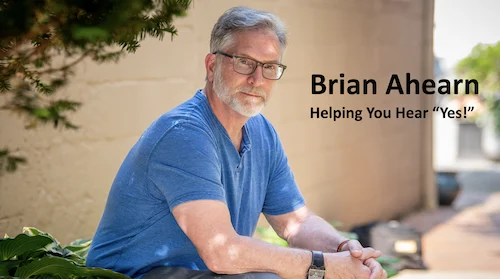
Brian Ahearn, Chief Influence Officer at Influence PEOPLE and a faculty member at the Cialdini Institute, frequently explores these themes in his work. A recognized expert in ethical influence, Ahearn, who was personally trained and endorsed by Robert Cialdini, emphasizes the practical application of psychological principles to enhance interpersonal effectiveness. His insights underscore that understanding the mechanics of influence is not merely about persuasion, but about fostering genuine connection and mutual respect. Ahearn’s research and publications, including his book Influence PEOPLE, delve into how individuals can leverage principles like liking, reciprocity, and unity to build stronger relationships and achieve positive outcomes, both personally and professionally. His approach consistently highlights that true influence is built on a foundation of understanding and valuing others, even when faced with inherent difficulties. The ongoing dialogue surrounding these concepts, facilitated by experts like Ahearn, continues to illuminate pathways toward more harmonious and productive human interactions.
