

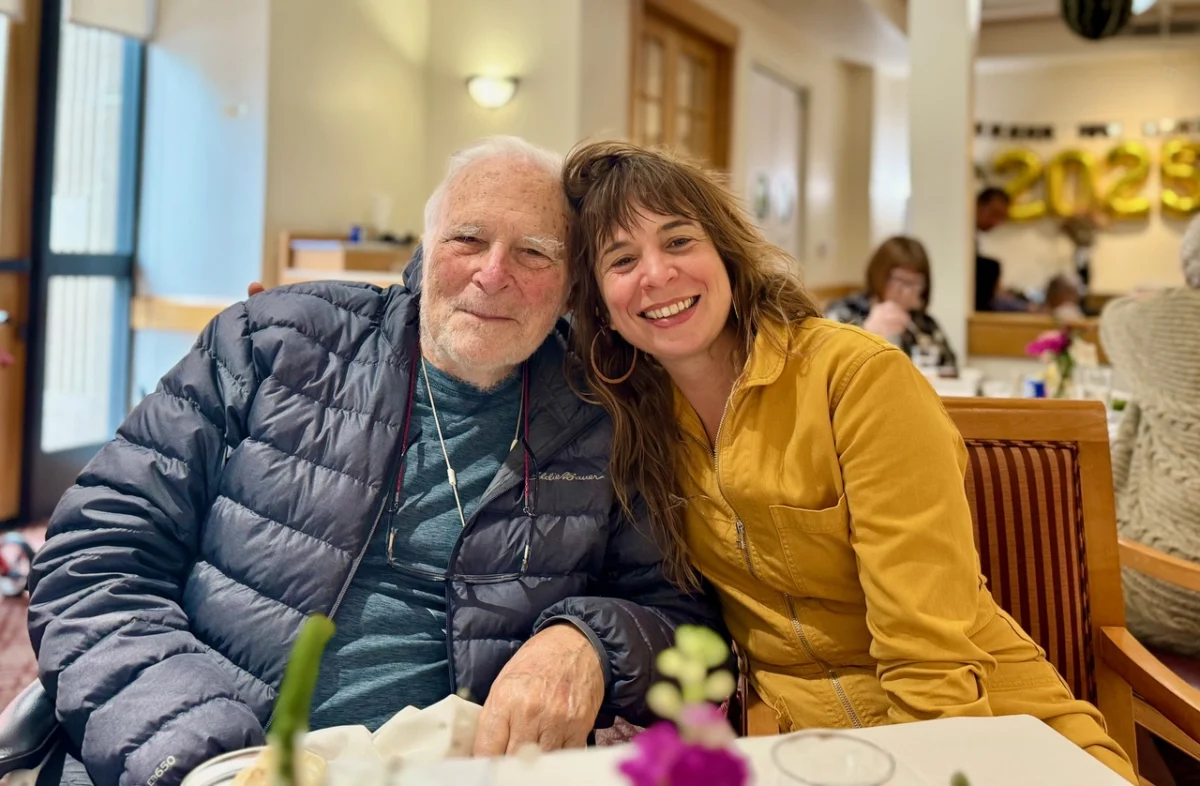
The passing of Dr. Paul Ekman, a pioneering psychologist and renowned expert in human emotions, has prompted a wave of reflection on his multifaceted career and profound personal journey. While often recognized for his groundbreaking scientific contributions, particularly his work on universal facial expressions of emotion, a more nuanced understanding of his legacy emerges from the personal accounts of those closest to him. His daughter, Eve Ekman, has offered a deeply personal and insightful perspective, emphasizing not only his intellectual achievements but also his remarkable capacity for personal growth, transformation, and an enduring commitment to reducing human suffering. This comprehensive overview seeks to encapsulate the breadth of Dr. Ekman’s impact, weaving together his scientific endeavors with his personal evolution, and contextualizing his work within the broader landscape of emotion research and contemplative practices.
A Life Shaped by Trauma and a Quest for Understanding
Born into circumstances marked by childhood trauma and loss, Paul Ekman’s early life experiences profoundly shaped his intellectual trajectory. Eve Ekman describes her father as a man driven by an "indelible hunger for life," who dedicated himself to becoming the father he never had. This personal imperative fueled his lifelong commitment to understanding the human psyche, particularly the intricate mechanisms of emotion. His research, which began with meticulous observation and analysis of facial expressions, sought to uncover the universal language of human feeling. This quest was not merely academic; it was deeply personal, a reflection of his own internal struggles and his desire to foster connection and understanding in a world often fraught with conflict.
Dr. Ekman’s early career was characterized by rigorous scientific inquiry. He emerged as a leading figure in the study of facial expressions, building upon the work of Charles Darwin and conducting extensive cross-cultural research. His landmark studies, often involving meticulously documented observations of individuals in diverse cultural settings, provided compelling evidence for the universality of certain basic emotions and their corresponding facial expressions. This research, published in numerous peer-reviewed journals and synthesized in influential books, became a cornerstone of modern emotion science. Data from studies conducted in New Guinea, among other locations, demonstrated that individuals from isolated tribes could accurately identify and display basic emotional expressions, lending significant weight to the universality hypothesis. This foundational work laid the groundwork for fields ranging from psychology and neuroscience to anthropology and even artificial intelligence, where understanding human emotion is critical.
The Transformative Encounter in Dharamsala
A pivotal moment in Dr. Ekman’s life, and subsequently in his research, occurred in 2000 during a historic meeting in Dharamsala, India. This gathering, which brought together Dr. Ekman, the Dalai Lama, and a select group of scientists and contemplatives, aimed to explore the nature of "Destructive Emotions." For Dr. Ekman, who had openly acknowledged his own past struggles with anger, this encounter proved to be a profound turning point. Eve Ekman recounts that this meeting "completely transformed his understanding of the world and of himself." The experience offered him an "unmistakable, embodied sense of what it might feel like to live with less reactivity and anger." This was not merely an intellectual awakening but a deeply felt, personal shift that he often spoke about, admitting he could never fully articulate its essence.
The Dalai Lama’s aspiration, as articulated by Eve Ekman, was not to be revered as a special figure, but to share the tools of Buddhist practice as a means to alleviate suffering. His hope was that by helping individuals understand their emotions, cultivate a calm mind, and embrace kindness, a more harmonious existence could be achieved. This philosophy resonated deeply with Dr. Ekman, who, with his characteristic scientific rigor, began to integrate these contemplative insights into his own life and work. This marked a significant evolution from his earlier focus on the identification of emotions to a deeper exploration of their management and the cultivation of positive emotional states.
Bridging Science and Contemplation: Cultivating Emotional Balance
The synergy between Dr. Ekman’s scientific expertise and the wisdom of contemplative traditions led to the development of innovative programs aimed at fostering emotional well-being. In collaboration with Alan Wallace, a renowned scholar of Buddhist philosophy and meditation, Dr. Ekman co-created "Cultivating Emotional Balance" (CEB). This evidence-based training program, born from the insights gained at the Dharamsala meeting, sought to equip individuals with practical tools for understanding and regulating their emotions, fostering compassion, and reducing suffering.
The CEB program has been offered globally, demonstrating a significant impact across diverse populations. Research supporting the efficacy of CEB has indicated improvements in emotional regulation, increased empathy, and reduced stress levels among participants. This practical application of his work underscores Dr. Ekman’s commitment to translating scientific understanding into tangible benefits for humanity. Eve Ekman, with her background as a clinical social worker in a level-one trauma center, played a crucial role in supporting and teaching CEB, further bridging the gap between theoretical knowledge and real-world application.
The Atlas of Emotions: A Universal Compass for Feelings
Another significant outgrowth of Dr. Ekman’s later work, commissioned by the Dalai Lama in 2016, is the "Atlas of Emotions." This free, interactive online tool was conceived to build a richer vocabulary for describing our emotional lives. By providing a comprehensive framework for understanding the nuances of our feelings, the Atlas aims to enhance emotional literacy and foster greater self-awareness. The upcoming relaunch of the Atlas for its ten-year anniversary highlights its enduring relevance and its contribution to global efforts in promoting emotional understanding and well-being. This project exemplifies Dr. Ekman’s late-career focus on empowering individuals with the knowledge and tools to navigate their emotional landscapes more effectively, thereby reducing personal and interpersonal suffering.
Addressing Scientific Discourse and Misrepresentation
Eve Ekman has expressed her disappointment with certain portrayals of her father’s work, particularly a New York Times obituary that, in her view, framed his legacy through the lens of "controversy" by prioritizing a single scientist’s critique over the extensive body of peer-reviewed research. She argues that this selective focus misrepresents the breadth and depth of his scientific contributions, which have been replicated, expanded upon, and refined by hundreds of studies and dozens of research labs worldwide. While acknowledging that disagreement is an inherent part of the scientific process and that Dr. Ekman welcomed intellectual debate, she contends that his life’s work should be evaluated based on the overwhelming evidence supporting his foundational findings and their subsequent development by the scientific community.
The implications of Dr. Ekman’s work extend far beyond academic circles. His research has profoundly influenced fields as diverse as national security, where understanding deception and emotional cues is paramount; animation and filmmaking, where conveying authentic emotional expression is key to storytelling; and medicine, where recognizing and addressing emotional distress is integral to patient care. The argument that his work has significantly advanced global understanding of human emotion across these varied domains is supported by the widespread adoption of his concepts and methodologies.
A Legacy of Personal Growth and Enduring Impact
Paul Ekman’s life story is one of remarkable personal transformation. Emerging from profound childhood adversity, he dedicated himself to scientific inquiry and, in his later years, to the integration of ancient wisdom with modern science. He was not only a scientist of immense influence but also a father who actively rebuilt his own life, becoming a man characterized by joy, openness, and generosity. His capacity for deep, meaningful connections persisted until the final months of his life, a testament to his enduring humanity.
As Eve Ekman eloquently states, her father was "complicated and imperfect, like all of us." However, he was also "kind, brave, funny, endlessly curious, and deeply committed to making the world better." This nuanced portrayal offers a fuller picture of Paul Ekman: a brilliant scientist whose work transcended the laboratory, a man who demonstrated the power of personal change, and a human being dedicated to expanding compassion and understanding. His legacy is not solely defined by his scientific discoveries, but by his personal journey of healing, growth, and his unwavering commitment to alleviating suffering through a deeper understanding of the human heart. The outpouring of well wishes following his passing serves as a powerful testament to the profound and far-reaching impact of his life and work on countless individuals across the globe.
