


Ten years ago, the world was introduced to the Atlas of Emotions, a groundbreaking initiative that emerged from a profound collaboration between renowned psychologist Dr. Paul Ekman, his daughter Dr. Eve Ekman, and His Holiness the Dalai Lama. This ambitious project aimed to chart the intricate landscape of human emotion, presenting it in a format that was both scientifically rigorous and easily comprehensible to a global audience. Today, a decade after its inception, the Atlas of Emotions continues to exert a significant influence, its framework for emotional awareness permeating educational institutions, therapeutic practices, academic research, and everyday discourse worldwide.
The Genesis of a Universal Emotional Framework
The conceptualization of the Atlas of Emotions stemmed from Dr. Paul Ekman’s lifelong dedication to understanding the universality of human emotions. His seminal work, building upon decades of research, sought to identify areas of consensus within the scientific community regarding the nature of emotions. This pursuit culminated in a comprehensive survey of nearly 250 emotion scientists, a landmark study that revealed a significant degree of agreement on the existence and characteristics of universal emotions. This scientific consensus formed the bedrock upon which the Atlas was built, ensuring its validity and broad applicability.
The collaborative spirit that defined the Atlas of Emotions was instrumental to its success. The project brought together distinct yet complementary expertise: the rigorous psychological research of the Ekman team, the sophisticated graphic design necessary for visualizing complex emotional data, and the profound contemplative insights of His Holiness the Dalai Lama. This interdisciplinary approach, capturing the essence of cross-cultural understanding and scientific inquiry, was crucial in translating complex psychological theories into an accessible and engaging format.
A Rare Glimpse: The Making of the Atlas
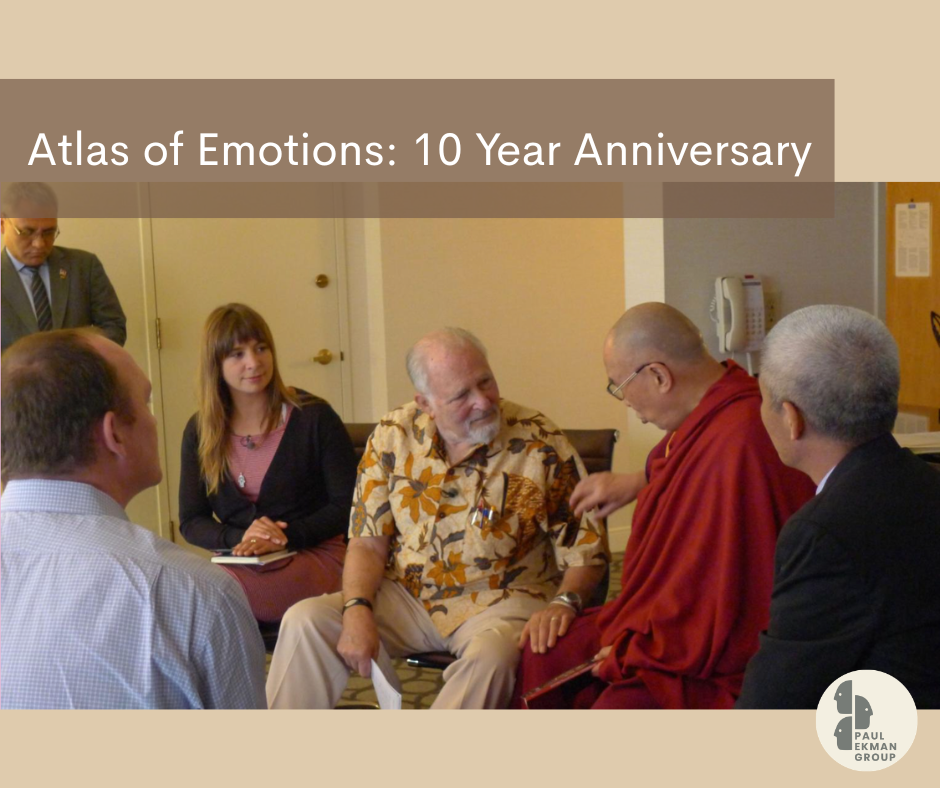
To commemorate its tenth anniversary, the Paul Ekman Group has released never-before-seen footage offering an intimate look into the creative process. This archival material captures a working meeting between Dr. Paul Ekman, Dr. Eve Ekman, and His Holiness the Dalai Lama as they meticulously reviewed the Atlas of Emotions during its development. This behind-the-scenes glimpse underscores the dedication, thoughtful deliberation, and shared vision that characterized the project’s creation. The footage provides valuable context, illustrating the collaborative dialogue and iterative refinement that went into shaping the final product, highlighting the intellectual synergy between these distinguished figures.
The video showcases the challenges and triumphs of synthesizing scientific data with contemplative wisdom. It reveals the meticulous attention to detail involved in mapping emotional states, their triggers, and their potential behavioral responses. The presence of His Holiness the Dalai Lama lent a unique dimension to the project, infusing it with a perspective that transcended purely scientific observation, emphasizing compassion and the shared human experience of emotions.
From Launch to Global Recognition: A Decade of Impact
Upon its official launch in 2016, the Atlas of Emotions garnered immediate and widespread international attention. The New York Times, among other prominent media outlets, recognized the initiative’s innovative approach to demystifying the complex world of emotions and making advanced psychological concepts accessible to the general public. This early validation served as a powerful catalyst, propelling the Atlas into broader adoption across diverse sectors.
Over the past ten years, the Atlas of Emotions has been integrated into a multitude of contexts. In educational settings, it has provided students with a foundational understanding of their own emotional lives and those of others, fostering greater empathy and emotional intelligence from an early age. Universities and research institutions have utilized the Atlas as a tool for academic study, contributing to ongoing research in psychology, neuroscience, and human behavior.
Within the therapeutic landscape, therapists and counselors have employed the Atlas to facilitate deeper client self-awareness and to equip individuals with practical strategies for managing emotional challenges. Its intuitive design and comprehensive approach have proven invaluable in helping individuals navigate complex emotional terrain, leading to improved mental well-being and more effective therapeutic outcomes. Furthermore, the Atlas has found its way into everyday conversations, empowering individuals to articulate and understand their emotions with greater clarity, thereby enhancing interpersonal relationships and fostering more constructive communication.
While specific quantitative data on user engagement is not detailed in the initial announcement, the widespread adoption across these varied fields suggests a significant cumulative impact. Anecdotal evidence, often shared through feedback channels, consistently points to the Atlas as a pivotal resource for personal growth and professional development.
Charting the Future: Community Feedback and Upcoming Developments
As the Atlas of Emotions celebrates this significant ten-year milestone, the focus is now shifting towards its future evolution. The Paul Ekman Group is actively seeking input from its global community to inform the next phase of development. Users are invited to share their personal experiences with the Atlas, detailing how it has influenced their perspectives, understanding, and actions. This direct feedback mechanism is crucial for ensuring that future iterations remain relevant, responsive, and impactful.
The feedback form, available via a provided link, serves as a vital conduit for collecting user insights. This information will be instrumental in identifying areas for enhancement, potential new features, and the most impactful applications of the Atlas. The commitment to incorporating user feedback underscores a user-centric approach to development, aiming to ensure the Atlas continues to serve its purpose effectively in an ever-evolving world.
Looking ahead, significant developments are on the horizon. Updates to the online, interactive Atlas of Emotions are planned, promising an enhanced user experience and potentially expanded content. More notably, Dr. Eve Ekman is currently authoring a comprehensive "Atlas of Emotions" book, slated for release in 2027. This forthcoming publication is expected to delve deeper into the foundational principles of the Atlas, offering expanded insights, updated research, and novel approaches to understanding and engaging with the emotional spectrum. The book aims to build upon the legacy of the original project, providing a rich, in-depth resource for a new generation of learners and practitioners. Individuals interested in being notified of the book’s availability are encouraged to join the dedicated announcement list.
The Enduring Significance of Emotional Literacy
The ten-year anniversary of the Atlas of Emotions is more than just a celebratory moment; it is a testament to the enduring human need for emotional literacy. In an increasingly complex and interconnected world, the ability to understand, manage, and express emotions effectively is paramount for individual well-being, healthy relationships, and societal harmony. The Atlas, by providing a clear and accessible map of this internal landscape, empowers individuals with the tools necessary to navigate their emotional lives with greater wisdom and resilience.
The collaborative spirit that birthed the Atlas, bridging scientific inquiry with compassionate wisdom, has proven to be a powerful model for addressing complex human challenges. As the project continues to evolve, its foundational principles of scientific rigor, accessibility, and collaborative development will undoubtedly continue to guide its trajectory, ensuring its relevance and impact for years to come. The ongoing commitment to gathering user feedback and expanding its reach through new publications signals a proactive approach to fostering a more emotionally intelligent world.
