

In the latest installment of the Anecdotally Speaking podcast, Episode 284, hosts Mark Hewlett and Shawn Callahan explore a fundamental paradox of human experience: the facts of a life may remain constant, but the meaning derived from those facts is entirely dependent on the narrative framework applied to them. This exploration is centered on the historical account of Tsutomu Yamaguchi, the only person officially recognized by the Japanese government to have survived both the Hiroshima and Nagasaki atomic bombings. By examining Yamaguchi’s life, the episode delves into how the stories individuals tell themselves influence resilience, leadership efficacy, and the capacity to find meaning in the wake of catastrophic change.
The discussion serves as a bridge between historical tragedy and modern organizational psychology. It posits that the ability to reframe events is not merely a survival mechanism but a critical leadership competency. As Anecdote International, a global leader in storytelling training, continues its work across 28 countries, this episode highlights the strategic importance of narrative in maintaining professional integrity and navigating complex decision-making environments.
The Dual Survival of Tsutomu Yamaguchi: A Chronology of August 1945
The narrative of Tsutomu Yamaguchi is one of the most statistically improbable events in modern history. In August 1945, Yamaguchi was a 29-year-old naval engineer for Mitsubishi Heavy Industries. His journey through the end of World War II provides a harrowing case study in human endurance and the randomness of fate.
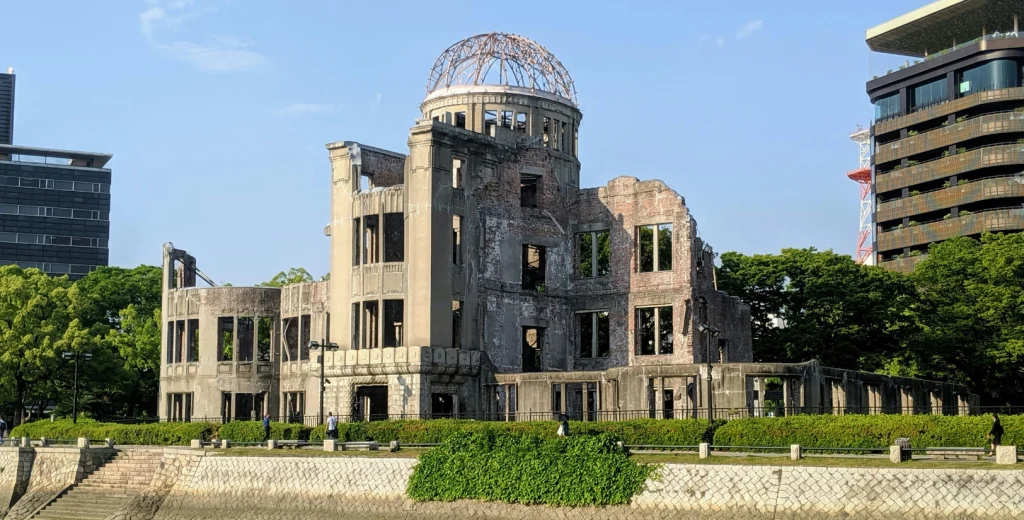
On August 6, 1945, Yamaguchi was in Hiroshima on a three-month business trip. As he was walking toward the Mitsubishi shipyard for his final day of work, the B-29 bomber Enola Gay dropped the "Little Boy" atomic bomb. At 8:15 a.m., Yamaguchi witnessed a "blinding flash" in the sky. Despite being approximately three kilometers from the hypocenter, the blast threw him into the air, ruptured his eardrums, and left him with severe thermal burns across the left side of his body. Amidst the total devastation of the city, which saw an estimated 140,000 fatalities by the end of the year, Yamaguchi found a way to a city shelter.
The following day, despite his injuries, Yamaguchi navigated the ruined city to reach the Hiroshima railway station, which was miraculously still functioning in a limited capacity. He boarded a train filled with other burned and traumatized survivors, traveling 320 kilometers west to his hometown of Nagasaki.
On August 9, 1945, after receiving basic medical treatment and reuniting with his wife and infant son, Yamaguchi reported to the Mitsubishi office in Nagasaki. As he sat in his superior’s office, explaining the unprecedented destruction he had witnessed in Hiroshima, his boss expressed disbelief that a single bomb could level an entire city. At that exact moment, the second atomic bomb, "Fat Man," was detonated over Nagasaki. Once again, Yamaguchi was approximately three kilometers from ground zero. Though the office windows were shattered and the building was damaged, Yamaguchi survived a second nuclear explosion within three days.
Data and Historical Context of the Atomic Bombings
To understand the magnitude of Yamaguchi’s experience, it is necessary to consider the scale of the 1945 bombings. The Hiroshima blast carried an explosive yield of approximately 15 kilotons of TNT, while the Nagasaki blast was more powerful at 21 kilotons.
| Metric | Hiroshima (Aug 6) | Nagasaki (Aug 9) |
|---|---|---|
| Bomb Name | Little Boy | Fat Man |
| Estimated Immediate Deaths | 70,000–80,000 | 35,000–40,000 |
| Total Deaths by end of 1945 | ~140,000 | ~74,000 |
| Distance of Yamaguchi from Hypocenter | 3 km | 3 km |
Yamaguchi was part of a group known in Japan as Hibakusha, or "explosion-affected people." For decades, the Japanese government recognized him only as a survivor of the Nagasaki bombing. It was not until March 2009 that the government of Japan officially recognized him as a "double hibakusha," acknowledging his presence at both sites. Yamaguchi lived to the age of 93, passing away in 2010 from stomach cancer, a condition often linked to radiation exposure.
The Narrative Pivot: Luck vs. Misfortune
A central theme of Episode 284 is the concept of "meaning-making." Mark and Shawn discuss whether Yamaguchi should be viewed as the unluckiest man in history—having been at the center of the only two nuclear attacks in war—or the luckiest, having survived both.
This distinction is more than a philosophical exercise; it is a demonstration of how narrative agency functions. In leadership, the "facts" of a business downturn, a failed product launch, or a corporate restructuring are objective realities. However, the leader’s ability to frame these facts determines the organization’s resilience. If a leader frames a setback as a terminal failure (the "unlucky" narrative), it breeds defeatism. If framed as a rare opportunity for transformation or a testament to the team’s endurance (the "lucky" narrative), it fosters a culture of resilience.

Storytelling Techniques in Professional Leadership
The podcast episode transitions from the historical account of Yamaguchi to the practical application of storytelling in the workplace. The hosts identify several key techniques that allow leaders to communicate more effectively:
1. The Role of Foreshadowing
In storytelling, foreshadowing creates a sense of inevitability and preparation. In a corporate context, leaders can use foreshadowing to prepare their teams for upcoming changes. By hinting at shifts in the market or upcoming strategic pivots before they occur, leaders reduce the "shock factor" and allow employees to mentally rehearse their roles in the new reality.
2. Audience Participation in Meaning-Making
One of the more nuanced points discussed is that a story is not a monologue; it is a co-creative process. When a leader shares a narrative, the audience (the employees) fills in the gaps with their own experiences and values. Effective leaders provide enough detail to guide the narrative but leave enough space for the team to find their own "why" within the story. This participation ensures that the meaning of a corporate direction is "owned" by the collective rather than imposed from the top.
3. Communicating Decisions with Integrity
A common challenge for leaders is the requirement to communicate and implement decisions they may not personally agree with. The podcast suggests that storytelling allows leaders to maintain authenticity by acknowledging the complexity of the decision. Rather than presenting a sanitized version of events, a leader can share the narrative of the decision-making process—the trade-offs considered, the constraints faced, and the ultimate goal. This transparency builds trust, as employees see the leader as a person of integrity navigating a difficult landscape rather than a mouthpiece for the "corporate machine."
Implications for Organizational Resilience
The story of Tsutomu Yamaguchi serves as an extreme metaphor for the "shocks" that organizations face in a volatile, uncertain, complex, and ambiguous (VUCA) world. Resilience is often misunderstood as simply "bouncing back." However, the Anecdotally Speaking hosts argue that true resilience is the ability to integrate trauma or disruption into a new, coherent story of the self or the organization.
In the decades following the war, Yamaguchi became a vocal advocate for nuclear disarmament. He transformed his trauma into a mission, speaking at the United Nations and writing memoirs. He chose to frame his survival not as a burden of memory, but as a responsibility to the future.
For modern organizations, this highlights the importance of "Story Banks"—a repository of narratives that demonstrate how the company has overcome past challenges. These stories serve as cultural anchors. When a new crisis emerges, leaders can reach into the story bank to remind the workforce of their inherent capacity for survival and adaptation.
Fact-Based Analysis: Why Narrative Matters in Data-Driven Worlds
While modern business is increasingly driven by data and analytics, the human brain remains wired for narrative. Research in neuroscience suggests that character-driven stories with emotional content result in a better understanding of the key points a speaker is trying to make and enable better recall of these points weeks later.
In the case of Anecdote International’s training programs, the focus is on "putting stories to work." The data suggests that when leadership communication shifts from dry bullet points to narrative-based sharing, employee engagement scores and retention of strategic goals increase significantly. By utilizing the "extraordinary true story" of figures like Yamaguchi, leaders can bypass the analytical skepticism of their audience and connect on a level of shared human values.
Conclusion: The Enduring Power of the Story Told
The account of Tsutomu Yamaguchi is a testament to the fact that humans are not merely passive recipients of their fate; they are the authors of the meaning of that fate. As Episode 284 of Anecdotally Speaking concludes, the "facts don’t change, but the meaning does."
For leaders navigating the complexities of the 2020s, the lesson is clear: resilience is built through the deliberate craft of storytelling. Whether dealing with the aftermath of a global pandemic, the disruption of artificial intelligence, or internal organizational shifts, the stories leaders tell themselves—and their teams—will determine whether they emerge as victims of circumstance or architects of a new, more meaningful future. The legacy of the "double survivor" reminds us that even in the face of the most blinding flashes of change, the human spirit finds its strength in the narrative it chooses to uphold.
