

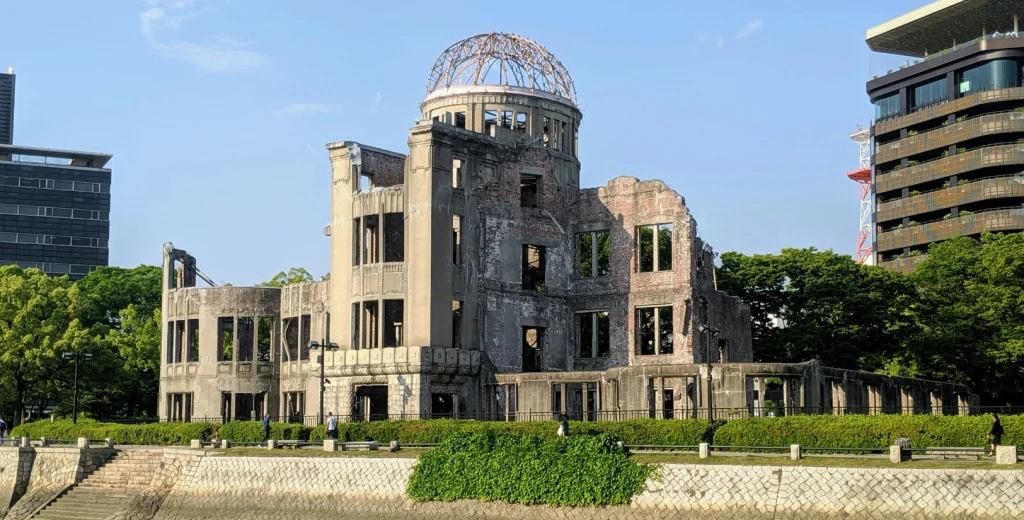
The recent release of Episode 284 of the Anecdotally Speaking podcast, hosted by Mark Schenk and Shawn Callahan of Anecdote International, has brought the historical account of Tsutomu Yamaguchi into a modern professional context. The episode explores the profound impact that internal narratives have on leadership, resilience, and decision-making within the corporate sphere. By examining the life of the only person officially recognized by the Japanese government to have survived both atomic bombings in 1945, the program highlights a critical psychological truth: while facts remain immutable, the meaning derived from them is a product of the stories individuals tell themselves. This concept serves as a cornerstone for leadership development, particularly in navigating organizational change and communicating difficult corporate decisions.
The Historical Account of Tsutomu Yamaguchi
In August 1945, Tsutomu Yamaguchi was a 29-year-old naval engineer employed by Mitsubishi Heavy Industries. His experience during the final days of World War II remains one of the most statistically improbable survival stories in human history. On August 6, 1945, Yamaguchi was in Hiroshima on the final day of a three-month business trip. As he walked toward the Mitsubishi shipyard, the B-29 bomber Enola Gay dropped the "Little Boy" atomic bomb.
Yamaguchi was approximately three kilometers from the hypocenter. The resulting blast caused a "blinding flash," a phenomenon he would later describe as a "great lightning bolt." The explosion ruptured his eardrums, caused temporary blindness, and left him with severe thermal burns across the left side of his upper body. Despite the devastation, which resulted in the immediate deaths of an estimated 70,000 to 80,000 people, Yamaguchi found the strength to seek shelter in a makeshift air-raid bunker.
The following day, demonstrating a level of resilience that would define his legacy, Yamaguchi navigated the ruined city to reach the Hiroshima railway station. Miraculously, some trains were still operational. He traveled overnight to his hometown of Nagasaki, seeking medical treatment and returning to his family.
On the morning of August 9, 1945, despite his injuries and heavy bandaging, Yamaguchi reported to the Mitsubishi office in Nagasaki to brief his supervisor on the catastrophe in Hiroshima. Historical records indicate that his superior was skeptical, questioning how a single bomb could level an entire city. As Yamaguchi attempted to explain the scale of the destruction, the second atomic bomb, "Fat Man," was detonated over Nagasaki. Once again, Yamaguchi was roughly three kilometers from ground zero. Though the office was destroyed, he survived a second time, shielded by the reinforced walls of the building.
Chronology of the 1945 Atomic Events
The survival of Tsutomu Yamaguchi is framed against a rigid timeline of global conflict and technological escalation:
- August 6, 1945, 8:15 AM: The first atomic bomb is dropped on Hiroshima. Yamaguchi is injured but survives.
- August 7, 1945: Yamaguchi traverses the city and boards a train to Nagasaki.
- August 8, 1945: Yamaguchi arrives in Nagasaki and receives basic medical care for his burns.
- August 9, 1945, 11:02 AM: The second atomic bomb is dropped on Nagasaki while Yamaguchi is at work. He survives again.
- August 15, 1945: Japan announces its surrender, effectively ending World War II.
- 2009: The Japanese government officially recognizes Yamaguchi as a nijyuu hibakusha (twice-bombed person), the only individual to hold this official dual designation.
- January 4, 2010: Tsutomu Yamaguchi passes away at the age of 93.
Supporting Data and the Statistical Improbability of Survival
To understand the weight of the story shared in the podcast, one must consider the sheer scale of the events. The Hiroshima bomb had an explosive yield of approximately 15 kilotons of TNT, while the Nagasaki bomb was more powerful, at approximately 21 kilotons.
Casualty data highlights the anomaly of Yamaguchi’s experience:
- Hiroshima: Out of a population of 350,000, roughly 140,000 had died by the end of 1945 due to the blast and radiation.
- Nagasaki: Out of a population of 263,000, approximately 60,000 to 80,000 deaths were recorded by the end of the year.
Medical experts note that survival at a three-kilometer radius was possible but rare, often depending on the specific shielding provided by topography or building materials. Yamaguchi’s ability to remain mobile enough to travel between cities while suffering from acute radiation poisoning and severe burns is a testament to physical and psychological fortitude.
Meaning-Making and the Duality of Luck
A central theme of the Anecdotally Speaking episode is the interpretation of Yamaguchi’s life. Mark Schenk and Shawn Callahan pose a fundamental question to their audience: Was Tsutomu Yamaguchi the unluckiest man in history for being present at both bombings, or the luckiest man for surviving both?

This distinction is not merely a philosophical exercise; it is a demonstration of "meaning-making." In a leadership context, the facts of a situation (e.g., a market crash, a failed product launch, or a corporate restructuring) are fixed. However, the narrative a leader constructs around those facts determines the organization’s trajectory. A leader who views a setback as an insurmountable stroke of "bad luck" fosters a culture of victimhood. Conversely, a leader who frames the same event as a "survival story" or a "learning catalyst" builds organizational resilience.
Storytelling Techniques for Professional Influence
The podcast episode delves into specific storytelling mechanics that leaders can utilize to influence their teams. Two key techniques highlighted are foreshadowing and audience participation.
The Role of Foreshadowing
In narrative construction, foreshadowing involves dropping subtle hints about what is to come. For leaders, this translates to "setting the stage" for change. By signaling upcoming shifts in the industry or internal strategy through small anecdotes and observations, leaders can reduce the shock of major announcements and help employees mentally prepare for new realities.
Audience Participation in Meaning-Making
The hosts discuss how effective storytellers do not dictate the meaning of a story; instead, they allow the audience to participate in the discovery of that meaning. By presenting the facts of Yamaguchi’s life and asking the "lucky vs. unlucky" question, the storyteller invites the listener to engage deeply with the material. In a business setting, this approach encourages employees to take ownership of the corporate narrative, leading to higher engagement and a more robust commitment to shared goals.
Leadership Integrity and Communicating Difficult Decisions
A significant portion of the discussion focuses on a common leadership dilemma: how to communicate and implement a decision that the leader may not personally agree with. This scenario often arises in middle and senior management during top-down restructures or budget cuts.
The podcast suggests that maintaining authenticity and integrity requires a "narrative bridge." Leaders must be able to explain the "why" behind the decision—the facts and the broader strategic context—while acknowledging the difficulty of the situation. By using stories of past resilience, leaders can validate the team’s concerns without undermining the company’s direction. This balance of empathy and executive presence is essential for maintaining trust during periods of instability.
Official Recognition and Broader Implications
For decades, Yamaguchi was hesitant to speak publicly about his experience. It was only later in life, particularly after the death of his son (who also survived the Nagasaki blast as an infant but died of cancer at age 59), that he became a vocal advocate for nuclear disarmament. His 2009 official recognition by the Japanese government served as a symbolic acknowledgment of the thousands of hibakusha (bomb-affected people) and their enduring struggle with health issues and social stigma.
From a broader perspective, the story of Tsutomu Yamaguchi serves as a powerful metaphor for the modern workforce. In an era of "permacrisis"—characterized by rapid technological disruption, global health emergencies, and economic volatility—the ability to reframe trauma into a narrative of survival and purpose is a vital skill.
Conclusion: The Strategic Value of the Anecdote
Anecdote International, through its global network of partners and training programs, posits that storytelling is not a "soft skill" but a strategic tool for bringing humanity back to the workforce. As explored in Episode 284, the story of Tsutomu Yamaguchi illustrates that the human spirit is governed not by what happens to us, but by the stories we choose to believe about those events.
For leaders, the takeaway is clear: to build a resilient organization, one must master the art of narrative. By selecting the right stories and framing them with integrity, leaders can guide their teams through the most blinding of flashes and the most uncertain of futures. The facts of the world may be beyond our control, but the meaning we assign to them remains our most powerful instrument of leadership.
