

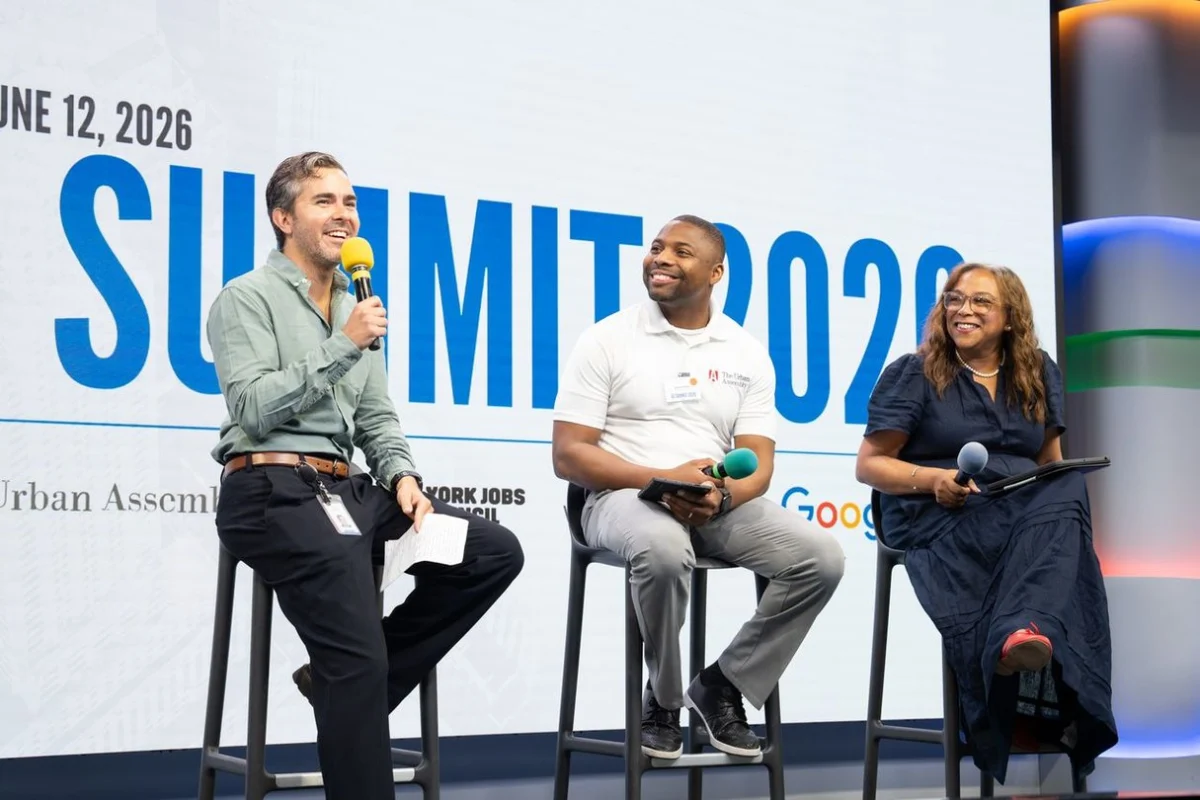
The rapid integration of generative artificial intelligence into the global economy has sparked a fundamental shift in how educational institutions approach career readiness. In a landmark collaboration designed to address this transformation, 150 of New York City’s most influential educators, policymakers, and industry executives gathered at Google’s Manhattan offices for a high-level AI summit. The event, co-hosted by Google, the New York Jobs CEO Council, and the Urban Assembly, served as a strategic forum to align classroom instruction with the evolving demands of the 21st-century labor market. As the traditional boundaries between technology and pedagogy continue to blur, the summit emphasized a critical thesis: the success of the next generation depends on a symbiotic relationship between those who build the technology and those who teach the students who will eventually use it.
Bridging the Vocational Divide in the Age of Generative AI
The primary objective of the summit was to foster direct knowledge sharing between the corporate sector and the public education system. For years, a "skills gap" has persisted between the graduation requirements of high schools and the entry-level expectations of major employers. With the advent of large language models (LLMs) and automated workflows, this gap threatens to widen unless systemic changes are implemented.
The New York Jobs CEO Council, a coalition of CEOs from the city’s largest employers—including JPMorgan Chase, Amazon, and IBM—provided a clear perspective on the urgency of this mission. Their participation underscored a growing reality: AI literacy is no longer an elective skill but a foundational requirement for economic mobility. By partnering with Urban Assembly, a non-profit organization known for its innovation in public school design, and Google, a leader in AI development, the summit aimed to demystify artificial intelligence for educators and provide them with a roadmap for implementation.
Hands-On Pedagogy: From Vibe Coding to NotebookLM
A significant portion of the summit was dedicated to experiential learning, allowing educators to engage directly with the tools currently reshaping industry standards. One of the most talked-about sessions featured "Vibe Coding," a concept introduced by aiEDU. Vibe Coding represents a shift in software development where natural language and "intent" take precedence over traditional syntax. By using AI to interpret high-level descriptions of a project, students can create functional applications without needing to master complex coding languages first. This lowers the barrier to entry for computer science and encourages a "builder" mindset among students who might otherwise feel intimidated by technical hurdles.
In addition to coding, Google showcased "Meet LEA" (Learning Environment Assistant), a specialized AI framework designed to support personalized learning. Educators explored how Google’s AI models and NotebookLM—an AI-powered research and writing assistant—could be used to spark student curiosity. NotebookLM, in particular, was highlighted for its ability to synthesize vast amounts of information, allowing students to act as curators and analysts rather than just passive consumers of data. These tools are not intended to replace the teacher; rather, they are designed to automate administrative and rote tasks, freeing educators to focus on high-level mentorship and complex instruction.
The Re-emergence of Human-Centric Skills
While the summit focused heavily on technological tools, a recurring theme among industry leaders was the paradox of automation: as technical tasks become easier to automate, "uniquely human" skills become more valuable. Representatives from the New York Jobs CEO Council emphasized that they are increasingly looking for candidates who demonstrate adaptability, collaboration, and, most importantly, critical judgment.
In a world where AI can generate reports, write code, and create visual content in seconds, the role of the human professional shifts toward "verification and ethics." Educators were urged to teach students how to interrogate AI-generated output, identify biases, and apply ethical frameworks to technological solutions. This "human-centric" approach to AI literacy ensures that students are not merely operators of machines but are leaders who can direct technology toward productive and equitable ends.
Addressing the Digital Divide and Data Privacy
As the conversation turned toward implementation, two major concerns dominated the discourse: data privacy and equitable access. New York City’s public school system, the largest in the United States, faces significant challenges in ensuring that students in underfunded districts have the same access to cutting-edge technology as their counterparts in more affluent areas.
Participants at the summit were unanimous in their stance that the "AI revolution" must not exacerbate the existing digital divide. This requires a commitment to providing hardware, high-speed internet, and, crucially, trained teachers to every neighborhood. Furthermore, the issue of data privacy remains a significant hurdle. Educators expressed the need for "uncompromising" standards regarding student data, ensuring that AI tools used in the classroom are transparent and do not exploit the personal information of minors. Google and its partners acknowledged that for AI to be successfully integrated into schools, it must be built on a foundation of trust and regulatory compliance.
A Chronology of AI Integration in New York City Schools
The summit represents a pivotal moment in a rapidly evolving timeline for New York City’s relationship with artificial intelligence.
- January 2023: In a move that reflected widespread global anxiety, the New York City Department of Education (DOE) initially banned the use of ChatGPT on all department devices and networks, citing concerns over academic integrity and the potential for misinformation.
- May 2023: Following extensive consultation with tech experts and educators, Schools Chancellor David Banks reversed the ban. He acknowledged that the "instinctive fear" of AI had overlooked the potential benefits, stating that NYC schools would instead lead the way in exploring the technology’s possibilities.
- Late 2023 – Early 2024: The DOE began piloting AI programs in select schools, focusing on teacher administrative support and personalized tutoring platforms.
- Current Summit (2024): The Google-hosted summit marks the transition from "exploration" to "strategic alignment," moving beyond simple tool usage toward a comprehensive integration of AI into the career-readiness pipeline.
Data-Driven Insights: The Economic Necessity of AI Literacy
The urgency of the summit is backed by significant economic data. According to a recent report by the World Economic Forum, an estimated 85 million jobs may be displaced by a shift in the division of labor between humans and machines by 2025. However, the same report suggests that 97 million new roles may emerge that are more adapted to the new division of labor.
In New York City, a global hub for finance, media, and healthcare—industries heavily impacted by AI—the stakes are particularly high. Research from the McKinsey Global Institute indicates that generative AI could automate activities that take up 60% to 70% of employees’ time today. For the 1.1 million students in the NYC public school system, the ability to navigate this shift is the difference between economic participation and obsolescence. The summit’s focus on "Vibe Coding" and "AI literacy" directly addresses the need for a workforce that can thrive in a landscape where AI is a ubiquitous co-pilot.
Official Responses and Broader Impact
Reaction to the summit from the educational community has been largely positive, though tempered by a call for sustained investment. "Technology can be a useful tool in the classroom, but it is the teacher who remains the heart of the learning experience," noted one participating educator. The sentiment was echoed by industry leaders who stressed that their goal is not to "disrupt" schools from the outside but to build capacity from within.
The partnership between the New York Jobs CEO Council and Urban Assembly is being viewed as a potential national model. By creating a direct feedback loop between the C-suite and the classroom, the initiative ensures that curriculum changes are grounded in real-world demand. The ultimate takeaway from the gathering was a call for "inclusive innovation." The attendees agreed that for the next generation to be truly prepared for the future, technological advancement must happen with schools, ensuring that educators are empowered as architects of the AI-integrated classroom rather than just observers.
Future Outlook: Innovation Within the Institutional Framework
As the summit concluded, the focus shifted toward the long-term scalability of these initiatives. The "Meet LEA" and NotebookLM workshops provided a glimpse into a future where AI reduces the "drudgery" of education—grading, lesson planning, and data entry—allowing for more robust human interaction. However, the success of this vision relies on continued collaboration between the public and private sectors.
In the coming months, the insights gathered at the Google offices are expected to inform new curriculum pilots across New York City. The goal is to move toward a "universal AI literacy" standard that ensures every student, regardless of their career path, understands the mechanics, ethics, and opportunities of artificial intelligence. By centering the human element and prioritizing equitable access, New York City is positioning itself as a leader in the global effort to redefine education for the age of automation. The summit served as a powerful reminder that while the tools of the future are digital, the responsibility for shaping that future remains a deeply human endeavor.
