

The delivery of compelling voiceover dialogue hinges on achieving a natural and engaging rhythm, often referred to as "flow." A significant impediment to this crucial element, particularly for emerging professionals in the voiceover industry, is a phenomenon known as "blocking." This article delves into the intricacies of voiceover flow, dissects the nature of blocking, and provides actionable strategies for its mitigation, drawing upon established principles of effective vocal communication.
The Essence of Voiceover Flow
Human conversation, by its very nature, possesses an inherent rhythm and cadence. When we engage in casual dialogue with friends, or even observe conversations in public spaces, a distinct pattern emerges. These patterns are not arbitrary; they are the result of subconscious communication cues that facilitate understanding and engagement. Natural speech is characterized by pauses that allow for thought processing, variations in pace that reflect emotional emphasis or narrative progression, and an overall smoothness that prevents listener fatigue.
In the realm of voiceover, replicating this natural conversational flow is paramount. While the specific requirements of flow can vary significantly across different genres – from the nuanced characterizations of animation to the informative precision of e-learning or the authoritative tone of corporate narration – the underlying principle remains constant. An effective voiceover delivery should sound authentic, maintaining an appropriate pace and providing the listener with adequate "space" to absorb the information while simultaneously holding their attention. This often involves incorporating elements of "humanization," which imbues the spoken word with a relatable quality, though its application is context-dependent. Ultimately, the goal is to ensure that dialogue is delivered with a natural, human flow, minimizing the cognitive effort required from the listener to comprehend and accept the message.
Identifying and Understanding Blocking
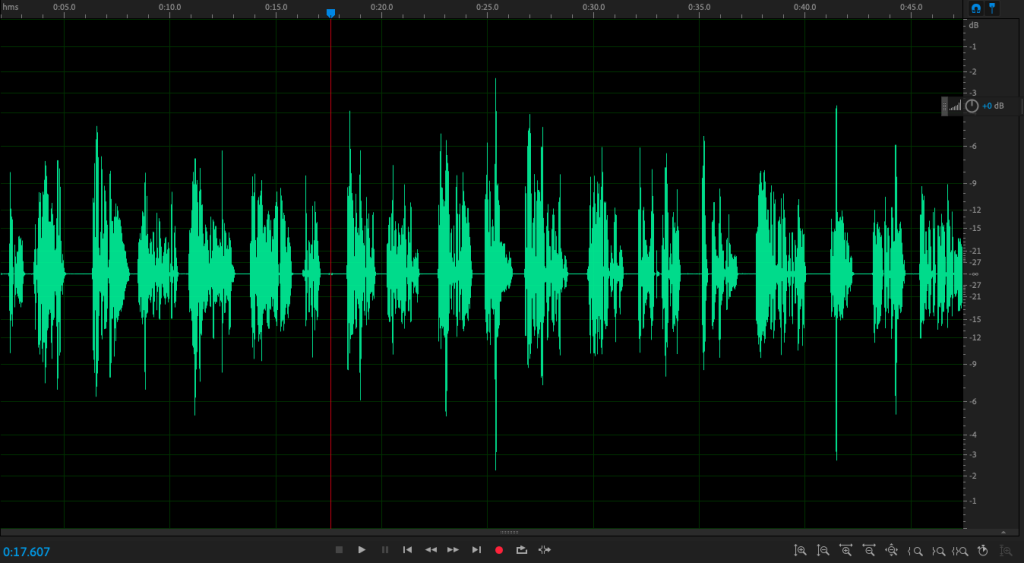
Blocking, in the context of voiceover, represents an unnatural disruption in this desired flow. The term itself is derived from the visual representation of such disruptions in audio editing software. When analyzing the waveform of a blocked delivery, distinct, often stark, "blocks" of silence or unnaturally abrupt transitions become apparent. This visual manifestation directly corresponds to an auditory experience that can be described as "staccato" or disjointed.

Consider a typical waveform analysis in audio production. A well-paced, natural voiceover will exhibit a continuous, undulating line, with subtle variations in amplitude and duration of pauses that mirror natural speech patterns. In contrast, a blocked delivery will present with sharp, defined gaps between segments of speech. These interruptions can create a perception of the speaker pausing excessively or unnaturally, forcing the listener to anticipate the next phrase rather than passively absorbing the narrative. This discontinuity can lead to listener frustration and a diminished overall impact of the message.
The auditory effect of blocking is a lack of smoothness. Instead of a continuous stream of information, the listener encounters abrupt halts, making the experience feel less like a conversation and more like a series of disconnected statements. This can lead to a sense of impatience or disengagement, as the listener’s attention is broken by the unnatural pauses. It forces the listener to actively "work" to piece together the intended message, detracting from the intended purpose of the voiceover, which is typically to inform, persuade, or entertain.
The Visual Evidence of Blocking
To illustrate the concept, consider the visual representation of audio waveforms. In a narrative voiceover, a "blocked" delivery often appears as distinct, separated peaks and valleys in the waveform. These represent periods of silence or very low amplitude sound, punctuated by short bursts of vocalization. This stark contrast between spoken segments and silences is what gives rise to the term "blocking." The waveform appears fragmented, with clear demarcations between where the voice is present and where it is absent.
Conversely, a voiceover dialogue characterized by natural flow, often colloquially termed "hairy caterpillars" in waveform analysis due to their continuous, somewhat irregular appearance, presents a radically different visual profile. These waveforms exhibit a more organic and interconnected structure. The peaks and valleys blend more smoothly, and the spaces between vocalizations are more nuanced, reflecting the natural ebb and flow of spoken language. This visual continuity is a strong indicator of a delivery that possesses good, natural, and humanistic rhythm. The listener can perceive this smoothness aurally, and it is directly reflected in the visual data of the audio file.
Contributing Factors to Blocking
While blocking is most commonly observed among newcomers to the voiceover industry, it is not exclusively confined to this demographic. Several factors can contribute to its occurrence:

- Inexperience with Pacing and Pausing: New voice actors may struggle with instinctively knowing how long to pause between phrases or sentences. They might overcompensate for perceived silence, leading to unnaturally long breaks.
- Anxiety and Performance Pressure: The pressure to deliver a "perfect" take can lead to a hesitant delivery. This nervousness can manifest as abrupt stops and starts, as the performer second-guesses their timing.
- Misinterpretation of Direction: Ambiguous or misunderstood direction from a client or director regarding pacing or emphasis can lead to an unintended blocked delivery.
- Over-reliance on Script Cues: Focusing too heavily on the written word and treating it as a rigid set of instructions, rather than a guide for natural speech, can result in stilted deliveries.
- Lack of Technical Understanding: Inadequate understanding of how vocal nuances translate into audio waveforms can prevent aspiring voice actors from recognizing and correcting blocking in their own work.
- Editing Habits: In some instances, excessive or poorly executed editing – such as over-enthusiastic de-breathing or cutting out all natural breaths – can inadvertently create a blocked effect.
The Opposite Spectrum: Over-Editing and Hyper-Pacing
While blocking presents as excessive, unnatural pauses, its antithesis lies in an equally detrimental form of delivery: a lack of sufficient space and pacing, often resulting from over-editing or an overly rapid delivery. This can occur when a voiceover artist attempts to cram too much information into a limited timeframe, or when the editing process aggressively removes all natural pauses and breaths, leaving no room for the listener to process the content.
A common analogy for this scenario is the American local radio advertisement where an extensive script is forced into a significantly shorter time slot. By the end of such a commercial, the listener is often left with little comprehension of the message. This occurs because the delivery is so rapid and devoid of natural pauses that the audience has no opportunity to digest the information being presented. This is not a problem of too much silence, but rather too much information delivered without adequate temporal breathing room. This lack of processing time is just as detrimental to listener engagement and comprehension as the disjointed nature of blocking.
When Blocking Becomes a Conscious Choice
It is crucial to distinguish between unintentional blocking and deliberate stylistic choices. In certain contexts, a staccato or deliberately fragmented delivery can be an effective artistic tool. Examples include:
- Portraying characters experiencing extreme stress or panic: A character who is highly agitated or overwhelmed might naturally speak in short, clipped sentences with abrupt pauses, reflecting their internal state.
- Depicting specific dialogue styles: Certain characters or narrative styles might call for a more fragmented or rhythmic delivery that deviates from standard conversational flow.
- Creating specific comedic or dramatic effects: A voiceover artist might intentionally employ pauses for comedic timing or to build dramatic tension, knowing precisely when and how to create these interruptions.
In these instances, the voiceover artist is making a deliberate, informed decision to deviate from a natural flow. This is a hallmark of a skilled professional who understands the impact of their vocal choices and uses them strategically to enhance the performance. The key differentiator is awareness and intent. When blocking is a conscious artistic choice, it serves a specific purpose and is executed with control. However, when it arises from a lack of awareness or technical proficiency, it detracts from the overall quality of the voiceover.
Strategies for Overcoming Blocking
Fortunately, addressing and eliminating blocking is a surmountable challenge for aspiring voice actors. The process involves cultivating awareness and implementing specific techniques during both practice and recording:
- Embrace Natural Pauses: Instead of viewing pauses as voids to be filled, understand them as essential components of natural speech. Allow yourself to pause where a person would naturally pause to breathe, think, or emphasize a point.
- Record and Analyze: Regularly record yourself reading scripts and critically analyze the recordings. Pay close attention to the rhythm and pacing. Listen for unnatural breaks or abrupt stops.
- Study Human Conversation: Actively listen to how people converse in everyday situations. Observe their breathing patterns, the natural length of their pauses, and the way their speech flows.
- Practice with Different Pacing: Experiment with varying your pace during practice. Try reading a script at a slower, more deliberate pace, then gradually increase it, always being mindful of maintaining a natural flow.
- Focus on the Listener: Constantly consider the listener’s experience. Ask yourself: "Is this delivery easy to follow?" "Does it sound natural?" "Will the listener have enough time to process this information?"
- Breathing Techniques: Proper breath control is fundamental to good vocal flow. Learn techniques that allow you to take natural breaths without creating jarring interruptions in your speech.
- Seek Feedback: Share your recordings with experienced voice actors, coaches, or mentors. Constructive criticism can provide invaluable insights into areas where your delivery might be blocked.
- Script Annotation: Before recording, mark up your script with notes on where natural pauses, breaths, or emphasis should occur. This visual guide can help maintain a consistent and natural flow.
Conclusion: The Artist’s Control Over Delivery
Ultimately, the professional voiceover artist holds the reins of their delivery. As the interpreter of the script and the conduit to the listener, they possess the agency to shape the vocal performance. Whether the chosen delivery is fast-paced, staccato, or naturalistic, it is a reflection of the artist’s understanding of the material, the intended audience, and the desired impact.
The critical distinction lies in conscious control. When a voiceover artist possesses a mastery of vocal tools and understands the nuances of flow and pacing, they can make deliberate choices to serve the performance. If a staccato delivery is chosen for artistic effect, it is a controlled and purposeful decision. However, issues arise when an artist is unaware of these techniques or lacks control over them, leading to unintentional blocking that compromises the clarity and engagement of the voiceover. The journey to effective voiceover lies in cultivating this awareness and mastering the art of natural, impactful vocal delivery.
