

The pursuit of sonic perfection in voice over work necessitates a deep understanding of the tools of the trade, paramount among them being the microphone. For aspiring and seasoned voice artists alike, selecting the right microphone can be the difference between a forgettable audition and a career-defining performance. This comprehensive guide delves into the nuances of voice over microphones, dissecting their technical specifications, exploring their application across various budget tiers, and providing an in-depth analysis of leading models currently shaping the industry. From understanding the fundamental principles of sound capture to evaluating the subtle sonic characteristics of professional-grade equipment, this article aims to equip voice actors with the knowledge to make informed decisions that will elevate their craft.
Understanding the Foundation: Essential Microphone Concepts
Before diving into specific models, a grasp of fundamental microphone terminology and technology is crucial. The quality of a voice over recording is directly influenced by the microphone’s ability to accurately capture the nuances of the human voice. This involves understanding how different microphone types interact with sound waves, how they are powered, and how their directional sensitivity impacts the recording environment.
Phantom Power: The Silent Enabler
Many professional microphones, particularly condenser microphones, require an external power source to operate. This is known as phantom power, typically supplied at 48 volts via an XLR cable. It energizes the microphone’s internal circuitry, enabling it to convert subtle sound vibrations into a usable electrical signal. While the term "phantom power" might sound intimidating, it is a standard feature on most audio interfaces and mixers, and its application is straightforward. It is essential for condenser mics, which are known for their sensitivity and detailed sound reproduction, making them a popular choice for voice over work.
The USB Microphone Advantage: Simplicity and Accessibility
For beginners and those working with limited studio space or budget, USB microphones offer a compelling entry point. These microphones integrate an audio interface directly into the microphone itself, allowing for a direct connection to a computer via a USB port.
-
Pros of USB Microphones:
- Ease of Use: Plug-and-play functionality significantly simplifies setup, making them ideal for individuals new to audio recording.
- Cost-Effectiveness: They eliminate the need for a separate audio interface, reducing the overall initial investment.
- Portability: Their compact design and direct computer connection make them highly portable for on-the-go recording.
- Reduced Signal Chain: Fewer components in the signal path can sometimes translate to a cleaner, more direct signal.
-
Cons of USB Microphones:
- Limited Upgrade Path: As skill and needs evolve, USB microphones can become a bottleneck, as upgrading often means replacing the entire unit rather than individual components.
- Potential for Latency: While improving, some USB microphones can introduce noticeable latency, impacting real-time monitoring and performance.
- Sound Quality Limitations: While good for their price point, they generally do not achieve the same level of sonic detail and transparency as professional XLR microphones paired with high-quality audio interfaces.
- Less Flexibility: They typically offer fewer control options and connectivity choices compared to XLR-based systems.
Dynamic Microphones: Robust and Reliable
Dynamic microphones operate on the principle of electromagnetic induction. They are generally more robust, less sensitive to background noise, and do not require phantom power, making them a practical choice for certain recording environments.
-
Dynamic Microphone Pros:
- Durability: Their sturdy construction makes them resilient to rough handling and extreme conditions.
- High SPL Handling: They can handle very loud sound sources without distortion, though this is less critical for voice over.
- No Phantom Power Required: This simplifies setup and eliminates a potential point of failure.
- Cost-Effectiveness: Many excellent dynamic microphones are available at competitive price points.
- Reduced Proximity Effect: Generally less prone to the exaggerated bass response that can occur when speaking very close to the microphone.
-
Dynamic Broadcast Voice Over Mic Cons:
- Lower Sensitivity: They require more gain from a pre-amplifier, which can sometimes introduce noise if the pre-amplifier is of lower quality.
- Less Detailed High Frequencies: They may not capture the same level of subtle high-frequency detail and air as condenser microphones.
- Potentially Less "Open" Sound: The sound can sometimes be perceived as less spacious or airy compared to condensers.
Large Diaphragm Condenser Microphones: The Voice Over Standard
Large diaphragm condenser (LDC) microphones are often considered the benchmark for professional voice over recording. Their larger diaphragms are more sensitive to subtle sound pressure variations, resulting in a more detailed, nuanced, and often warmer sound reproduction.
-
Large Diaphragm Condenser Pros:
- Exceptional Detail and Clarity: They excel at capturing the subtle textures and nuances of the human voice.
- Wide Frequency Response: Capable of reproducing a broad range of frequencies, from deep lows to airy highs.
- Sensitivity: They can pick up quiet performances and subtle vocal inflections.
- Warmth and Presence: Many LDCs are designed to impart a pleasing warmth and presence to vocals.
- Versatility: Many models offer switchable polar patterns and pad controls, allowing for adaptation to various recording situations.
-
Large Diaphragm Condenser Cons:
- Fragility: They are generally more delicate than dynamic microphones and require careful handling.
- Sensitivity to Environment: Their high sensitivity makes them more susceptible to picking up room noise, requiring a well-treated acoustic space.
- Require Phantom Power: They necessitate an audio interface or mixer that can provide phantom power.
- Higher Cost: Professional LDC microphones typically represent a significant investment.
Decoding Sound Capture: Polar Patterns and Beyond
The way a microphone captures sound is dictated by its polar pattern, which describes its directional sensitivity. Understanding these patterns is key to isolating the desired sound source and minimizing unwanted ambient noise.
Understanding Polar Patterns
A polar pattern illustrates how a microphone’s sensitivity varies with direction. For voice over artists, the most critical pattern is the cardioid.
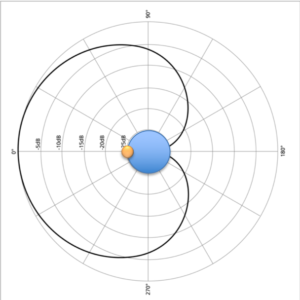
- Cardioid: This pattern is most sensitive to sound originating from the front of the microphone, with significant rejection of sound from the rear and sides. This makes it ideal for isolating a single voice source in a typical recording environment, minimizing room reflections and background noise. The "heart-shaped" pattern is named for its visual representation.
- Omnidirectional: This pattern is equally sensitive to sound from all directions, making it useful for capturing an ambient soundscape or multiple speakers in a controlled environment, but generally not ideal for isolating a single voice.
- Bidirectional (Figure-8): This pattern is sensitive to sound from both the front and rear of the microphone but rejects sound from the sides. It is often used for interviews or capturing duets.
The cardioid polar pattern is the most commonly utilized for voice over work. As illustrated in diagrams, a cardioid microphone captures sound primarily from the front. Ideally, sounds arriving at a 20-degree angle off-axis (to the side) are significantly attenuated, helping to mitigate "plosives" (bursts of air from ‘p’ and ‘b’ sounds) while still capturing the full spectrum of dialogue. Some high-end microphones, such as the Neumann U87, offer switchable polar patterns, providing greater flexibility. However, for a dedicated voice over microphone, the presence of at least a cardioid pattern is essential for effective sound isolation.
The Role of Pads in Microphone Technology
Pads, often implemented as a switch on the microphone, serve to attenuate the incoming audio signal. This is primarily useful when dealing with extremely loud sound sources, such as close-miking a guitar amplifier, which could otherwise overload the microphone’s capsule and pre-amplifier. For typical voice over applications, where the sound source is the human voice at a controlled distance, the pad function is generally not a primary consideration. However, its presence can offer an additional layer of protection against unexpected signal spikes.
Connectors: XLR vs. Jack
The connection between a microphone and the rest of the audio chain is a critical factor in sound quality and functionality.
- XLR Connectors: Professional microphones requiring phantom power universally utilize XLR connectors. These robust, three-pin connectors are not only capable of carrying phantom power but also facilitate balanced audio transmission. Balanced cables, like XLR, employ a system that actively cancels out electromagnetic interference picked up along the cable’s length, resulting in a cleaner signal with reduced noise. This is paramount for achieving pristine audio quality in professional recordings.
- Jack Connectors: While common in consumer audio equipment, standard 1/4-inch jack cables are generally not used with professional voice over microphones. If a microphone is equipped solely with a jack output, it is often an indicator that it may not meet professional audio standards, particularly concerning signal integrity and phantom power capabilities.
The Art and Science of Selection: Factors for Voice Over Microphones
Choosing the optimal microphone involves a delicate balance between technical specifications, acoustic considerations, and the unique characteristics of the voice actor’s instrument.
Matching the Microphone to Your Voice and Career Stage
The "best" microphone is inherently subjective, contingent on the individual voice actor’s vocal timbre, the genre of voice work they pursue, and their budget. A microphone that flatters a deep baritone might not be ideal for a high-pitched soprano, and vice versa. Similarly, the demands of audiobook narration might differ from those of commercial advertising or character animation.
It is also crucial to assess the recording environment. A professional studio with acoustic treatment will allow for the use of more sensitive condenser microphones, whereas a less controlled space might benefit from the inherent noise rejection of a dynamic microphone.
Frequency Response: A Critical Sonic Signature
Microphones are designed with specific frequency responses, which dictate how they amplify or attenuate different frequencies within the audible spectrum. A "flat" frequency response aims to reproduce sound as accurately as possible, without coloration. However, many microphones are intentionally designed with subtle boosts or dips in certain frequency ranges to impart a specific sonic character.
For instance, a microphone with an artificial lift in the higher frequencies might accentuate sibilance (the harsh ‘s’ sounds) in a voice, particularly in female voices. Conversely, a microphone with a gentle presence boost in the mid-range can enhance vocal clarity and intelligibility. Understanding how a microphone’s frequency response interacts with your voice is a key aspect of selection.
Budget Allocation: Investing in Your Craft
The voice over industry encompasses a wide spectrum of income levels, and microphone investments should align with a voice actor’s current career stage and financial capacity. While high-end microphones command premium prices, numerous excellent options exist at various price points. Setting a realistic budget from the outset will help narrow down the choices and prevent overspending on features that may not be immediately necessary.
A Spectrum of Excellence: Leading Voice Over Microphones
The following is an curated list of microphones widely recognized for their performance in voice over applications, spanning a range of budgets. These selections are based on industry acclaim, technical specifications, and user feedback.
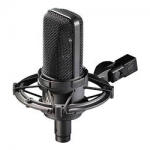
Entry-Level to Mid-Range Excellence (Under $500)
-
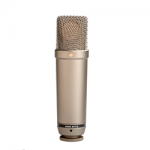
Rode NT1/NT2 (Approx. $249/£200): The Rode NT1 and NT2 are often lauded as superb entry-level microphones for voice actors. They offer a balanced frequency response and a notably low self-noise level, contributing to clean, high-quality recordings. While some audio engineers can identify the characteristic "Rode sound," for newcomers, these microphones provide excellent value and a solid foundation for building a voice over career. Their neutrality and wide dynamic range make them versatile for various vocal styles.
-
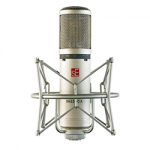
sE Electronics sE2200a II C ($299): This versatile condenser microphone delivers an upfront, clear sound that is well-suited for voice over work. Its integrated high-pass filter and 10dB pad provide valuable sound-shaping capabilities, allowing for greater control over the recorded audio. The low self-noise ensures that vocal performances are captured with clarity and minimal unwanted hiss.
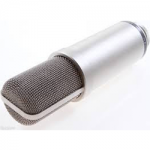
-
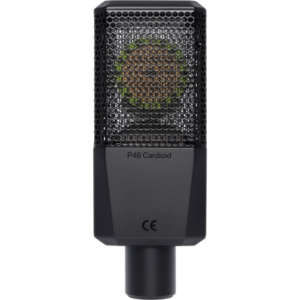
Lewitt LCT 440 Pure (£245): A more recent entrant to the voice over microphone market, the LCT 440 Pure features a distinctive design with an open front and a magnetic pop shield. Its 1-inch condenser capsule is known for producing a clear and crisp sound. At its price point, it offers a compelling combination of sonic quality and thoughtful design features, making it a strong contender for budget-conscious professionals.
-
Blue Yeti Pro ($249.00): For those prioritizing a USB interface, the Blue Yeti Pro stands out. It offers higher bit recording capabilities and the flexibility of XLR output, bridging the gap between consumer-level USB mics and professional XLR setups. While USB microphones are not universally recommended for professional studios, the Yeti Pro represents one of the more capable options in this category, particularly for beginners.
-
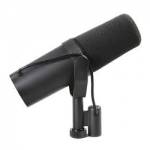
Shure SM7B ($349): A legendary microphone in broadcasting and podcasting, the Shure SM7B is a dynamic cardioid microphone renowned for its exceptionally clear sound, warmth, and presence. Its broad frequency response can be further tailored with its built-in high-boost switch. While more commonly found in radio studios, its robust build and excellent vocal reproduction make it a viable and popular choice for home studio voice over work. Its integrated swing-mount allows for precise positioning.
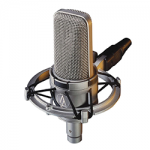
Mid-Range to Professional Grade ( $500 – $1000)
-
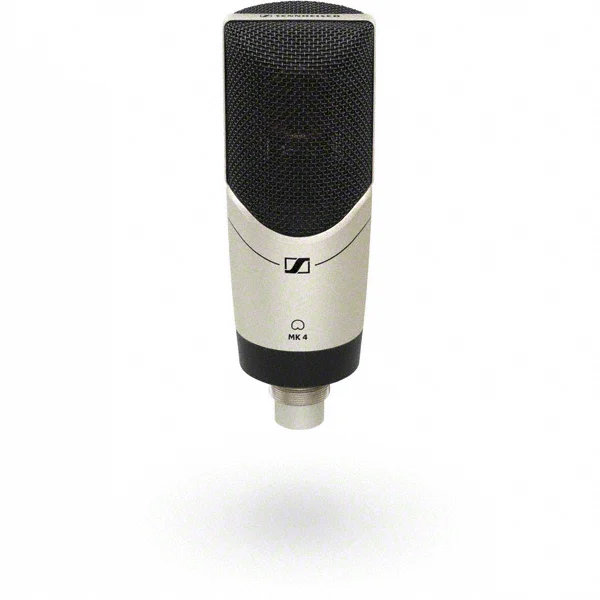
Sennheiser MK4 (Approx. $350/£300): This microphone earns our top recommendation for working voice artists seeking exceptional value. Notably, Sennheiser owns Neumann, and the MK4’s diaphragm capsule was designed by the same team behind the iconic Neumann U87. It is a cardioid-only microphone without a pad but delivers a superb sound quality for both male and female voices. Its robust construction, durability, and reliability make it a standout performer in its price category, offering a professional sound at a fraction of the cost of some high-end alternatives.
-
Audio-Technica AT4033 ($399): The AT4033 is a cardioid condenser microphone celebrated for its excellent transient response and clean output signals. It features an 80Hz high-pass filter, allowing users to switch between a flat frequency response and a low-end roll-off to reduce ambient noise and plosives during close-up vocal recording. This makes it a versatile tool for various voice over applications.
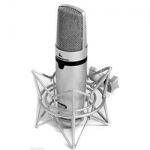
-
Rode NTK ($529): Another strong contender from Rode, the NTK is a valve (tube) condenser microphone that provides a warm, clear, and rich sound profile. Its rugged build quality ensures longevity, and its sonic characteristics are highly regarded for voice over work. The inclusion of a valve pre-amp often imparts a desirable musicality and depth to vocal recordings.
-
Audio-Technica AT4047 ($699): This microphone is engineered for professional recording and broadcast applications. Its transformer-coupled output and finely tuned element are designed to emulate the sonic characteristics of classic F.E.T. studio microphones. It boasts low self-noise, a wide dynamic range, and high SPL capability. The precision-machined brass housing enhances stability and sensitivity, making it a reliable choice for demanding voice over sessions.
-
Miktek C7 ($899): The Miktek C7 is a large-diaphragm FET condenser microphone that offers an aesthetically pleasing and sonically rich sound. Its versatility is a key strength, featuring three selectable pickup patterns: cardioid, omnidirectional, and bidirectional. The bidirectional pattern is particularly useful for capturing dual sources, making it suitable for interviews or collaborative voice over projects.
-
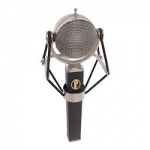
Blue Dragonfly: While pricing can fluctuate, the Blue Dragonfly is recognized for offering a sweet, vintage-inspired sound reminiscent of classic Neumann and AKG microphones. Its unique capsule design allows for extensive positioning flexibility, opening up a wide range of sonic possibilities for voice actors seeking a distinctive vocal signature.
High-End Professional and Industry Standards (Over $1000)
-
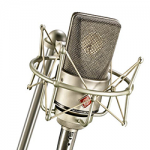
Neumann TLM 103 ($1,099): Although the TLM series was not originally designed specifically for voice work (TLM stands for Transistorless Microphone), the TLM 103 is a highly recommended microphone by numerous professional voice actors. It operates with a transformerless circuit, contributing to its exceptionally low self-noise and wide dynamic range. The cardioid polar pattern is meticulously tuned for acoustic balance and effective phase cancellation from rear sound sources. A minor consideration is its slight lift in high frequencies, which can occasionally lead to increased sibilance in higher-pitched female voices.
-
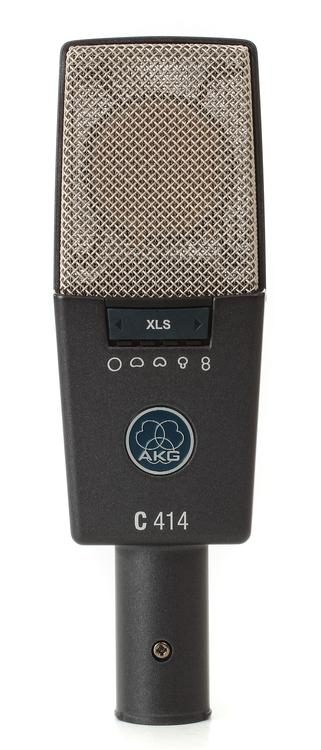
AKG 414 ($1100): The AKG C414 is a legendary studio workhorse, celebrated for its superb pickup range and a pleasingly flat frequency response. It represents a mid-range investment in the professional microphone market, offering professional-grade performance, robust construction, and significant versatility. With switchable polar patterns and a pad setting, the C414 is an excellent choice for any serious voice artist seeking a reliable and adaptable microphone.
-
Neumann U87 ($3180/£2500): The Neumann U87 is arguably the most iconic microphone in professional recording studios worldwide. It has long held a reputation as one of the finest microphones for vocal recording, a status reflected in its exceptional build quality, performance, and accompanying price tag. While a significant investment, the U87 offers switchable polar patterns, a pad, and a remarkably flat response, making it highly effective for both male and female voices. For those with the budget, it represents an unparalleled standard. However, the Sennheiser MK4 is frequently cited as a remarkable alternative, offering a comparable sonic quality at a tenth of the price.
-
Sennheiser MKH 416 (Circa $700/£550): The MKH 416 is a ubiquitous microphone in the voice over world, particularly for commercial work. It is a hypercardioid microphone, which requires precise on-axis positioning to avoid off-axis coloration. While not originally designed for voice work, its unique acoustic properties, when used in close proximity, produce a punchy, commercial-ready sound. Its exceptional ruggedness and durability also make it a preferred choice for travel. Many professional voice actors who own a 416 also possess a large-diaphragm condenser microphone to cover a broader range of vocal styles and applications.
Concluding Thoughts: Charting Your Course to Sonic Success
Selecting the ideal microphone for voice over work is a strategic decision that hinges on a clear understanding of one’s budget, the desired sonic characteristics, and the specific demands of the voice acting profession. The microphones detailed in this guide represent a cross-section of the industry’s most respected tools, each offering unique advantages across different price tiers.
For those embarking on their voice over journey, starting with a well-regarded yet accessible microphone like the Rode NT1 or Sennheiser MK4 can provide a solid foundation. As a career progresses and revenue increases, investing in higher-tier microphones such as the Neumann TLM 103 or the legendary U87 can further enhance the quality and marketability of one’s voice over services.
Ultimately, the most effective microphone is one that aligns with your vocal signature, complements your recording environment, and empowers you to deliver your best performance. By considering the technical specifications, understanding the nuances of sound capture, and exploring the diverse range of available options, voice actors can confidently invest in the tools that will define their sonic identity and propel their careers forward. For those seeking more in-depth guidance on setting up a professional home recording studio, comprehensive courses and resources are available to further refine your technical skills and studio environment.
