

The Greek language, a cornerstone of Western civilization and one of the oldest recorded living languages in the Indo-European family, continues to serve as a vital tool for cultural exchange, tourism, and international diplomacy. In an increasingly globalized world, the ability to navigate the Hellenic linguistic landscape is more than a mere academic pursuit; it is a practical necessity for the millions of travelers who visit the Hellenic Republic and the Republic of Cyprus annually. According to recent data from the Bank of Greece, tourism remains a primary pillar of the Greek economy, with international arrivals often exceeding 30 million in peak years. For these visitors, the acquisition of high-frequency phrases is the primary bridge to authentic social integration and efficient navigation of the country’s infrastructure.
This comprehensive analysis examines the foundational elements of Greek communication, categorizing essential phrases into functional modules designed to facilitate immediate proficiency. From formal greetings to the nuanced application of modern slang, the following framework provides a structured approach to Greek language acquisition, supported by linguistic context and sociolinguistic observations.
The Architecture of Greek Etiquette: Formal and Informal Greetings
The Greek communicative style is characterized by a distinct hierarchy of politeness, often referred to in linguistics as the "T-V distinction." This involves the use of specific verb forms and pronouns depending on the relationship between the speakers. In Greek, this is manifested through the use of the singular and plural second-person forms.
The standard greeting "Hello," or Yassas (Γειά σας), is the plural or formal variant, used when addressing elders, strangers, or a group of people. Conversely, Ya sou (Γειά σου) is the informal singular version, reserved for friends, family, and children. Mastering this distinction is considered the first step in demonstrating respect for Greek social norms.
Beyond the standard "hello," the Greek day is segmented by specific temporal greetings. Kalimera (Καλημέρα), meaning "good morning," is typically used until midday. As the afternoon progresses, Kalo apogevma (Καλό απόγευμα) is used to wish someone a pleasant afternoon, though it is less common as a greeting and more frequent as a parting wish. By the evening, Kalispera (Καλησπέρα) becomes the standard, while Kalinihta (Καληνύχτα) is strictly reserved for "good night" when one is departing for sleep.
Functional Survival: Navigating Daily Life and Tourism
For the international traveler, linguistic competence is often a matter of logistics. Data from travel industry reports suggest that tourists who utilize even basic local phrases report a 40% higher satisfaction rate in their interactions with service staff. Essential functional phrases include:
- Gratitude and Requests: The word Parakalo (Παρακαλώ) is perhaps the most versatile in the Greek lexicon. While it primarily means "please," it also serves as the standard response for "you’re welcome." Its counterpart, Efcharisto (Ευχαριστώ), meaning "thank you," is derived from the ancient Greek word charis, meaning grace.
- Affirmation and Negation: A common pitfall for English speakers is the word for "yes," which is Ne (Ναι). Phonetically, it resembles the English "nay," leading to frequent confusion. The word for "no" is Ochi (Όχι), often accompanied by a subtle upward nod of the head—a non-verbal cue deeply rooted in Balkan and Mediterranean cultures.
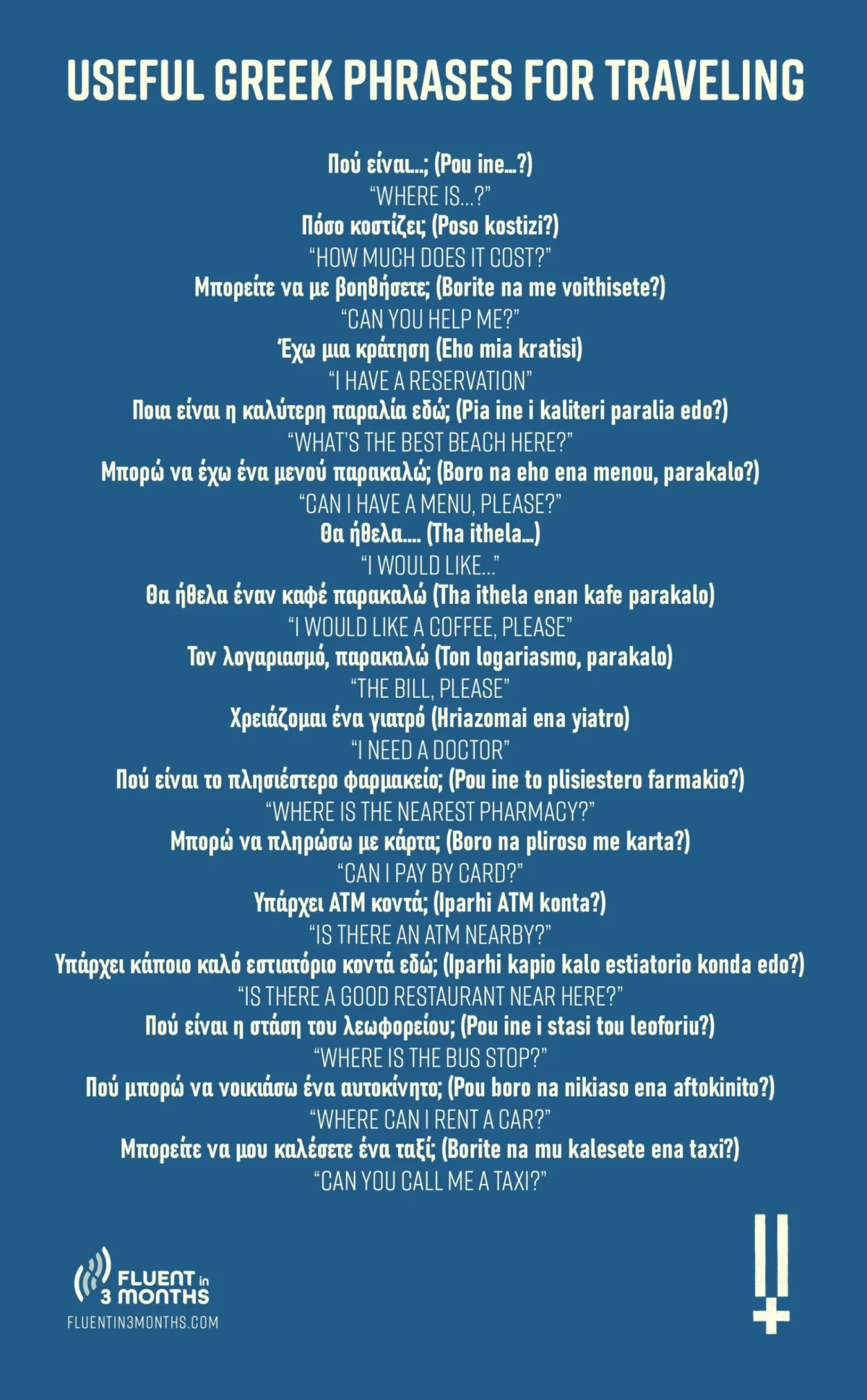
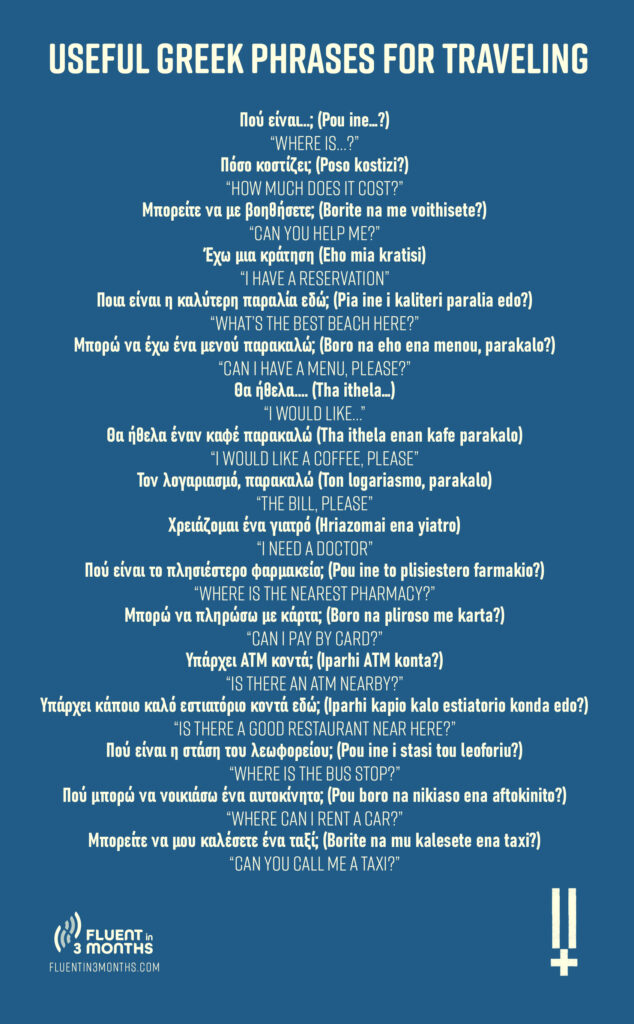
- Financial Transactions: When dining or shopping, the phrases Poso kani? (Πόσο κάνει; – How much is it?) and Ton logariasmo, parakalo (Τον λογαριασμό, παρακαλώ – The bill, please) are indispensable. In the modern era, the question Boro na pliroso me karta? (Μπορώ να πληρώσω με κάρτα; – Can I pay by card?) has become increasingly relevant following the implementation of strict POS terminal regulations across the Greek islands and mainland.
Social Integration: The Art of Self-Introduction
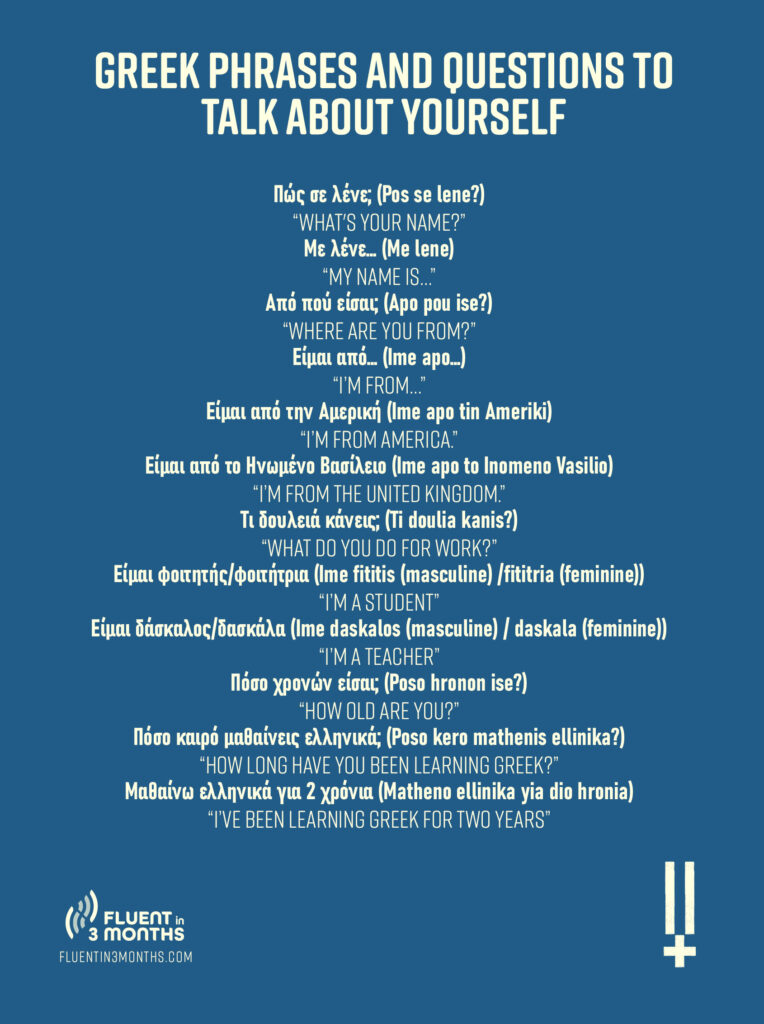
Establishing a personal connection is central to Greek culture, which places a high premium on hospitality, or philoxenia (φιλοξενία)—literally "friendship toward strangers." To participate in this cultural exchange, learners must be able to introduce themselves and inquire about others.
The standard inquiry Pos se lene? (Πώς σε λένε; – What is your name?) is typically followed by the response Me lene… (Με λένε… – My name is…). Identifying one’s origin is also a standard part of the initial "getting to know you" phase. Phrases like Ime apo tin Ameriki (Είμαι από την Αμερική – I’m from America) or Ime apo to Inomeno Vasilio (Είμαι από το Ηνωμένο Βασίλειο – I’m from the United Kingdom) help provide context to the interaction.
Furthermore, the distinction between masculine and feminine endings in professions is a critical grammatical feature. A male student identifies as fititis (φοιτητής), while a female student is fititria (φοιτήτρια). Similarly, a male teacher is daskalos (δάσκαλος) and a female teacher is daskala (δασκάλα).
Safety and Emergency Communication
While tourism in Greece is generally safe, linguistic preparation for emergencies is a vital component of responsible travel. The phrase Hriazomai ena yiatro (Χρειάζομαι ένα γιατρό – I need a doctor) and the inquiry Pou ine to plisiestero farmakio? (Πού είναι το πλησιέστερο φαρμακείο; – Where is the nearest pharmacy?) can provide critical assistance in times of distress. Pharmacies in Greece, marked by green crosses, often serve as the first point of medical advice for minor ailments, making this vocabulary particularly useful.
Additionally, knowing how to find a bus stop (stasi tou leoforiu) or an ATM (Iparhi ATM konta?) ensures that a traveler remains mobile and financially liquid, even in remote areas where English proficiency may be lower than in major hubs like Athens or Mykonos.
The Nuance of Modernity: Slang and Informal Vernacular
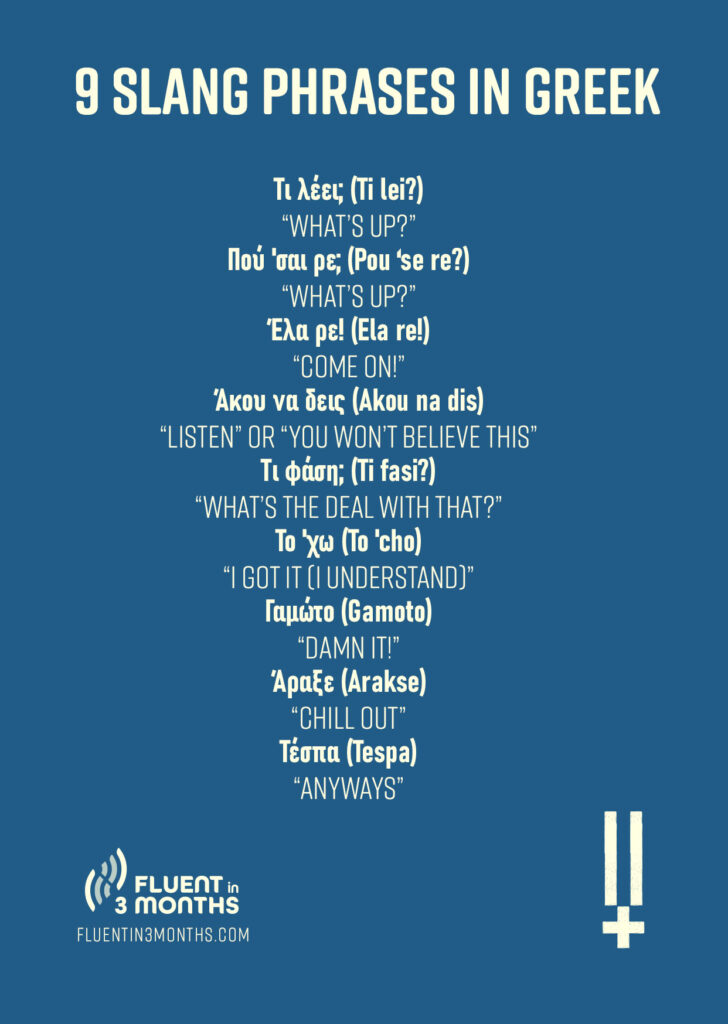
To truly sound "local," one must understand the informal register used by Greek youth and in casual social settings. The word Malaka (μαλάκα) is perhaps the most globally recognized Greek swear word. While technically an insult, its usage has evolved into a versatile term of endearment or a casual filler among close friends. However, linguists caution that its use by foreigners can be misinterpreted if the tone or relationship is not appropriate.
Other common slang terms include Tespa (Τέσπα), a shortened version of telos panton, meaning "anyway," and To ‘cho (Το ‘χω), an idiomatic expression meaning "I’ve got it" or "I understand." The exclamation Ela re! (Έλα ρε!) is used to express surprise, skepticism, or to urge someone to hurry, depending entirely on the inflection.
Cultural Wisdom: Proverbs and Their Modern Implications
Greek proverbs, or parimies, offer a window into the collective psyche of the nation. These phrases often emphasize patience, the consequences of excess, and the inevitability of change.
- "The drop that overflows the glass" (I stagona pou xehili zi to potiri): This is the Greek equivalent of "the straw that broke the camel’s back," used to describe the final minor event that leads to a major reaction.
- "He who has burned his tongue on the porridge, blows on the yogurt" (Opios kaike ston chilo, fisaei ke to giaourti): This proverb highlights the lasting impact of trauma or mistakes, suggesting that a person who has been hurt once will be overly cautious in the future.
- "One swallow does not make a spring" (Enas koukos den feri tin anixi): A reminder that a single positive sign does not guarantee a full change in circumstances.
- "The good day is apparent from the morning" (I kali mera apo to proi fenete): This reflects the Greek belief that the beginning of an endeavor often predicts its final outcome.
- "Small in the eye, but big in the heart" (Mikro sto mati, megalo sto mproti): Used to describe something or someone that may look insignificant but possesses great value or strength.
Broader Impact and Educational Implications
The systematic study of these phrases serves a dual purpose. For the individual, it reduces "foreign language anxiety" and fosters a sense of agency in a new environment. On a broader scale, the promotion of the Greek language helps preserve a linguistic heritage that has contributed over 150,000 words to the English vocabulary, particularly in the fields of science, medicine, and philosophy.
Educational experts, including Yaren Fadiloglulari, a prominent freelance journalist and linguist, emphasize that the goal of learning these phrases is not immediate perfection but "communicative competence." By focusing on high-frequency vocabulary and survival phrases, learners can achieve a functional level of Greek that facilitates meaningful human connection.
As digital tools and language applications continue to evolve, the accessibility of Greek language resources has never been higher. However, the core of the language remains rooted in the oral tradition—the "Yamas!" (Cheers!) shared over a meal or the "Kali tihi" (Good luck) offered to a departing friend. By mastering these basics, learners do more than speak a language; they participate in a thousands-year-old tradition of dialogue and discovery.
