

South Korea’s cultural landscape is undergoing a significant transition as traditional social hierarchies intersect with modern legislative reforms, most notably the 2023 standardization of the age-counting system. At the heart of this cultural fabric lies the birthday celebration, an event that in Korea is governed by a complex set of linguistic rules, honorific structures, and deeply rooted historical traditions. For expatriates, students of the language, and international observers, understanding how to navigate these celebrations requires more than a simple translation of "Happy Birthday." It necessitates an appreciation of the Korean language’s hierarchical nature and the recent legal shifts that have redefined what it means to grow a year older in the Republic of Korea.
The Linguistic Hierarchy of Birthday Greetings
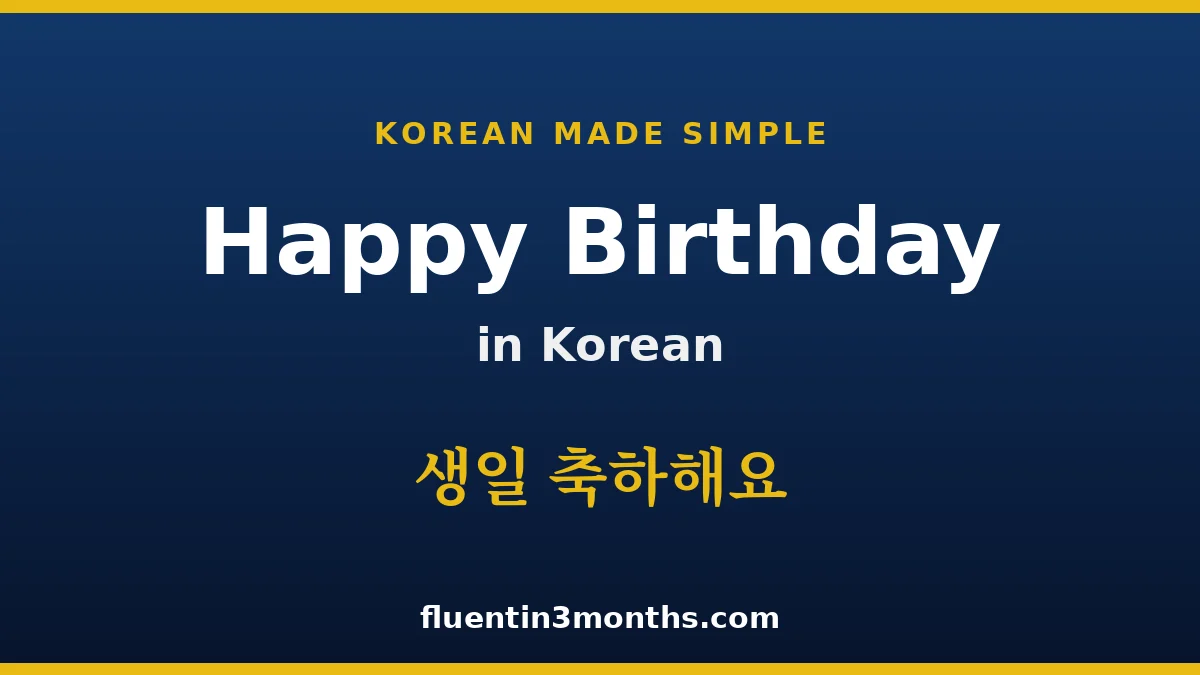
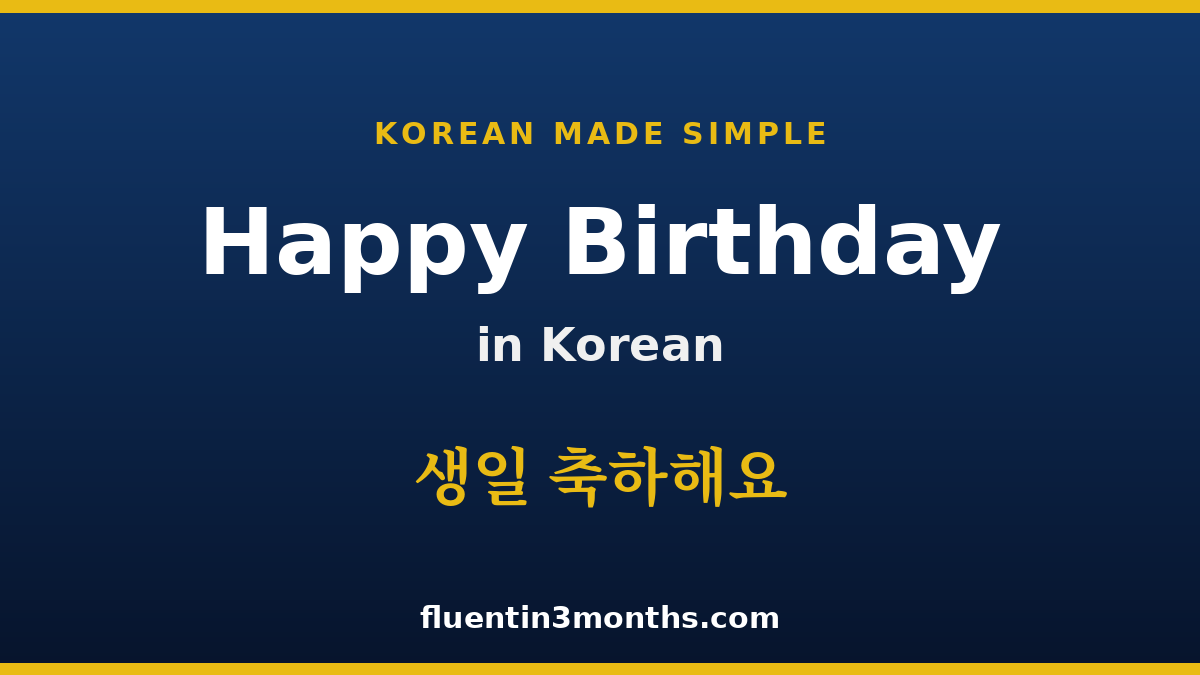
In the Korean language, the phrase "Happy Birthday" is not a static expression but a variable greeting that must be calibrated according to the social standing, age, and intimacy of the parties involved. The most versatile and commonly utilized version is "Saengil chukhahaeyo" (생일 축하해요). This expression utilizes the polite "-yo" ending, making it suitable for interactions with colleagues, acquaintances, and those of a similar social tier where a degree of professional or social distance remains.
However, the linguistic architecture of Korea, known for its intricate system of honorifics, provides at least four distinct levels of this greeting. The casual form, "Saengil chukhae" (생일 축하해), is strictly reserved for "Banmal" or informal speech. This is used between close friends of the same age or by an older individual addressing a significantly younger person with whom they share a close bond. Using this form inappropriately can be perceived as a social transgression, signaling a lack of respect for the hierarchy that still governs much of Korean social life.
Conversely, for formal settings or when addressing individuals of high status, the "Hapsyo-che" style is employed, resulting in "Saengil chukha-hamnida" (생일 축하합니다). This version is most famously heard in the Korean rendition of the "Happy Birthday to You" song, which maintains the formal verb ending regardless of the singer’s relationship to the celebrated individual.
The most deferential tier is reserved for elders, such as parents, grandparents, or mentors. In these instances, the vocabulary itself shifts. The standard word for birthday, "Saengil," is replaced with the honorific "Saengsin" (생신). Furthermore, the verb "Chukhahada" (to congratulate) is often paired with "Deurida" (드리다), a humble verb meaning "to give" or "to offer" to a superior. The resulting phrase, "Saengsin chukha-deurimnida" (생신 축하드립니다), represents the pinnacle of linguistic respect in a birthday context.
The 2023 Legislative Shift: Standardizing the "Man Nai" System
On June 28, 2023, South Korea officially implemented a law to standardize the way age is calculated across all judicial and administrative sectors. Historically, South Korea utilized three distinct systems for determining a person’s age. The "Korean Age" system (Seneun Nai) dictated that a child was one year old at birth and gained a year every New Year’s Day. Under this system, a baby born on December 31 would technically turn two years old on January 1, despite having lived for only two days.
The second system, "Year Age" (Yeon Nai), calculated age by subtracting the birth year from the current year, a method primarily used for the Military Service Act and the Protection of Children and Juveniles against Sexual Offenses Act (governing the legal age for purchasing alcohol and tobacco). The third system was the international standard (Man Nai), based on the actual birth date.
The 2023 amendment to the Civil Act and the General Act on Public Administration was designed to eliminate the "unnecessary social and administrative costs" arising from these conflicting systems. According to the Ministry of Government Legislation, the move was a response to public confusion in providing healthcare services, calculating pension eligibility, and interpreting various legal contracts.
While the legal shift to "Man Nai" has simplified administrative processes, the social implications remain complex. In a society where age determines speech style, seniority in the workplace, and social hierarchy, the sudden "loss" of one or two years has sparked widespread conversation. Many citizens continue to use the traditional "Korean Age" in casual social settings, particularly when determining the hierarchy of a new social circle.
Historical and Culinary Traditions: The Significance of Miyeokguk
Beyond the linguistic nuances, Korean birthdays are defined by specific cultural rituals, most notably the consumption of "Miyeokguk" (미역국), or seaweed soup. This tradition is deeply tied to the concept of filial piety and the honoring of motherhood. Historically, seaweed soup—rich in iodine and calcium—was the primary meal given to women after childbirth to aid in recovery and milk production.
By eating Miyeokguk on their birthday, Koreans are reminded of their mother’s sacrifice and the care provided during their infancy. This tradition dates back centuries; records from the Goryeo Dynasty suggest that people observed mother whales eating seaweed after giving birth, leading to the adoption of the practice for human postpartum recovery. Today, while modern dining options abound, the presence of seaweed soup remains a staple of the birthday breakfast table, symbolizing health and a connection to one’s origins.
Milestone Celebrations: Doljanchi and Hwangap
In the Korean life cycle, certain birthdays carry more weight than others. The first birthday, or "Doljanchi" (돌잔치), is a major milestone that historically celebrated a child’s survival through the precarious first year of life when infant mortality was high. A central feature of this celebration is the "Doljabi" (돌잡이), a ritual where the child is placed before various objects. The item the child picks is thought to foretell their future: a string or thread symbolizes longevity, money or rice indicates future wealth, and a brush or book suggests a life of scholarship.
Similarly, the 60th birthday, known as "Hwangap" (환갑), was traditionally the most significant milestone for an adult. Based on the 60-year cycle of the lunar calendar, reaching one’s 60th birthday meant completing a full cycle and beginning a new one. In the past, when life expectancy was lower, the Hwangap was a grand festival. However, as South Korea’s life expectancy has risen to among the highest in the world (exceeding 83 years), the 60th birthday is now often celebrated more modestly, with the 70th (Gohui) and 80th (Palsun) birthdays gaining more prominence as the new major milestones of elderhood.
The Role of Hangul and Phonetic Accuracy
The accuracy of birthday greetings is also tied to the mastery of Hangul, the Korean alphabet. Established by King Sejong the Great in 1443, Hangul was designed to be phonetically logical and easy for the populace to learn. For language learners, relying on romanization—such as "saengil chukhahaeyo"—can lead to pronunciation errors.
Linguists point out that the "k" sound in "chukhahae" is actually an aspirated "k" (ㅋ) resulting from the combination of the final consonant "g" (ㄱ) in "chuk" and the initial "h" (ㅎ) in "ha." This phonetic blending is a hallmark of natural Korean speech. Understanding these nuances is essential for anyone wishing to integrate into Korean social circles, as clear pronunciation is often viewed as a sign of respect for the culture.
Societal Implications and Modern Adaptations
The intersection of these traditions with modern technology has also changed how birthdays are celebrated. The rise of "Kakaotalk Gifts," a feature of Korea’s ubiquitous messaging app, has transformed birthday etiquette. It is now standard practice to send digital coupons for cakes, coffee, or luxury goods via the app. This digital gift-giving often precedes the actual birthday and serves as a modern way to maintain social ties in a fast-paced urban society.
Despite these technological and legislative changes, the core of the Korean birthday remains rooted in the acknowledgment of one’s place within a community and a family. Whether it is through the careful selection of honorifics or the sharing of a bowl of seaweed soup, the celebration continues to reinforce the values of respect, gratitude, and social harmony.
As South Korea continues to globalize, the tension between traditional age-based hierarchies and modern egalitarian standards will likely persist. However, the linguistic and cultural rituals surrounding birthdays provide a stable framework through which Koreans navigate their relationships. For the international community, these traditions offer a window into a society that deeply values its history while rapidly evolving toward a standardized, modern future. The 2023 age law may have changed the numbers on a legal document, but the "Saengil" remains a profound moment of cultural expression and social connection.
