

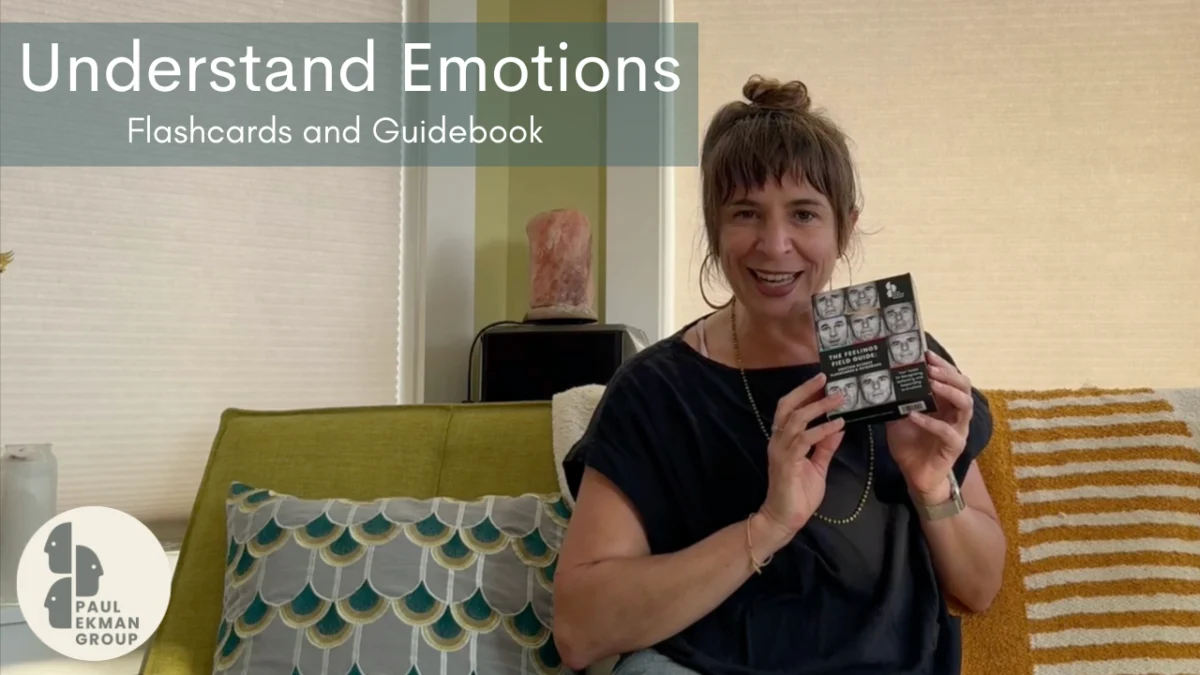
Understanding emotions, a cornerstone of human interaction, is no longer confined to abstract theory. Drs. Paul and Eve Ekman have introduced "The Feelings Field Guide," a scientifically validated toolkit designed to translate over five decades of behavioral research into practical, everyday skills. This innovative resource aims to empower individuals across various walks of life—from parents navigating the complexities of childhood anxiety to professionals engaging in high-stakes negotiations—by providing a tangible method for identifying universal facial expressions and fostering constructive responses.
The genesis of "The Feelings Field Guide" stems from the pioneering work of Dr. Paul Ekman, a renowned psychologist and professor emeritus at the University of California, San Francisco. His research, beginning in the 1960s, focused on the universality of human emotions and their corresponding facial expressions. Through extensive cross-cultural studies, Dr. Ekman identified seven universal emotions—anger, fear, disgust, contempt, surprise, sadness, and happiness—each associated with distinct, involuntary facial muscle movements. This foundational research laid the groundwork for the development of the Facial Action Coding System (FACS), a comprehensive method for cataloging all observable human facial movements. "The Feelings Field Guide" is, in essence, a distillation of this monumental body of work, made accessible and actionable for the general public.
A Comprehensive Toolkit for Emotional Literacy
At its core, "The Feelings Field Guide" is a meticulously crafted toolkit designed to enhance emotional awareness and non-verbal communication. It comprises 92 emotion flashcards, each depicting scientifically accurate representations of facial expressions linked to specific emotions, and a comprehensive scientific guidebook. This pairing allows users to move beyond simply labeling an emotion to understanding the subtle nuances of its expression.
Dr. Eve Ekman, a psychologist and co-creator of the guide, emphasizes the core methodology behind recognizing the seven universal emotions. In a demonstration video accompanying the guide, she illustrates how these expressions manifest and provides context for their interpretation. The visual and interactive nature of the flashcards, combined with the scientific explanations in the guidebook, transforms the learning process from passive observation to active engagement. This approach is crucial for developing what psychologists term "emotional intelligence" (EQ), a set of skills that allows individuals to perceive, use, understand, manage, and handle emotions. Research consistently shows that higher EQ is correlated with improved relationships, better academic and professional performance, and greater overall well-being. For instance, a 2011 study published in the journal Emotion found that individuals with higher emotional intelligence were better at regulating their own emotions and understanding the emotions of others, leading to more positive social interactions.
From Decades of Insight to Everyday Action
The development of "The Feelings Field Guide" is not a recent endeavor but rather the culmination of over 50 years of dedicated research into the nature of emotion and facial expression. This extensive scientific foundation distinguishes the guide from other resources that may offer simplified or anecdotal approaches to understanding emotions. The Ekmans’ work has been instrumental in advancing our understanding of how emotions influence human behavior, decision-making, and social dynamics.
The guide’s practical application is highlighted by its tangible components. While the exact contents beyond the flashcards and guidebook are not detailed in the provided information, the emphasis is on transforming scientific insight into actionable skills. The core principle is that recognizing emotions is only the first step; the true value lies in knowing how to respond constructively to that awareness. This is particularly relevant in interpersonal contexts where misinterpreting emotions can lead to conflict or missed opportunities. For example, a study by the Harvard Business Review indicated that executives with high emotional intelligence are more effective leaders, fostering better team cohesion and productivity.
Designed for Adaptability and Personalized Learning
A key strength of "The Feelings Field Guide" lies in its inherent flexibility. The Ekmans have designed the tool to be adaptable to a wide range of learning styles and personal goals. Users are encouraged to engage with the materials in ways that best suit their needs. This could involve:
- Self-Quizzing: Utilizing the expression cards to test one’s ability to identify emotions from facial cues.
- Focused Study: Concentrating on mastering the recognition of a single emotion or a group of related emotions.
- Reflective Exercises: Engaging with prompts and scenarios provided in the guidebook to deepen understanding and application of emotional concepts.
This personalized approach acknowledges that emotional intelligence is not a one-size-fits-all skill. The absence of a rigid, prescribed method of use underscores the guide’s commitment to user-centered learning. This mirrors pedagogical approaches in adult education, which often emphasize learner autonomy and self-directed learning to maximize engagement and retention.
Endorsements Reflecting Real-World Impact
The efficacy of "The Feelings Field Guide" is further validated by testimonials from individuals who have incorporated it into their lives. Mark B., a parent with no formal background in behavioral sciences, found the guide to be an "effective tool to use in discussing emotions with my son," who was experiencing anxiety and social regression. His confidence in the product was bolstered by the "very high degree of confidence in the validity" of the science pioneered by Dr. Ekman. This highlights the guide’s success in bridging the gap between complex scientific research and the practical needs of everyday families.
Simon B., working in information security and data protection, underscores the professional benefits. He describes the guide as a "great tool" for understanding micro-expressions and emotions, which has "helped me understand colleagues, customers and suppliers better and improved my interactions." He specifically notes its utility in "determining what people really feel compared to what they are saying," a crucial skill in fields requiring keen interpersonal perception. This aligns with research suggesting that non-verbal communication skills, including the ability to detect deception or true sentiment, are highly valued in many professional settings. A survey by the Society for Human Resource Management (SHRM) frequently lists interpersonal skills and communication as top attributes sought in employees.
The Profound Significance of Emotional Understanding
The impact of emotions on human cognition, communication, and decision-making is profound, often operating on a subconscious level that significantly shapes our experiences. Misinterpreting emotions, whether in ourselves or others, can be a significant impediment, leading to misunderstandings, interpersonal conflicts, and the forfeiture of opportunities for genuine connection and collaboration. Conversely, the ability to accurately recognize and respond to emotions yields substantial benefits. These include:
- Enhanced Self-Awareness: A deeper understanding of one’s own emotional states, triggers, and reactions.
- Improved Interpersonal Relationships: Fostering empathy, stronger bonds, and more effective conflict resolution.
- Better Decision-Making: Integrating emotional intelligence into cognitive processes for more balanced and considered choices.
- Increased Empathy and Compassion: Cultivating a greater capacity to understand and share the feelings of others.
- Greater Resilience: Developing stronger coping mechanisms for stress and adversity.
"The Feelings Field Guide" is strategically designed to cultivate these essential skills, providing a grounded, practical, and repeatable pathway to emotional mastery. The increasing recognition of emotional intelligence as a critical factor in personal and professional success, as evidenced by its inclusion in leadership training programs and academic curricula worldwide, underscores the timeliness and relevance of this tool.
Addressing Frequently Asked Questions
The Ekmans’ research has often been distinguished by its scientific rigor. In response to queries about how "The Feelings Field Guide" differs from other emotion-focused resources, the developers highlight its unique foundation. Unlike many flashcards that merely label an emotion, "The Feelings Field Guide" is explicitly based on the Facial Action Coding System (FACS). This scientific system ensures that the facial expressions presented are not arbitrary but are derived from meticulous research, guaranteeing their accuracy and universal recognition across cultures. FACS provides an objective, anatomical basis for understanding facial expressions, moving beyond subjective interpretations.
For individuals seeking a more advanced or digitally integrated learning experience, the physical "Field Guide" is often complemented by the "Micro-expression Training Tools." These digital resources offer certified, performance-based mastery, catering to those who wish to delve deeper into the science of subtle facial movements and their implications. This dual approach—tangible learning combined with advanced digital training—offers a comprehensive pathway for skill development, catering to a broad spectrum of learning preferences and objectives.
The introduction of "The Feelings Field Guide" represents a significant step forward in making complex psychological science accessible and applicable to everyday life. By providing a scientifically validated, practical, and adaptable tool, Drs. Paul and Eve Ekman are equipping individuals with the essential skills to navigate the intricate landscape of human emotions, fostering greater understanding, connection, and well-being in a world that increasingly values emotional intelligence.
