

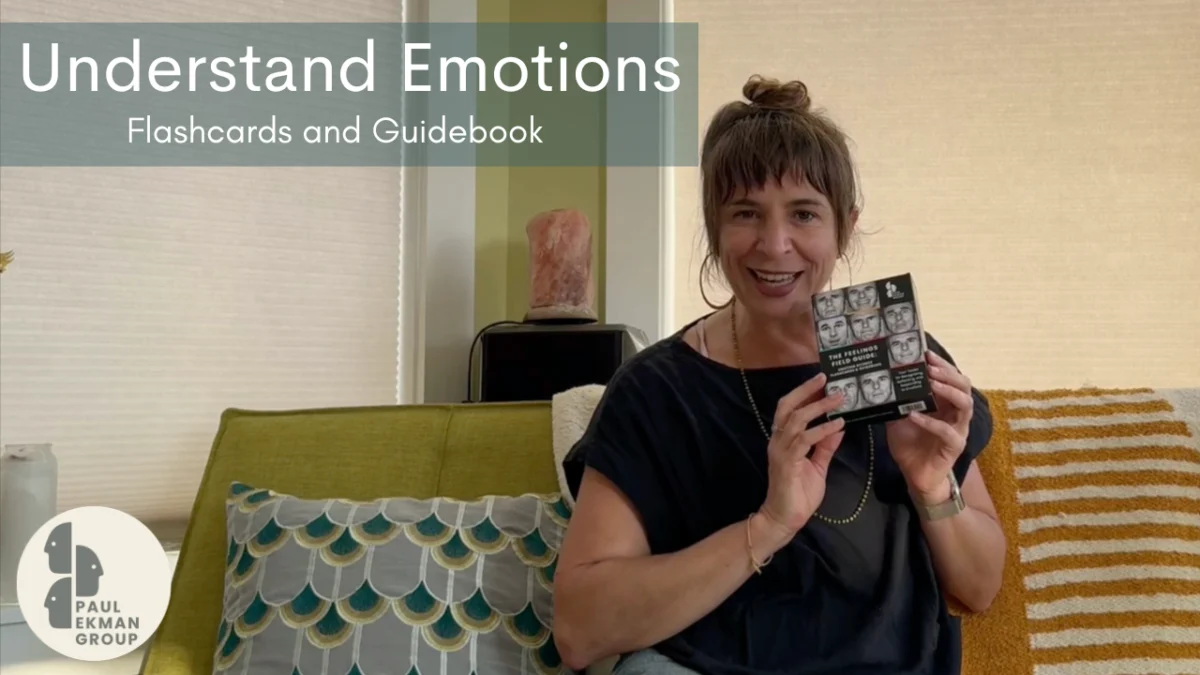
In an era increasingly defined by the need for effective interpersonal communication and emotional intelligence, a groundbreaking tool developed by leading psychologists is bringing the complex science of human emotions into tangible, everyday practice. The Feelings Field Guide, a brainchild of Drs. Paul and Eve Ekman, leverages over half a century of pioneering research into facial expressions and emotional responses, offering individuals a scientifically validated method to understand and navigate the nuances of human sentiment. This comprehensive toolkit aims to demystify emotions, transforming abstract psychological concepts into actionable skills applicable across personal and professional spheres.
The genesis of The Feelings Field Guide lies in the extensive work of Dr. Paul Ekman, a renowned psychologist whose research has fundamentally shaped our understanding of emotions and their universal expressions. Beginning in the mid-20th century, Ekman’s studies, often in collaboration with Wallace Friesen, identified a set of seven universal emotions – happiness, sadness, anger, fear, surprise, disgust, and contempt – that are expressed through distinct, involuntary facial muscle movements recognizable across diverse cultures. This groundbreaking discovery laid the foundation for the Facial Action Coding System (FACS), a detailed catalog of all observable human facial movements, which serves as the scientific bedrock for The Feelings Field Guide. The guide is not merely an educational resource; it is a practical application of this extensive body of work, translating decades of academic rigor into a user-friendly format designed for immediate utility.
What Constitutes The Feelings Field Guide?
At its core, The Feelings Field Guide is a meticulously designed toolkit comprising 92 meticulously crafted emotion flashcards and an accompanying scientific guidebook. This ensemble is engineered to significantly enhance an individual’s emotional awareness and their proficiency in non-verbal communication. The flashcards visually represent the subtle yet distinct facial expressions associated with a wide spectrum of emotions, derived directly from the scientifically validated principles of FACS. The guidebook provides the theoretical framework and practical instructions for utilizing the cards effectively, demystifying the science behind each expression and offering strategies for interpretation and response. This dual approach ensures that users not only learn to recognize emotions but also understand the underlying mechanisms and implications of these expressions.
A Scientific Foundation for Emotional Literacy
Dr. Eve Ekman, a psychologist and educator who has actively contributed to her father’s research and its dissemination, often highlights the methodological rigor behind The Feelings Field Guide. In introductory materials and demonstrations, she explains that the guide’s efficacy stems from its direct link to the universal nature of human emotional expression. The seven core emotions identified by Dr. Paul Ekman are not arbitrary classifications; they are rooted in evolutionary biology and are believed to have served crucial survival functions throughout human history. The guide facilitates the recognition of these universal expressions, providing a common language for understanding human sentiment regardless of cultural background. This scientific grounding distinguishes The Feelings Field Guide from other, less scientifically robust, emotion-recognition tools available on the market.
The development of The Feelings Field Guide can be traced through a timeline of critical research milestones. Dr. Paul Ekman’s early work in the 1960s and 1970s, including extensive cross-cultural studies, established the universality of basic emotional expressions. The development of FACS in the 1970s provided a standardized system for analyzing facial movements. Over the subsequent decades, this research was continuously refined and expanded, leading to applications in various fields, including law enforcement, national security, and clinical psychology. The creation of The Feelings Field Guide represents a natural evolution of this research, aiming to democratize access to this specialized knowledge and make it accessible to the general public. The transition from purely academic research to a practical, consumer-facing product underscores a commitment to bridging the gap between scientific discovery and real-world application.
From Insight to Action: Practical Application of Emotional Science
The true value of The Feelings Field Guide lies in its ability to translate complex scientific insights into practical, actionable skills. The guide is not simply about identifying an emotion; it is about understanding what to do with that awareness. This emphasis on application distinguishes it as a powerful tool for personal and professional development.
The toolkit’s contents are designed for immersive learning. While the original article mentions the flashcards and guidebook, a deeper dive into the typical components of such a scientifically backed resource would likely include:
- 92 Emotion Flashcards: Each card features a high-quality image of a facial expression associated with a specific emotion or a nuanced variation thereof. These images are often derived from posed expressions validated by FACS, ensuring accuracy. Some cards might depict micro-expressions, fleeting emotional signals that are often involuntary and reveal true feelings.
- Scientific Guidebook: This manual provides detailed explanations of the seven universal emotions, their associated facial muscle movements (Action Units), and the evolutionary reasons behind them. It also offers guidance on how to use the flashcards for self-assessment, training, and for understanding others.
- Reflection Exercises: The guidebook typically includes exercises designed to encourage users to apply their newfound knowledge in real-world scenarios, prompting reflection on personal emotional experiences and observations of others.
- Case Studies or Scenarios: Practical examples illustrating how emotional understanding can be applied in specific situations, such as parenting, conflict resolution, or customer service.
The objective is to move beyond mere recognition towards informed, constructive responses. This proactive approach empowers individuals to manage their own emotional states more effectively and to interact with others with greater empathy and understanding.
Designed for Flexibility and Personal Growth
The Feelings Field Guide is intentionally designed for adaptability, recognizing that individuals learn and engage with material in diverse ways. Its flexibility allows for integration into various learning styles and contexts:
- Individual Learning: Users can engage with the flashcards independently, quizzing themselves on identifying emotions and their associated expressions. This self-paced approach allows for deep personal reflection and practice.
- Group Training: The cards can be used in workshops or training sessions, facilitating interactive learning and discussion among participants. This is particularly valuable for teams in professional settings.
- Therapeutic Settings: Therapists and counselors can utilize the guide as a supplementary tool to help clients improve emotional literacy, particularly those struggling with emotional regulation or social interaction.
- Parenting and Education: Parents can use the guide to teach children about emotions, fostering early emotional intelligence and communication skills. Educators can incorporate it into curricula to enhance social-emotional learning programs.
The absence of a rigid, prescribed method of use is a deliberate design choice. Users are encouraged to explore different approaches, such as focusing on a single emotion at a time, practicing with a partner, or integrating the exercises into daily routines. This user-centric approach ensures that the guide remains a relevant and effective tool for a broad audience with varying needs and goals.
Testimonials: Real-World Impact of Emotional Insight
The efficacy of The Feelings Field Guide is consistently reinforced by testimonials from individuals who have experienced its benefits firsthand. These accounts offer compelling evidence of its practical value across different demographics and professional fields.
Mark B., a parent navigating the challenges of a son with anxiety and social regression, found the guide to be an invaluable resource. He stated, "I have always been fascinated by the science of emotions and how I can be used by a layman such as myself. I have no formal scientific background in behavioral sciences or psychology but I do have a son who has issues with anxiety and social regression. I appreciate that ‘The Feelings Field Guide’ deck turned out to be an effective tool to use in discussing emotions with my son. Knowing that this science was practically pioneered by Dr. Ekman gave me a very high degree of confidence in the validity of this product." This testimonial highlights the guide’s accessibility for individuals without formal psychological training and its efficacy in addressing complex developmental challenges.
Simon B., working in information security and data protection, underscores the professional applications of the guide. He commented, "The Field Guide is a great tool to have and I recommend it to anyone interested in understanding micro-expressions and emotions… Working in information security and data protection, understanding micro-expressions and emotions has helped me understand colleagues, customers and suppliers better and improved my interactions with people. These are great skills to have as a security professional, especially in determining what people really feel compared to what they are saying." Simon’s experience demonstrates how enhanced emotional intelligence can lead to improved professional relationships, better decision-making, and a more nuanced understanding of human behavior in high-stakes environments.
The Enduring Significance of Emotional Awareness
The profound impact of emotions on human cognition, communication, and decision-making is a well-established scientific fact. Emotions are not merely subjective experiences; they are powerful drivers of behavior, influencing how individuals perceive the world, interact with others, and make choices, often on a subconscious level. Misinterpreting these emotional signals, whether in oneself or in others, can lead to a cascade of negative consequences, including misunderstandings, interpersonal conflicts, and missed opportunities for connection and collaboration.
Conversely, the development of accurate emotional recognition and response skills yields significant benefits:
- Improved Relationships: A deeper understanding of emotions fosters empathy and strengthens interpersonal bonds, leading to more harmonious and supportive relationships.
- Enhanced Communication: By accurately perceiving and responding to emotional cues, individuals can communicate more effectively, avoiding misinterpretations and facilitating clearer exchanges.
- Effective Conflict Resolution: Recognizing the underlying emotions in a conflict allows for a more constructive approach to resolution, addressing the root causes rather than just the surface-level disagreements.
- Increased Self-Awareness: Understanding one’s own emotional landscape is crucial for self-regulation, personal growth, and mental well-being.
- Better Decision-Making: By acknowledging and integrating emotional intelligence into decision-making processes, individuals can make more balanced, informed, and effective choices.
The Feelings Field Guide is strategically designed to cultivate these essential skills in a manner that is both scientifically grounded and eminently practical, offering a repeatable and sustainable pathway to enhanced emotional literacy.
Frequently Asked Questions About The Feelings Field Guide
How is this different from other emotion flashcards?
A crucial differentiator of The Feelings Field Guide is its scientific pedigree. While many emotion flashcards simply provide a label for a feeling, The Feelings Field Guide is the only tool directly derived from and validated by the Facial Action Coding System (FACS). FACS is a comprehensive, objective system for describing all observable facial movements. This ensures that the expressions presented in the guide are not arbitrary representations but are scientifically accurate and universally recognizable across human populations. This rigorous scientific foundation provides a level of validity and reliability that is unmatched by less scientifically grounded alternatives.
Is there a digital version?
The Feelings Field Guide is primarily designed as a physical, tactile tool to encourage hands-on learning and deeper engagement with the material. However, for individuals seeking a more advanced, performance-based mastery of emotion recognition, particularly micro-expressions, it is often recommended to complement the Field Guide with digital resources such as the Micro-expression Training Tools. These digital platforms typically offer interactive exercises, video analysis, and performance tracking, catering to those who require a more intensive and certified approach to skill development. The tactile nature of the Field Guide, however, remains a key feature for foundational learning and broad accessibility.
