

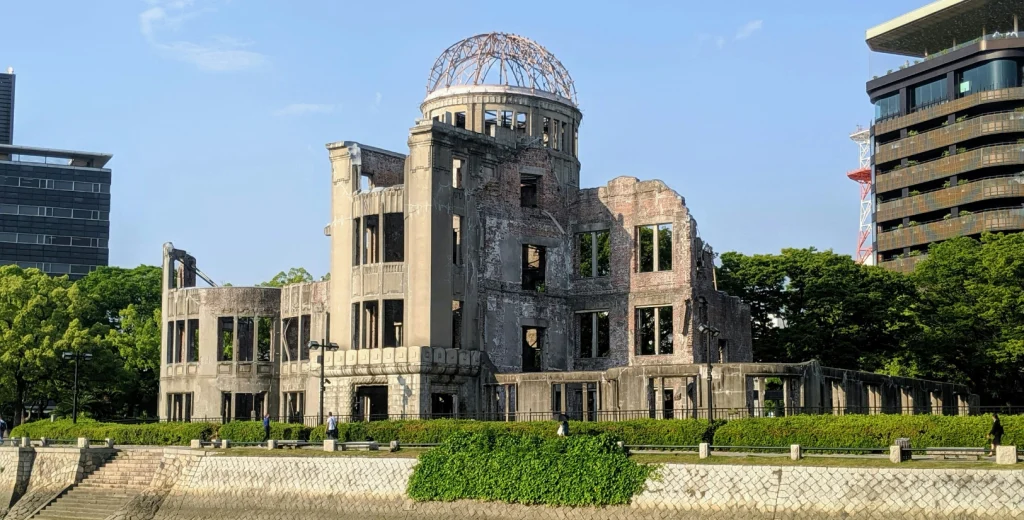
In the latest release of the Anecdotally Speaking podcast, Episode 284, hosts Mark Schenk and Shawn Callahan examine the profound impact of internal narratives on leadership, resilience, and organizational decision-making. The discussion centers on the historical account of Tsutomu Yamaguchi, a Japanese engineer who survived both the Hiroshima and Nagasaki atomic bombings in August 1945. By analyzing Yamaguchi’s experience, the episode explores how the "meaning" attributed to facts can fundamentally alter a leader’s trajectory and a workforce’s ability to navigate crisis. Anecdote International, a global consultancy specializing in corporate storytelling, utilizes this case study to illustrate how narrative techniques—such as foreshadowing and audience participation—serve as essential tools for contemporary executives.
The core of the discussion revolves around a central philosophical question: was Tsutomu Yamaguchi the unluckiest man in history for being present at both nuclear detonations, or the luckiest for surviving them? This distinction highlights the podcast’s primary thesis: while facts remain static, the narrative framework applied to those facts determines an individual’s capacity for resilience and leadership.
The Chronology of Survival: August 1945
The historical record of Tsutomu Yamaguchi’s ordeal provides a stark timeline of the dawn of the nuclear age. In the summer of 1945, Yamaguchi was a 29-year-old naval engineer employed by Mitsubishi Heavy Industries. He had spent three months in Hiroshima working on the design of a new oil tanker and was scheduled to return home to Nagasaki on August 6.
On the morning of August 6, 1945, at approximately 8:15 a.m., Yamaguchi was walking toward the Mitsubishi shipyard when the B-29 bomber Enola Gay dropped the "Little Boy" atomic bomb. The device detonated roughly 1,900 feet above the city center. Yamaguchi was approximately three kilometers (1.9 miles) from the hypocenter. The resulting flash blinded him temporarily, and the heat caused serious burns to the left side of his body. The shockwave ruptured his eardrums and tossed him into a nearby potato patch. Despite the devastation, which saw the immediate death of an estimated 70,000 to 80,000 people, Yamaguchi survived. He spent a harrowing night in an air-raid shelter amidst the ruins of the city.
On August 7, Yamaguchi navigated the smoldering remains of Hiroshima to reach the railway station, which miraculously remained functional on the city’s outskirts. He boarded a train filled with burned and traumatized survivors, arriving in his hometown of Nagasaki on August 8. After receiving basic medical treatment for his burns and wounds, he reported for work at the Mitsubishi office in Nagasaki on the morning of August 9.
At approximately 11:00 a.m. on August 9, Yamaguchi was describing the Hiroshima explosion to his supervisor. Historical accounts suggest his supervisor was skeptical, questioning how a single bomb could destroy an entire city. As Yamaguchi attempted to explain the scale of the devastation, the second atomic bomb, "Fat Man," was dropped on Nagasaki. The explosion occurred roughly three kilometers from his location. Once again, Yamaguchi survived the blast, though his bandages were blown off and he suffered a new wave of radiation exposure.
Statistical Context and Historical Data
The scale of the events Yamaguchi survived is underscored by the casualty data from the two bombings. In Hiroshima, the initial blast and subsequent firestorm killed approximately 30% of the population instantly. By the end of 1945, the death toll rose to an estimated 140,000 due to radiation sickness and injuries. In Nagasaki, the death toll was estimated at 74,000 by the end of the year.
Yamaguchi was one of an estimated 165 people known to have been in both cities during the explosions, a group referred to in Japan as "nijyuu hibakusha" (double-bombed people). However, it was not until 2009, a year before his death at age 93, that the Japanese government officially recognized him as a survivor of both bombings. For decades, Yamaguchi lived a relatively quiet life, working as a translator and teacher, before becoming a vocal advocate for nuclear disarmament in his later years. His longevity, despite extreme radiation exposure, remains a subject of medical interest, as he lived nearly seven decades beyond the events of 1945.
Meaning-Making and Leadership Resilience
The podcast episode uses Yamaguchi’s story to transition into a deeper analysis of "meaning-making" in a professional context. Mark and Shawn argue that leadership is less about the management of facts and more about the management of meaning. In an organizational setting, a "setback" can be framed as a failure or as a critical learning pivot.

Resilience, according to the hosts, is a byproduct of the stories individuals tell themselves. If a leader views a market downturn as an insurmountable catastrophe, the organization’s response will be defensive and paralyzed. Conversely, if the narrative is framed around survival and the opportunity for evolution—much like Yamaguchi’s eventual transition from victim to advocate—the organizational culture can maintain its integrity during periods of high stress.
The discussion highlights that the "unluckiest vs. luckiest" dichotomy is not merely a linguistic exercise. It is a psychological framework. Leaders who can reframe adverse events without denying the reality of the situation are better equipped to maintain team morale. This requires a balance of transparency (acknowledging the burns and the "black rain") and forward-looking vision (the journey home and the return to work).
Storytelling Techniques: Foreshadowing and Participation
Beyond the psychological aspects of resilience, Episode 284 delves into specific storytelling mechanics that leaders can employ. One such technique is "foreshadowing." In a narrative sense, foreshadowing prepares the audience for what is to come, creating a sense of inevitability or preparedness. In leadership, this translates to "signaling." By providing early indicators of coming changes or challenges, leaders reduce the shock of the eventual "explosion," allowing the workforce to build the necessary mental and operational buffers.
The hosts also discuss the role of audience participation in meaning-making. A story is not a one-way transmission of data; it is a collaborative process where the listener fills in the gaps. In a corporate environment, this means leaders should leave room for employees to find their own place within the organizational narrative. When employees participate in the story of the company’s future, they are more likely to commit to its success, even during difficult transitions.
Navigating Authenticity and Integrity
A significant portion of the podcast addresses the challenge of communicating decisions that a leader may not personally agree with. This is a common occurrence in mid-to-upper management, where executives must execute board-level strategies that conflict with their personal preferences or previous promises to their teams.
The hosts suggest that maintaining integrity in these situations requires a nuanced approach to storytelling. Rather than adopting a "corporate script" that feels hollow and inauthentic, leaders are encouraged to find a "truthful narrative" that bridges the gap. This involves acknowledging the difficulty of the decision while focusing on the broader context and the "why" behind the change. By being honest about the challenges while remaining committed to the organization’s ultimate goals, leaders can preserve trust—a commodity that is easily destroyed and difficult to rebuild.
Broader Impact and Implications for Corporate Culture
The insights provided by Anecdote International reflect a growing trend in global business: the move toward "human-centric" leadership. As organizations become increasingly data-driven, the "humanity" of the workforce can often be sidelined. Storytelling is presented as the mechanism that brings this humanity back to the forefront.
Anecdote International’s global network, spanning 28 countries and 11 languages, indicates that the need for narrative-based leadership is universal. Whether in sales enablement or executive leadership, the ability to craft and share compelling stories is linked to higher engagement and better decision-making.
The story of Tsutomu Yamaguchi serves as an extreme but effective metaphor for the modern professional world. While few leaders will ever face a literal atomic blast, many will face "explosive" changes in technology, market shifts, or global crises. The lesson of the "double survivor" is that survival is not just a matter of physical presence; it is a matter of the narrative one constructs in the aftermath.
Conclusion
Episode 284 of Anecdotally Speaking concludes by reinforcing that the facts of our lives and careers are often beyond our control, but the meaning we assign to them is entirely within our jurisdiction. Tsutomu Yamaguchi’s life was defined by two of the most horrific events of the 20th century, yet his narrative shifted from one of a victim to one of a witness and an advocate for peace. For leaders, the takeaway is clear: the stories told within an organization determine its resilience. By mastering the art of storytelling, leaders can guide their teams through the most volatile of circumstances, ensuring that even in the face of "blinding flashes" of change, the organization can find its way home and continue its work.
