

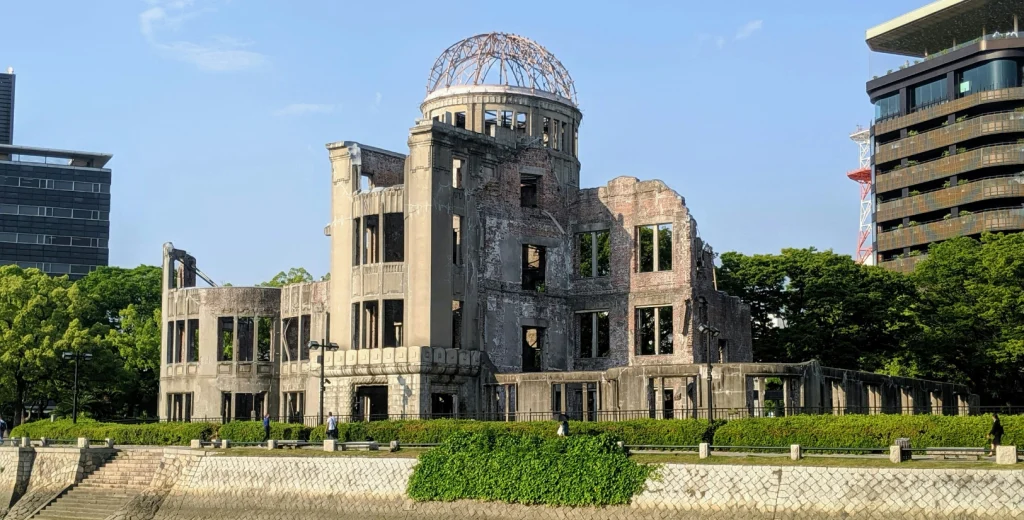
The intersection of historical tragedy and modern leadership theory provides a unique lens through which organizational experts analyze the human capacity for resilience and the construction of meaning. In the latest installment of the Anecdotally Speaking podcast, Episode 284, hosts Mark and Shawn explore the harrowing and scientifically improbable biography of Tsutomu Yamaguchi, the only person officially recognized by the Japanese government as a survivor of both the Hiroshima and Nagasaki atomic bombings. By examining Yamaguchi’s life, the podcast delves into how the internal narratives individuals construct can dictate their capacity for leadership, their psychological endurance, and the integrity with which they communicate difficult decisions within a corporate or social structure.
The Dual Survival of Tsutomu Yamaguchi: A Chronology of the Unthinkable
The historical record of Tsutomu Yamaguchi serves as the primary case study for the podcast’s exploration of "meaning-making." In August 1945, Yamaguchi was a 29-year-old naval engineer employed by Mitsubishi Heavy Industries. His experience began on August 6, 1945, in Hiroshima, where he had spent the previous three months on a business trip designing a new oil tanker. As he prepared to leave the city to return to his family, he realized he had forgotten his "hanko"—a personal identification stamp—and returned to the shipyard to retrieve it.
At 8:15 a.m., the B-29 bomber Enola Gay dropped the "Little Boy" atomic bomb over the city center. Yamaguchi was approximately three kilometers (1.9 miles) from the hypocenter. The resulting blast produced a blinding flash and a heat wave that inflicted severe burns on the left side of his body, ruptured his eardrums, and rendered him temporarily blind. Despite the devastation, which resulted in the immediate deaths of an estimated 70,000 to 80,000 people, Yamaguchi found the strength to spend the night in a local air-raid shelter.
The following day, navigating a landscape of charred ruins and "black rain" (radioactive fallout), he reached the Hiroshima train station, which miraculously remained somewhat functional. He boarded a train packed with wounded survivors, heading toward his hometown: Nagasaki.
On August 9, 1945, having received rudimentary medical treatment for his burns and injuries, Yamaguchi reported to the Mitsubishi office in Nagasaki. Historical accounts, echoed in the podcast, describe a scene of profound irony: Yamaguchi was in the middle of explaining the scale of the Hiroshima disaster to his supervisor, who expressed disbelief that a single bomb could level an entire city. At 11:02 a.m., as Yamaguchi was speaking, the "Fat Man" plutonium bomb exploded over Nagasaki. Despite being three kilometers from the second ground zero, Yamaguchi survived again. The topography of Nagasaki, characterized by its hilly terrain, shielded certain sectors of the city from the full force of the blast, contributing to his survival a second time.
Statistical Context and the Rarity of the Nijyuu Hibakusha
To understand the weight of Yamaguchi’s story in a leadership context, one must consider the statistical improbability of his survival. The Hiroshima bombing killed roughly 30% of the city’s population instantly, with the death toll rising to 140,000 by the end of 1945 due to radiation sickness and burns. The Nagasaki bombing killed an additional 40,000 to 75,000 people.
While the Japanese government eventually identified approximately 165 individuals who were present in both cities during the bombings—known as nijyuu hibakusha or "twice-bombed people"—Yamaguchi remains the only person to receive official certification for surviving both. He lived to the age of 93, passing away in 2010.
The podcast uses this data to pose a fundamental question regarding narrative: Was Yamaguchi the unluckiest man in history for being present at both ground zeros, or was he the luckiest for surviving both? Mark and Shawn argue that the facts of the event are immutable, but the "meaning" is a choice. For leaders, this distinction is critical. The way a leader frames a "disaster"—be it a market crash, a failed product launch, or a corporate restructuring—determines the organization’s ability to recover and move forward.
Storytelling Techniques: Foreshadowing and Audience Participation
Beyond the historical narrative, Episode 284 examines the technical aspects of storytelling that leaders can use to engage their teams. A key focus is the use of foreshadowing. In Yamaguchi’s story, the "forgotten stamp" acts as a narrative hook—a small, mundane detail that places him in the path of a world-altering event.
The podcast hosts discuss how leaders can use similar techniques to build anticipation and "stickiness" in their communications. By layering details that hint at future challenges or successes, speakers can keep an audience engaged. Furthermore, the episode explores the role of the audience in "meaning-making." A story is not a monologue; it is a collaborative process where the listener interprets the facts through their own experiences.

In a corporate setting, when a leader shares a story of resilience, the employees are not just passive recipients; they are actively searching for parallels in their own work lives. The podcast suggests that the most effective leaders provide enough detail to make a story credible but leave enough "interpretive space" for the audience to find their own meaning.
Leadership Integrity and Communicating Difficult Decisions
One of the more complex segments of the podcast addresses a common challenge for modern executives: how to communicate decisions or policies they may not personally support. This requires a high degree of narrative integrity.
Mark and Shawn discuss the importance of authenticity in leadership. If a leader merely recites a corporate script, the lack of conviction is often palpable to the workforce, leading to a breakdown in trust. The episode suggests that leaders must find a "personal truth" within the larger corporate narrative. By connecting a difficult decision to a broader purpose—such as the long-term sustainability of the company or the protection of the majority of jobs—a leader can maintain integrity even when delivering unpopular news.
This ties back to the Yamaguchi narrative. Following the war, Yamaguchi did not initially speak of his experiences, choosing instead to focus on his work and family. However, in his later years, he embraced the role of an anti-nuclear activist, seeing his survival not as a burden of trauma, but as a mandate to provide a first-hand account of the horrors of nuclear warfare. He reframed his personal tragedy into a global mission.
Broader Implications for Organizational Resilience
The analysis provided by Anecdote International highlights a shift in how modern corporations view "soft skills" like storytelling. Far from being a peripheral talent, the ability to craft and share purposeful stories is increasingly viewed as a core competency for sales, leadership, and change management.
The story of Tsutomu Yamaguchi serves as an extreme metaphor for organizational resilience. If an individual can endure the two most destructive events of the 20th century and emerge with a sense of purpose, it suggests that smaller-scale corporate "traumas" can also be navigated through effective narrative framing.
Key takeaways for leaders from the podcast episode include:
- The Power of the Reframe: Facts provide the foundation, but the narrative provides the direction. Leaders must decide whether a setback is a terminal failure or a survival story in the making.
- The Importance of Detail: Specificity, such as the detail of the "hanko" stamp, makes stories memorable and relatable.
- Authentic Connection: Leaders must find a way to align their personal values with corporate messaging to maintain the trust of their teams.
- Long-term Vision: Like Yamaguchi’s eventual transition to activism, leaders must look beyond the immediate crisis to find the long-term meaning in their organization’s journey.
About Anecdote International
The insights shared in the podcast reflect the broader mission of Anecdote International, a global training and consulting firm. Founded on the principle of "bringing humanity back to the workforce," Anecdote has established itself as a leader in corporate storytelling. With a network of over 60 partners across 28 countries, the organization translates complex psychological and narrative theories into practical learning programs for leadership and sales enablement.
Their methodology emphasizes that in an era of data-driven decision-making, the "human element"—the stories we tell ourselves and each other—remains the most potent tool for driving change and fostering resilience. As demonstrated in the discussion of Tsutomu Yamaguchi, the stories that survive are those that provide a path forward, turning the most harrowing of facts into a blueprint for future endurance.
Conclusion
The legacy of Tsutomu Yamaguchi is a testament to the durability of the human spirit and the power of perspective. By integrating his story into the discourse on leadership, Episode 284 of Anecdotally Speaking provides a framework for professionals to evaluate their own "meaning-making" processes. Whether viewed as the unluckiest man or the most resilient, Yamaguchi’s life proves that while we cannot always control the events that befall us, we retain absolute authority over the stories we tell about them. For leaders, this authority is the key to inspiring teams through uncertainty and building an organizational culture rooted in integrity and purpose.
