

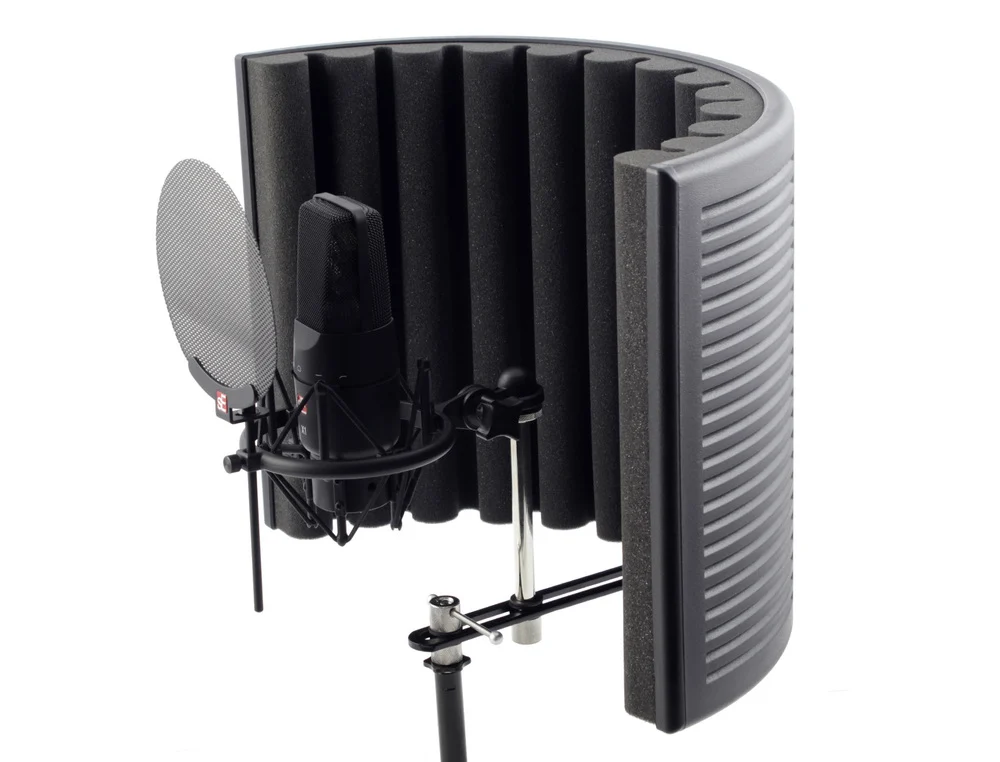
The persistent query, "Do I need a sound reflection filter in my home studio?" is a frequent point of discussion among aspiring audio professionals, particularly those honing their craft in a home recording environment. This article aims to provide a comprehensive and definitive answer by delving into the fundamental principles of home studio acoustics, microphone technology, and the actual function of these commonly marketed devices.

Defining the Home Recording Studio’s Purpose
At its core, a home recording studio is designed to create a controlled and consistent acoustic environment. This entails achieving two primary objectives: preventing external sounds from entering the recording space (sound ingress) and preventing the recorded audio from escaping the space (sound egress). Crucially, it also seeks to minimize unwanted sound reflections within the studio itself, which can degrade the quality of recordings. These reflections, often referred to as "room tone" or "reverb," can muddy vocals, instruments, and other audio sources, detracting from clarity and presence. The ultimate goal is to capture a pristine audio signal directly from the source, uncolored by the acoustics of the recording space.
Understanding Sound Reflections and Mitigation
Sound waves, once generated, interact with their environment in predictable ways. Hard, flat surfaces, such as bare walls, ceilings, and tabletops, tend to reflect sound waves with minimal absorption. This bouncing of sound energy can lead to echoes and a build-up of reverberation. Conversely, softer, irregular, or porous materials are more effective at absorbing sound energy. Examples include thick curtains, heavy duvets, and specialized acoustic foam tiles. These materials convert sound energy into heat, thereby reducing the amount of sound that is reflected back into the recording space. Even everyday objects can play a role; a furry pet, while an unconventional sound treatment, would theoretically absorb sound due to its fur, though its practical application in a studio setting is understandably not recommended.

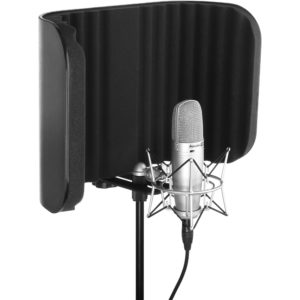
The market offers a variety of products marketed as solutions to mitigate these reflections. Among the most visible are "sound reflection filters," often seen surrounding microphones in promotional materials. These devices typically consist of a curved or semi-circular shell lined with sound-absorbing material, designed to be mounted around a microphone. Popular brands include Auray and sE Electronics, with their products often featuring a robust construction and a design that appears to physically block sound from reaching the microphone from the sides and rear.
The Microphone’s Role: Polar Pickup Patterns
To critically assess the efficacy of a reflection filter, it is essential to understand how microphones capture sound. Microphones are not omniscient ears; they possess directional characteristics known as "polar pickup patterns." These patterns define the area or space from which a microphone is most sensitive to sound. The most common patterns include:
- Omnidirectional: This pattern captures sound equally from all directions, essentially creating a 360-degree listening sphere. While useful for capturing ambient sound or when the sound source is moving, it is highly susceptible to picking up room noise and reflections.
- Cardioid: This is the most prevalent pattern for voice recording. It is most sensitive to sound directly in front of the microphone, with progressively less sensitivity to sounds arriving from the sides and significantly reduced sensitivity to sounds from the rear. This directional focus is crucial for isolating the desired sound source and minimizing unwanted ambient noise and reflections.
- Figure-of-Eight (Bidirectional): This pattern is equally sensitive to sound from the front and the rear of the microphone, with a null (zero sensitivity) on the sides. This is often used for capturing duets or in specific stereo recording techniques.
Many high-end microphones, such as the Neumann U87, offer switchable polar patterns, allowing users to adapt the microphone’s sensitivity to different recording scenarios. However, most microphones intended for voice-over work or general vocal recording are fixed in a cardioid pattern due to its inherent ability to reject off-axis sound.
Analyzing the Cardioid Pattern in Practice
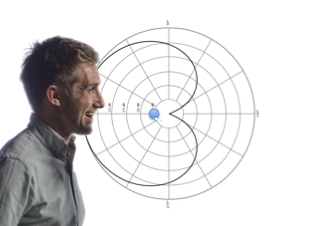
The cardioid pickup pattern, when visualized from above (a top-down view), resembles a heart shape, hence its name. The "front" of the microphone, typically indicated by a logo or marking, is the point of maximum sensitivity. The "bubble" of pickup extends outwards from this front, encompassing a roughly heart-shaped area. This pattern is not merely two-dimensional; it extends into a three-dimensional space, creating a "heart-shaped beanbag" of sensitivity in front of the microphone. This allows for some flexibility in the performer’s positioning – slightly to the left, right, high, or low – while still maintaining optimal pickup.
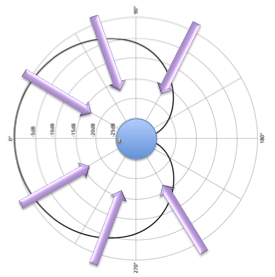
When considering sound reflections, they emanate from all directions within a room – bouncing off walls, ceilings, floors, and furniture. Even with a directional microphone like a cardioid, some of these reflections will inevitably enter the pickup pattern, particularly from the sides.
The Reflection Filter: A Closer Examination
The marketing of sound reflection filters often suggests they act as a barrier, preventing ambient sound and reflections from reaching the microphone’s rear and sides. The design, with its absorbent interior and curved outer shell, visually supports this claim. However, a critical analysis of microphone polar patterns reveals a significant limitation in this approach.
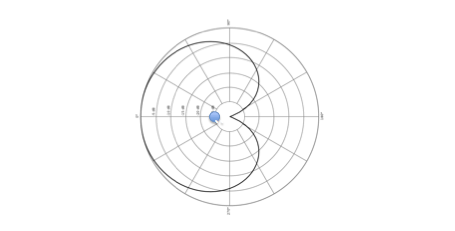
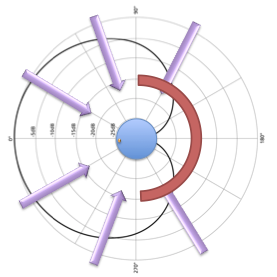
The cardioid pattern, by its very design, already attenuates sound arriving from the sides and rear. The majority of unwanted reflections that might reach a cardioid microphone will be those that are slightly off-axis. The reflection filter, positioned around the microphone, primarily aims to block sound that would have otherwise entered from the sides and rear. Yet, the microphone is already significantly reducing its sensitivity to these very sounds.
Consider the scenario: Sound reflections are present from all angles. The cardioid microphone is selectively picking up sound from its front. Reflections arriving from the sides are already picked up with reduced intensity. The reflection filter, when placed around the microphone, blocks a portion of these side and rear-arriving reflections. However, the microphone’s inherent directional properties mean that the contribution of these blocked reflections to the final recording was already minimal.
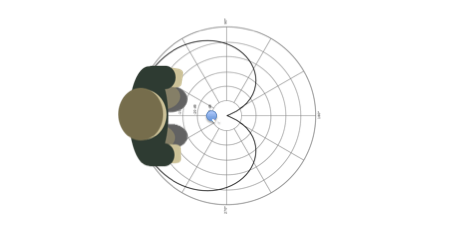
Visual representations often illustrate this point effectively. When a reflection filter is placed around a cardioid microphone, the filter’s barrier largely coincides with the areas where the microphone’s pickup sensitivity is already significantly reduced. In essence, the filter is blocking sound that the microphone was already largely ignoring.
Empirical testing, including controlled recording sessions with and without a reflection filter, often reveals a negligible difference in the recorded audio quality. This suggests that while the filter may offer a psychological benefit or a perceived improvement in isolation, its actual acoustic impact on the recorded signal is often minimal, especially when compared to the inherent capabilities of a well-chosen microphone and proper positioning.
The Verdict: Do You Need a Reflection Filter?
Based on the principles of microphone polar patterns and the physics of sound reflection, the definitive answer for most home studio users is: No, you generally do not need a sound reflection filter. They represent a significant expenditure of money and effort for a device that offers little to no tangible improvement in audio quality for typical voice-over or vocal recording applications.
Why the Persistent Popularity?
The continued purchase and use of reflection filters by many audio practitioners, particularly those new to the field, can be attributed to several factors. Inexperienced voice-over artists, or those less technically inclined, may be swayed by marketing materials that showcase the devices prominently. They may see other, more established professionals using them and assume their efficacy is a given. Furthermore, the intuitive appeal of a physical barrier that looks like it’s blocking sound can be persuasive. However, this visual impression does not always translate to acoustic reality. While these filters do not inherently harm the recording process, their contribution to improving it is often overstated.
Achieving High-Quality Recordings: The Real Solution
If reflection filters are not the answer, what is? The key to achieving professional-sounding recordings in a home studio lies in addressing the acoustic environment itself. This involves creating a properly sound-treated space. This can range from building a dedicated vocal booth to carefully adapting an existing room. The objective is to absorb and diffuse sound reflections within the recording space, ensuring that only the direct sound from the source reaches the microphone.
Methods for achieving this include:
- Acoustic Treatment: Employing acoustic panels made of dense fiberglass or mineral wool on walls and ceilings to absorb sound.
- Bass Traps: Installing specialized absorbers in corners to manage low-frequency reflections.
- Diffusion: Using diffusers to scatter sound waves, preventing flutter echoes and creating a more natural-sounding acoustic space.
- Room Construction: For more advanced setups, building a dedicated booth with multiple layers of drywall, insulation, and decoupling techniques can provide superior isolation and acoustic control.
While these solutions require more significant investment in time, effort, and potentially money, they offer a direct and effective path to achieving high-quality audio recordings. The "How to Build A Home Studio" webinar, available through specialized audio education platforms, provides in-depth guidance on these essential acoustic treatment strategies.
In conclusion, while the allure of a quick fix like a sound reflection filter is understandable, the science points to a different approach. Focusing on creating a well-treated acoustic environment, coupled with the intelligent use of a directional microphone, will yield far superior results for any home studio recording endeavor. The savings from foregoing a reflection filter can be redirected towards more impactful acoustic treatments, ultimately leading to a more professional and satisfying audio outcome.
