

Rites of passage mark significant transitions in human experience, from the communal singing of "Auld Lang Syne" at New Year’s Eve to the symbolic smashing of champagne on a ship’s hull for its maiden voyage. In the corporate sphere, particularly for sales organizations, the annual Sales Kickoff (SKO) serves as a critical rite of passage, christening the new sales cycle with defined objectives, strategic alignment, and reinvigorated purpose. Far from a mere corporate gathering, a successful SKO is a meticulously orchestrated event, demanding deep reflection, strategic foresight, and a compelling narrative designed to unify and energize every participant. It is the crucial launchpad for new initiatives, a powerful tool for galvanizing teams, and a significant investment aimed at building unstoppable momentum for the fiscal year ahead.
The Evolving Landscape of Sales Kickoffs: More Than Just a Rally
Historically, sales kickoffs often leaned heavily on motivational speeches, product roadmap reviews, and ambitious, often top-down, goal declarations. While these elements remain relevant, the modern business environment demands a more sophisticated approach. Companies invest substantial resources in SKOs; industry estimates suggest large enterprises can spend hundreds of thousands, even millions, of dollars on these events annually, covering venues, travel, speakers, and content development. Despite this investment, a significant portion of attendees frequently report feeling disengaged, overwhelmed by information, or lacking clear, actionable takeaways. A 2023 survey by a leading sales enablement platform indicated that nearly 40% of sales professionals felt their SKOs were either "somewhat effective" or "ineffective" in driving tangible change or sustained motivation. This highlights a critical disconnect: while leadership aims to inspire and inform, the delivery often misses the mark, leading to a suboptimal return on a considerable investment.
The core challenge lies in shifting the paradigm from a leadership-centric monologue to an audience-first dialogue, transforming a passive information dump into an active, immersive experience. To maximize the impact of this pivotal event, organizations must integrate four fundamental elements into their SKO planning and execution. These elements are not merely best practices; they are strategic imperatives for fostering engagement, ensuring message retention, and driving the collective will to achieve ambitious targets.
I. Prioritizing the Audience: The Foundation of Engagement
A common pitfall in SKO planning is the inherent inclination of leaders to prioritize organizational health, future projections, and the bottom line above all else. While these are legitimate concerns, allowing them to exclusively dictate SKO messaging often leads to content laden with abstract numbers, high-level corporate jargon, and strategic blueprints that fail to resonate with the day-to-day realities of the sales force. The consequence is predictable: a room full of glazed-over eyes and rapidly dwindling engagement.
The antidote is a fundamental shift in perspective: Put Your Audience First. Before drafting a single slide or outlining a keynote address, leaders must engage in a rigorous process of empathy and inquiry. This begins by asking: "Who is my audience, truly?" This isn’t just about demographics; it’s about understanding their current mindset, their recent experiences, their triumphs, and their frustrations.

Consider these probing questions to gain deeper insight:
- What were the primary successes and challenges for sellers in the previous year?
- What are their immediate concerns about the upcoming sales cycle, market conditions, or new company initiatives?
- What motivates them beyond financial incentives? What fears or anxieties might they harbor regarding new tools, processes, or targets?
- What practical support, resources, or training do they genuinely need to excel?
- How do they prefer to receive information and engage with content? Are they collaborative, competitive, or more reflective?
By adopting this audience-centric lens, SKO content can be crafted to articulate company goals in a language that is relatable, relevant, and inspiring to sellers. For instance, when introducing a new AI-enabled sales workflow, instead of framing it solely as a "productivity win" from a corporate perspective, articulate it as a "time-saving liberation" for sellers. Emphasize how the new tools will alleviate tedious clerical tasks, freeing up precious hours (e.g., "8-10 hours a week") that can be redirected towards nurturing high-value relationships and strategic client engagement, thereby enhancing their professional satisfaction and earning potential.
Beyond messaging, the audience-first approach extends to the entire event experience. This includes thoughtful consideration of:
- Scheduling: Optimizing event timings to maintain energy levels, incorporating breaks, and avoiding "death by PowerPoint" sessions.
- Amenities: Ensuring comfort with adequate food, hydration, and caffeine, whether for in-person attendees or virtually.
- Programming Mix: Balancing passive listening (keynotes) with active participation (small group breakouts, hands-on workshops, peer-to-peer discussions) to foster deeper learning and collaboration. For the AI workflow example, facilitating interactive sessions where sellers can test the new tech stack in a supportive environment, rather than a mere live demonstration, can significantly boost adoption and confidence.
To gather these crucial insights, direct engagement is paramount. Conversations with team leaders, anonymous surveys, and direct interviews with a representative sample of sales professionals can illuminate their hopes, fears, and unique pain points. This not only makes team members feel valued and heard but also provides the raw material for crafting a truly impactful message and making informed programming decisions. Tools like Duarte’s Audience Needs Map™ can provide a structured framework for analyzing these responses and translating them into actionable SKO strategies. This foundational work ensures that the subsequent messaging is not only heard but deeply internalized.
II. Establishing a Singular "Big Idea": The North Star of Your Narrative
A common pitfall in many SKOs is the attempt to cram an exhaustive list of topics into a finite timeframe. Financial projections, detailed product roadmaps, market trend analyses, and ambitious growth forecasts all vie for attention, often leaving the audience with a fragmented, overwhelming impression. The result is a diffusion of focus, where no single message truly penetrates or motivates.
To counteract this, every successful SKO must be anchored by a single, compelling "Big Idea." This concept, a cornerstone of The Duarte Method™, is a scalable framework for distilling complex messaging into a clear, concise, and unforgettable takeaway. It articulates your unique point of view on a subject, explicitly coupled with what’s at stake for your audience, all encapsulated in a single, digestible sentence. The formula is elegantly simple:
Point of View (Your unique perspective) + Stakes (What happens if the audience acts or doesn’t act) = The Big Idea
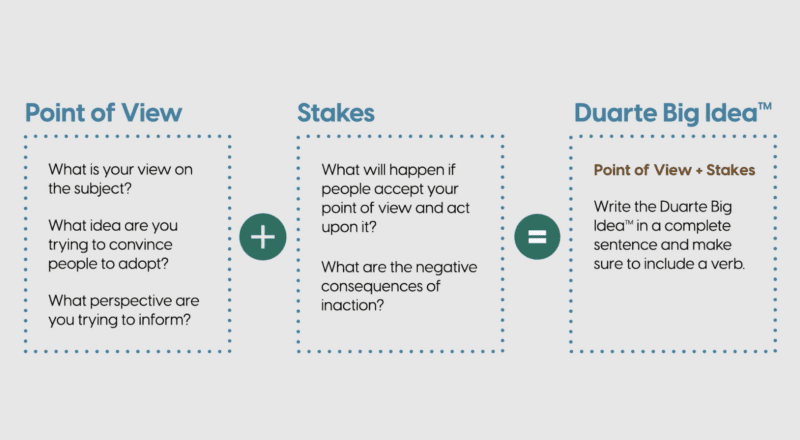
This "Big Idea" serves as the unwavering north star for all SKO content, from the keynote address to breakout sessions and supporting materials. Its primary function is to guide what to include and, equally importantly, what to omit. If a piece of content does not directly serve or reinforce the Big Idea, it should be delivered through an alternative channel or reconsidered for its necessity within the SKO.
For instance, continuing with our AI workflow example, the Big Idea might be: "This new AI workflow will cut clerical tasks for sellers by 20% and free up between 8-10 hours a week, empowering them to cultivate high-value client relationships and significantly boost their annual earnings." This statement clearly articulates the company’s vision (POV) and directly addresses the personal benefits and potential losses for the sales team (Stakes). It’s concise, compelling, and actionable.
The process of forging a robust Big Idea involves relentless refinement. Start by attempting to articulate it as a single, clear sentence. Then, rigorously identify what can be removed without sacrificing the core meaning. Ask yourself: "What is the absolute essence of what I want my audience to remember and act upon?" This discipline ensures that the SKO’s overarching message is not merely understood but indelibly etched into the minds of the sales force, providing a clear mandate for the year ahead. A clear Big Idea has been shown to improve message recall by up to 70% compared to presentations with multiple, competing objectives.
III. Structuring the Narrative: The Power of the 3-Act Story
Once the audience is understood and the Big Idea defined, the next critical step is to give the SKO programming a recognizable and emotionally resonant structure. The timeless 3-Act Story structure—comprising a beginning, middle, and end—provides an instinctively familiar framework that guides audience members through the narrative arc of change and achievement. This structure is not merely an aesthetic choice; it leverages deep-seated human cognitive patterns that make stories inherently more engaging and memorable than disjointed facts.
- The Beginning (The "What Is"): This act sets the stage and immediately positions the audience as the hero of the narrative. It acknowledges the current reality, the market landscape, past successes, and crucially, the challenges, gaps, and needs that were identified through the audience-first research. It builds empathy by validating their experiences and establishing a common ground.
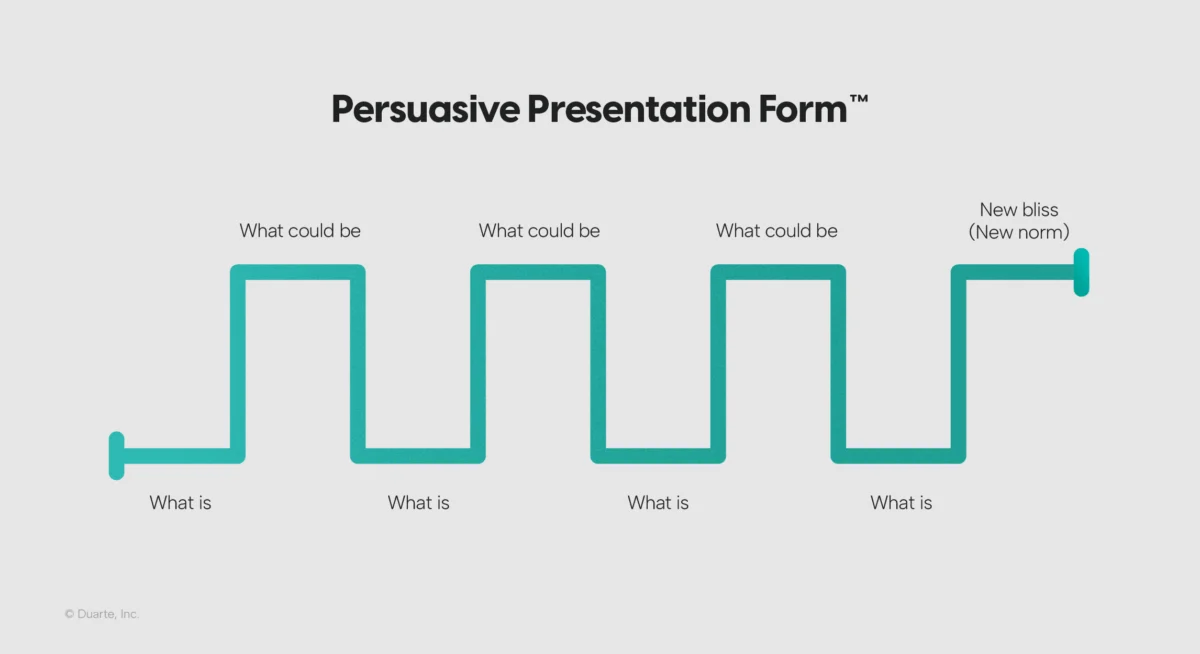
- The Middle (The "Messy Middle" and the "What Could Be"): This is where the core action unfolds. The hero (the sales team) encounters new challenges and opportunities (the new initiatives, market shifts, or tools like the AI workflow). This act introduces tension, exploring the "what is" versus the "what could be." It details the proposed solutions, strategies, and the journey required to overcome obstacles. This section often utilizes Duarte’s Persuasive Presentation Form™, which alternates between describing the current state and envisioning a brighter future, creating a powerful call-and-response dynamic that propels the audience towards the desired "new bliss."
- The End (The "New Bliss"): In the concluding act, the hero emerges transformed. Resolution is achieved, and the tension built in the middle is released as the "what could be" becomes the new reality. This act outlines the vision of success, reinforces the Big Idea, and provides a clear call to action, outlining the next steps and the support available for the journey. It’s a celebration of potential, reinforcing the collective commitment to the shared vision.
This classic storytelling arc, found in everything from ancient myths to modern blockbusters, is hardcoded into human psychology. Its ubiquity makes it instantly digestible, allowing audience members to emotionally connect with the narrative, anticipate developments, and feel a sense of progression.
When applying the Persuasive Presentation Form™ within the "messy middle," speakers effectively toggle between acknowledging the current state ("What Is") and painting a vivid picture of the improved future ("What Could Be"). For example, when addressing the new AI workflow: "We know some sellers likely harbor reservations about this new AI-enabled workflow. Change is hard, and there will undoubtedly be bumps along the way as you adapt. However, with consistent adoption, we firmly believe you will find unprecedented space in your day to nurture high-value accounts, cultivate deeper relationships, and ultimately drive greater success. To support this transition, IT and Learning & Development have collaboratively developed comprehensive training materials and dedicated support channels, ensuring you have every resource to get up to speed quickly. We anticipate an onboarding period throughout the next quarter and strongly encourage trial and error. We are confident you will be amazed at the significant time you reclaim for truly impactful work."
This segment effectively addresses potential resistance head-on, validating concerns while simultaneously illustrating the tangible benefits and outlining the support structure. It transforms potential obstacles into conquerable challenges within a larger, beneficial journey. Visualizing this flow, perhaps using sticky notes or digital whiteboards, can help leaders ensure a natural cadence and identify "ah-ha" moments, ensuring the narrative builds effectively toward the desired outcome.

IV. Weaving in a Personal Story: The Human Connection
The final, yet profoundly impactful, element is the integration of a personal story. After the meticulous groundwork of audience analysis, Big Idea articulation, and structural narrative, a genuine personal touch can elevate the SKO from informative to truly inspirational. While storytelling might not come naturally to everyone, its power to forge connection and build trust is undeniable.
The human brain is wired for stories. Research in neuroscience demonstrates that narratives activate more parts of the brain than mere facts, leading to greater comprehension, retention, and emotional resonance. A well-placed personal anecdote can:
- Build Trust and Authenticity: Humanizing leadership by revealing vulnerability or a shared experience.
- Create Emotional Connection: Allowing the audience to empathize and see the speaker as a fellow journeyer, not just a distant authority figure.
- Make the Abstract Relatable: Translating complex concepts or strategic shifts into tangible, personal experiences.
- Increase Message Stickiness: Stories are up to 22 times more memorable than facts alone, ensuring the core message lingers long after the event.
The story doesn’t need to be deeply vulnerable or dramatic. A simple, relatable anecdote that connects to the SKO’s Big Idea or a specific initiative can be incredibly effective. Consider the most challenging aspect of your message – what might be hard for your audience to believe, embrace, or understand? Then, reflect on a personal experience that illuminates that challenge or the solution.
For our AI workflow example, a leader might share: *"While rigorously testing this new workflow over the past several months, something entirely unexpected happened in my personal life. My son was navigating his ‘terrible twos,’ and my wife and I were perpetually exhausted, struggling to keep pace with his boundless energy. I found myself working late every night, leaving her to manage toddler duty almost entirely. Yet, as my understanding and proficiency with these new AI tools grew, my workday began to shrink. I was not only keeping pace with my
