

Sales kickoffs (SKOs) stand as pivotal annual rites of passage for sales organizations, signifying not merely the start of a new fiscal chapter but a strategic recalibration and rallying cry for the year ahead. Much like the ceremonial smashing of a champagne bottle against a ship’s hull to mark its maiden voyage, or the collective singing of Auld Lang Syne on New Year’s Eve, SKOs are carefully orchestrated events designed to imbue teams with renewed purpose, align efforts, and ignite momentum. These gatherings are far more than celebratory assemblies; they are critical investments in a company’s human capital, demanding meticulous reflection, keen foresight, and a compelling narrative that unites every seller in a shared vision of success.
The modern sales landscape, characterized by rapid technological advancements, evolving customer expectations, and intense global competition, has elevated the sales kickoff from a routine meeting to an indispensable strategic event. A well-executed SKO has the power to reinvigorate sales professionals, introduce and embed new sales initiatives, and establish a robust foundation for achieving ambitious targets. Conversely, a poorly planned or executed event can foster disengagement, dilute strategic messaging, and undermine morale, with potentially costly implications for the entire sales cycle. To maximize the impact of this crucial annual tradition, organizations must integrate fundamental elements that ensure audience engagement, foster deep understanding, and cultivate lasting energy.
The Evolution and Strategic Significance of SKOs
Historically, sales meetings were often perfunctory reviews of past performance and rudimentary goal-setting sessions. However, as businesses grew in complexity, product portfolios diversified, and sales processes became more sophisticated, the need for a more comprehensive and engaging annual launch became apparent. The rise of global teams necessitated centralized events to ensure consistent messaging and training across diverse markets. Today, SKOs are multi-faceted affairs, often spanning several days, incorporating a blend of keynote speeches, interactive workshops, product demonstrations, and team-building exercises. Their objectives extend beyond mere target communication; they encompass strategic alignment, skill development, cultural reinforcement, and motivational impetus.
According to recent industry analyses, companies that invest significantly in sales enablement, which SKOs are a cornerstone of, often report higher quota attainment and lower sales representative turnover. A study by the Sales Enablement Society indicated that organizations with effective sales enablement programs achieve 23% higher win rates on forecasted deals. SKOs play a vital role in this by serving as the primary platform for launching new enablement tools, training methodologies, and strategic directives that directly impact a salesperson’s ability to perform. The financial commitment to an SKO can be substantial, ranging from tens of thousands to millions of dollars for large enterprises, underscoring the strategic imperative that leadership places on these events. The return on investment (ROI) is measured not just in immediate sales uplift, but in sustained engagement, improved pipeline health, and enhanced market positioning.
Anchoring the Narrative: Four Pillars of an Impactful SKO
While approaches to SKOs vary widely—some organizations opt for celebrity keynotes, others for elaborate spectacle—the core objective remains consistent: to unify sellers and inspire them toward shared goals. The challenge lies in avoiding common pitfalls such as over-reliance on aspirational targets without outlining actionable processes, or presenting high-level corporate concerns that fail to resonate with the day-to-day realities of the sales force. By focusing on four critical components, leaders can transform a merely "good" event into a truly transformative experience that delivers the right content, strikes an emotional chord, and drives tangible results.

1. Prioritizing the Audience: The Seller-Centric Approach
A common misstep in SKO planning is for leadership to default to an organization-first perspective, focusing heavily on company health, future projections, and the bottom line. While these concerns are valid, assuming that the sales audience shares the same immediate priorities can lead to disengagement. Presentations dominated by abstract numbers and high-level strategy often result in "glazed-over eyes" and a lost opportunity for genuine connection.
The antidote lies in a fundamental question: Who is my audience? Before drafting any event materials, leaders must deeply consider the mindset, challenges, aspirations, and experiences of their sales force. This involves a crucial shift in perspective:
- What were their key struggles in the past year?
- What new market pressures are they facing?
- What new tools or processes would genuinely alleviate their pain points?
- What are their personal and professional aspirations for the coming year?
- How does the company’s vision directly benefit them?
By articulating company goals in terms that are relatable and impactful to sellers, leaders can curate an environment conducive to maximum absorption and buy-in. This extends beyond content to the logistical details of the event itself: strategic placement of sessions throughout the day, ensuring adequate breaks, providing refreshments, and balancing passive learning with active, participatory programming.
Consider, for example, an organization launching a new AI-enabled sales workflow. Instead of framing it purely as a "productivity win" for the company, an audience-first approach would anticipate seller reservations and center their hopes and fears. Messaging would emphasize how AI tools will save them time, freeing up 8-10 hours a week for high-value relationship nurturing rather than clerical tasks. Instead of a mandatory, passive live demonstration, the SKO could feature small group breakouts where sellers actively test the new technology, fostering immediate familiarity and ownership. This approach transforms a corporate mandate into a personal advantage, creating internal champions for the new initiative. Industry experts frequently highlight that personalized relevance is key to driving adoption of new technologies and methodologies among sales teams, directly impacting post-SKO performance metrics like efficiency gains and lead conversion rates.
To glean these vital insights, leaders should engage directly with sales managers and representatives through surveys, focus groups, or one-on-one interviews. This not only makes team members feel valued but provides the raw material for crafting messages that resonate and making programming decisions that truly serve the audience. Tools like Duarte’s Audience Needs Map™ offer structured frameworks to facilitate this audience-first perspective, translating feedback into actionable planning.
2. Establishing a Unified "Big Idea"
In the flurry of an SKO, it’s easy for ambitious presenters to overload the agenda with an extensive list of topics—financial reports, product roadmaps, market forecasts. While each piece of information may be valid, their collective impact can be diluted if not anchored to a singular, overarching message. This is where a "Big Idea" becomes indispensable.
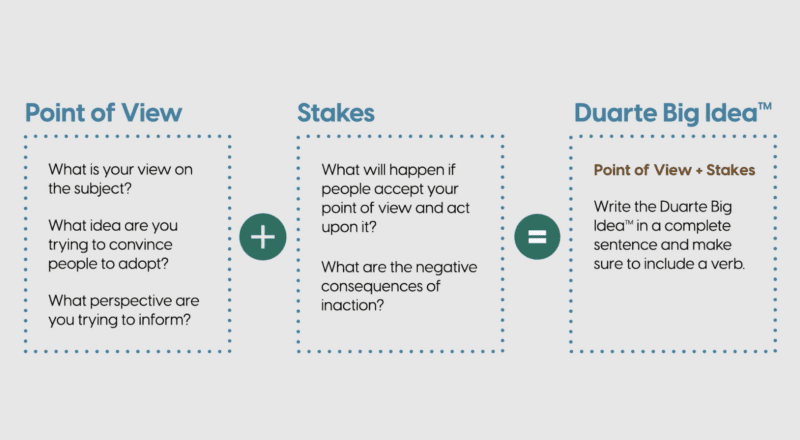
A Big Idea is a concise, memorable distillation of the core takeaway, articulating the organization’s unique point of view (POV) on a subject alongside what’s at stake for the audience. It’s the single most important thing leaders want their audience to remember and act upon. For instance, if the POV is "This new AI workflow will cut clerical tasks for sellers by 20%," the stakes might be "and free up between 8-10 hours a week for high-value account holders." Combined, the Big Idea becomes: "This new AI workflow will cut clerical tasks for sellers by 20% and free up between 8-10 hours a week for high-value account holders." This clear, concise statement acts as a north star, guiding all keynote presentations, breakout sessions, and supporting materials. Anything that doesn’t serve this central idea can be streamlined or communicated through other channels, preventing information overload. Research in cognitive psychology supports the notion that humans are more likely to retain and act upon information when it is presented in a clear, singular, and emotionally resonant message, rather than a fragmented list of facts.
3. Structuring for Engagement: The Power of a 3-Act Narrative
Once the audience is understood and the Big Idea defined, the next step is to structure the SKO’s programming in a way that is both familiar and compelling. The classic 3-Act story structure—beginning, middle, and end—provides an intuitive framework that resonates deeply with human psychology and has been proven effective in everything from ancient myths to modern blockbusters.
- Act I (The Beginning): Establishes the current reality, acknowledging the audience’s existing feelings, challenges, and needs. It positions the sales team as the heroes of the narrative, setting the stage for their journey.
- Act II (The Middle): This is the "messy middle," where the core action unfolds. Here, the heroes encounter obstacles and challenges, and the tension builds as old ways of working confront new possibilities. This is where most of the new information, strategies, and training are introduced.
- Act III (The End): The resolution. The heroes emerge transformed, equipped with new tools and understanding. Tension is released as a new, improved reality takes hold, outlining the path to collective success.
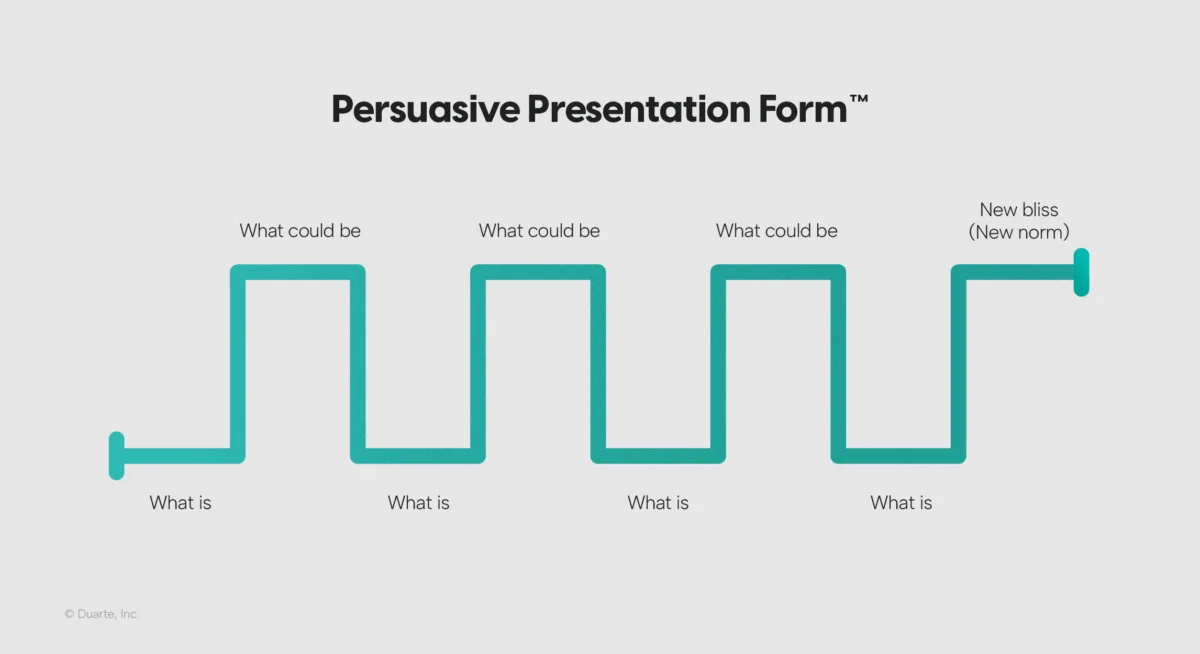
Within the "messy middle," the "Persuasive Presentation Form™," often visualized as a "Sparkline," offers a powerful call-and-response rhythm. This structure alternates between describing "what is" (the current challenges, pain points, or status quo) and "what could be" (the envisioned future, the benefits of adopting new strategies, the potential for success). This dynamic interplay builds a compelling case for change, leading the audience to actively desire the "new bliss" proposed in the resolution.
For our AI workflow example, this might look like: "We know some sellers likely have reservations about this new AI-enabled workflow. Change is hard. There will be bumps along the way (what is), but with adoption, you’ll find more space in your day to nurture high-value accounts and build meaningful relationships (what could be). We’re anticipating an onboarding period throughout the next quarter and encourage trial and error to feel comfortable (what is). To help with the transition, IT and L&D collaborated on training materials (what could be). We think you’ll be amazed at the time you get back." This honest approach acknowledges difficulties while consistently highlighting the rewards, building trust and maintaining engagement. The ability to articulate challenges openly, rather than glossing over them, is a hallmark of authentic leadership and fosters greater team resilience.
4. Weaving in Personal Stories: The Human Touch
The final, and often most impactful, element is the integration of personal stories. While data and strategy are crucial, human beings connect most profoundly through shared experiences and emotions. A leader’s personal anecdote can transform abstract concepts into relatable realities, making the message stick and fostering a deeper emotional investment from the audience.
Personal stories do not need to be deeply vulnerable; rather, they should offer a genuine glimpse into the speaker’s human experience, building rapport and demonstrating authenticity. A well-placed story can:

- Humanize the speaker and the leadership team.
- Make complex or abstract ideas tangible and memorable.
- Break through monotony and re-engage a fatigued audience.
- Inspire empathy and connect the strategic vision to individual experiences.
Continuing with our AI workflow example: "While testing this new workflow over the past several months, something unexpected happened. My son was entering his terrible-twos, and my wife and I were exhausted from keeping up with his antics. I was working late every night, and she was increasingly on toddler duty. But as my understanding of these tools grew, my days started ending earlier. I was keeping pace with tasks and getting time back. Now we all go to the park every day after picking him up from daycare. He can run his wheels, I’m contributing more around the house, and we’re all sleeping a little better." This anecdote immediately connects the abstract "time-saving" benefit of AI to a universally understood personal struggle, making the message resonate on a far deeper level. Research in organizational behavior shows that leaders who share personal stories are perceived as more authentic and trustworthy, which can significantly enhance their influence and the team’s willingness to embrace change.
Measuring Impact and Sustaining Momentum
The success of an SKO is not merely judged by the energy in the room during the event but by its enduring impact on sales performance and team morale throughout the year. Companies typically measure SKO effectiveness through a combination of post-event surveys (assessing content relevance, engagement, and clarity of messaging), follow-up assessments on knowledge retention, and, most critically, tracking key sales metrics in the subsequent quarters. These metrics include quota attainment, pipeline growth, conversion rates for new products or initiatives, and adoption rates of new tools or methodologies introduced at the SKO.
A truly successful SKO generates a positive ripple effect: increased sales productivity, improved team cohesion, higher employee retention, and a stronger, more unified brand voice in the market. It cultivates a sense of shared purpose and equips the sales force with the confidence and tools needed to overcome challenges and seize opportunities. Conversely, a poorly conceived SKO risks squandering significant financial and human resources, leading to cynicism, apathy, and a detrimental impact on overall sales performance and company culture.
By prioritizing the audience, establishing a clear Big Idea, structuring the narrative for maximum impact, and weaving in authentic personal stories, organizations can transform their annual sales kickoff into a strategic powerhouse—an event that not only defines the year’s goals but inspires the passion and commitment necessary to achieve them, laying a robust foundation for sustained growth and market leadership. The SKO, when executed with precision and empathy, becomes an indispensable catalyst for collective success, driving both individual achievement and organizational triumph.
