

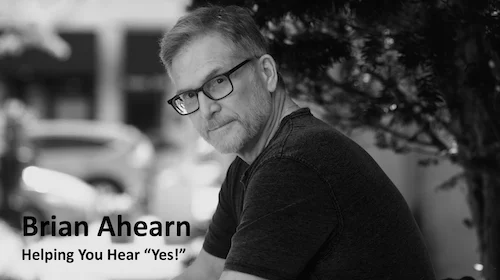
When Brian Ahearn embarked on his professional journey in July 1986, fresh from Miami University and joining Travelers Insurance, the corporate landscape presented a starkly different environment than the one prevalent today. While technological advancements and evolving dress codes are readily apparent shifts, a more profound transformation has occurred in the realm of acceptable workplace discourse. Topics once considered strictly taboo – sex, religion, and politics – have migrated from the periphery of personal life into the daily fabric of professional interactions, amplified significantly by the pervasive influence of platforms like LinkedIn. This evolution, Ahearn argues, necessitates a re-evaluation of how individuals integrate their core values, particularly faith, into their professional identities and spheres of influence.
Ahearn’s recent book, "Influenced from Above: Where Faith and Influence Meet," signifies a personal and professional inflection point, marking his decision to openly discuss his faith. His intention, he emphasizes, is not proselytization, but rather to offer validation and hope to others who may feel compelled to compartmentalize this integral aspect of their lives. For decades, the prevailing professional ethos dictated that religion was a private matter, confined to the sanctity of homes and places of worship. However, Ahearn posits that for believers, faith, empowered by the indwelling of the Holy Spirit as taught in Christian scripture, is an intrinsic element that permeates all facets of life, inevitably shaping worldview, decision-making, and interpersonal conduct, irrespective of whether it is explicitly articulated. This inherent integration means that faith, whether acknowledged or not, invariably manifests in the workplace.
The Unspoken Rules of Yesterday
The professional environment of the mid-1980s was characterized by a clear demarcation between personal and professional life. Ahearn’s early career experience at Travelers Insurance, a prominent insurance and financial services company, was typical of the era. The emphasis was squarely on task completion and professional conduct, with a strong unspoken understanding that personal beliefs and controversial topics were to be left at the door. This was not merely a matter of decorum; it was a fundamental expectation that fostered a sense of professional distance and uniformity. The "leave it at home" mentality ensured that workplace interactions remained focused on business objectives, minimizing potential conflict or discomfort arising from deeply held, and often disparate, personal convictions. This approach, while perhaps promoting a superficial sense of harmony, also limited the potential for authentic connection and the exploration of diverse perspectives among colleagues.
The Digital Shift: A New Era of Disclosure
The advent of the internet and, more significantly, the rise of professional networking platforms like LinkedIn, have fundamentally altered this dynamic. What was once a strictly enforced silence surrounding personal beliefs has been replaced by an environment where such disclosures are not only tolerated but, in many instances, are implicitly expected. Platforms that were initially conceived as professional networking tools have evolved into arenas for personal expression, advocacy, and the sharing of deeply held convictions. This shift has been gradual, accelerating with each new wave of digital communication and social media integration.
Data from various studies underscore this transformation. A 2022 Pew Research Center survey indicated that a significant percentage of U.S. adults believe it is important for people to be able to express their religious beliefs openly at work. This contrasts sharply with previous decades where such openness was often met with apprehension or professional repercussions. The very architecture of modern digital platforms encourages sharing, with algorithms often prioritizing content that elicits engagement, which can include personal narratives and expressions of values. This environment has inadvertently created a pressure for individuals to present a more holistic version of themselves, blurring the lines between their personal and professional identities.
A Turning Point: Faith and Influence Converge
Ahearn’s decision to address the intersection of faith and influence in his book, "Influenced from Above," reflects a broader societal trend and a personal reorientation. His career, spanning over three decades, has been dedicated to the study and application of influence, drawing heavily on the foundational principles established by social psychologist Robert Cialdini. The "science of influence" typically focuses on psychological principles that guide persuasion and decision-making, often within a secular framework. However, Ahearn’s latest work seeks to integrate his understanding of these principles with his personal faith, positing that deeply held spiritual beliefs are not extraneous to, but rather integral to, effective and ethical influence.
"At this stage of my career, being able to integrate what I’ve studied and taught for decades—the science of influence—with what matters most to me personally—faith—is icing on the cake," Ahearn stated. This integration is not about imposing religious doctrine but about recognizing how faith informs an individual’s ethical compass, their approach to relationships, and their decision-making processes. He draws a parallel between the biblical concept of the Holy Spirit dwelling within believers and the pervasive nature of faith, suggesting that it naturally extends into all areas of life, including the professional sphere.

Navigating the New Discourse: Respectful Engagement
The shift towards greater openness about personal beliefs has not been without its challenges. Ahearn recounts a recent LinkedIn exchange where a fellow Christian expressed hesitation about discussing religion on the platform. Ahearn’s respectful disagreement highlights a growing sentiment that if secular topics once deemed inappropriate are now openly discussed, faith, when approached with thoughtfulness and respect, should not be uniquely excluded.
"My reasoning was simple: we now see open discussion of topics that were once completely unacceptable in professional settings. Faith, when expressed thoughtfully and respectfully, shouldn’t be uniquely excluded," Ahearn explained. The positive outcome of this exchange, characterized by "candor and disagreement without vitriol," underscores Ahearn’s core belief that influence is fundamentally about building relationships grounded in respect, rather than solely on persuasion. The other participant’s remark, "Candor and disagreement without vitriol! Who would have thought. Thank you for the invitation," serves as a powerful testament to the potential for civil discourse even on sensitive topics within professional digital spaces.
Adapting to the Evolving Professional Landscape
Ahearn acknowledges that adapting to this new reality has been a process. The sight of posts detailing sobriety journeys, political stances, social advocacy, or personal struggles in professional online spaces initially required an adjustment period. He differentiates between agreeing with an individual’s decision to share and recognizing the undeniable presence of these personal narratives in the contemporary business environment.
"Whether I agree or disagree with someone’s decision to share regarding a particular topic isn’t the point," he stated. "The reality is that this is now part of the business landscape." Ahearn’s approach is to exercise discernment, often choosing not to engage in conversations that he anticipates may devolve into divisive debates rather than constructive dialogue. However, he draws a clear distinction between choosing not to engage and choosing to remain silent or "hide" one’s authentic self.
His proactive stance in being more open about how his faith informs his views on influence is a conscious choice, acknowledging that it may not resonate with everyone. "I know being more vocal about how faith informs my thinking on influence will rub some people the wrong way. That’s okay," he asserts. His objective is not to convert or convince, but to share his lived experience, hoping to inspire others to reflect on how their own core values, whatever they may be, inherently shape their leadership, sales tactics, hiring decisions, and overall influence.
The Inescapable Influence of Values
The core argument presented by Ahearn is that faith and deeply held values are not entities that can be switched off upon entering the workplace or logging onto a professional platform. They are integral components of an individual’s identity that continuously influence their perceptions and actions. The crucial question, therefore, is not whether these values exert influence, but rather the extent to which individuals are willing to consciously reflect upon and understand this influence.
This introspective process, Ahearn believes, has profound implications for personal and professional development. It fosters greater self-awareness, leading to more ethical decision-making and a more authentic approach to leadership and interpersonal engagement. By understanding how our deepest convictions shape our interactions, we are better equipped to navigate complex professional environments with integrity and purpose. This conscious reflection can transform individuals into more effective communicators, more empathetic colleagues, and ultimately, more influential leaders who can foster positive change. The ongoing evolution of the workplace continues to challenge traditional boundaries, demanding a more integrated and authentic approach to professional life, where personal values and professional conduct are not seen as separate, but as interconnected elements contributing to a richer and more impactful presence.
