

The Foundational Role of Play in Speech and Language Acquisition
The development of speech and language skills is a cornerstone of early childhood, profoundly influencing a child’s cognitive, social, and emotional growth. Play, often perceived simply as recreation, is in fact a primary vehicle through which young children explore their world, interact with others, and acquire fundamental communication abilities. Research consistently demonstrates that engagement with developmentally appropriate toys and activities fosters crucial skills such as vocabulary expansion, articulation clarity, sentence structure comprehension (syntax), narrative development, and pragmatic communication (social language use). For instance, interactive play with dolls or action figures can encourage imaginative storytelling and role-playing, prompting children to use descriptive language and engage in turn-taking conversations. Building blocks or puzzles can introduce concepts like spatial relationships and sequencing, laying groundwork for more complex linguistic structures.
According to the American Speech-Language-Hearing Association (ASHA), approximately 1 in 12 (7.7 percent) U.S. children aged 3–17 years have had a disorder of voice, speech, language, or swallowing in the past 12 months. Early identification and intervention are paramount, and structured play environments, whether at home or in therapy, are key components of effective intervention strategies. The selection of toys, therefore, is not merely about entertainment but about strategically supporting these vital developmental pathways. Toys that encourage open-ended play, interaction, problem-solving, and imaginative scenarios are particularly valuable in stimulating verbal expression and comprehension.

Expert-Curated Selection: A Strategic Approach to Toy Recommendations
Jenna Kirk, a seasoned pediatric speech-language pathologist with extensive experience in clinical settings, brings a dual perspective to her recommendations: that of a trained professional and a parent navigating the complexities of child development. Her approach to selecting toys is rooted in principles of speech and language therapy, focusing on attributes that promote communication. While the original content broadly mentions "a few things," a professional analysis of such a guide would imply criteria like:

- Encourages Interaction: Toys that naturally prompt back-and-forth communication between a child and caregiver or peers. This includes board games, cooperative building sets, and role-playing props.
- Promotes Verbalization: Items that require children to name objects, describe actions, or express preferences. Examples include animal sets, food play items, or vehicles.
- Facilitates Imaginative Play: Open-ended toys that allow children to create their own narratives and scenarios, thereby practicing story structure and creative language use. Dolls, puppets, and miniature playsets fall into this category.
- Supports Cause and Effect: Toys where a child’s action directly leads to a discernible outcome, which can be verbalized ("I push the button, the car goes!"). This helps build early sentence structures.
- Variety of Textures and Sounds: Sensory-rich toys can be used to introduce descriptive vocabulary and engage multiple senses, enhancing language learning.
- Durability and Safety: Ensuring that recommended toys are safe and robust enough for repeated play is a practical consideration for parents.
Kirk’s personal experience with her own child’s Childhood Apraxia of Speech (CAS) adds a unique dimension to her expertise. CAS is a neurological speech sound disorder in which the brain has difficulty coordinating the muscle movements necessary to make speech sounds. Children with CAS often require intensive, targeted therapy. Toys that encourage repetitive motor planning for speech, provide clear visual cues, or motivate consistent verbal attempts can be particularly beneficial for children facing such challenges. This lived experience likely informs the subtle nuances in her recommendations, ensuring they are practical and effective for a broad spectrum of developmental needs.
Navigating the Gift Guides: Structure and Accessibility

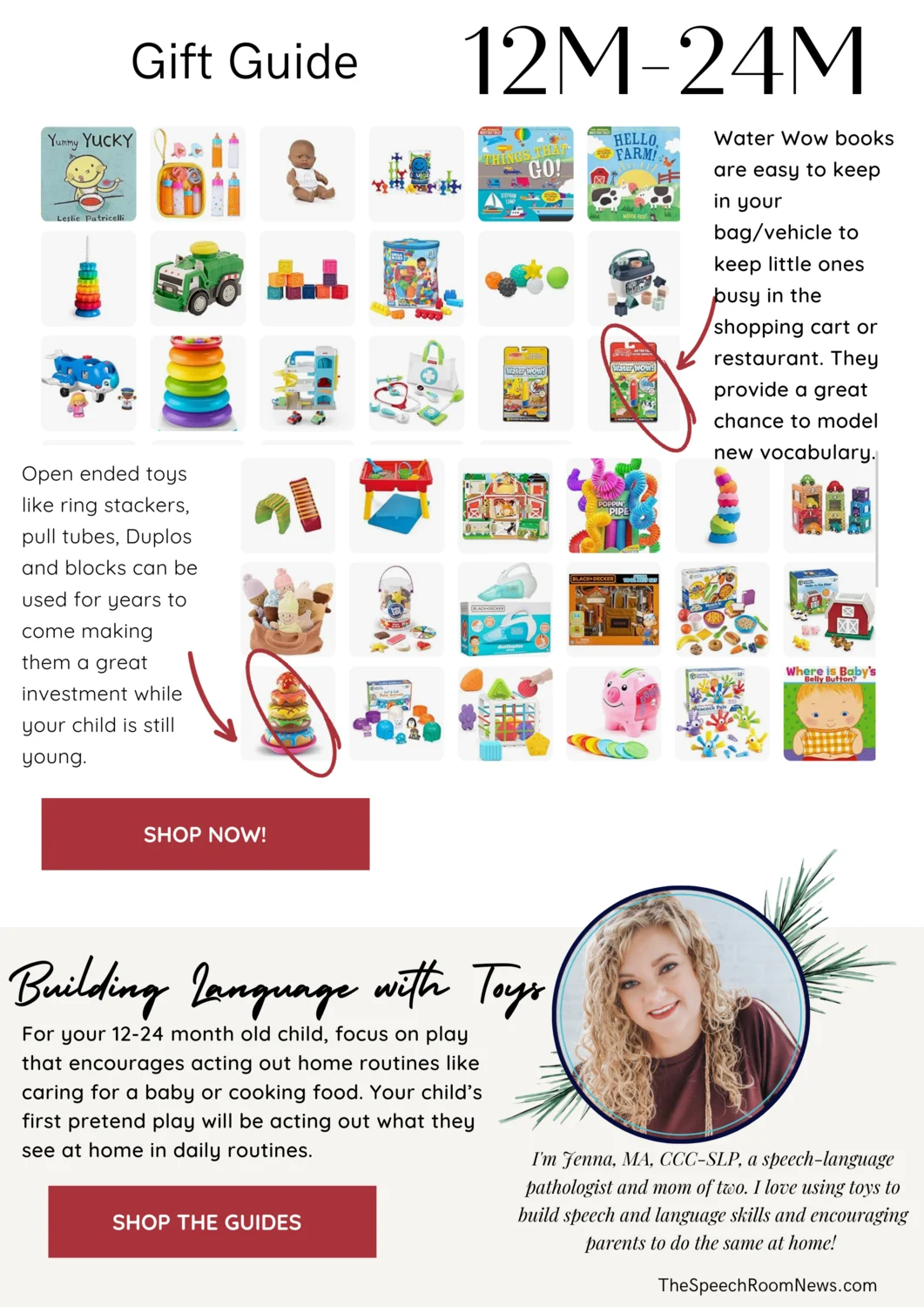
The core of Kirk’s initiative lies in the accessibility of her curated lists. The Amazon Gift Guides are meticulously "sorted by age," a critical feature that acknowledges the varying developmental stages of children. This age-based segmentation ensures that parents can easily identify toys appropriate for their child’s current cognitive and linguistic capabilities, maximizing the potential for engagement and learning. The availability of these guides on a widely accessible platform like Amazon streamlines the purchasing process, making expert recommendations readily actionable.
Furthermore, Kirk provides a direct download link for a "Christmas Toy Guide.pdf," suggesting a more comprehensive, printable version of her recommendations. This dual approach—online interactive lists and a downloadable document—caters to different user preferences, ensuring that the valuable information reaches a broader audience. The visual aids, such as the numerous image links within the original content, likely represent specific pages or sections of these guides, showcasing examples of recommended items. This visual reinforcement helps parents conceptualize the types of toys that align with developmental goals.

Beyond Traditional Toys: The Inclusion of Stocking Stuffers
A thoughtful addition to the gift guides is the section dedicated to "stocking stuffers." This inclusion highlights an understanding that valuable speech and language development can be fostered not only through large, central gifts but also through smaller, more portable items. Stocking stuffers often include:

- Miniature Figurines or Animals: Excellent for imaginative play, categorization, and vocabulary building.
- Small Card Games: Promote turn-taking, following instructions, and verbal problem-solving.
- Fidget Toys: While not directly speech-related, they can help with focus and attention, which are prerequisites for effective communication.
- Bubbles or Wind-Up Toys: Encourage requests ("more," "open," "go"), exclamations, and breath control for speech.
- Stickers or Craft Supplies: Facilitate descriptive language, sequencing instructions, and fine motor skills that can indirectly support articulation.
This demonstrates a holistic view of integrating language-rich opportunities into all aspects of a child’s play environment, emphasizing that every item, regardless of size, can serve a developmental purpose. The idea of "for the whole family" in this section also subtly promotes the concept of inclusive play, where family members engage together, creating more opportunities for rich language models and interactive communication.
Broader Implications and Expert Consensus

The initiative by Jenna Kirk aligns with a growing consensus among pediatricians, educators, and speech-language pathologists regarding the vital importance of early intervention and the strategic use of play in mitigating developmental delays. Providing parents with expert-vetted resources like these gift guides has several significant implications:
- Empowering Parents: Many parents, particularly those new to parenthood or those whose children have identified developmental needs, may feel overwhelmed by the vast array of toys on the market. Expert guides empower them to make informed choices that are both enjoyable for their children and beneficial for their development.
- Promoting Early Intervention: By making developmentally appropriate toys accessible and understandable, these guides can indirectly promote early intervention. Parents may notice improvements in their child’s communication skills through play, or they may become more attuned to potential areas where professional support might be beneficial.
- Bridging the Gap Between Therapy and Home: Speech and language therapy is most effective when principles and strategies are carried over into the home environment. These gift guides serve as a practical bridge, providing tools that parents can use to reinforce therapeutic goals during everyday play.
- Economic Efficiency: Investing in toys that serve a dual purpose—entertainment and education—can be more efficient for families, ensuring that purchases contribute meaningfully to a child’s growth.
- Raising Awareness: Resources like this raise public awareness about the complexities of speech and language development and the significant role that environmental factors, including play, contribute to a child’s linguistic journey.
Leading organizations in child development, such as the American Academy of Pediatrics, frequently issue guidelines emphasizing play as essential for healthy brain development. They advocate for "serve and return" interactions—responsive engagement between children and caregivers—which are naturally facilitated by interactive, open-ended toys. These recommendations by Kirk provide concrete examples of how to implement such principles at home.

Conclusion: A Resource for Intentional Play
Jenna Kirk’s creation of these speech and language-focused gift guides represents a valuable contribution to the resources available for parents, caregivers, and educators. By combining professional insight with practical, age-appropriate recommendations, she has crafted a tool that transcends typical holiday shopping lists, transforming them into instruments for intentional developmental support. In an era where screens often dominate children’s attention, the emphasis on tangible, interactive toys that stimulate communication is more pertinent than ever. These guides offer a clear pathway to enriching children’s play experiences, fostering essential speech and language skills, and ultimately supporting their holistic development, ensuring that playtime is not just fun, but also fundamentally formative. The continuous engagement with resources like these, and the active sharing of successful toy recommendations within communities, further amplify their positive impact on the next generation’s communicative competence.
