

The traditional dinner party, once a staple of mid-century social life, is experiencing a significant digital transformation as Google integrates sophisticated generative artificial intelligence into its core search functionality. As social trends shift toward meaningful, in-person connections following years of digital fatigue, Google has unveiled a suite of AI-powered tools designed to alleviate the logistical burdens of hosting. These features, ranging from visual tablescape generation to automated playlist curation, represent a broader shift in how consumers interact with information, moving from simple query-and-response mechanisms to comprehensive, creative assistance. By leveraging the latest advancements in large language models and multimodal AI, Google Search is positioning itself not just as an information portal, but as a project management partner for the modern host.
The Shift Toward AI-Enhanced Lifestyle Management
The integration of AI into party planning arrives at a critical juncture in consumer behavior. Data from various social platforms and search trend reports indicate a burgeoning interest in "slow living" and "intentional hosting." Google’s internal data suggests that queries related to dinner party logistics—such as "how to host a dinner party for beginners" and "themed dinner party ideas"—have seen a marked increase as individuals seek to reclaim physical social spaces.
To meet this demand, Google has introduced "AI Mode" and specialized tools like Nano Banana, which allow users to bridge the gap between abstract concepts and execution. This evolution is part of Google’s broader strategy to implement Search Generative Experience (SGE) across its ecosystem, transforming the search engine into a generative engine capable of producing unique images, schedules, and curated lists.
Visualizing Aesthetics: The Role of Nano Banana in Tablescaping
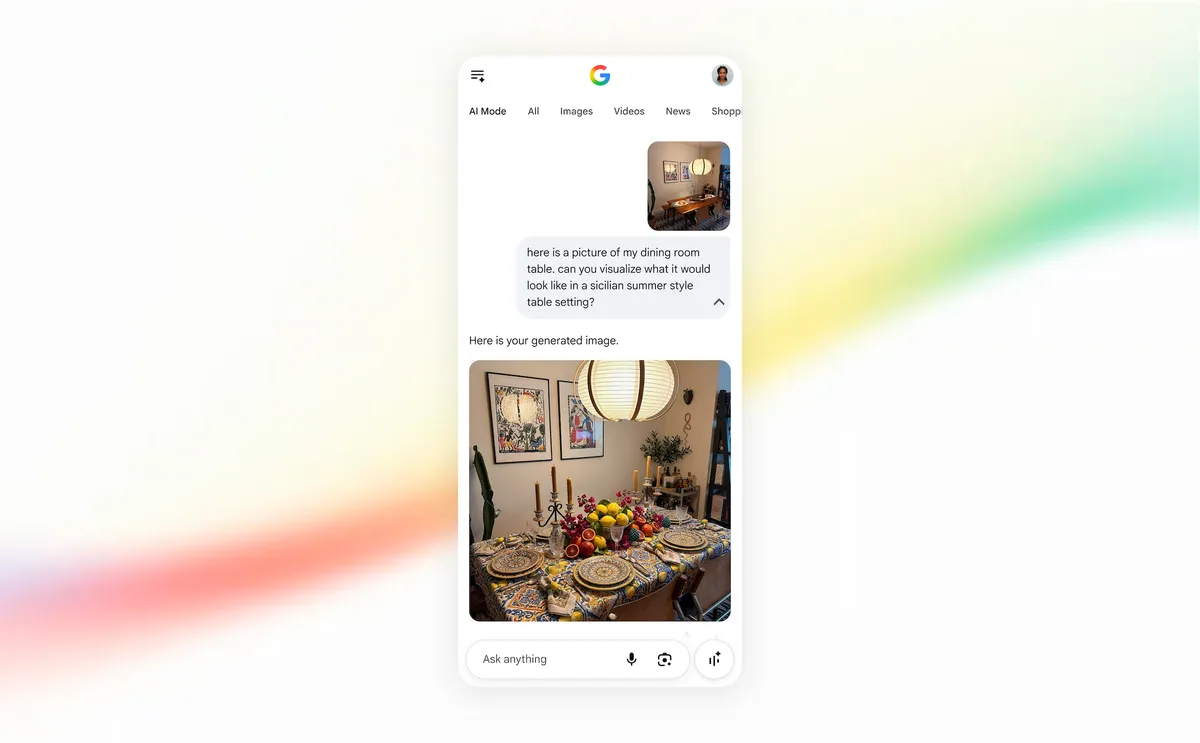
One of the most complex aspects of hosting is the visual presentation, or "tablescape." For many hosts, translating a theme into a physical arrangement of linens, glassware, and floral arrangements is a daunting task. Google’s Nano Banana tool, integrated into AI Mode, addresses this by providing high-fidelity visual simulations based on natural language prompts.
When a user inputs a query such as "visualize a rustic Italian tablescape with sunflowers and linen napkins," the AI processes thousands of aesthetic data points to generate a realistic image of how the table could look. This capability is built on diffusion model technology, similar to Google’s Imagen 2, which allows for precise control over lighting, texture, and composition. For the host, this means the ability to experiment with multiple themes—from "minimalist Scandinavian" to "maximalist disco"—without the financial risk of purchasing decor that may not harmonize.
Culinary Discovery and the Support of the Creator Economy
At the heart of any dinner party is the menu. Historically, search engines provided a list of links that required users to click through multiple websites to compare recipes. The updated AI Mode streamlines this by synthesizing recipe data while simultaneously prioritizing the creators behind the content.
Google’s new visual treatment in AI Mode highlights recipe creators by placing prominent links at the top of the search results. These links include rich metadata: the creator’s name, user ratings, total cook time, and the number of ingredients required. This serves a dual purpose: it provides the host with an immediate overview of the dish’s complexity and ensures that traffic is directed back to the original food bloggers and chefs. This move is seen as a response to concerns within the creator community regarding AI "scraping" content without attribution. By emphasizing the creator’s identity, Google maintains the health of the food-media ecosystem while providing a more efficient user experience.
Advanced Pairing Logic: The AI Sommelier
Beyond the main course, the modern dinner party often requires sophisticated drink pairings, a task that traditionally necessitated a level of expertise in viticulture or mixology. Google Search now utilizes its vast knowledge graph to act as a digital sommelier.
The AI’s ability to recommend pairings is not based on simple keyword matching but on flavor profile analysis. For example, if a host is serving a complex dish like miso salmon followed by a key lime pie, the AI evaluates the acidity of the citrus, the umami of the miso, and the fat content of the fish to suggest specific wine varietals or craft cocktails. This feature democratizes the hosting experience, allowing those without formal training to offer a professional-level beverage program that complements their culinary efforts.

Chronology of Google’s AI Integration into Search
The current suite of dinner party tools is the result of a multi-year development cycle aimed at making Search more intuitive and generative.
- 2021: The Introduction of MUM. Google introduced the Multitask Unified Model (MUM), which allowed the search engine to understand information across text and images, laying the groundwork for complex query handling.
- Late 2022: The Generative Pivot. Following the rise of large language models, Google began testing generative responses to provide more conversational and helpful answers.
- 2023: Search Generative Experience (SGE) Launch. SGE was introduced in Search Labs, allowing users to opt-in to experimental AI features, including early versions of image generation and list curation.
- 2024: Integration of Connected Apps. Google began allowing Search to interact directly with other ecosystem apps, such as YouTube Music and Google Maps, enabling a "seamless action" workflow.
- Present: Lifestyle Optimization. The rollout of specific tools for hosting, such as Nano Banana and enhanced recipe discovery, represents the move toward applying AI to specific, high-intent lifestyle tasks.
Ecosystem Integration: From Search to Sound
A successful dinner party is defined by its atmosphere as much as its food. Google’s "Connected Apps" initiative represents a significant leap in utility, allowing users to move from the "inspiration phase" to the "execution phase" without leaving the search interface.
Through AI Mode, a host can request a playlist that "matches a 1920s jazz lounge vibe" or "modern upbeat bossa nova." The AI doesn’t just list songs; it curates a functional playlist and provides a direct link to save it to YouTube Music. This integration reduces the "app-switching" friction that often plagues event planning. By connecting Search to the broader Google ecosystem, the company is creating a "flywheel" effect where information discovery leads directly to digital action.
Design and Personalization: The Printable Menu
The final touch for many high-end dinner parties is a physical menu. Google has leveraged Nano Banana to assist in graphic design, allowing users to generate printable menus that reflect their specific meal. This feature uses the same generative logic as the tablescape visualizer but applies it to document layout and typography. By inputting the finalized dishes, the host can receive a professionally designed menu template that can be shared digitally or printed for the table. This level of personalization was previously reserved for those with graphic design skills or those willing to pay for premium templates.
Market Analysis and Broader Implications
The push toward AI-assisted hosting is more than a technological novelty; it is a strategic response to changing market dynamics. According to market research firm Mintel, the "at-home entertainment" sector has seen a 15% increase in spending as consumers look for alternatives to expensive restaurant dining. Furthermore, a study by the American Psychological Association recently highlighted the importance of "social infrastructure," noting that small-scale gatherings are vital for mental health.
By positioning Search as a tool for "IRL" (In Real Life) connection, Google is tapping into a profound human need for community. However, this also raises questions about the future of digital dependency. Critics argue that delegating creative tasks like menu planning and playlist curation to AI might diminish the personal touch that makes hosting special. Conversely, proponents suggest that by removing the "heavy lifting" of logistics, hosts are freed to be more present with their guests—the ultimate goal of any gathering.
From an industry perspective, Google’s focus on creator attribution within AI recipes is a critical development. As AI-generated summaries become the norm, the "traffic-referral" model of the internet is under threat. By integrating creator names and ratings prominently, Google is attempting to balance the efficiency of AI with the economic necessity of the open web.
Conclusion: The Future of the Intelligent Host
As Google continues to refine these tools, the boundary between a search engine and a personal assistant will continue to blur. The "5 ways to host the ultimate dinner party" serves as a case study for how generative AI can be applied to complex, multi-variable human activities. By synthesizing data across culinary arts, interior design, music, and logistics, Google is providing a blueprint for the future of domestic management. For the modern host, the value proposition is clear: less time spent on the "how" of hosting, and more time spent on the "who"—the guests and the connections that define the dinner party experience.
