

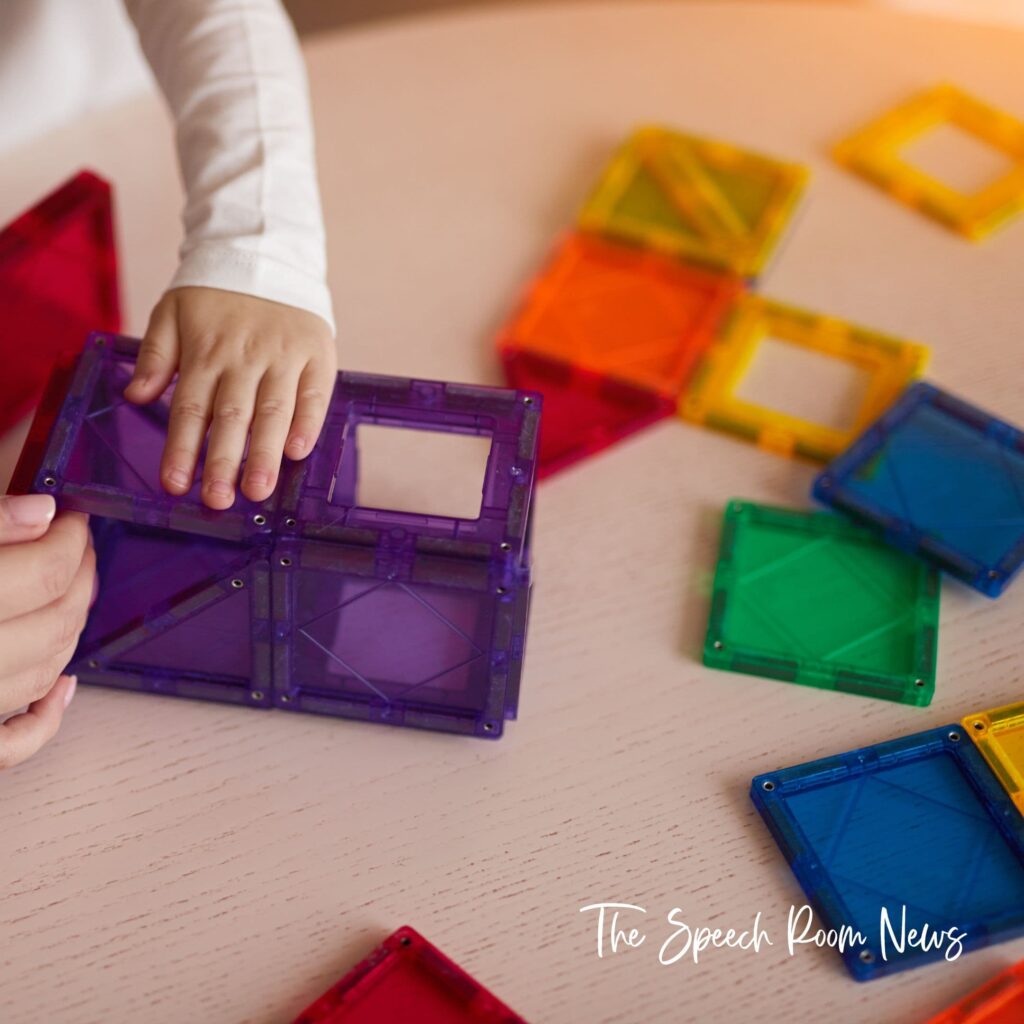
Magnetic tiles, long celebrated in homes and early childhood education for their capacity to inspire creative construction, are gaining significant recognition within the specialized field of pediatric speech-language pathology (SLP). These colorful, geometric building blocks offer a dynamic, hands-on medium for addressing a broad spectrum of speech and language goals, transforming therapeutic sessions into engaging play experiences for young children. This shift towards incorporating interactive manipulatives underscores an evolving understanding of child development and effective intervention strategies, where active engagement and multi-sensory learning are paramount.
The integration of play-based tools like magnetic tiles into speech therapy aligns with contemporary best practices that emphasize naturalistic learning environments. Traditional therapy models, often reliant on repetitive drills and structured tasks, are increasingly complemented by approaches that leverage children’s innate drive to play. This evolution is driven by research demonstrating that children learn and retain information more effectively when they are actively involved, motivated, and enjoying the learning process. For speech-language pathologists, finding tools that are both versatile and highly engaging is crucial, especially when working with diverse populations and varying developmental stages, typically from ages one and up.
The Evolution of Therapeutic Tools and Play-Based Learning
The journey of therapeutic interventions for speech and language disorders has seen a gradual but profound shift over the decades. Historically, therapy often involved direct instruction, flashcards, and highly structured exercises. While these methods hold value, their effectiveness, particularly with very young children or those with attention challenges, could be limited by a lack of intrinsic motivation. The late 20th and early 21st centuries witnessed a growing appreciation for developmental psychology and educational theories that champion play as a fundamental mechanism for learning. Researchers like Lev Vygotsky emphasized the role of social interaction and play in cognitive development, providing a theoretical framework for the integration of play into educational and therapeutic settings.
Magnetic tiles, though a relatively modern invention in their current widespread form, fit perfectly into this framework. Their open-ended nature allows for creativity, problem-solving, and collaboration, all of which are fertile ground for language development. The tactile experience, visual feedback, and auditory cues (the gentle click of magnets) contribute to a multi-sensory learning environment that can be particularly beneficial for children with diverse learning styles or specific sensory needs. This chronological adoption of such engaging tools reflects a broader trend in pediatric care: moving beyond isolated skill acquisition to holistic development within meaningful contexts.
Ten Core Therapeutic Applications of Magnetic Tiles
Speech-language pathologists are leveraging the inherent appeal and structural flexibility of magnetic tiles to target a wide array of speech and language objectives. Here are ten prominent applications demonstrating their utility:
-
Fostering Social-Cooperative Communication: Magnetic tiles serve as an exceptional catalyst for enhancing social interaction and cooperative play among students. Group activities involving building shared structures naturally necessitate back-and-forth communication, turn-taking, and negotiation. Children learn to articulate their ideas ("Let’s build a tall tower!"), request specific pieces ("Can I have a square?"), and provide instructions ("Put it on top!"). This collaborative environment not only hones verbal expression but also cultivates essential social skills such such as sharing, problem-solving collectively, and understanding different perspectives. Therapists can guide these interactions to target specific conversational skills, joint attention, and emotional regulation.
-
Mastering Prepositional Concepts: Abstract spatial concepts can be challenging for young learners. Magnetic tiles provide a concrete, manipulable medium for teaching prepositions like "on," "under," "beside," "between," "in front of," and "behind." Therapists can instruct children to place tiles in various positions relative to others, verbalizing each action ("Place the red square under the blue triangle"). This hands-on experience allows children to physically enact and observe these relationships, solidifying their comprehension of spatial language. The ability to create and dismantle structures quickly facilitates rapid repetition and varied examples.
-
Cognitive Development Through Sorting and Categorization: The varied shapes (squares, triangles, rectangles, arches) and vibrant colors of magnetic tiles make them ideal for sorting and categorization activities. Therapists can direct students to group tiles by color, shape, or even size. This activity not only reinforces basic concepts of attributes but also encourages descriptive language ("This is a big red square"). An advanced application involves building "sorting bins" with the tiles themselves, further integrating the material into the task and providing a tangible outcome for the sorting effort. This practice sharpens cognitive skills by requiring students to identify similarities and differences, articulate their reasoning, and follow multi-step instructions.
-
Targeted Articulation Practice: Integrating specific speech sounds into magnetic tile activities makes articulation therapy both dynamic and enjoyable. For a child working on the /k/ sound, the therapist might encourage building a "castle," a "kitchen," or a "car," prompting the child to repeatedly produce words containing the target sound in a meaningful context. As children construct their creations, they can name the objects they are building or describe their actions, providing numerous opportunities for guided articulation practice. This contextualized repetition is often more effective than isolated drills, as it embeds the sound practice within purposeful communication.
-
Building Grammatical Foundations: Irregular Verbs: Magnetic tiles offer an excellent opportunity to practice irregular verbs within narrative play. Children can build a scene, and then the therapist can prompt them to describe what happened using irregular past tense verbs. For instance, building a tower that "fell," a character that "ran" through a tunnel, or a house they "built." The tactile nature of construction allows for creation of scenarios that elicit these specific verb forms, enabling children to narrate stories or sequences that incorporate verbs like "built," "fell," "ran," "saw," or "hit." This active storytelling fosters grammatical accuracy in a fun, low-pressure environment.
-
Fostering Executive Function Skills: The process of building with magnetic tiles inherently engages executive function skills. Children must plan their design, sequence their actions, maintain attention to task, and problem-solve when structures don’t quite work as intended. Therapists can introduce challenges, such as building a specific structure within a time limit or replicating a model, which further develops planning, organization, time management, and cognitive flexibility. Discussing their strategies and adaptations during the building process also enhances metacognitive awareness and expressive language related to planning and execution.
-
Developing Plurality: Regular Noun Forms: Creating patterns or structures with multiple identical magnetic tile shapes naturally lends itself to practicing regular plurals. As children add "squares," "triangles," or "rectangles" to their construction, the therapist can prompt them to articulate the plural forms. "How many squares do you have?" "I have three squares." Encouraging them to discuss the quantity of each shape used and describe their creations reinforces the morphological rule for regular plurals within a concrete context. This repeated exposure in a playful setting aids in generalization.
-
Stimulating Expressive Language: WH-Questions: Magnetic tiles serve as a powerful tool for eliciting and practicing responses to WH-questions ("who," "what," "where," "when," "why"). As children build, therapists can ask: "Where does this piece go?" "What are you building?" "Who helped you put that up?" "When will your tower fall down?" or "Why did you choose that color?" These questions encourage students to describe actions, locations, objects, and intentions, thereby enhancing both their comprehension and expressive language skills in a natural conversational flow.
-
Reinforcing Pronoun Usage: The Case of "I": For children struggling with self-referential pronouns, magnetic tile activities provide ample opportunity to practice "I." By asking "Who wants to add a piece?" or "Who built this part?", the therapist can prompt the child to respond, "I want to add a piece" or "I built this part." Encouraging students to narrate their actions using the pronoun, such as "I have a red tile for the top" or "I am making a house," reinforces correct usage in a meaningful and personal context, aiding in the development of self-awareness and linguistic independence.
-
Supporting Augmentative and Alternative Communication (AAC) Core Words: Magnetic tiles are invaluable for reinforcing AAC core words, which are high-frequency words crucial for functional communication. Words like "more," "on," "off," "up," "down," "help," "open," "close," "big," "small," "mine," "yours," "that," and "this" can be seamlessly integrated into building activities. A child using an AAC device can request "more" tiles, indicate "up" for stacking, or ask for "help" to connect pieces. This provides practical, repeated exposure to core words within an engaging, motivating context, making communication purposeful and effective.
Expert Perspectives and Practitioner Insights
Leading speech-language pathologists widely endorse the use of open-ended, manipulable toys in therapy. Dr. Elena Rodriguez, a prominent SLP specializing in early intervention, notes, "Magnetic tiles are a game-changer. They provide endless opportunities for language modeling and elicitation without feeling like work. The intrinsic motivation children feel when building translates directly into sustained engagement, which is paramount for therapeutic progress." Similarly, educational psychologists highlight the cognitive benefits. Dr. Marcus Chen, focusing on play-based learning, states, "Construction toys like magnetic tiles are foundational for developing spatial reasoning, problem-solving, and executive functions. When these are integrated with language goals, the learning is far more robust and transferable."
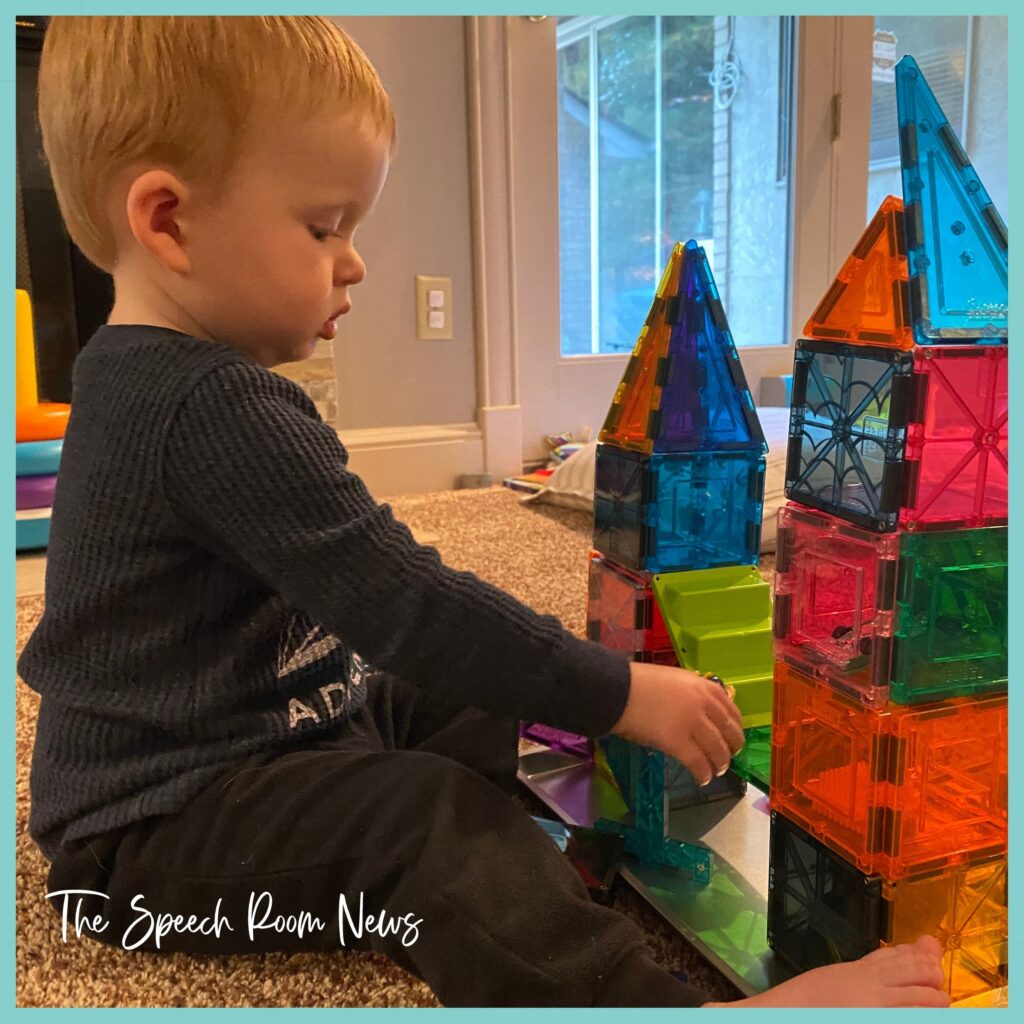
The appeal for practitioners also lies in their durability and reusability. "Unlike consumable materials, magnetic tiles are a one-time investment that can be used for years across countless therapy sessions and with a wide range of goals," explains Sarah Miller, a school-based SLP with over 15 years of experience. "They are easy to clean, store, and transport, making them incredibly practical for busy clinicians."
Parental Engagement and Home-Based Support
Beyond the clinic, magnetic tiles offer a powerful tool for parental engagement and the continuation of therapeutic strategies at home. Therapists frequently recommend them to parents as a versatile toy that can support language development in a natural, play-based manner. By demonstrating specific language-building activities with the tiles, therapists empower parents to reinforce skills learned in sessions, bridging the gap between clinical intervention and daily life. Parents report that children are often more receptive to "practicing" with a beloved toy than with formal exercises. This home-based reinforcement is crucial for generalizing new skills and accelerating progress.
Economic and Practical Considerations
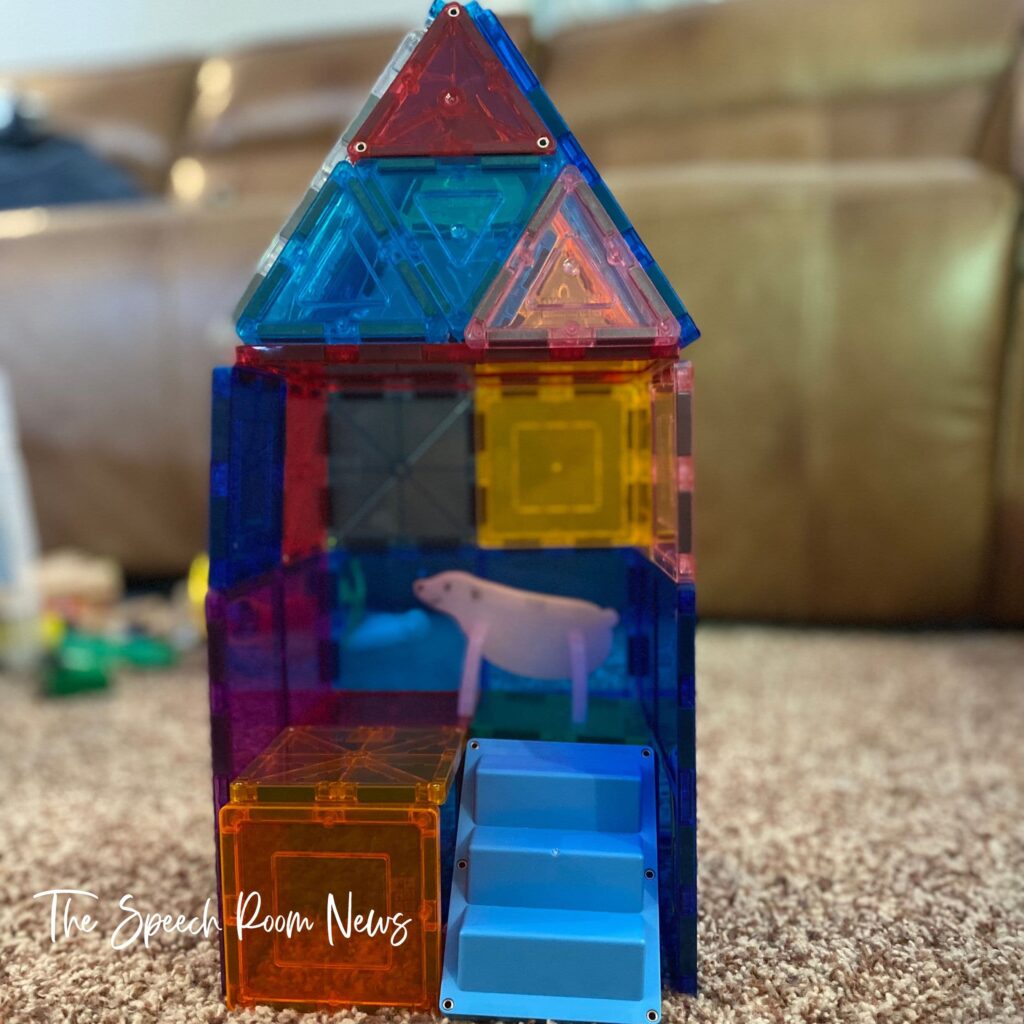
While the initial investment for a quality set of magnetic tiles can be higher than some other therapy materials, their versatility, durability, and broad age appeal represent significant long-term value. A single set can address multiple goals for various children over many years, making them a cost-effective choice for both professional clinics and home use. Furthermore, their ease of use requires minimal setup or cleanup, maximizing therapy time dedicated to interaction and learning. Their stackable nature also makes them efficient for storage in diverse therapy environments.
Future Outlook and Broader Implications
The growing recognition of magnetic tiles in speech-language therapy is indicative of a broader trend towards dynamic, child-centered interventions. As research continues to underscore the importance of play in development, tools that naturally integrate learning with engagement will become increasingly central to therapeutic practices. Magnetic tiles, with their proven capacity to address a wide array of speech and language goals while simultaneously fostering cognitive and social development, are poised to become a staple in the SLP’s toolkit, offering an effective, joyful pathway to improved communication for countless children. Their continued adoption signifies a commitment to innovative, engaging, and holistic approaches in pediatric therapy.
