

In the annals of the Old Testament, a profound societal practice known as gleaning offered a remarkable blend of resourcefulness and mandated generosity. Landowners were expressly instructed not to meticulously harvest their fields down to the very last stalk. Any grain that was dropped during the harvesting process was also to be left behind. This seemingly counterintuitive approach, especially in eras where food scarcity was a constant threat, stemmed from a divinely inspired system designed to build a robust safety net for the most vulnerable members of society. Widows, orphans, and foreigners – individuals often lacking access to land or independent means of sustenance – were granted the right to freely gather these overlooked provisions. This ancient mandate serves as a compelling precursor to understanding the immense, often untapped, potential residing within contemporary professional networking platforms.
The most enduring narrative illustrating this principle is found within the Book of Ruth. Ruth, a Moabite woman and a widow, found herself in the fields of Bethlehem, gleaning to support herself and her mother-in-law, Naomi. It was here that she encountered Boaz, a wealthy landowner and relative of Naomi’s late husband. Upon learning of Ruth’s plight and her diligence, Boaz took extraordinary measures. He instructed his reapers to intentionally leave behind extra sheaves of grain and even to pull out some heads of grain from their bundles for her to gather. This deliberate act of amplified generosity, born from the ancient commandment to leave the gleanings, profoundly altered the course of Ruth’s life. This narrative culminates in her marriage to Boaz, a union that would eventually lead to the lineage of King David, one of Israel’s most revered monarchs. The profound impact of this story lies in its testament to how a singular act of intentional generosity, embodied in the act of leaving something behind, could catalyze transformative change.
LinkedIn: A Modern Field of Abundant Opportunity
This ancient practice of gleaning resonates powerfully when transposed to the landscape of LinkedIn, a digital platform that has become, in many respects, a modern-day field ripe for professional exploration and enrichment. Every day, LinkedIn hosts an extraordinary volume of free, high-quality content, meticulously curated and disseminated by a diverse spectrum of professionals. Researchers share groundbreaking findings, practitioners offer practical insights gleaned from real-world experience, executives impart strategic wisdom, entrepreneurs detail their innovative journeys, and trainers provide valuable skill-building techniques. For individuals who may not have the financial resources to attend expensive conferences or whose employers do not invest heavily in professional development programs, LinkedIn offers an unparalleled gateway to learning. This accessibility represents a paradigm shift, providing educational opportunities that would have been virtually unimaginable to previous generations.
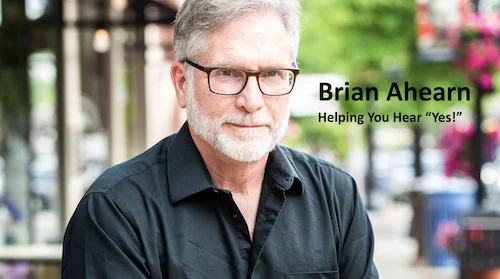
Consider, for instance, the prolific output of individuals dedicated to sharing their expertise. Brian Ahearn, the author and Chief Influence Officer at Influence PEOPLE, exemplifies this commitment. He has maintained a weekly blogging schedule for nearly two decades and posts daily on LinkedIn, generating thousands of pieces of content aimed at enhancing understanding and application of the science of ethical influence. His dedication is far from an isolated phenomenon. Across the platform, professionals can access invaluable wisdom pertaining to sales strategies, effective leadership, sophisticated communication techniques, negotiation tactics, productivity enhancements, mindset development, and a myriad of other critical business disciplines. This vast repository of knowledge is available at no cost, awaiting those willing to actively engage and “glean” its contents.
The Imperative of Active Engagement: Harvesting the Insights
However, the efficacy of this digital field hinges on a crucial prerequisite: the active participation of the individual. Just as the grain in ancient fields did not magically transport itself into Ruth’s dwelling, the insights available on LinkedIn do not spontaneously manifest in one’s professional toolkit. Ruth had to physically enter the field and exert effort to gather what was left behind. Similarly, on LinkedIn, passive consumption is insufficient. Reading a post requires intention, but truly internalizing its value demands deeper reflection. The application of that knowledge, moreover, necessitates deliberate effort and consistent practice.
For example, engaging with the foundational works of social scientists like Dr. Robert Cialdini, whose research forms the bedrock of understanding ethical influence, or delving into the practical applications shared by professionals like Brian Ahearn, provides significant depth in the science of influence. Yet, as Ahearn emphasizes, insight alone does not yield tangible results. The critical question for any professional seeking growth is not merely what they have learned, but rather, "How do I put this into practice?" This necessitates a transition from passive reception to active assimilation and implementation.
Bridging the Gap: Translation from Theory to Practice
The distinct roles of researchers and practitioners highlight a vital aspect of professional development: the translation of academic theory into actionable business strategies. Dr. Cialdini, as a renowned social scientist, dedicates his career to rigorous research methodology and the study of human behavior. His work is foundational, providing the scientific underpinnings of influence. Brian Ahearn, on the other hand, has spent his career in the business world, specifically within the property-casualty insurance industry, translating this complex research into practical, applicable tools and techniques. This bridge-building function is indispensable for professionals seeking to leverage scientific insights in their daily work.
At its core, professional success, whether in sales, leadership, or any client-facing role, often boils down to the cumulative effect of securing a series of affirmative responses – a chain of "yeses." This is not a singular event but a process. In sales, achieving a "yes" involves a multi-stage journey: initial prospecting, engaging in meaningful conversations, securing commitment, diligent follow-through, and cultivating referrals. Each stage requires specific influence skills and a deep understanding of human psychology.
Leadership, too, is built upon a foundation of successive agreements and inspired action. Effective leaders must:
- Communicate a Compelling Vision: Inspiring others to believe in a shared future.
- Build Trust and Rapport: Establishing strong interpersonal connections that foster loyalty.
- Motivate and Empower Teams: Encouraging individuals to perform at their highest potential.
- Navigate Complex Challenges: Guiding teams through obstacles with confidence and strategic foresight.
- Foster a Culture of Collaboration: Creating an environment where teamwork thrives.
- Drive Strategic Initiatives: Ensuring that organizational goals are met through collective effort.
Even for those not occupying formal leadership positions or engaged in direct sales, professional advancement is inextricably linked to the ability to gain agreement and inspire action from colleagues, stakeholders, and clients. Consider the common professional scenarios that demand these skills:
- Securing Buy-in for a Project Proposal: Presenting an idea in a way that garners enthusiasm and commitment.
- Negotiating Favorable Terms: Achieving mutually beneficial outcomes through skillful discussion.
- Influencing Cross-Functional Teams: Collaborating effectively with individuals from different departments to achieve shared objectives.
- Managing Upward Effectively: Communicating needs and gaining support from superiors.
- Inspiring Client Confidence: Building trust and demonstrating value to external partners.
For most professionals, the answer to whether they need these skills is a resounding "yes." The ability to elicit positive responses is not a niche requirement but a universal competency in the modern workplace.
A Call to Action: Intentional Gleaning and Structured Growth
The encouragement offered by the principle of gleaning is clear: be intentional about your professional development on LinkedIn. Identify the areas where you seek to grow your skills and actively seek out content that aligns with those aspirations. Save valuable posts, take the time to reflect on their core messages, and commit to applying at least one new idea each week. The wealth of free content is readily available, but like Ruth in the fields, the onus is on you to actively gather it.
However, it is also crucial to recognize the distinction between gleaning and ownership. Gleaning provides essential sustenance and foundational insights. For deeper mastery, accelerated growth, and more structured, comprehensive development, individuals must explore additional avenues. These include delving into comprehensive books, enrolling in structured online learning programs, attending specialized workshops, seeking guidance from coaches, and pursuing certification programs. Free content on platforms like LinkedIn can be an exceptional catalyst for sparking insight and identifying areas for further exploration. Focused training, conversely, is instrumental in building robust skills and achieving a higher level of proficiency. Both have their distinct and valuable roles in a holistic professional development strategy.
The ultimate question for each professional is one of active engagement: are you merely walking past a field brimming with opportunity, or are you stepping in, diligently gathering the available resources, and transforming them into tangible professional growth? The digital landscape of LinkedIn presents an unprecedented opportunity for continuous learning and skill enhancement. By embracing the spirit of intentional gleaning and strategically supplementing it with more structured learning, professionals can cultivate a trajectory of sustained success and impactful contribution in their respective fields. The platform is a testament to the power of shared knowledge, but its true value is unlocked by those who actively participate in its harvest.
