

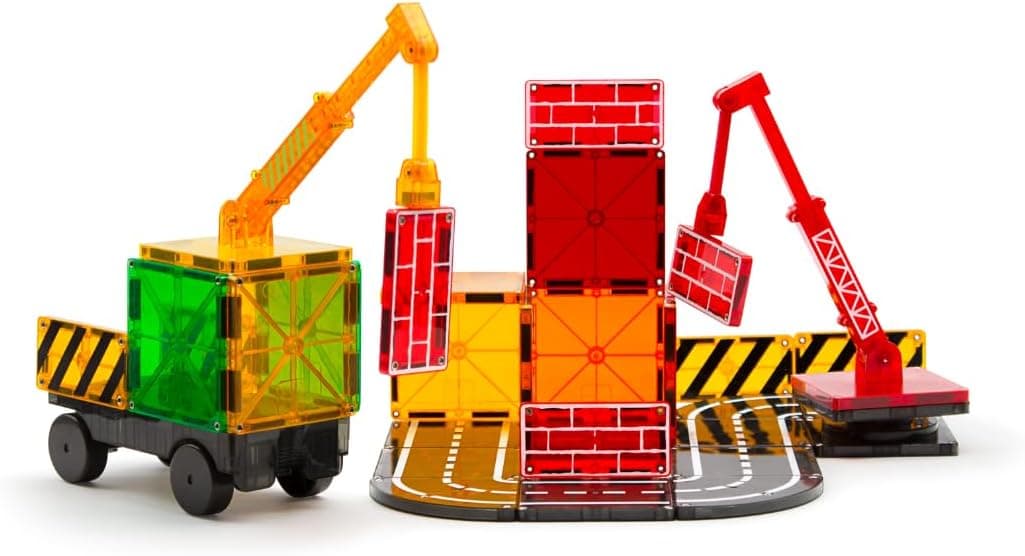
The landscape of pediatric speech-language pathology is continually evolving, with a pronounced shift towards engaging, multisensory, and play-based interventions. Among the diverse array of tools increasingly embraced by clinicians, magnetic tiles have emerged as a remarkably versatile and effective resource for addressing a broad spectrum of speech and language goals in young children. These colorful, geometric shapes, known for their strong magnetic connections and open-ended play potential, are proving invaluable in fostering communication skills, cognitive development, and social interaction within therapeutic settings.
Background and Evolution of Therapeutic Play
For decades, speech-language therapy often relied on more structured, drill-based exercises. However, a growing body of research in child development and educational psychology has underscored the profound impact of play on learning, particularly for young children. This understanding has propelled a significant paradigm shift, advocating for play-based therapy as a cornerstone of pediatric intervention. This approach leverages children’s natural inclination to learn through exploration and interaction, making therapy sessions more enjoyable, less intimidating, and ultimately, more effective.
The integration of commercially available toys into therapy is a natural extension of this philosophy. Toys that promote creativity, problem-solving, and interaction are particularly prized. Magnetic tiles, initially popularized as a constructive toy for home use and early childhood education, quickly demonstrated their potential beyond general play. Their inherent properties—durability, ease of manipulation, vibrant colors, and geometric versatility—make them an ideal candidate for structured therapeutic activities that feel like play. The widespread adoption of these tiles in homes and preschools since the early 2010s paved the way for their subsequent recognition and integration into clinical practice, particularly by 2018-2020 as SLPs shared innovative applications through professional networks and online communities.
The Foundational Appeal of Magnetic Tiles in Therapy
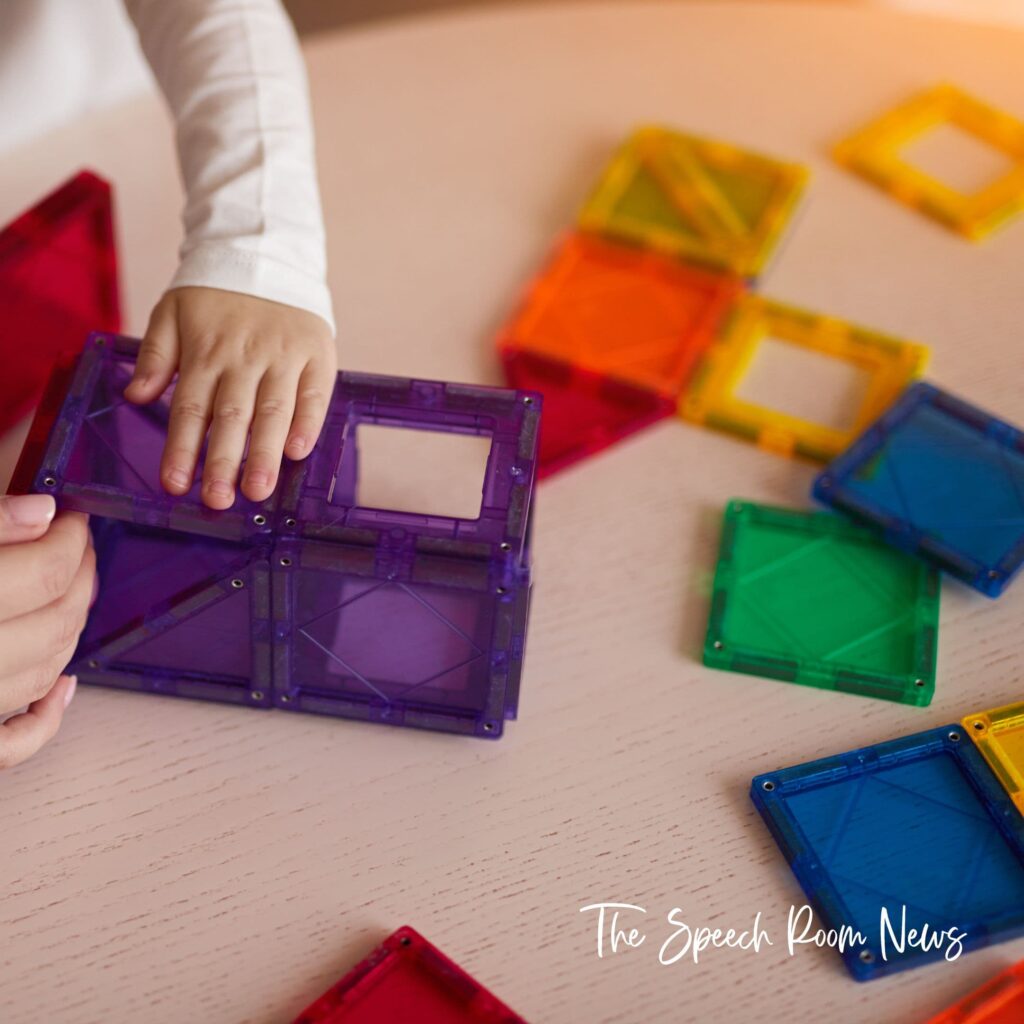
The effectiveness of magnetic tiles in speech therapy stems from several key attributes. First, their multisensory nature engages children visually, tactilely, and kinesthetically. Children manipulate the tiles, observe their colors and shapes, and experience the satisfying click of magnets connecting, all of which contribute to a richer learning experience. Second, their open-ended design encourages imaginative play and creativity, allowing therapists to adapt activities to individual children’s interests and developmental levels. This adaptability is crucial for maintaining engagement, especially with diverse caseloads spanning various ages and diagnostic profiles. Third, their robust construction ensures longevity, making them a cost-effective investment for therapy rooms, despite an initial higher price point compared to some single-purpose therapeutic aids.
Leading speech-language pathologists, such as Sarah Johnson, a clinician specializing in early intervention, have observed, "Magnetic tiles offer an unparalleled blend of structure and freedom. We can target specific linguistic goals while allowing the child to feel like they are simply playing and creating. This intrinsically motivating environment is critical for sustained attention and repeated practice, which are vital for skill acquisition in speech and language development."
Diverse Applications: A Deep Dive into Therapeutic Strategies
The versatility of magnetic tiles allows for their application across numerous speech and language domains. Clinicians are leveraging these tools to address everything from foundational language concepts to complex executive functioning skills.
-
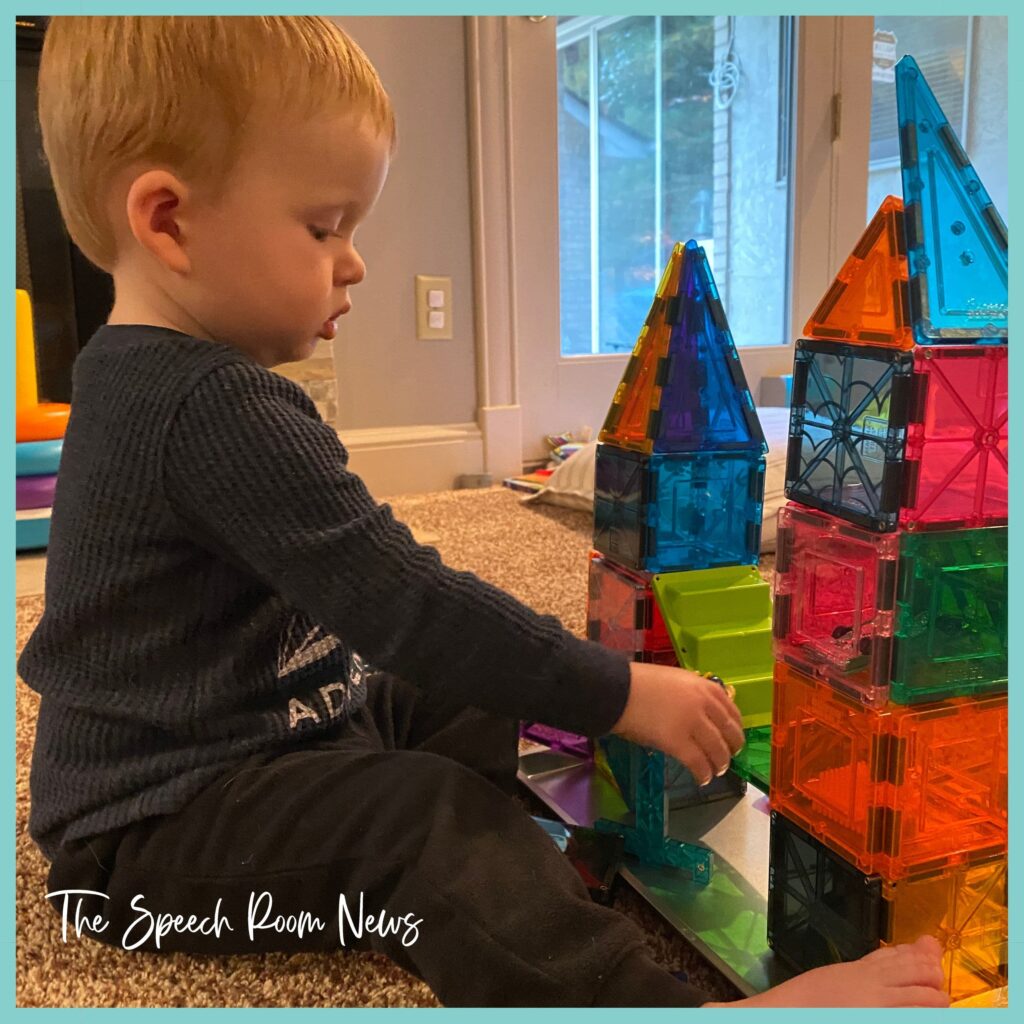
Enhancing Social-Pragmatic Communication: Magnetic tiles serve as an exceptional medium for fostering social interaction and cooperative play. During building tasks, children are naturally prompted into back-and-forth communication. This provides organic opportunities to practice turn-taking, negotiation, requesting (e.g., "my turn," "give me that"), sharing ideas, and problem-solving together. Therapists can guide students to plan their structures, assign roles, and verbalize their actions, thereby nurturing vital social skills alongside speech development. The collaborative nature of constructing a large tower or a complex "house" inherently encourages conversational exchanges and joint attention.
-
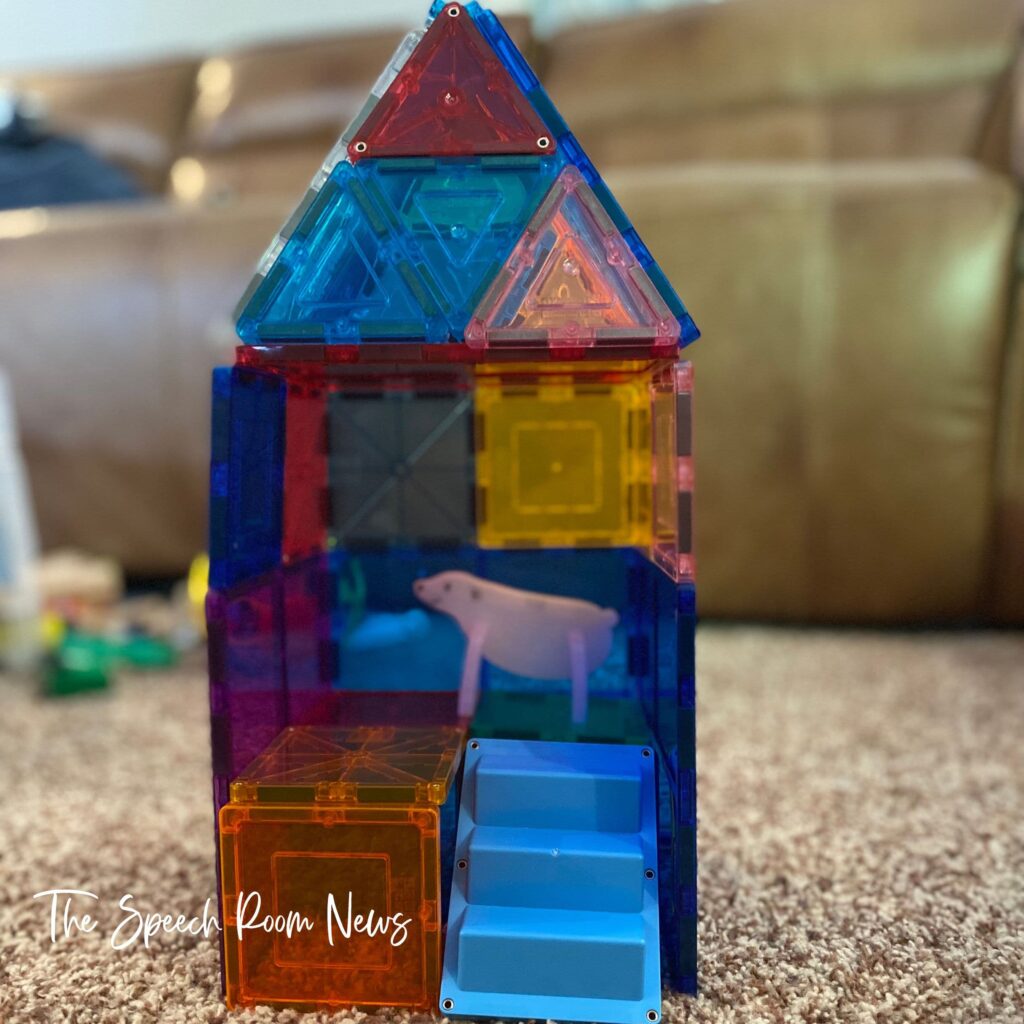
Mastering Linguistic Concepts: Prepositions and Plurals: Abstract concepts like spatial relationships (prepositions) and number agreement (plurals) become concrete through hands-on manipulation with magnetic tiles. Children can physically demonstrate "on," "under," "beside," "between," "in front of," and "behind" by arranging tiles in relation to one another. For plurals, therapists can guide children to describe their creations, emphasizing quantities: "I have two squares," "Look at all the triangles." This tactile reinforcement aids in solidifying these grammatical rules, moving beyond rote memorization to experiential understanding.
-
Articulation and Phonological Development: Integrating specific speech sounds into magnetic tile activities provides a fun and functional context for articulation practice. For example, targeting the /k/ sound might involve building a "castle" or a "cage," describing a "car" made of tiles, or placing a tile "in the park." Each instance of building or describing prompts the child to produce the target sound in meaningful words, increasing the frequency and naturalness of practice. The rewarding experience of completing a structure serves as a positive reinforcer for correct sound production.
-
Grammar and Syntax: Irregular Verbs and Pronouns: Magnetic tiles offer a dynamic platform for practicing irregular verbs and pronouns. Children can narrate the construction process or create stories around their finished structures. For irregular verbs, they might describe how a tile "fell" or how they "built" a tower, or what they "saw." When focusing on pronouns like "I," "he," "she," and "they," therapists can model and elicit sentences such as "I put the blue tile," "He built the roof," or "They are making a wall." This contextualized practice helps embed grammatical structures into spontaneous speech.
-
Cognitive and Executive Functioning Skills: The open-ended nature of magnetic tile play is a powerful tool for developing executive functioning skills. Children must plan their designs, sequence steps, maintain focus on a goal, and problem-solve when structures don’t connect as expected. Therapists can introduce challenges, such as building a specific structure within a time limit or replicating a design, to further hone planning, organization, and inhibitory control. This enhances cognitive flexibility and provides a rich environment for verbalizing thought processes.
-
Facilitating Expressive and Receptive Language: WH Questions and Vocabulary: Magnetic tiles naturally lend themselves to practicing "WH" questions (who, what, where, when, why). Therapists can ask, "Where does this tile go?" "What are you building?" "Who wants to add another piece?" This promotes both receptive comprehension and expressive language as children formulate answers. Additionally, the varied shapes and colors expand vocabulary (e.g., "square," "triangle," "rhombus," "pyramid," "arch," "transparent," "opaque") and descriptive language (e.g., "tall," "wide," "colorful," "wobbly").
-
Augmentative and Alternative Communication (AAC) Integration: For children who use Augmentative and Alternative Communication (AAC) systems, magnetic tiles provide a highly motivating context for practicing core words. Core words are high-frequency words that form the foundation of communication (e.g., "more," "on," "off," "up," "down," "help," "want," "go," "stop"). During play, therapists can model and elicit these words using the AAC device: "More tiles," "Put it on," "Help me build," "Go up!" The tangible outcome of building provides immediate feedback and reinforces the meaning and utility of these words.
Clinician Perspectives and Adoption Trends
The feedback from speech-language pathologists regarding magnetic tiles is overwhelmingly positive. A recent informal survey among SLPs indicated that over 70% regularly incorporate magnetic tiles into their therapy sessions, citing high student engagement and versatility as primary benefits. Dr. Elena Petrova, a researcher in pediatric communication disorders, notes, "The beauty of magnetic tiles lies in their capacity to be a ‘low-floor, high-ceiling’ tool. They are accessible for very young children and those with significant developmental delays, yet they also challenge older children with complex construction tasks, allowing for individualized goal targeting across a wide age range and ability spectrum."
Clinicians also appreciate the minimal setup and cleanup required, which maximizes valuable therapy time. The robust nature of the tiles means they withstand repeated use by active children, offering a durable alternative to more fragile therapeutic materials. While the initial investment for quality magnetic tile sets can be substantial, clinicians often report that their longevity and multifaceted utility make them a worthwhile expenditure, often acquired through grants, classroom wish lists, or personal investment.
Parental Engagement and Home Practice
Beyond the clinic, magnetic tiles offer significant potential for parental engagement and home practice. Because these toys are common in many households, therapists can easily recommend their continued use at home, providing parents with concrete strategies to reinforce therapeutic goals in a natural, play-based environment. This continuity of care is crucial for generalizing skills learned in therapy to everyday situations. Parents can be coached on how to prompt language, ask questions, or encourage social interaction during magnetic tile play, extending the impact of professional intervention. This bridges the gap between clinical sessions and daily life, empowering families to actively participate in their child’s communication development.
Challenges and Considerations
While magnetic tiles present numerous advantages, certain considerations exist. The primary barrier for some clinicians and families is the initial cost of quality sets. However, many find that the long-term benefits and durability outweigh this initial outlay. Furthermore, while the open-ended nature is a strength, therapists must be skilled in structuring activities to ensure specific goals are targeted effectively, rather than simply allowing free play. This requires careful planning and strategic facilitation during sessions.
The Future of Play-Based Therapy
The integration of magnetic tiles into speech-language pathology exemplifies a broader trend towards innovative, child-centered therapeutic approaches. As research continues to highlight the importance of holistic development, tools that simultaneously address cognitive, social, and linguistic skills will remain at the forefront of effective intervention. Magnetic tiles, with their inherent ability to captivate and educate, are not merely a passing trend but a testament to the enduring power of play in fostering communication and unlocking a child’s full potential. Their continued evolution, perhaps with specialized therapeutic kits or digital integration, promises an even brighter future for their role in pediatric speech and language development.
