

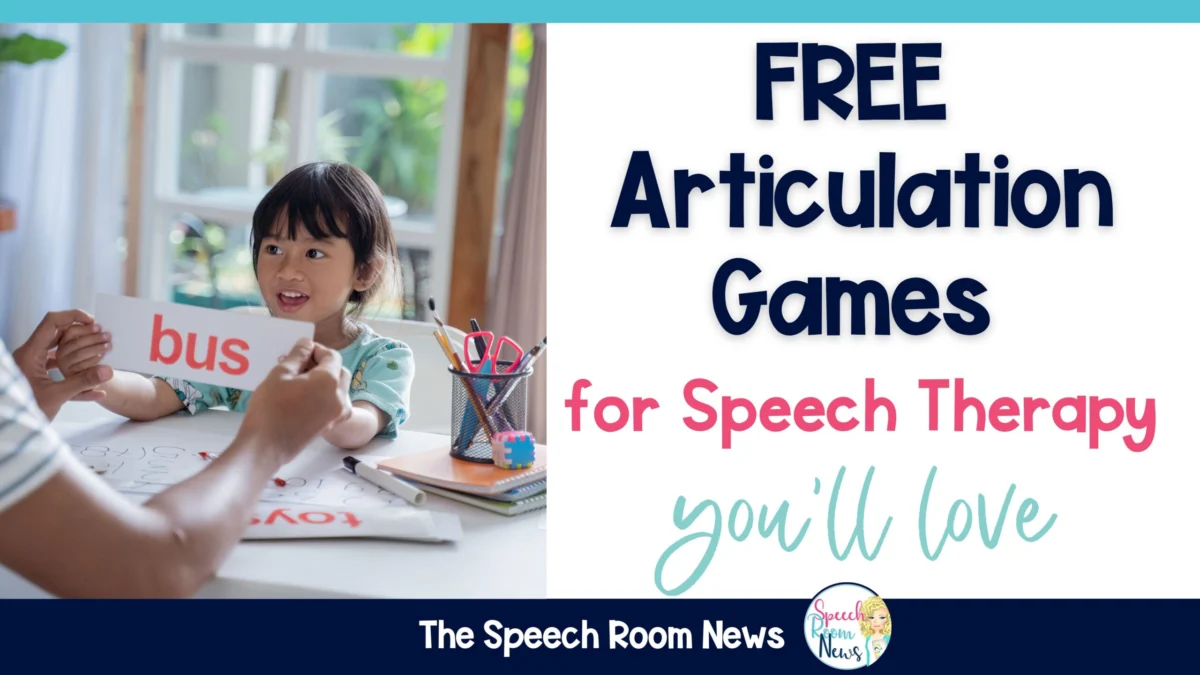
The landscape of pediatric speech therapy is undergoing a significant transformation, driven by an increasing emphasis on accessible, engaging, and play-based interventions. At the forefront of this shift is the growing availability of free articulation games, which are proving instrumental in enhancing student engagement, fostering skill generalization, and alleviating resource burdens for speech-language pathologists (SLPs) and families alike. These innovative tools, ranging from interactive online platforms to printable activities and material-free exercises, represent a critical advancement in making effective speech sound practice more widely available and enjoyable for children requiring support.
Speech sound disorders (SSDs) affect a considerable portion of the pediatric population, impacting their ability to produce sounds correctly and, consequently, their overall communication, literacy development, and social interactions. According to the American Speech-Language-Hearing Association (ASHA), approximately 2.3% to 24.6% of children aged 0-17 years may experience some form of communication disorder, with SSDs being among the most common. Early and consistent intervention is crucial for these children, yet challenges such as limited therapy slots, financial constraints, and difficulties in maintaining engagement during practice often hinder progress. The integration of play into therapy sessions has long been recognized for its capacity to make learning memorable and intrinsically motivating, providing countless opportunities to generalize language skills into everyday contexts. This principle is now being amplified through a wealth of no-cost resources, ensuring that effective practice extends beyond the clinical setting.
The evolution of speech therapy practices has seen a steady move towards more dynamic and child-centric approaches. Historically, articulation therapy often relied on repetitive drill-based exercises, which, while effective, sometimes struggled to capture and sustain a child’s attention, particularly younger learners. The recognition of play as a child’s primary mode of learning has spurred the development of therapeutic tools that seamlessly integrate educational goals with recreational activities. This paradigm shift has been accelerated by technological advancements and the collaborative efforts of educators and developers committed to supporting children’s communication development. Whether therapy sessions are conducted virtually, in-person, or through a hybrid model, these readily available games are democratizing access to high-quality articulation practice, ensuring that fun remains an integral part of the learning journey.
Interactive Digital Platforms: Expanding Reach and Engagement
The digital age has ushered in an era of unprecedented accessibility for educational resources, and speech therapy is no exception. Interactive online games have emerged as a game-changer for students’ articulation skills, offering dynamic and adaptable environments that make practicing speech sounds both effective and enjoyable. These platforms are particularly valuable for virtual therapy sessions, hybrid models, and for at-home practice, providing immediate feedback and a highly stimulating experience.

One prominent example is ABCya’s "Alphabet BINGO," a digital resource specifically designed for younger students. This game transforms the fundamental practice of letter sound recognition into an engaging activity, crucial for pre-readers and early learners. By associating visual letters with their corresponding phonemes in a familiar game format, children reinforce early literacy skills alongside their articulation targets. The interactive nature keeps children focused, making repetitive sound practice feel less like work and more like play.
The Articulation Station App (Lite Version) offers another robust digital solution. Available for download on various devices, this free version provides several sound options and interactive games. Its intuitive design allows students to practice target sounds at different linguistic levels—isolation, syllables, words, phrases, and sentences—all within a gamified environment. The app’s ability to provide visual and auditory feedback supports self-monitoring, a key component in mastering articulation. This resource underscores the power of mobile technology in delivering personalized and effective therapy tools directly to users.
Language Playroom stands out as a dedicated online hub, currently offering 20 free online games focused on articulation. The platform’s commitment to continually expanding its collection to include fluency, language, and social communication activities highlights a broader effort to provide holistic speech and language support. The variety of games ensures that therapists can select activities tailored to individual student needs and preferences, maintaining novelty and engagement over time. Such comprehensive resources are vital for SLPs seeking diverse and reliable tools.
For a more focused approach, Phoneme Pop is an online game where children can pop bubbles containing words with their target sounds. This simple yet effective concept leverages immediate gratification and visual feedback to reinforce correct sound production. The tactile-like experience of "popping" virtual bubbles can be incredibly satisfying for children, encouraging repeated trials without the monotony often associated with traditional drills.
Furthermore, Boom Cards have become a cornerstone of digital speech therapy, offering a vast array of interactive, self-grading digital task cards. A significant number of free Boom Card decks are available on platforms like Teachers Pay Teachers and Boom Learning, covering various articulation sounds and therapeutic goals. These digital decks can simulate traditional card games, board games, or interactive worksheets, providing a flexible and engaging format that can be easily assigned for homework or used during therapy sessions. The immediate feedback mechanism embedded in Boom Cards helps students understand their accuracy, fostering independent learning. The ecosystem of user-generated content on these platforms ensures a continuous supply of fresh, creative, and often themed materials, keeping therapy relevant and exciting.
Tangible Printable Activities: Bridging Digital and Hands-On Learning

While digital resources offer unparalleled convenience and interactivity, printable games remain a cornerstone of speech therapy, particularly for those who prefer hands-on activities, desire a break from screens, or need materials to send home for extra practice. These resources allow for tactile engagement, foster fine motor skills, and can be easily adapted to various group sizes and settings.
The "Whack-a-Sound /S/ Self-Checking Articulation Freebie" exemplifies the practical utility of printable games. Perfect for preschool through 2nd grade, this game helps children identify the position of a target sound (initial, medial, or final) within words. This meta-phonological awareness is crucial for developing robust articulation skills. The "self-checking" aspect empowers children to take ownership of their learning, fostering independence and critical thinking.
Articulation Worksheets from Super Duper Publications offer a foundational set of printable activities. While perhaps less "game-like" than other options, these worksheets provide structured practice opportunities that can be integrated into games or used as standalone exercises. They often include target words, sentences, and activities designed to elicit specific sounds, providing a versatile resource for therapists and parents. The ability to print and re-use these materials makes them cost-effective and readily available.
For seasonal engagement, the "Hot Chocolate Articulation Board Game" is a popular choice, particularly during winter months. This adaptable game can be used in numerous ways, typically involving flashcards with target words. Students practice saying a target word; if successful, they roll a die and move spaces on the board. This combines articulation practice with basic game mechanics, making repetitive trials enjoyable. The thematic element adds an extra layer of engagement, connecting therapy to children’s everyday experiences and interests.
"100 Trial Challenges" by Peachie Speechie address the critical need for high-frequency practice. These printable sheets are often themed around holidays or specific interests, making it easy to integrate articulation drills into various therapy sessions. The goal is to achieve 100 correct productions of a target sound, a common benchmark in articulation therapy. By framing this as a "challenge," these sheets motivate students to complete numerous trials, which is essential for motor learning and habituating new speech patterns. The thematic approach helps maintain interest and allows for easy customization based on student preferences.
Finally, "Color & Play Ocean Articulation Bingo" provides a classic group game format for articulation practice. Printing out bingo cards with target words allows for both individual and group settings. As words are called out, children locate and mark them, practicing the target sound as they do. This fosters auditory discrimination, word recognition, and articulation skills in a fun, competitive environment. The "color and play" aspect adds an artistic element, engaging children through multiple modalities.

Integrating Therapy into Daily Life: Material-Free Games for On-the-Go Practice
Effective articulation therapy extends beyond structured sessions; it thrives on consistent, naturalistic practice. Material-free games are invaluable for integrating articulation practice into daily routines, making every moment an opportunity for growth. These activities are particularly useful for car rides, waiting rooms, or any situation where physical materials are impractical, reinforcing the idea that communication practice is a continuous process.
"I Spy" is a timeless classic that can be easily modified to target specific speech sounds. Instead of simply naming objects, the game can focus on finding items that start with or contain a particular target sound. For instance, an SLP or parent might say, "I spy with my little eye something that starts with /s/" while targeting the /s/ sound. This encourages auditory discrimination, phonological awareness, and spontaneous production of target sounds in a natural context.
"20 Questions" serves as an excellent vehicle for encouraging descriptive language and question-asking, all while implicitly targeting articulation goals. Children must formulate clear questions and responses, providing ample opportunities to practice specific sounds within meaningful sentences. The cognitive demands of this game also enhance critical thinking and vocabulary development, making it a multi-faceted therapeutic tool.
"Rhyme Time" is a fantastic game for developing phonological awareness and practicing articulation. Participants take turns saying words that rhyme with a target word, consciously focusing on the correct articulation of each word. This activity not only reinforces sound production but also highlights the phonetic similarities between words, which is crucial for early literacy and phonological processing.
The "Alphabet Game" is another simple yet powerful tool. Going through the alphabet, the child says a word that starts with each letter, with an added emphasis on correctly articulating specific target sounds. For example, if the child is working on /r/, they might be encouraged to choose words like "rabbit" or "red" for the letter R. This systematic approach ensures exposure to a wide range of words and provides structured practice within a familiar framework.

Expert Perspectives and Broader Implications
The proliferation of free articulation games is widely celebrated by speech-language pathologists, parents, and educators. Dr. Aliyah Khan, a pediatric SLP based in a bustling urban center, notes, "These free resources are indispensable. They empower families to continue practice at home, which is critical for generalization, especially for those with limited access to consistent therapy. The engagement factor is huge; when children are having fun, they learn more effectively and are more likely to comply with practice."
Parents, often burdened by the cost and time commitment of therapy, echo these sentiments. "Having free games means I can reinforce what my child learns in therapy without adding another expense," states Maria Rodriguez, a mother of a 6-year-old receiving articulation therapy. "The material-free games are a lifesaver during long car rides. It feels less like homework and more like playing together."
The implications of these accessible resources extend to broader issues of educational equity. Children from lower socioeconomic backgrounds, or those in rural areas with limited access to specialized services, can particularly benefit from free, high-quality materials. These resources help bridge the gap, ensuring that all children have opportunities to develop clear and effective communication skills, regardless of their family’s financial situation or geographical location. Furthermore, the ease of integration into various settings — from the therapy room to the classroom and home — promotes a collaborative approach to speech development, fostering stronger partnerships between SLPs, teachers, and parents.
Looking ahead, the continued development and dissemination of free articulation games will likely shape the future of speech therapy. It encourages innovation in resource creation, pushing developers to create engaging, evidence-based tools that are widely available. This movement also highlights the importance of open-source and collaborative initiatives within the therapeutic community, allowing for a constant influx of fresh ideas and materials. By reducing barriers to practice, these free games not only accelerate progress for individual children but also contribute to a more inclusive and supportive educational environment for all.
In conclusion, the widespread availability of free articulation games marks a pivotal moment in speech therapy. By incorporating play, leveraging technology, and offering versatile, no-cost options, these resources create a dynamic and engaging learning environment that helps students practice their speech sounds effectively. They empower families, support SLPs, and, most importantly, equip children with the foundational communication skills essential for lifelong success. The ongoing commitment to providing such valuable tools ensures that the journey to clear speech is not only effective but also joyful.
