

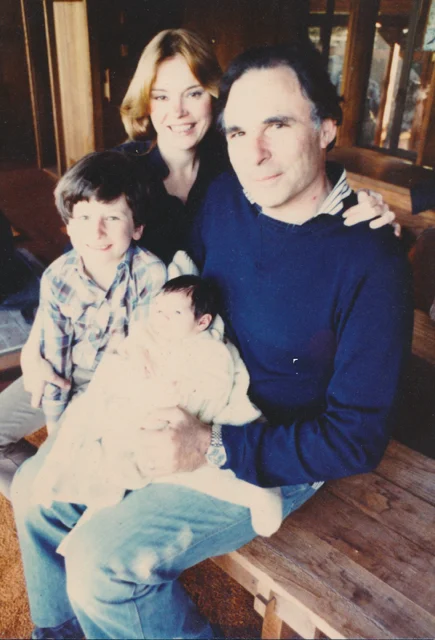
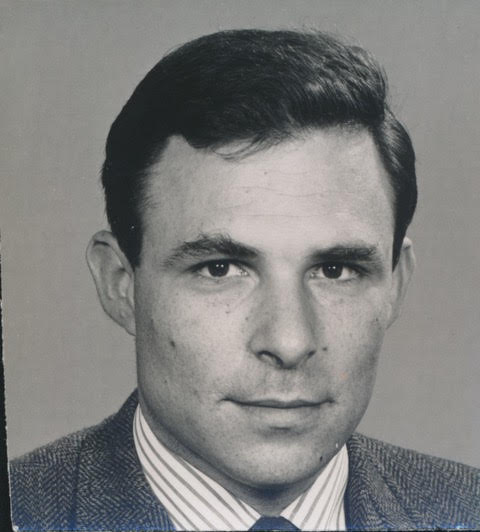
San Francisco, CA, November 17, 2025 – The world of psychology and affective science mourns the loss of Dr. Paul Ekman, a titan whose decades of meticulous research irrevocably shaped our understanding of human emotions, facial expressions, deception, and compassion. Dr. Ekman, aged 91, passed away peacefully at his home, surrounded by his family. His passing marks the end of an era for a field he not only contributed to but, in many ways, defined.
Dr. Ekman’s seminal work began in the mid-20th century, a time when the study of emotion was often mired in subjective interpretation. His unwavering commitment to empirical observation and cross-cultural validation provided a rigorous scientific foundation for the study of affect. Over a career spanning more than sixty years, Dr. Ekman’s laboratory and extensive fieldwork, including groundbreaking expeditions to remote corners of the globe, systematically explored the universality of certain facial expressions and the corresponding physiological responses associated with distinct emotions. This pioneering research challenged prevailing cultural relativist theories and established the existence of a set of basic, universally recognized emotions with associated facial displays.
The impact of Dr. Ekman’s research extends far beyond academic circles. His development of the Facial Action Coding System (FACS) in the 1970s, a comprehensive manual for describing all observable facial movements, provided researchers, clinicians, and even law enforcement agencies with a standardized, objective tool for analyzing facial expressions. This system, refined over decades, became the gold standard for quantifying and comparing emotional displays across individuals and cultures. Alongside FACS, his work on microexpressions – fleeting, involuntary facial movements that betray underlying emotions – led to the creation of Micro Expression Training Tools, empowering individuals to better recognize and interpret subtle emotional cues.
“Paul brought his remarkable intellect, observational skills, and unflagging energy to illuminate the ways we express and feel our emotions and how they are embodied in our physiology,” stated Dr. Robert W. Levenson, a distinguished professor in the Department of Psychology at the University of California, Berkeley. “His research, theorizing, and ideas for how emotions could be harnessed in service of the greater good galvanized what was a small niche area of research into a vibrant and thriving research area that will continue to be hugely influenced by his work and vision.”
Dr. Ekman’s intellectual curiosity and dedication to applying scientific findings to real-world problems were hallmarks of his career. His collaborations spanned a wide spectrum, from the rigorous pursuit of academic knowledge to high-level dialogues on global ethics and empathy. A particularly significant and enduring relationship was his friendship and intellectual partnership with His Holiness the Dalai Lama. This collaboration, spanning over two decades, explored the intersection of contemplative practices and emotion science, aiming to foster greater emotional well-being and compassion on a global scale.
The latter quarter of Dr. Ekman’s career was profoundly shaped by this focus on applying his scientific insights to promote human flourishing. This dedication culminated in significant projects aimed at cultivating emotional intelligence and compassion. He co-authored a seminal book and produced a webisode series, "Developing Global Compassion," with the Dalai Lama, further bridging the gap between ancient wisdom traditions and modern psychological science. This profound collaboration also catalyzed a new generation of research and application through his daughter, Dr. Eve Ekman. Together, they played instrumental roles in developing the Atlas of Emotions, an interactive online resource designed to expand emotional vocabulary and insight, and the Cultivating Emotional Balance program, which integrates mindfulness meditation with emotion regulation skills.
"My dad’s commitment to rigorous science, love of discovery, and dedication to alleviating pain from destructive emotions were at the very core of his brilliant mind and accomplishments," shared Dr. Eve Ekman, director of the Paul Ekman Group and a contemplative social scientist. "However, his huge heart and ability to vulnerably share his own struggles with emotions were what made him beloved by so many. He was an incredibly loving dad – a lover of life and unrelentingly curious."
Dr. Ekman’s influence also reached a vast popular audience through his accessible and engaging books, including the bestselling "Emotions Revealed" and "Telling Lies." His groundbreaking work on deception detection and microexpressions was further popularized by the critically acclaimed television series "Lie to Me," which introduced millions of viewers worldwide to the scientific underpinnings of reading subtle emotional cues. His commitment to making emotional science understandable and relevant extended to his role as a scientific advisor for Pixar’s animated film "Inside Out," a project that brought the complexities of the human emotional landscape to life for audiences of all ages.
The legacy of Dr. Paul Ekman will continue to be championed by the Paul Ekman Group, now under the leadership of his daughter, Dr. Eve Ekman. The organization remains dedicated to advancing his mission of making emotional awareness, empathy, and truthfulness accessible globally through evidence-based education and training programs.
Dr. Ekman is survived by his children, Eve Ekman and Tom Ekman, and a wide circle of cherished friends and colleagues who have been profoundly influenced by his life and work.
Honoring Dr. Ekman’s Enduring Legacy
The profound impact of Dr. Ekman’s contributions is being further commemorated through ongoing initiatives that celebrate his life and scientific achievements. A documentary film is currently in development, aiming to capture the breadth and depth of his pioneering work and its lasting influence on the understanding of human emotion. Those wishing to support the completion of this cinematic tribute to his legacy can find more information and contribute through a dedicated funding page.
In recognition of his enduring influence, the Paul Ekman Group is actively collecting reflections, personal anecdotes, photographs, film clips, and messages of appreciation from his vast network of colleagues, former students, and readers worldwide. These contributions will form a memorial page dedicated to celebrating his remarkable life and his indelible mark on the field of affective science.
A Chronology of Impact
Dr. Paul Ekman’s career trajectory illustrates a consistent dedication to unraveling the complexities of human emotion.
- 1950s-1960s: Early research into facial expressions and their relationship to emotional states, laying the groundwork for his later cross-cultural studies.
- 1970s: Development of the Facial Action Coding System (FACS), a foundational tool for objective analysis of facial movements. Publication of seminal works on the universality of emotions.
- 1980s-1990s: Extensive fieldwork in diverse cultures to validate theories of universal emotional expressions. Research into deception and the development of microexpression analysis techniques.
- 2000s: Publication of influential books like "Emotions Revealed" and "Telling Lies," bringing his research to a broader audience. The acclaimed television series "Lie to Me" further popularizes his work. Collaboration with the Dalai Lama intensifies, leading to projects focused on compassion and emotional balance.
- 2010s-Present: Continued development of educational tools like the Atlas of Emotions and Cultivating Emotional Balance, with active involvement from his daughter, Dr. Eve Ekman. Continued advisory roles and contributions to scientific and public discourse on emotion.
Supporting Data and Broader Implications
Dr. Ekman’s research provided empirical evidence that countered the prevailing notion that emotional expressions were purely culturally determined. His studies, which included observations of isolated tribes with no prior exposure to Western media, consistently identified universal facial expressions for happiness, sadness, anger, fear, surprise, and disgust. This finding has profound implications for interpersonal communication, cross-cultural understanding, and even the diagnosis and treatment of psychological disorders.
The ability to accurately identify and interpret emotions, as facilitated by Dr. Ekman’s work, has direct applications in fields such as:
- Law Enforcement and Security: Enhancing deception detection and threat assessment.
- Healthcare: Improving patient-physician communication and understanding of mental health conditions.
- Education: Developing more effective teaching strategies that account for emotional learning.
- International Relations: Fostering greater empathy and understanding between different cultures and nations.
The development of FACS and microexpression analysis has been crucial in validating emotional responses in clinical settings, research studies, and even in legal contexts. The widespread adoption of these tools underscores the practical value of Dr. Ekman’s scientific rigor.
Official and Scholarly Responses
The announcement of Dr. Ekman’s passing has elicited widespread tributes from the scientific community and beyond, reflecting the profound respect and admiration he commanded. His work has been a cornerstone for generations of researchers in psychology, neuroscience, anthropology, and communication studies.
Universities and research institutions where Dr. Ekman held affiliations or collaborated have expressed their deep sorrow and acknowledged his immeasurable contributions to their respective fields. His impact is evident in countless dissertations, research papers, and textbooks that cite his foundational studies.
The ongoing work of the Paul Ekman Group, under Dr. Eve Ekman’s leadership, ensures that his scientific legacy will continue to evolve and inform new generations, addressing contemporary challenges related to emotional intelligence, mental well-being, and the promotion of a more compassionate global society. The continuation of his mission through educational programs and accessible resources highlights a lasting commitment to translating scientific discovery into tangible benefits for humanity.
