

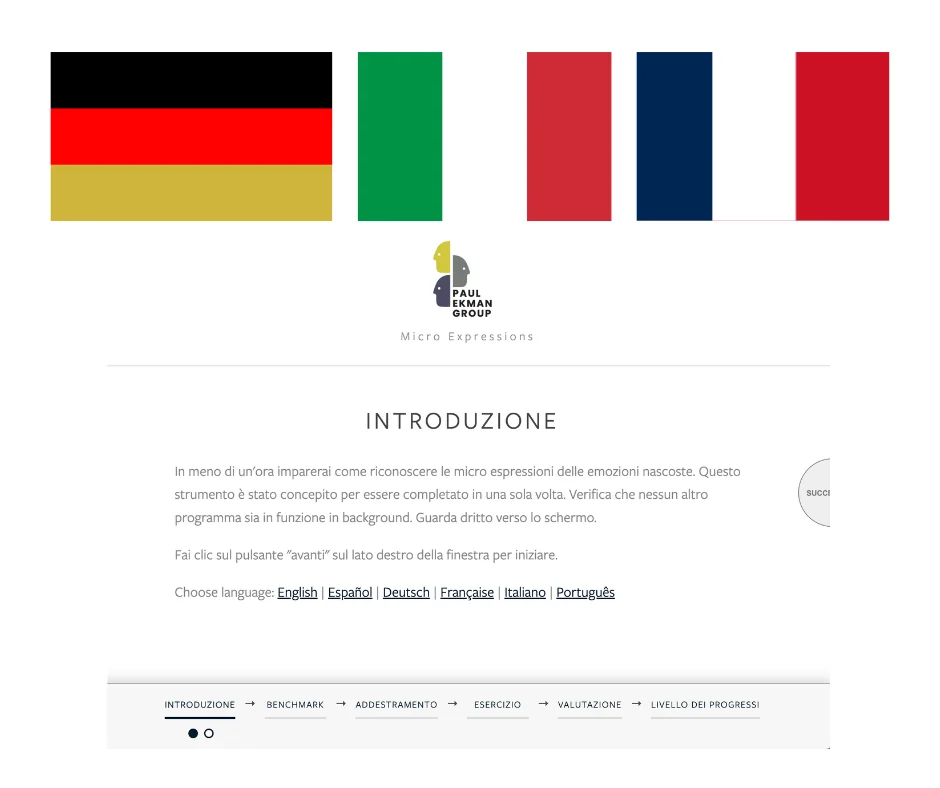
Paul Ekman Group, a leader in emotional awareness training, has announced a significant expansion of its online micro expression training tools, now offering comprehensive courses in Italian, French, and German. This strategic move aims to democratize access to scientifically-backed emotional intelligence skills, making them more readily available to a broader international audience. The new language options are integrated into all seven core micro expression training tools, previously available in English, Spanish, and Portuguese. This expansion underscores the organization’s commitment to its mission of enhancing self-understanding and interpersonal comprehension worldwide.
Background and Context: The Growing Demand for Emotional Intelligence
The announcement comes at a time of heightened global awareness regarding the importance of emotional intelligence (EQ) in both personal and professional spheres. Research consistently links higher EQ to improved leadership, stronger relationships, better conflict resolution, and enhanced overall well-being. A 2023 report by the World Economic Forum highlighted emotional intelligence as one of the top skills for the future workforce, emphasizing its crucial role in navigating complex and diverse work environments. This growing demand has fueled the market for specialized training programs that equip individuals with the tools to better understand and manage emotions.
Paul Ekman Group’s micro expression training is rooted in the pioneering work of Dr. Paul Ekman, a renowned psychologist and professor emeritus at the University of California, San Francisco. Dr. Ekman’s research, spanning decades, identified universal facial expressions associated with core human emotions and the fleeting, involuntary nature of micro expressions – involuntary facial movements that reveal true emotions often hidden from conscious awareness. These brief expressions, lasting fractions of a second, are considered crucial indicators of genuine emotional states.
The organization’s online training platform has been a cornerstone of its outreach, providing accessible resources for individuals and professionals across various sectors. The decision to introduce Italian, French, and German translations was driven by consistent user feedback and a strategic assessment of markets where there is a significant interest in emotional intelligence and communication skills development. This initiative directly addresses a key barrier to learning – language – thereby fostering greater inclusivity and enabling a more profound engagement with the subject matter for non-native English speakers.
Timeline of Expansion and Previous Milestones
The introduction of Italian, French, and German marks the latest phase in Paul Ekman Group’s ongoing global expansion. The organization has a history of progressively broadening its reach:
- Early Development: Dr. Paul Ekman’s foundational research on universal facial expressions and micro expressions began in the mid-20th century, culminating in groundbreaking publications and the identification of seven universal emotions.
- Formalization of Training: The development of structured training programs, initially in English, began to equip individuals with the ability to recognize these subtle emotional cues.
- Digital Transformation: The advent of online learning platforms allowed for scalable delivery of these specialized skills, reaching a wider audience than traditional in-person workshops.
- Spanish and Portuguese Expansion: Recognizing the significant linguistic communities, Paul Ekman Group previously translated its core training modules into Spanish and Portuguese. This proved to be a successful strategy, demonstrating a strong appetite for the training in these markets.
- Current Expansion (2024/2025): The recent launch of Italian, French, and German translations represents a significant leap forward, covering major European linguistic blocs and further solidifying the organization’s presence on the continent.
This phased approach to language expansion demonstrates a deliberate and data-driven strategy to maximize accessibility and impact. The organization consistently monitors user engagement and market demand to inform future development.
What the Enhanced Training Offers: A Deep Dive into the Curriculum
The newly translated micro expression training packages encompass all seven of Paul Ekman Group’s core online modules. These modules are designed to provide a comprehensive understanding of micro expressions and their application. Key components typically include:
- Introduction to Micro Expressions: This foundational module explains the science behind micro expressions, their origins in Dr. Ekman’s research, and their physiological and psychological underpinnings. It differentiates them from macro expressions and discusses their significance in human interaction.
- Recognizing Universal Emotions: Participants learn to identify the subtle facial cues associated with the seven universal emotions: happiness, sadness, anger, fear, surprise, disgust, and contempt. This often involves extensive visual training with a curated library of images and video clips.
- The Speed and Nuance of Micro Expressions: This section delves into the temporal aspects of micro expressions, highlighting their fleeting nature and the challenges in their detection. It introduces techniques for improving observational skills and capturing these rapid emotional shifts.
- Contextual Application: The training emphasizes the importance of context in interpreting micro expressions. It explores how these expressions can be understood within different social, professional, and personal scenarios, cautioning against simplistic interpretations.
- Deception Detection (with caveats): While not solely focused on lie detection, the training equips individuals with the skills to better understand emotional congruence and incongruence, which can be indicators in situations where deception is a concern. It stresses that micro expressions are one piece of a larger puzzle and should not be used as definitive proof of deception.
- Empathy and Emotional Intelligence: The overarching goal is to enhance emotional awareness, which in turn fosters greater empathy, improved communication, and more effective interpersonal relationships. The training aims to build a nuanced understanding of human emotional states.
Users will be prompted to select their preferred language upon initiating each course, ensuring a seamless and immersive learning experience. The translated content maintains the fidelity and scientific rigor of the original English materials.
Supporting Data: The Global Impact of Emotional Literacy
The expansion into new languages is supported by a growing body of evidence highlighting the benefits of emotional literacy and micro expression recognition across diverse cultures and professions.
- Global Market for EQ Training: The global emotional intelligence market is projected to reach substantial figures in the coming years. While specific figures vary by research firm, estimates suggest a compound annual growth rate (CAGR) in the high single digits, driven by corporate demand for leadership development and a general societal emphasis on well-being. This indicates a robust and expanding market for the very skills Paul Ekman Group imparts.
- Cross-Cultural Universality: Dr. Ekman’s extensive research, including studies conducted in Papua New Guinea and other remote cultures, has consistently supported the universality of facial expressions for the seven core emotions. This scientific foundation provides a strong rationale for the translatability and applicability of the training across different linguistic and cultural backgrounds. While cultural display rules can influence how emotions are expressed, the underlying facial musculature and emotional triggers are largely universal.
- Professional Applications: The benefits of micro expression training are documented across numerous fields:
- Law Enforcement and Security: Enhanced ability to read subtle emotional cues can aid in threat assessment, witness interviewing, and building rapport.
- Healthcare Professionals: Improved empathy and understanding of patient emotions can lead to better patient care and diagnostic accuracy.
- Educators: Recognizing students’ emotional states can help create a more supportive learning environment and address potential learning barriers.
- Business Leaders: Enhanced emotional intelligence is linked to more effective leadership, improved team dynamics, and better negotiation outcomes. A study published in the Journal of Applied Psychology found a strong correlation between leader EQ and team performance.
- Sales and Customer Service: Understanding customer emotions can lead to more tailored interactions and improved customer satisfaction.
The expansion into Italian, French, and German directly taps into these professional communities within Europe, which have a significant presence in sectors that highly value emotional intelligence.
Official Statements and Inferred Reactions
While specific official statements from individuals within Paul Ekman Group were not provided in the original content, the announcement itself implies a clear strategic direction and commitment. Inferred reactions from stakeholders and potential users would likely be overwhelmingly positive:
- From Paul Ekman Group Leadership: "Our mission has always been to make the science of emotion accessible to everyone. By translating our leading micro expression training tools into Italian, French, and German, we are taking a significant step towards achieving that goal on a global scale. We believe that fostering emotional awareness is fundamental to building a more empathetic and understanding world, and we are thrilled to empower more individuals with these vital skills." (Inferred statement)
- From European Professionals: Professionals in Italy, France, and Germany who have been seeking advanced training in emotional intelligence and nonverbal communication will likely welcome this development. The ability to learn in their native language removes a significant hurdle and allows for a deeper, more nuanced understanding of the subject matter. This is particularly true for fields like psychology, law enforcement, and international business where subtle communication cues are critical.
- From Educators and Academics: The availability of training in these languages will also benefit academic institutions and educators who can now incorporate these scientifically validated resources into their curricula more effectively, fostering a new generation of emotionally intelligent students and researchers.
Broader Impact and Implications: Bridging Emotional Divides
The expansion of Paul Ekman Group’s micro expression training into more languages has several significant implications:
- Increased Global Accessibility: This move democratizes access to advanced emotional intelligence training, making it available to individuals who may not have the linguistic proficiency in English, Spanish, or Portuguese. This fosters a more inclusive approach to skill development.
- Enhanced Intercultural Communication: As the world becomes increasingly interconnected, the ability to understand and interpret emotions across cultural boundaries is paramount. While micro expressions are universal, cultural display rules can influence their expression. Training that acknowledges this, and is delivered in local languages, can help bridge these nuances more effectively.
- Strengthening European Professional Networks: The availability of training in Italian, French, and German can foster stronger professional networks across Europe. Individuals from these linguistic backgrounds can now more easily engage in shared learning and discourse on emotional intelligence, potentially leading to collaborative advancements in various fields.
- Contribution to Mental Well-being: By improving emotional awareness, the training contributes to enhanced mental well-being. Individuals who can better understand their own emotions and those of others are often better equipped to manage stress, build healthier relationships, and navigate life’s challenges.
- Advancement of Emotion Science Research: Wider access to training may also lead to increased participation in related research, offering valuable data from diverse linguistic and cultural groups, further enriching the scientific understanding of human emotions.
Looking Ahead: Continued Growth and Community Engagement
Paul Ekman Group has indicated that this expansion is not the final step. The organization is actively exploring opportunities to translate its training tools into additional languages. They have invited feedback from their global community regarding desired language additions, demonstrating a commitment to responsive development. This proactive approach ensures that their offerings remain relevant and accessible to an ever-expanding audience.
The organization’s commitment to making emotion science accessible worldwide is evident in its already extensive reach, with resources provided to individuals in over 230 countries. The addition of Italian, French, and German is a testament to this enduring vision, reinforcing their position as a global leader in emotional intelligence education.
In conclusion, the launch of Italian, French, and German language options for Paul Ekman Group’s micro expression training tools represents a significant milestone in their mission to enhance global emotional literacy. By breaking down linguistic barriers, the organization is empowering a broader spectrum of individuals and professionals with the invaluable skills needed to understand themselves and others more profoundly, fostering a more empathetic and insightful world. This strategic expansion is poised to have a lasting positive impact on interpersonal dynamics across continents.
