

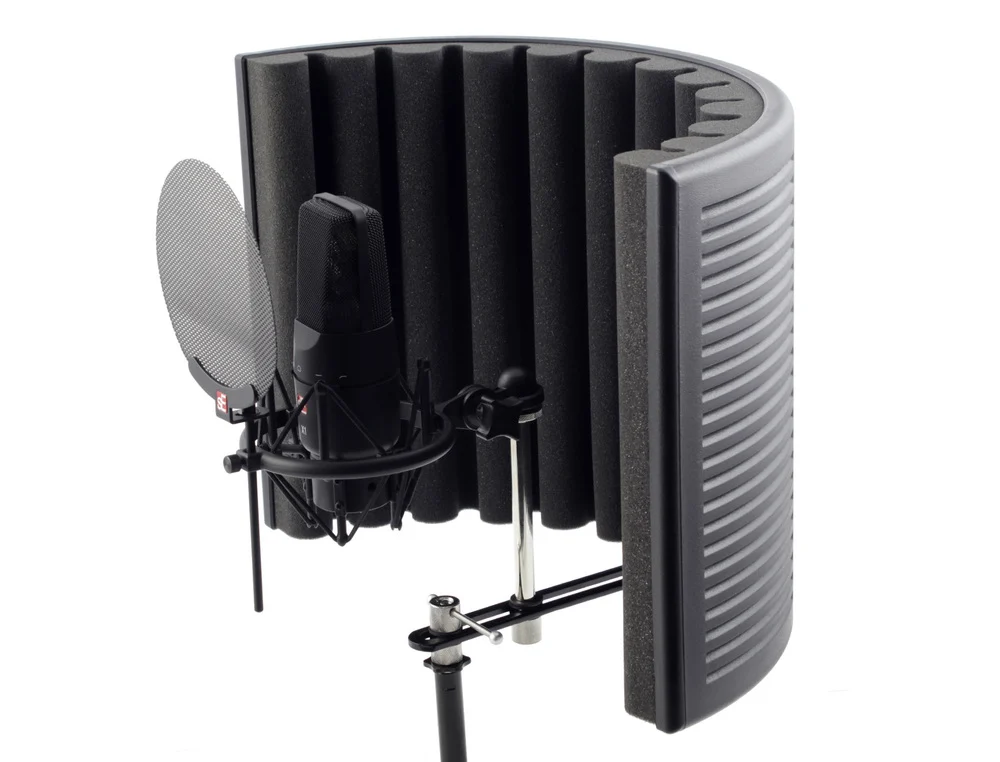
The persistent question echoing through home recording studios and vocal booths worldwide – "Do I need a sound reflection filter?" – demands a clear, evidence-based answer. This article delves into the mechanics of sound recording, the function of microphones, and the true efficacy of reflection filters, aiming to equip aspiring and seasoned audio professionals with the knowledge to make informed decisions about their studio setup.
Understanding the Purpose of a Home Recording Studio
At its core, a home recording studio is designed to create a controlled audio environment. This entails achieving several critical objectives: preventing external sounds from contaminating recordings (no sound ingress), ensuring that the recorded audio does not escape into living spaces (no sound egress), and, crucially, minimizing the impact of unwanted sound reflections within the recording space itself. These reflections, often referred to as "room tone" or "reverb," can muddy vocal clarity, introduce undesirable coloration, and ultimately detract from the professional quality of an audio production. The ultimate goal is to capture the purest possible rendition of the intended sound source, free from the acoustic artifacts of the recording environment.
The Science of Sound and Microphones
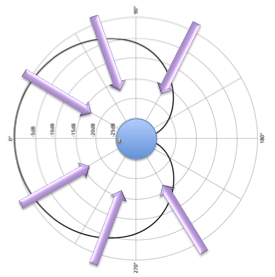
To understand the role, or lack thereof, of a reflection filter, it’s essential to grasp how microphones capture sound. Microphones are transducers, converting acoustic energy into electrical signals. Their sensitivity to sound varies with direction, a characteristic defined by their polar pickup pattern. This pattern illustrates the microphone’s sensitivity to sound arriving from different angles relative to its front.
Common polar pickup patterns include:
- Omnidirectional: Picks up sound equally from all directions. While capturing a broad sonic picture, it is highly susceptible to ambient room noise and reflections.
- Cardioid: Picks up sound most effectively from the front, with significant rejection from the rear and sides. This pattern is highly favored for voice-over and vocal recording due to its ability to isolate the sound source and minimize the capture of room reflections.
- Bidirectional (Figure-8): Picks up sound equally from the front and rear, with maximum rejection from the sides. Often used for capturing duets or for specific stereo miking techniques.
- Supercardioid and Hypercardioid: These are tighter variations of the cardioid pattern, offering even greater side rejection but with a small lobe of sensitivity directly behind the microphone.
Many professional microphones, such as the Neumann U87, offer switchable polar patterns, allowing engineers to adapt the microphone’s pickup characteristics to the specific recording scenario. However, for typical home studio vocal recording, the cardioid pattern is almost universally recommended. This directional focus directly combats the problem of capturing unwanted room reflections.
Visualizing the Cardioid Pickup Pattern
Imagine a microphone with its front facing forward. The cardioid pattern, when viewed from above (a plan view), resembles a heart shape – hence the name. This "heart" represents the primary area from which the microphone will capture sound.
- Plan View: In a 2D representation, the cardioid pattern shows the microphone at the center, with the widest pickup sensitivity directly in front, gradually narrowing towards the sides and becoming almost completely insensitive at the rear.
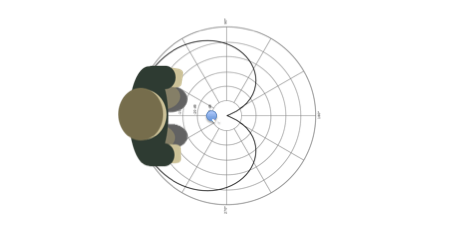
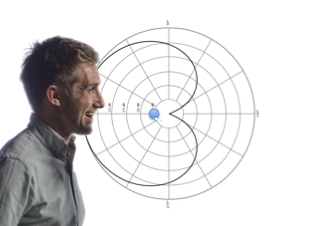
- 3D Representation: In three dimensions, this pattern forms a "bubble" or a "beanbag" shape extending in front of the microphone. This bubble encompasses the ideal positioning for the vocalist, allowing for some latitude in movement (slightly left, right, high, or low) while maintaining optimal pickup.
The crucial insight here is that the cardioid pattern inherently rejects a significant portion of sound arriving from the sides and, critically, from the rear of the microphone. This inherent directional filtering is the primary tool for mitigating room reflections when using a cardioid microphone.
The Role and Perceived Function of Reflection Filters
Reflection filters, often seen in marketing materials and in the setups of some audio professionals, typically consist of a curved, multi-layered acoustic material designed to be mounted around a microphone. The prevailing marketing narrative suggests that these devices create a localized "dead zone" around the microphone, effectively blocking out ambient room reflections and improving the clarity of the recorded sound.
These filters are generally constructed with an outer shell and an inner lining of absorbent acoustic foam or other sound-dampening materials. The idea is that the vocalist speaks into the front of the microphone, and the filter shields the sides and rear of the microphone from capturing any sound bouncing off nearby surfaces like walls, ceilings, or furniture.
The Technical Reality: Do Reflection Filters Actually Work?
The crucial question remains: do these devices deliver on their promise? The evidence, when examined through the lens of microphone polar patterns, suggests a different story.
Consider the path of sound waves in a typical home recording environment. Sound emanates from the vocalist’s mouth and travels in all directions. Some of this sound travels directly to the front of the microphone, where it is captured. Other sound waves, however, bounce off the surrounding surfaces of the room. These reflected sound waves then travel towards the microphone from various angles – sides, rear, and even from above and below.
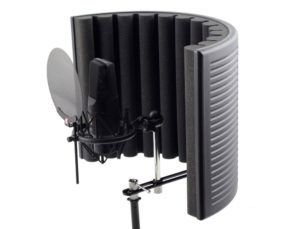
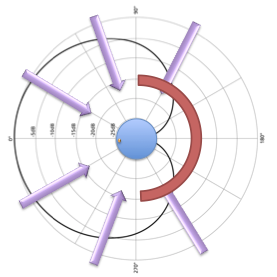
When a cardioid microphone is employed, its inherent polar pattern already significantly attenuates sounds arriving from the sides and rear. The primary capture area is directed forward. Now, introduce a reflection filter. This filter is positioned around the microphone, intended to absorb or block these returning reflections.
However, the critical flaw in the perceived efficacy of many reflection filters lies in their placement relative to the microphone’s primary pickup pattern. The filter shields the microphone body and potentially the rear of the microphone capsule. But the sound waves that are most problematic and are captured by the microphone are those arriving at the front of the capsule from the room’s reflections.
Analysis:
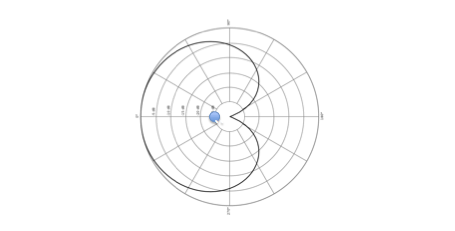
A reflection filter, by its design, is attempting to block sound waves that are already being significantly rejected by the cardioid polar pattern of the microphone. The filter primarily affects the sound arriving at the microphone from the sides and rear. However, the microphone is already designed to minimize the capture of sound from these directions. The sound waves that do make it past the filter and into the microphone’s pickup pattern are largely those that are already within the cardioid’s sensitivity range – essentially, reflections coming from the general direction of the vocalist or slightly off-axis.
In essence, the reflection filter is attempting to address a problem that the microphone’s directional sensitivity is already largely solving. The absorption material on the filter may slightly reduce the amplitude of any reflections that reach it, but the degree to which this translates into a noticeable improvement in the final recording is often negligible.
Numerous anecdotal and empirical tests, including those conducted by the authors of the original material, have demonstrated that recording with and without a reflection filter, using a cardioid microphone in a moderately reflective room, often yields recordings with very little discernible difference. This suggests that the perceived benefit of these filters is often more psychological or marketing-driven than acoustically significant.
Why the Misconception? Factors Contributing to Reflection Filter Popularity
The widespread adoption and marketing of reflection filters can be attributed to several factors:
- Visual Appeal and Perceived Professionalism: Reflection filters look like professional studio equipment. Their presence can create an impression of a more serious or advanced recording setup, which can be appealing to newcomers.
- Marketing and Influencer Endorsements: Audio equipment manufacturers heavily promote these devices. Furthermore, many online tutorials and demonstrations feature reflection filters, leading viewers to assume their necessity.
- The "More is Better" Mentality: In acoustics, more treatment is often better. The presence of a physical barrier around the microphone can intuitively seem like a positive step towards sound isolation.
- Lack of Technical Understanding: Many home studio users may not fully grasp the nuances of microphone polar patterns and the principles of acoustic treatment. They may purchase reflection filters based on the advice of less technically informed peers or simply because they are a readily available solution presented as a necessity.
The Truth About Sound Treatment: The Real Solution
If reflection filters are not the answer, then what is? The fundamental principle of achieving a clean, professional-sounding recording lies in acoustic treatment of the recording space. This involves modifying the room itself to control sound reflections.
Instead of trying to shield the microphone from a problematic environment, the more effective approach is to modify the environment itself. This can be achieved through various methods:
- Sound Absorption: Using materials like acoustic foam panels, bass traps, and heavy blankets to absorb sound waves, preventing them from bouncing around the room. This reduces reverberation time and flutter echo.
- Sound Diffusion: Employing diffusers to scatter sound waves, breaking them up into smaller, less coherent reflections. This helps to create a more natural and pleasing acoustic space without making it sound "dead."
- Building a Vocal Booth: Constructing a dedicated, acoustically treated enclosure for recording. This can range from professional prefabricated booths to DIY solutions made from wood, insulation, and acoustic dampening materials.
- Strategic Room Adaptation: Even without a dedicated booth, adapting an existing space can yield significant improvements. This might involve strategically placing absorbent materials (e.g., thick curtains, rugs, upholstered furniture) and avoiding recording in highly reflective rooms like kitchens or bathrooms.
Timeline of Understanding and Development:
The principles of acoustics and microphone design have evolved over decades. Early recording studios were massive, often with significant natural reverberation that engineers learned to work with or mitigate through microphone placement and mixing techniques. As recording technology advanced and home studios became more accessible, the need for localized and effective sound control became paramount. The development of directional microphones in the mid-20th century was a significant step, but the challenge of controlling room acoustics in smaller, less ideal spaces persisted. The reflection filter emerged as a commercially available "quick fix" solution, gaining popularity in the late 20th and early 21st centuries, coinciding with the rise of digital audio workstations and the democratization of music production.
Official Responses and Industry Perspectives
While specific manufacturers of reflection filters might assert their product’s benefits, the broader consensus within the professional audio engineering community, as often expressed in technical forums and educational materials, leans towards prioritizing room treatment over reflection filters. Many experienced audio engineers and vocal coaches emphasize that while a reflection filter won’t necessarily harm a recording, its contribution to sound quality is often marginal compared to proper room acoustics.
For instance, a representative from a prominent microphone manufacturer might state, "While reflection filters can offer a slight reduction in immediate reflections around the microphone capsule, they are not a substitute for proper acoustic treatment of the recording space. The inherent directional properties of a cardioid microphone are the primary tool for managing room sound when recording vocals."
The Broader Impact and Implications
The persistent marketing and purchase of ineffective acoustic accessories like reflection filters have several implications:
- Financial Waste for Consumers: Inexperienced users can spend money on products that do not deliver the promised results, diverting funds that could be better invested in actual acoustic treatment or higher-quality recording equipment.
- Hindered Learning Curve: Relying on a "quick fix" like a reflection filter can prevent users from understanding and addressing the root cause of poor recording quality – the acoustics of their room. This can slow down their development as audio professionals.
- Reinforcement of Misinformation: The continued prevalence of reflection filters in marketing and online content perpetuates a cycle of misinformation, making it harder for newcomers to discern effective acoustic solutions.
Conclusion: The Definitive Verdict
To directly answer the question: No, you likely do not need a sound reflection filter in your home studio if you are using a directional microphone (such as a cardioid) and are aiming for clean vocal recordings.
The true path to professional-sounding audio in a home studio environment lies in understanding and implementing proper acoustic treatment for your recording space. This involves actively managing the sound within your room through absorption and diffusion, rather than relying on a supplementary device that offers limited benefits. Investing time, effort, and resources into treating your recording environment will yield far more significant and lasting improvements to your audio quality than any reflection filter can provide. Save your money, focus on your room, and you’ll be well on your way to achieving the pristine recordings you desire.
