


The discourse surrounding Artificial Intelligence (AI) and its role in content creation, particularly within the influencer and professional spheres, has intensified following a recent LinkedIn post that began with a stark declaration: “I don’t use AI to write my content.” While this statement might initially be perceived as a badge of honor, the author of the post clarified that their intent was not to claim superiority, but rather to highlight a critical distinction: the value of the content itself, irrespective of its origin. This nuanced perspective has reignited a broader conversation about the ethical and practical implications of AI in professional communication and personal branding.
The core of the discussion revolves around the difference between leveraging AI as a tool to enhance human capabilities and allowing it to supplant genuine human thought and experience. This distinction is not merely semantic; it carries significant weight in how we perceive authenticity, expertise, and ultimately, influence. The potential for AI-generated content to mimic human expression raises questions about the very nature of authorship and the trust audiences place in their perceived creators.
The Evolution of Content Creation and the AI Paradox
For decades, the creation of compelling content has been a cornerstone of building influence. Professionals across industries have relied on their unique insights, experiences, and writing prowess to connect with audiences, establish authority, and drive engagement. This process typically involves deep thinking, personal reflection, and the articulation of original ideas. However, the rapid advancement of AI tools, capable of generating text, images, and even audio that is increasingly indistinguishable from human output, presents a new paradigm.
The initial premise that "what matters isn’t who writes the content—it’s whether the content provides value" holds a certain truth. If an AI can produce an article that is informative, engaging, and addresses a reader’s needs, its origin might, on the surface, seem secondary. AI tools can indeed assist in various stages of content creation: organizing thoughts, challenging assumptions, improving clarity, and refining grammar and style. Many professionals, including those in the field of influence and marketing, are actively integrating these tools into their workflows. For instance, a 2023 report by Statista indicated that approximately 30% of content marketers globally were already using AI tools in their content creation processes, with that figure projected to rise significantly in the coming years.
However, the concern arises when AI is used not to augment human intellect but to entirely replace it. This shift can be likened to the infamous case of the musical group Milli Vanilli in the late 1980s. The duo achieved immense commercial success, winning awards and selling millions of albums, only for their careers to collapse when it was revealed they had not sung any of their hit songs. The music itself did not diminish in quality, but the deception surrounding its creation led to a profound loss of trust and respect from their audience. The issue was not the music, but the authenticity of the performers and the integrity of their presented artistry.
Authenticity and the Erosion of Trust in the Digital Age
The Milli Vanilli scandal serves as a potent analogy for the potential pitfalls of over-reliance on AI in content creation. If a professional, an author, or an influencer has built a reputation and a following based on their perceived expertise and unique voice, the revelation that their content was primarily generated by AI could lead to a similar crisis of authenticity. Audiences invest not just in information but in the persona, the lived experience, and the genuine insights of the individuals they follow.
This is particularly relevant to the concept of "Authority" as outlined by Dr. Robert Cialdini, a renowned expert in the science of ethical influence. Cialdini’s principles highlight that individuals are more likely to trust and be persuaded by those they perceive as having genuine expertise. If AI is the true source of ideas, examples, and conclusions, then the "authority" being showcased is not that of the individual, but of their ability to prompt an AI effectively. This distinction is critical. True expertise is cultivated through years of study, practice, lived experience, and personal reflection – elements that AI, by its nature, cannot replicate.
Data from ongoing research in consumer psychology suggests that transparency regarding AI usage in content creation can significantly impact audience perception. A recent survey by Edelman revealed that while consumers are open to AI-assisted content, a lack of transparency about its role can lead to decreased trust. This indicates a growing awareness and expectation for honesty in the digital space.
AI as a Collaborator, Not a Replacement
The argument is not to shun AI entirely but to advocate for its responsible and ethical integration. AI can be an exceptional collaborator, serving as a sophisticated sounding board for ideas, a powerful editor, or a tool for refining communication. For instance, an author might use AI to explore different narrative angles for a story, to identify potential plot holes, or to generate initial drafts of descriptive passages. Similarly, a business leader might use AI to analyze market trends and generate preliminary reports, which they then interpret, contextualize, and present with their own strategic insights.
The unique value that humans bring to content creation lies in their lived experiences: the personal anecdotes, the hard-won lessons from failures, the deeply held convictions, and the emotional resonance that stems from genuine human understanding. These are the elements that imbue content with a distinct voice and connect with audiences on a profound level. AI, which does not experience life, cannot generate this authentic human element. It can process vast amounts of data and identify patterns, but it cannot imbue content with the wisdom gained from personal struggle or the empathy born from shared human experience.
The Future of Influence in an AI-Augmented World
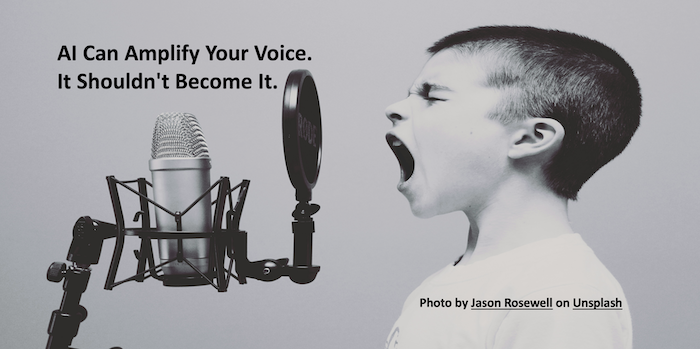
The professionals who will likely thrive in the coming decade are not those who delegate all their creative work to AI, but those who possess deep, verifiable expertise and leverage AI to communicate that expertise more effectively and efficiently. AI can amplify a human voice, making it reach wider audiences and resonate more powerfully, but it should never become the voice itself.
The implications of this evolving landscape extend beyond individual influencers. For brands and organizations, the ethical use of AI in marketing and communication is becoming paramount. Consumers are increasingly savvy and discerning, and any perceived deception can lead to significant reputational damage. Companies that are transparent about their use of AI, while emphasizing the human oversight and strategic direction behind their content, are likely to build stronger, more enduring relationships with their audiences.
The challenge, therefore, lies in establishing clear ethical guidelines and personal boundaries. The question for every content creator and professional becomes: "Where do I draw the line between using AI as a valuable tool and allowing it to become the author of my expertise?" This introspection is crucial for maintaining integrity and fostering genuine influence in an era increasingly shaped by artificial intelligence.
Broader Impact and Implications
The implications of AI in content creation extend to various sectors, including education, journalism, and research. In academia, the use of AI to write essays or complete assignments raises concerns about academic integrity and the development of critical thinking skills. In journalism, the ability of AI to generate news articles poses questions about journalistic ethics, fact-checking, and the potential for misinformation.
The long-term impact on the job market is also a significant consideration. While AI may automate certain tasks, it is also expected to create new roles focused on AI development, management, and ethical oversight. The ability to collaborate effectively with AI will likely become a critical skill for many professions.
Furthermore, the societal implications of pervasive AI-generated content are profound. As AI becomes more sophisticated, distinguishing between human-created and AI-generated content may become increasingly difficult. This could lead to a future where authenticity is a rare commodity, and the value placed on genuine human creativity and experience is amplified.
The ongoing debate underscores the need for continuous dialogue and adaptation. As AI technology continues to evolve, so too must our understanding of its role in shaping our professional and personal lives. The key to navigating this evolving landscape lies in prioritizing authenticity, ethical conduct, and the enduring power of human intellect and experience.
Author’s Background and Expertise
Brian Ahearn, the Chief Influence Officer at Influence PEOPLE and a faculty member at the Cialdini Institute, brings extensive expertise to this discussion. As one of the few Cialdini Method Certified Trainers, personally trained by Dr. Robert Cialdini, Ahearn is an authority on ethical influence. His work as an author, TEDx presenter, international speaker, coach, and consultant focuses on helping clients apply influence principles effectively. His books, including "Influence PEOPLE," have garnered critical acclaim, and his LinkedIn Learning courses and TEDx Talk have reached hundreds of thousands globally, demonstrating a deep understanding of communication, persuasion, and audience engagement in the digital age. This background provides a credible foundation for his insights into the nuanced relationship between AI and professional influence.
