

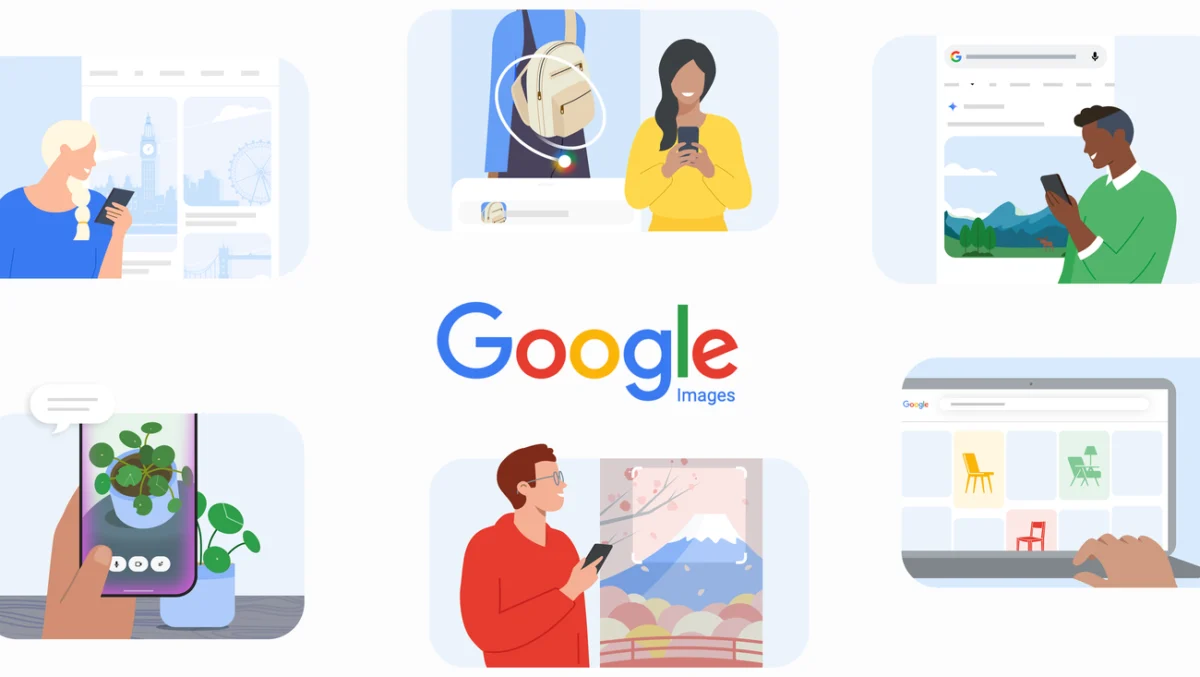
Google has officially marked the 25th anniversary of Google Images, a milestone that underscores the search giant’s transition from a text-centric index to a sophisticated, multimodal discovery engine. To commemorate a quarter-century of visual search, the company has announced a significant overhaul of the Google Images interface and the integration of advanced generative artificial intelligence directly into the search experience. These updates, spearheaded by Google’s Senior Engineering Director of Search, Brad Kellett, represent the latest chapter in a technological evolution that began with a single viral fashion moment and has culminated in a world where users can search using live video and complex AI-driven reasoning.
The Transformation of the Visual Discovery Experience
The centerpiece of the anniversary announcement is the introduction of a reimagined "home" for Google Images. Designed to move beyond a static grid of results, the new interface features a dynamic, immersive gallery that populates content from across the open web in real time. This experience is intelligently tailored to individual user interests, utilizing machine learning to curate inspiration. A key functional addition is the integration of "collections," where users can save ideas that subsequently appear as accessible tabs above the main gallery. This allows for a non-linear search journey, enabling users to jump between different creative threads without losing their progress.
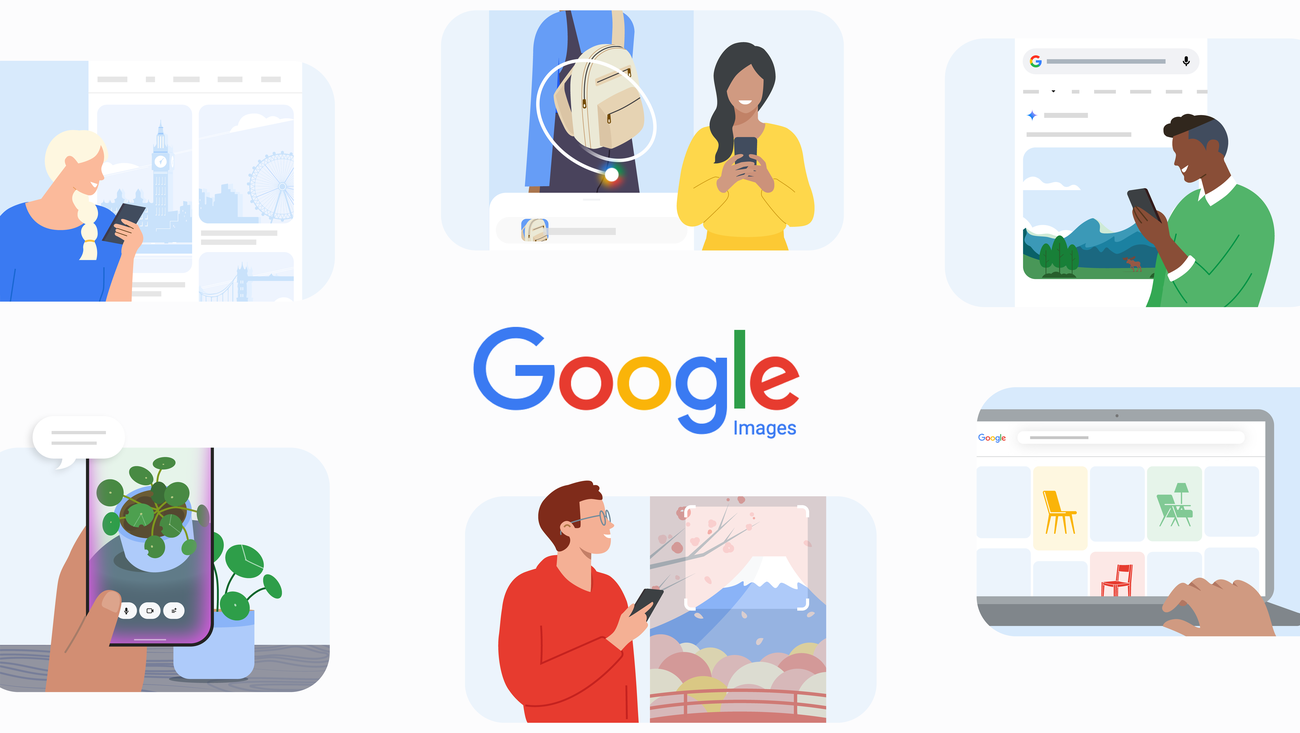
The new desktop experience is scheduled to roll out over the coming weeks for users in the United States, initially supporting the English language. According to company statements, this update aims to bridge the gap between intent-based searching—where a user knows exactly what they want—and serendipitous discovery, where the engine provides inspiration based on subtle user preferences.
Generative AI and the "Nano Banana" Model
Perhaps the most significant technical advancement introduced during this anniversary is the integration of high-quality image generation directly into AI Overviews. While traditional search relies on indexing existing content, Google is now enabling users to create visuals that do not yet exist. This feature is powered by the "Nano Banana" model, the latest iteration in Google’s suite of generative AI tools.
By entering a descriptive text prompt into the search bar, users can generate custom visuals from scratch. This tool is designed to assist in scenarios where a specific vision—such as a unique interior design concept or a niche comparison—cannot be satisfied by existing web photography. The rollout for this feature is slated for the coming weeks in English-speaking regions that already support image creation in AI Mode. Industry analysts suggest that this move is a direct response to the rising demand for generative tools, positioning Google Search not just as a librarian of the internet, but as a creative partner.
A Chronological History: From the Green Dress to the Intelligent Search Box
The history of visual search at Google is a timeline of responding to human curiosity that outpaced the capabilities of text-based indexing.
2001–2009: The Foundational Years
The catalyst for Google Images occurred in 2000, following the 42nd Grammy Awards. When Jennifer Lopez appeared in an iconic green Versace silk chiffon dress, the search volume for the image was unprecedented. At the time, Google only provided a list of blue text links, leaving users frustrated in their attempt to find the photo. In July 2001, Google Images launched with an initial index of 250 million images. By 2009, the "Similar Images" feature was introduced, allowing users to navigate visually related content without needing to refine their text queries, marking the first major step toward visual-to-visual search.
2011–2018: The Rise of Computer Vision
In 2011, "Search by Image" allowed users to upload files or paste URLs to find the source of a photo or discover similar aesthetics. The most transformative shift occurred in 2018 with the launch of Google Lens. By leveraging the smartphone camera, Lens turned the physical world into a searchable database. It enabled real-time translation, object identification, and commercial discovery, effectively moving search from the desktop to the environment at large.

2022–2024: Multimodality and "Circle to Search"
The introduction of "Multisearch" in 2022 represented a breakthrough in multimodal capabilities, allowing users to search with an image and then refine that search with text (e.g., uploading a photo of a pattern and typing "wallpaper"). In 2024, "Circle to Search" simplified the user interface further, allowing Android users to highlight anything on their screen to initiate a search. Google reports that Circle to Search is now available on more than 580 million devices globally, demonstrating the rapid adoption of gesture-based discovery.
2025–2026: The Era of AI Reasoning
The most recent innovations focus on deep contextual understanding. In 2025, the integration of AI Mode with Lens allowed for "visual image fan-out," a technique that breaks a single image into dozens of sub-queries to understand a complex scene. This was followed by "Search Live," which enables interactive voice conversations with the search engine while sharing a live camera feed. By 2026, the engine evolved to include "Multi-Object Recognition," allowing a user to deconstruct an entire outfit or a room full of furniture in a single gesture, and the "Intelligent Search Box," which accepts multiple image uploads as part of a single complex query.
Technical Analysis: The Visual Image Fan-Out Technique
At the heart of Google’s modern visual search is a process known as "visual image fan-out." Traditional computer vision models often struggle with "visual noise" or complex scenes where multiple objects are present. Google’s current architecture addresses this by treating a single image as a multidimensional query.

When a user circles an image or uses Lens, the system does not just look for a "match" for the whole file. Instead, it identifies individual components—textures, brands, shapes, and contexts—and launches simultaneous sub-searches. This allows the AI to provide nuanced results, such as identifying the specific breed of a dog in the background of a photo while simultaneously finding the brand of the sunglasses worn by the subject. This leap in processing power is what enables the new "Intelligent Search Box" to handle queries like "find this dress in this color but within this price range," using an uploaded photo as the primary data point.
Broader Impact and Industry Implications
The evolution of Google Images from a secondary tab to a primary interface for AI interaction has significant implications for e-commerce, digital copyright, and information literacy.
E-commerce and Consumer Behavior
The "Visual Results in AI Mode" and "Circle to Search" features have fundamentally altered the sales funnel. By allowing users to shop for items directly from social media feeds or live video without switching apps, Google is tightening its grip on the digital advertising market. This "instant shoppability" poses both an opportunity and a challenge for retailers, who must now ensure their product imagery is optimized for AI recognition rather than just human browsing.

The Generative Challenge
The introduction of AI-generated images within Search brings a new set of ethical and practical considerations. As Google integrates the "Nano Banana" model, the distinction between "found" information and "created" content becomes thinner. Industry experts have raised questions regarding the potential for AI "hallucinations"—where the AI generates a visual that is factually incorrect—and the impact on photographers and digital artists whose work forms the training data for these models. Google has stated that these features are built with 25 years of innovation aimed at making information "useful," but the shift toward synthesis marks a departure from its traditional role as a web indexer.
The Future of the Interface
The 25th-anniversary updates suggest a future where the search bar may eventually become obsolete, replaced by a combination of camera inputs, voice, and generative canvases. Brad Kellett’s vision for the next quarter-century focuses on "pushing the boundaries of what’s possible," indicating that the company will continue to invest heavily in multimodal LLMs (Large Language Models) that can "see" and "hear" the user’s environment in real time.
Conclusion
Google Images’ 25-year journey reflects the broader trajectory of the internet itself: a move away from static, text-heavy data toward a fluid, visual, and increasingly synthetic digital reality. As the company rolls out its new immersive home and AI generation tools, it remains at the center of a global shift in how humans interact with information. While the "blue link" era is firmly in the past, the challenge for the next 25 years will be balancing the immense power of generative AI with the foundational goal of providing accurate, accessible, and human-centric visual information.
