

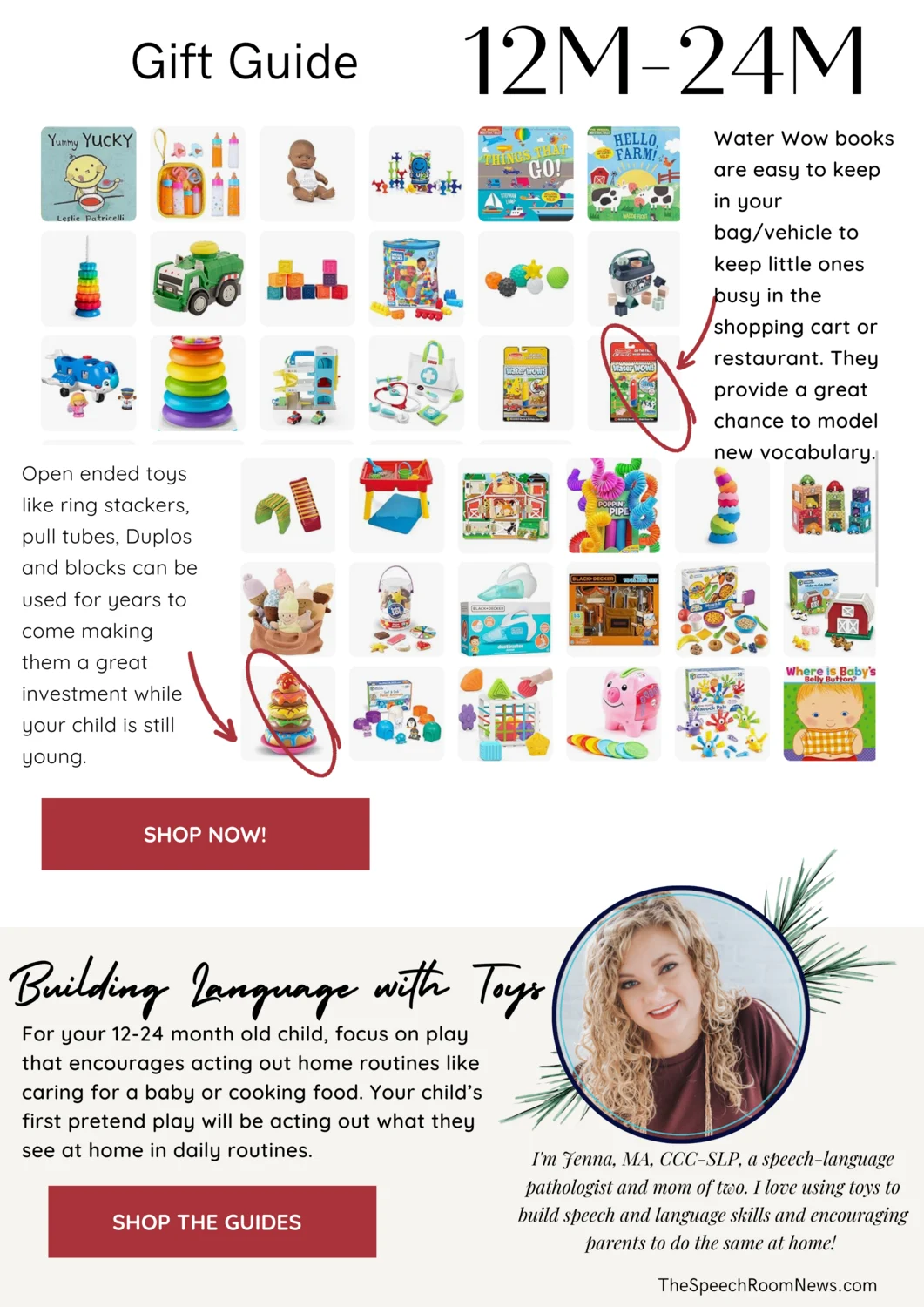
In an increasingly competitive toy market, parents and caregivers often seek guidance on selecting gifts that not only entertain but also actively contribute to a child’s developmental milestones. This holiday season, Jenna Kirk, MA, CCC-SLP, a pediatric speech-language pathologist and founder of The Speech Room News, has unveiled a comprehensive series of Amazon Gift Guides specifically designed to assist families in identifying toys that foster crucial speech and language skills. These meticulously curated recommendations, sorted by age group and including dedicated suggestions for stocking stuffers, aim to empower parents to make informed purchasing decisions that support their children’s cognitive and communicative growth.
Ms. Kirk’s expertise is rooted in both her professional practice and personal experience. As a seasoned speech-language pathologist, she possesses a deep understanding of pediatric communication disorders and the therapeutic role of play. This professional insight is further enriched by her perspective as a mother of two young children, one of whom has been diagnosed with Childhood Apraxia of Speech (CAS). This unique blend of clinical knowledge and lived experience lends particular weight to her recommendations, ensuring they are not only theoretically sound but also practically applicable and child-approved. Her initiative underscores a growing awareness among parents about the profound connection between early play experiences and the development of robust communication abilities.
The Foundational Role of Play in Language Acquisition
The scientific community widely recognizes play as a cornerstone of early childhood development, particularly for speech and language acquisition. Through play, children naturally experiment with sounds, words, and conversational structures. It provides a low-pressure environment for practicing social interaction, turn-taking, problem-solving, and imaginative thinking—all vital precursors to advanced linguistic skills. When selecting toys, Ms. Kirk emphasizes several key characteristics that maximize their therapeutic potential. These include toys that are open-ended, allowing for varied interpretations and imaginative scenarios rather than prescribed outcomes. Such toys encourage children to generate their own narratives, fostering vocabulary expansion, sentence construction, and narrative abilities.
Furthermore, toys that promote interactive engagement are prioritized. These are items that naturally lead to back-and-forth communication, encouraging questions, comments, and collaborative play between children or between children and adults. Examples might include building blocks, dollhouses, or interactive games that require verbal negotiation and shared attention. The focus is often on low-tech options, as these typically necessitate more direct human interaction and less passive consumption, contrasting with the often solitary and less verbally stimulating nature of many screen-based activities. The absence of complex electronic features often forces children and caregivers to fill the communicative void, leading to richer verbal exchanges.

Addressing the Prevalence of Speech and Language Disorders
The timely release of these guides also addresses a critical public health concern. According to the Centers for Disease Control and Prevention (CDC), approximately one in six children aged 3–17 years in the United States has one or more developmental disabilities, with speech and language disorders being among the most common. The American Speech-Language-Hearing Association (ASHA) reports that nearly 8% of children aged 3-17 years have had a voice, speech, language, or swallowing disorder in the past 12 months. Early identification and intervention are paramount for these conditions, with research consistently demonstrating that children who receive support early in life achieve better long-term outcomes in academic, social, and emotional domains.
Ms. Kirk’s guides serve as a proactive resource, enabling parents to select toys that can subtly yet effectively support development, potentially mitigating the severity of minor delays or complementing formal therapy for diagnosed conditions. By making expert recommendations accessible, she aims to demystify the process of choosing developmentally appropriate toys, moving beyond marketing hype to focus on educational efficacy. This initiative aligns with broader public health efforts to integrate developmental support into everyday routines and environments, transforming play into a powerful therapeutic tool.

Structure and Accessibility of the Guides
The Speech Room News gift guides are meticulously organized to ensure ease of use for busy parents. They are segmented by age, reflecting the evolving developmental needs and interests of children from infancy through school age. This age-based categorization ensures that recommended toys are appropriately challenging without being overwhelming, aligning with typical developmental milestones for fine motor skills, cognitive processing, and linguistic complexity. The inclusion of dedicated "stocking stuffer" suggestions provides practical ideas for smaller, often more portable items that can still offer significant speech and language benefits, promoting quick interactions and versatile play opportunities.
The guides are primarily available through Ms. Kirk’s Amazon storefront, streamlining the purchasing process for interested families. Additionally, a downloadable PDF version is offered, providing a convenient, printable resource for offline reference or sharing. This multi-format availability underscores the commitment to accessibility, recognizing that parents utilize various platforms for their holiday shopping and information gathering. The direct linking to products on a widely used retail platform removes barriers to acquisition, allowing parents to easily implement the expert recommendations.

Beyond the Toy: Maximizing Language Opportunities During Play
While the selection of appropriate toys is a crucial first step, Ms. Kirk implicitly emphasizes that the true power of these items lies in how they are utilized. A toy alone cannot build speech and language skills; it is the interaction around the toy that creates the learning environment. Therefore, parents and caregivers are encouraged to actively engage with children during play, transforming ordinary moments into rich language-learning opportunities. This active engagement can take many forms:
- Narrating Play: Describing actions, objects, and characters during play ("The car is going fast down the ramp!" "The doll is sleeping in the bed.") helps children associate words with concepts and actions, expanding their receptive and expressive vocabulary.
- Asking Open-Ended Questions: Instead of simple yes/no questions, open-ended inquiries ("What do you think will happen next?" "Tell me about your drawing.") encourage more elaborate responses, fostering critical thinking and complex sentence structures.
- Modeling Language: Repeating and expanding on a child’s utterances ("Ball!" becomes "Yes, that’s a big, red ball!") provides a scaffold for more advanced language use.
- Encouraging Turn-Taking: Games that involve taking turns (e.g., board games, rolling a ball) naturally teach the rhythm of conversation and social interaction, which are foundational to effective communication.
- Creating Opportunities for Requesting: Strategically placing toys slightly out of reach or withholding a piece of a puzzle can prompt children to make verbal requests, practicing functional communication.
- Embracing Imaginative Play: Engaging in pretend play scenarios allows children to experiment with different roles, perspectives, and emotional expressions, all of which require sophisticated language use and understanding.
These interactive strategies, when combined with the thoughtfully selected toys from the guides, create a synergistic effect, amplifying the developmental benefits. Ms. Kirk’s resources, therefore, serve not just as shopping lists but as catalysts for more intentional and language-rich play experiences within the family home.

Broader Impact and Implications
The release of expert-curated toy guides like those from The Speech Room News carries significant implications for various stakeholders. For parents, it provides a trusted, evidence-informed resource in a market saturated with options, alleviating decision fatigue and instilling confidence that their purchases contribute positively to their child’s development. This can be particularly valuable for parents of children with identified delays, offering practical, actionable steps they can take at home to support therapeutic goals.
For the toy industry, such guides highlight the demand for products that are not merely entertaining but also developmentally robust. This could encourage manufacturers to invest further in research and design focused on educational and therapeutic outcomes, potentially influencing future product lines and marketing strategies. The emphasis on open-ended, interactive, and often low-tech toys also serves as a subtle counter-narrative to the pervasive influence of digital and screen-based entertainment, advocating for a return to more traditional, hands-on play.

Furthermore, these initiatives reinforce the critical role of speech-language pathologists beyond direct clinical intervention. By providing accessible educational resources, SLPs like Ms. Kirk contribute to public health education, empowering families with knowledge and tools to foster healthy development. This broader outreach helps bridge the gap between clinical expertise and everyday parenting, promoting a more proactive approach to supporting children’s communication skills from an early age. The Speech Room News guides are more than just holiday recommendations; they represent a valuable contribution to the ongoing effort to ensure every child has the opportunity to develop their full communicative potential.
As the holiday season approaches, parents are invited to explore these carefully crafted gift guides. Ms. Kirk encourages feedback and additional toy suggestions from the community, fostering a collaborative environment where shared experiences and recommendations can further enrich the resource for all families. The aim is clear: to make the act of giving not just joyful, but profoundly impactful on a child’s lifelong journey of communication and learning.
